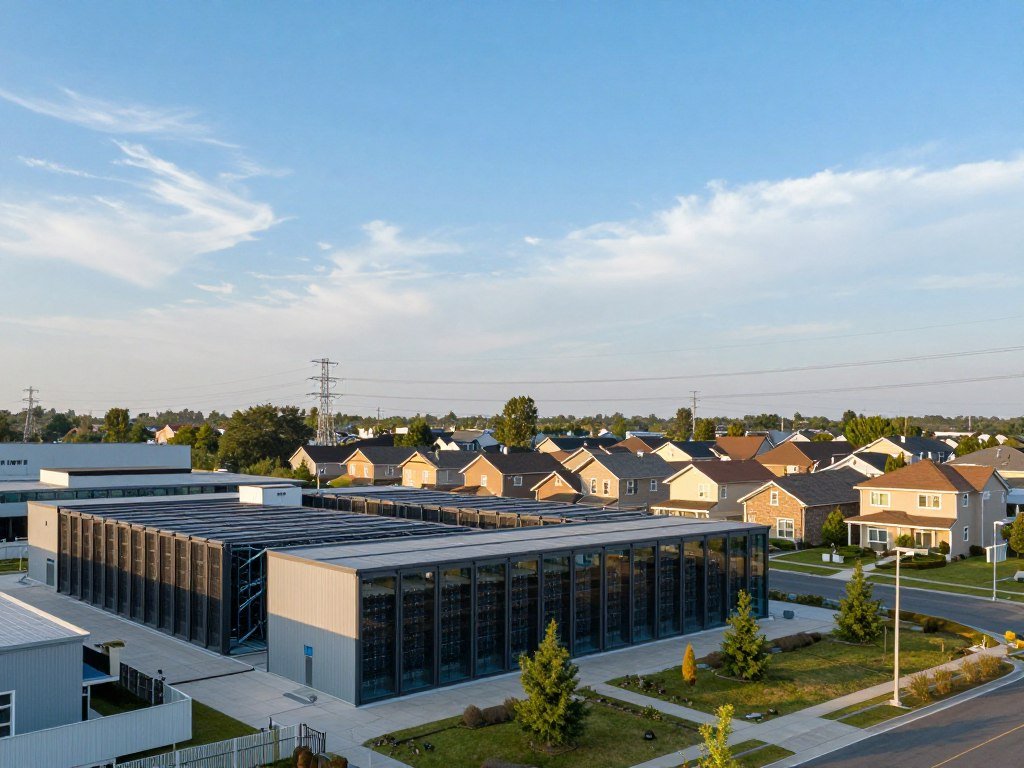
AI data centers can harm the environment when rising demand strains water and power systems or relies on fossil fuels. Their impact depends on where and how they operate. Artificial intelligence needs physical computing facilities, and their environmental cost also depends on water conditions, location, and hardware life cycle. IT capacity is the portion of a campus’s grid power that reaches its servers and chips; the rest runs cooling and other equipment.
For people living near a proposed facility, local effects may matter as much as global climate change. The same technology can have different effects based on the power supply and the resources available nearby. A useful assessment looks at the resources a facility consumes and the effects its neighbors experience.
Key Takeaways
- Environmental effects depend on a facility’s location, power, water, and equipment.
- AI is one part of data center activity, alongside cloud storage and other services.
- Electricity use can lead to different emissions on different grids.
- Direct water use and water used to make electricity are separate impacts.
- Land, hardware, and nearby community effects also shape the full picture.
- Local plans can show what a facility will use and what residents may experience.
Are AI Data Centers Bad for the Environment?
The short answer is yes, AI data centers can cause substantial environmental harm, but the size and type of impact depend on the facility and its setting. Scale matters: one building serving several digital services has a different footprint from a large campus built for dense computing.
The environmental impact includes power, water, land, and hardware, not software alone. AI is only part of a data center’s workload; cloud storage and other digital services also use its servers. The local burden depends on the campus’s size, its water setting, and how its electricity is produced.
As of October 27, 2026, 4,319 U.S. data centers were tracked across 1,491 campuses. That count included 1,394 operating facilities, 539 buildings under construction on 255 campuses, and 2,386 planned facilities.
Building-level counts group separate buildings into campuses. Some directories may count rooms inside one building as separate data centers, which can make totals look larger. These different counting methods can change comparisons between places and years.
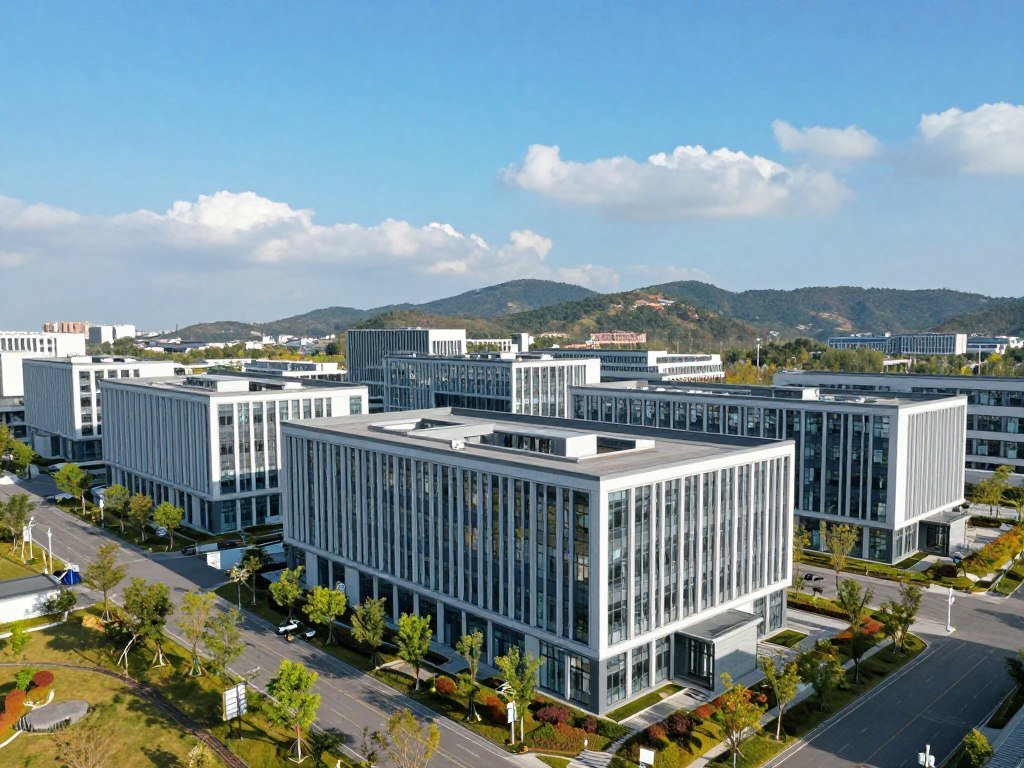
Why are AI data centers bad? They can concentrate resource use in one area, while their climate effects depend on the electricity supply. Neither impact is identical everywhere.
Check whether a reported count refers to individual buildings or campuses before comparing totals.
How Much Electricity Do AI Data Centers Use, and What Does It Mean for Emissions?
U.S. data centers used 176 TWh of electricity in 2023, and that demand could take a much larger share of the national total by 2028. The trend is significant, though projections depend on future growth and efficiency.
Electricity use and emissions are different measures. The location and time of demand affect which power plants supply it, and that mix shapes emissions.
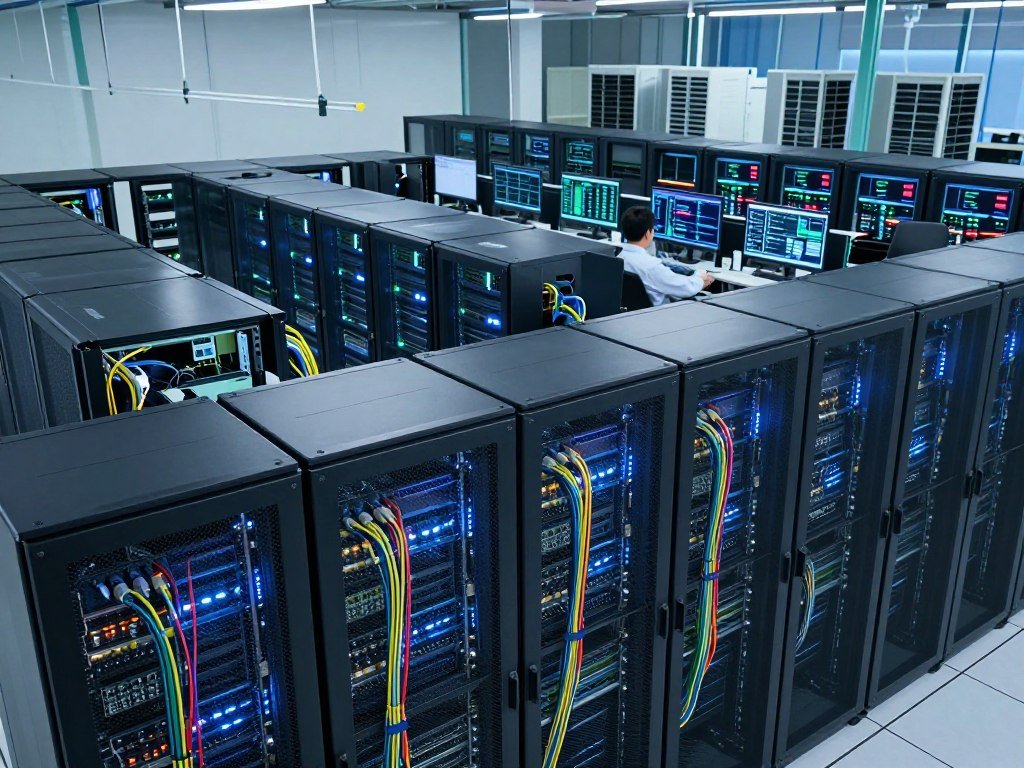
U.S. and global electricity demand
U.S. data centers used 4.4% of national electricity in 2023. Globally, data centers used about 415 TWh in 2024, or about 1.5% of electricity consumption.
| Geography and year | Electricity measure | Share of total electricity consumption |
|---|---|---|
| U.S. 2023 | 176 TWh | 4.4% |
| Global 2024 | 415 TWh | 1.5% |
| U.S. 2028 projection | Not stated as a single amount | 6.7%-12.0% |
The U.S. Department of Energy report gives the national use and 2028 projection. Some large data centers under construction are slated to draw peak power of 3 GW or more.
A ChatGPT query can use about five times the electricity of a simple web search. That estimate compares one query with one search, not every AI task. The 2021 GPT-3 training estimate is a model-specific example, not a benchmark for current models.
AI infrastructure also includes chips, servers, networking, and cloud capacity. Readers weighing the companies building AI infrastructure should keep investment estimates separate from electricity measures.
Why the grid changes emissions
A facility using power on a coal- or gas-heavy grid can drive more greenhouse gas emissions than one drawing low-carbon electricity. The grid mix can change by place and hour.
When added demand is met with fossil-fueled supply, air and water pollution can rise along with climate emissions. Efficiency helps, but its effect depends on whether cleaner generation meets the remaining demand.
A clean-power claim is most useful when it reflects the electricity available where and when the facility actually draws power.
How Much Water Do AI Data Centers Use?
U.S. data centers used water both at their sites and indirectly through the electricity that powered them in 2023. Those are separate flows, and each can affect a different watershed.
Direct water use reached about 66 billion liters, while indirect use through electricity generation reached an estimated 800 billion liters. Local conditions shape the risks behind both figures.
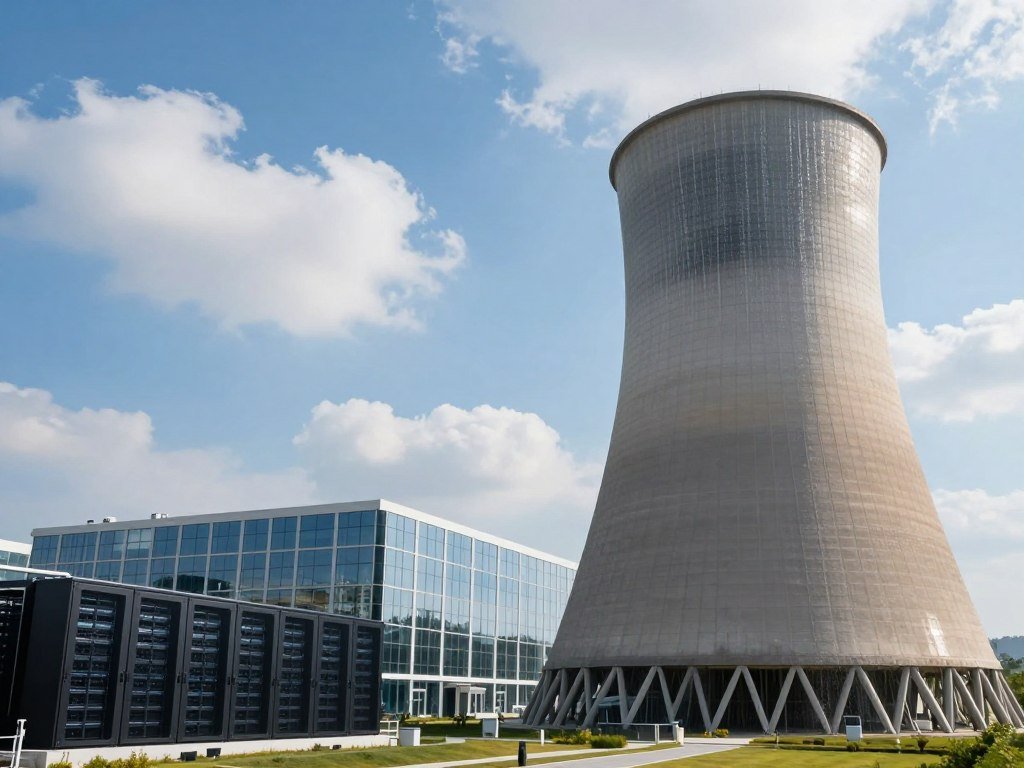
Cooling water drawn at the facility
Direct water use means water used at the facility, often for cooling. U.S. data centers directly consumed about 21.2 billion liters in 2014, rising to about 66 billion liters in 2023.
Evaporative cooling sends heat away by turning water into vapor. About 80% of the water drawn for this process evaporates, while 20% is discharged. Evaporated water does not return to the same local watershed.
Reclaimed water can still leave a watershed through evaporation. Data centers do not automatically pollute water, but withdrawals can stress a watershed. Discharge quality depends on the cooling system and how operators manage it.
Water used to generate electricity
Indirect water use is water consumed upstream to generate the electricity a facility uses. Its impact reaches beyond the campus, but remains tied to the basin supplying power plants.
Cooling systems account for about 40% of a data center’s electricity use. Water needs also depend on climate, available water, facility size, IT rack and chip density, and GPU chips.
Roughly two-thirds of data centers built since 2022 were in water-stressed regions. A planning mistake is to call an area water-secure based only on annual supply, without checking hot, dry periods and local basin conditions.
Assess water risk at the watershed level, including peak-season demand, rather than relying only on a facility’s annual total.
What Happens to Land and Hardware Across a Data Center’s Life Cycle?
A data center’s environmental footprint begins with the materials and land needed to build it, not with its first day of operation. The full life cycle includes construction, daily use, and replacement.
Four stages shape the footprint:
- Mineral extraction and component manufacturing.
- Building construction and grid construction.
- Operation and cooling.
- Hardware replacement and e-waste.
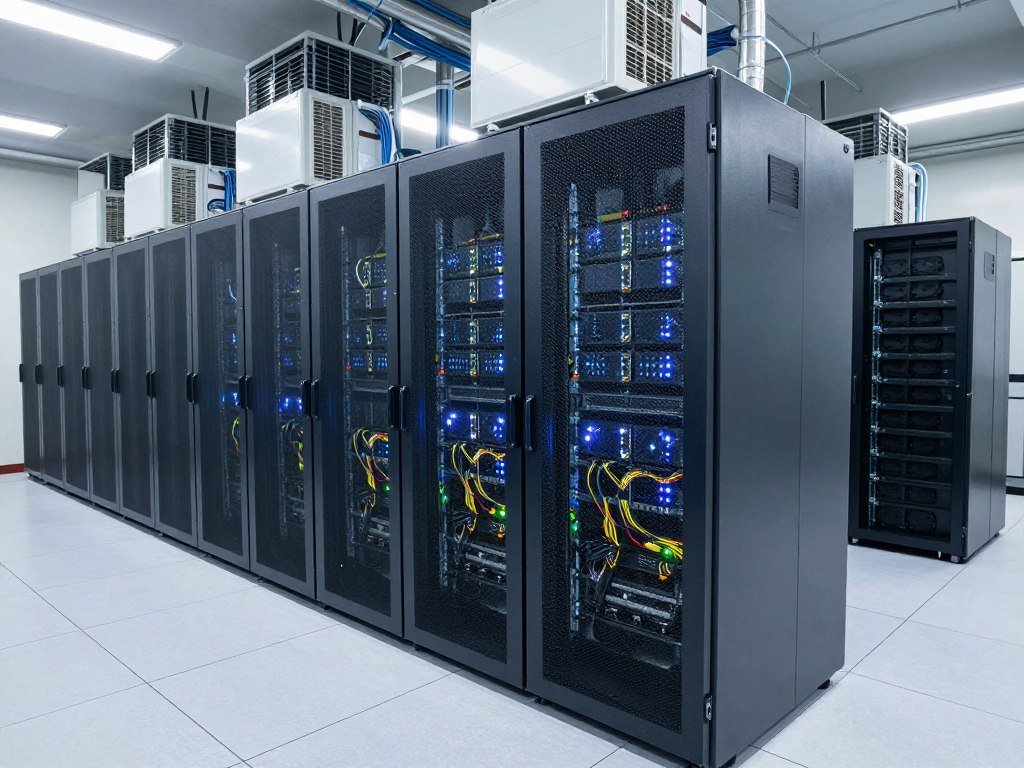
Land conversion can affect farms and habitat, while new power lines need transmission corridors. Buildings, backup power systems, cooling equipment, and grid infrastructure all require materials and construction.
NVIDIA, AMD, and Intel shipped an estimated 3.85 million GPUs to data centers in 2023, up from about 2.67 million in 2022. Chip production also needs water: a typical chip factory uses about 10 million gallons of ultrapure water daily. Making one gallon of ultrapure water takes about 1.5 gallons of tap water.
Hard drives typically last 3-5 years, and an estimated 20-70 million U.S. drives reach end of life each year. Other parts have different replacement cycles, so one lifespan does not fit every component.
Readers tracking companies supplying AI chips and servers can also consider the materials needed across that supply chain.
Treat hardware replacement and disposal as part of the facility’s footprint, not as a separate technology problem.
How Do Data Centers Affect Nearby Communities?
A nearby resident may experience the steady sound of cooling equipment even when a data center is not using its backup generators. Distance and conditions matter to what people hear and feel.
Noise and air effects depend on the equipment running, its location, and how sounds combine. Some data centers sit within 50 feet of homes, while noise can carry hundreds of feet.
Noise and backup generation
- Cooling systems.
- Air chillers.
- Fans.
- Diesel generators.
- Onsite gas turbines.
Thousands or tens of thousands of servers can combine to produce sound levels up to 96 decibels. Industrial-sized diesel generators can reach 105 decibels, and cooling towers can emit up to 70 dBA within 400 feet.
Noise above 65 decibels can increase stress and blood pressure; sounds above 85 decibels are considered harmful to ears. These measurements describe sound levels, not a universal boundary that guarantees health or safety.
Backup and primary power can cause local air pollution when they burn fuel. That does not mean every facility runs generators continuously. Community groups have raised concerns about land, water, and power for projects such as the planned Google data center near Visakhapatnam.
Waste heat and neighborhood exposure
In Phoenix, estimates found data center waste heat could raise nearby land-surface temperatures by as much as 16°F and air temperatures by up to 4°F. Effects were observed as far as half a kilometer.
Those estimates describe a specific place, not every site. Even a smaller local rise can add to existing urban heat exposure for people who already face hot streets and limited shade.
Ask for noise measurements at the nearest homes, not just at the facility boundary.
What Should a Community Check Before Approving a Data Center?
Before approving a project, a community can check who issues its air permit and who pays for the grid upgrades it requires. Both decisions matter to nearby residents and ratepayers.
Permits set rules for certain emissions, while local review can address land use and costs. The details depend on the equipment and the project’s power needs.
Air permits and generator rules
Most data center air permits come from state or local air agencies under approved programs that meet federal requirements. The EPA’s Clean Air Act rules for data centers cover stationary engines and combustion turbines.
| Equipment or use | Federal rule | Permit authority |
|---|---|---|
| Emergency-generator testing | Up to 50 non-emergency hours per calendar year; covered 2026 DOE-order hours do not count toward that limit | State or local air agency |
| Stationary engines | Applicable Clean Air Act emissions and hazardous-air-pollutant standards | State or local air agency |
| Stationary combustion turbines | Applicable Clean Air Act emissions and hazardous-air-pollutant standards | State or local air agency |
The EPA allows certain emergency generators to run up to 50 hours per calendar year for non-emergency uses, such as testing. Under 2026 DOE emergency orders, covered stationary emergency engines’ hours under those orders do not count toward that limit.
Grid costs, land-use review, and local benefits
As of October 27, 2026, 121 U.S. campuses were planned at 1 GW or more. A service area may share new grid costs while a town receives tax revenue, so residents should review cost allocation, demand, land conversion, and promised public benefits together.
A University of Michigan policy report discusses concerns about utility costs and cost-shifting in data center growth and local costs. More than 140 local groups blocked or delayed over $60 billion in proposed investments in roughly a year. That shows organized scrutiny, not that every project has the same effects.
Northern Virginia, especially Ashburn, is the best-known U.S. data-center hub. Rankings depend on whether counts cover buildings or campuses. AI data centers are bad for communities when burdens build up without adequate review or meaningful local benefits.
Compare projected power demand with the facility’s enforceable commitments, not only its announced capacity.
How Can Data Centers Reduce Their Environmental Impact?
The most credible improvements combine efficient operation, suitable siting, and power that is clean when and where it is used. No single purchase makes a facility sustainable.
Operators can take four practical steps:
- Improve computing and cooling efficiency.
- Procure clean electricity that matches the facility’s location and operating times.
- Choose cooling and water sources suited to local basin conditions.
- Report comparable carbon, water, reliability, and life-cycle impacts.
Cooling choices involve tradeoffs. Closed-loop cooling can lower direct water loss but use more electricity. Immersion cooling is not yet widespread, largely because of cost.
Efficiency gains can be overtaken when total demand grows faster than those gains.
The 2026 United Nations University Institute for Water, Environment and Health report considers AI’s carbon, water, and land footprints together. That wider view helps companies show how one change affects several resources.
Ask for public metrics that show both per-unit efficiency and the facility’s total resource demand.
Conclusion
AI data centers are not environmentally neutral, and their effects depend on choices made before and during operation. Harm is not inevitable, but power, water, siting, and hardware decisions shape the outcome.
Local benefits matter too. A project’s promises have more value when residents can track them over time and compare them with actual use.
Check local planning documents for the project’s electricity demand, water source, air permit, and community noise assessment. Start with the project’s local water and power plans, then ask whether its commitments are measurable and enforceable.
FAQ
What are the five major environmental problems?
The five major problems are electricity demand and emissions, water use and watershed stress, land and habitat conversion, material extraction and e-waste, and local noise, air pollution, and heat. Their size depends on the site and its power supply. A campus in a water-stressed area can raise different concerns than one using a less water-intensive system.
What are 5 negative effects of using AI?
AI can add electricity demand, increase emissions when fossil fuels supply that power, raise water demand, speed hardware and land impacts, and concentrate burdens near communities. These effects do not come from every task in equal amounts. A small tool use differs from building and running large models, and the infrastructure behind each task matters.
Do data centers hurt property value?
Data centers do not always raise or lower nearby property values. Local market conditions, noise, land use, and new infrastructure can affect buyer interest in different ways. Check comparable local sales near similar facilities, then compare them with homes farther away. A single nearby sale cannot show what caused a price change.
How far does pollution travel from a data center?
Air emissions, noise, and heat travel in different ways, so there is no single distance. Data center noise can be heard hundreds of feet away; cooling towers can emit up to 70 dBA within 400 feet. In Phoenix, heat effects were observed as far as half a kilometer. Wind, weather, and site design affect local exposure.
Is IT a bad idea to live near a data center?
Living near a data center is not automatically a bad choice, but the site’s conditions matter. Review its noise assessment, air permits, backup-power use, water conditions, and distance to homes. A facility with limited noise and managed emissions may affect neighbors differently from one with frequent generator use or heavy nearby infrastructure.
How far away should you live from a data center?
No single setback guarantees the same experience at every data center. Noise and air assessments, local standards, equipment, and nearby homes all matter. A home beside a cooling system may face a different sound level from one farther away. Ask how measurements were taken and whether they reflect typical and peak operating conditions.
Do data centers emit EMF radiation?
Electrical equipment in data centers produces non-ionizing electromagnetic fields, not radioactive emissions. Exposure depends on the equipment, shielding, and distance from it, so there is no universal property-line level for every site. EMF is different from the air pollution that can come from fuel-burning generators or turbines.