
The best statement is the one that accurately explains how both facts fit together, not one that repeats just one fact. The right answer depends on the paired statements and the answer choices in the question. A shared word or subject can make an option look relevant, but it does not prove that the option explains the connection. You need to compare what each fact says and what the proposed answer adds. Without the two facts or answer choices, no specific correct option can be named. A passage may show a cause, a link, a contrast, or another kind of connection. The wording matters because a small change can turn a careful explanation into an unsupported claim. This method gives you a clear way to judge the text, then uses examples to show how the same idea works in science questions. If the original question has answer choices, keep them beside the two facts as you compare their meaning.
Key Takeaways
- Use both facts to identify the connection.
- Do not name a specific answer without the paired statements.
- Match the strength of the answer to the evidence.
- Separate an observed association from a proven cause.
- Write the relationship in plain language before choosing.
How to Answer: Which Statement Best Explains the Relationship Between These Two Facts
Without the two facts, there is no way to identify which specific relationship the question tests. Both statements matter because an answer can sound right while describing only one. A multiple-choice question also needs its answer choices before you can identify a letter. Share the paired statements or the options for a specific answer.
A question needs two statements to compare, and a letter answer also needs the available choices. Without those details, you can still describe the likely task, but you cannot name its correct relationship. Read the text closely and notice whether each statement concerns the same subject, event, or process. Then explain the connection in your own words, rather than relying on a repeated term.

- Identify the subject each statement shares.
- Restate each statement in plain language.
- Decide what the first says about the second.
- Select the choice that preserves that exact connection.
A sound answer must explain both statements, not just repeat a detail from one.
A question without options can still be answered by naming the relationship, such as a cause, contrast, or association. It does not need a letter. This approach works for short classroom questions and longer arguments in a passage. The same word may appear in both statements, but that alone does not show how their ideas fit.
For example, two statements about rain may describe a change in soil and a change in plant growth. A useful answer explains how those facts connect, while a weak choice merely mentions rain again. Take enough time to preserve the direction of the connection: if the first fact says one thing rises as another falls, the answer should not reverse that pattern. Before choosing a letter, check that the answer accounts for both statements rather than just one.
How Can You Identify the Relationship Type?
Two facts can change together without one causing the other. Correlation describes an observed link, while other relationships may show cause, contrast, or comparison. A correlation coefficient is a number from +1.0 to –1.0 that indicates the strength and direction of the relationship between two variables. Correlation alone does not prove that one variable caused a change in the other.
A positive correlation means two variables move in the same direction; a negative correlation means they move in opposite directions. The closer the coefficient is to either end, the stronger the relationship. A coefficient near zero shows little or no linear relationship. The number describes a pattern, not its cause.
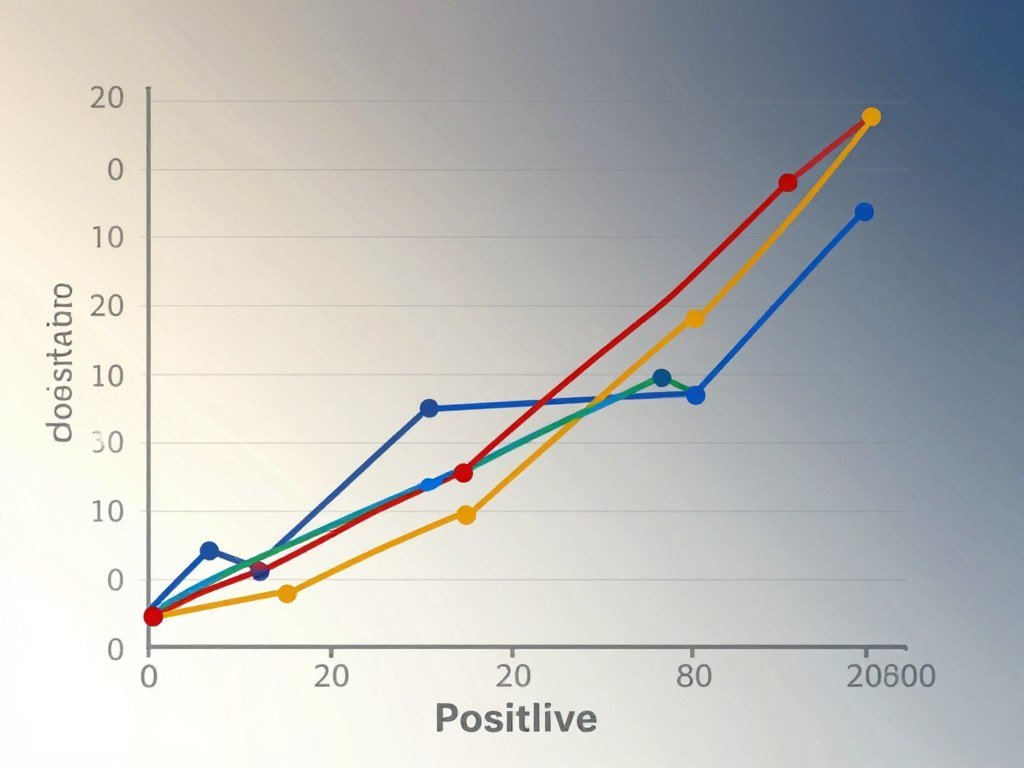
An overview of correlation coefficients explains how the number reflects strength and direction. An association can exist with or without a causal link. A confounding variable, an unmeasured influence on two variables, can help explain why they appear connected.
Correlation Shows a Link, Not Necessarily a Cause
For example, two measurements may rise together because a third factor affects both. That pattern supports an association, but it does not show that either measurement caused the other. Strong analysis keeps the claim close to what the paired statements actually show.
Look for a Mechanism, Contrast, or Analogy
A causal mechanism describes how one event produces a change in another. A contrast points out a meaningful difference, while an analogy explains an idea through a familiar comparison. These links call for different answer choices, even when the facts share a topic.
| Relationship type | What the two facts show | What a matching answer choice says |
|---|---|---|
| Correlation | Two variables move together | The variables have an association |
| Causation | One change produces another | A mechanism links the events |
| Confounding | A third influence affects both | Another factor may explain the association |
| Analogy | Two situations share a pattern | A familiar case helps explain the idea |
A confounding variable can account for an association without making either observed variable the cause of the other. In a science text, check whether the evidence gives a mechanism or only records a pattern. Treat an answer that claims cause from correlation alone as stronger than the evidence allows.
How Do Laws, Theories, and Facts Relate?
A scientific law describes what happens, while a scientific theory explains why the pattern happens. Pattern is the key difference: a law summarizes an observed regularity, and a theory explains it. Facts are observations or established information, not explanations competing with theories.
Scientific laws differ from theories because laws describe patterns, while theories explain why those patterns occur. Facts differ from theories because facts report observations or accepted information; theories connect evidence into an explanation. A fact can support a theory, and new evidence can shape how scientists explain a pattern.
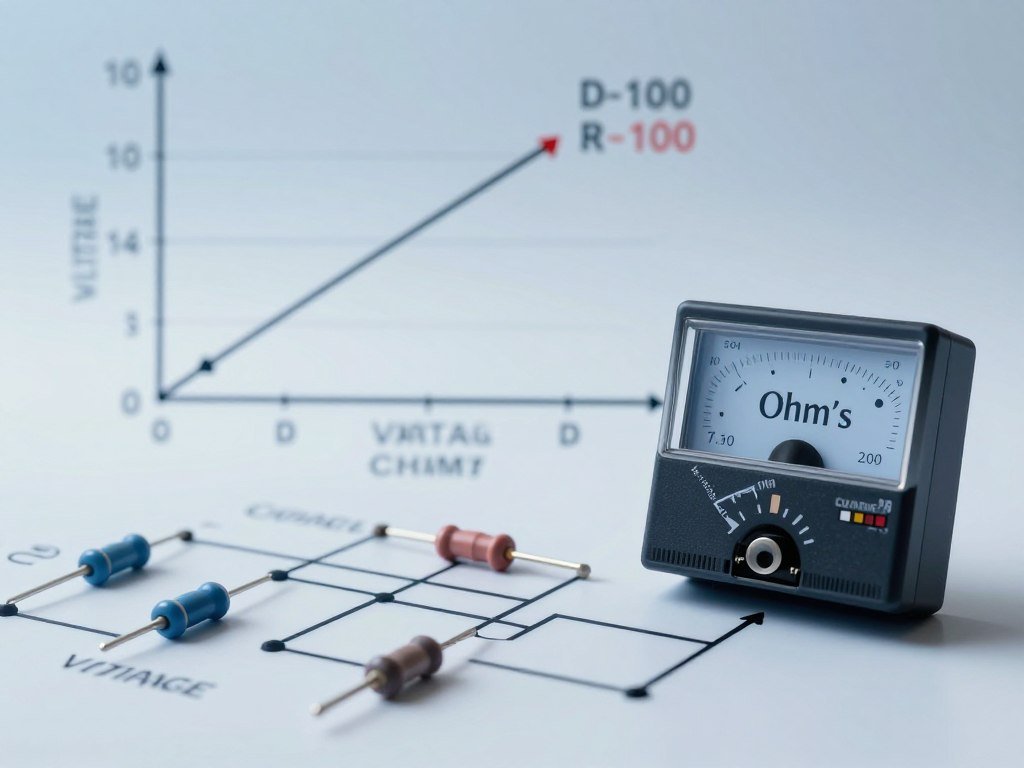
Ohm’s law relates voltage, current, and resistance in an electrical circuit. At the same voltage, higher resistance allows less current to flow. For instance, a resistance of 1 ohm allows 1 ampere of current when 1 volt is applied. That relationship gives the answer a clear condition: voltage must stay fixed.
One ampere means 6.241×10¹⁸ electrons, or 1 coulomb of charge, passing a point in a circuit each second. The definition of a scientific theory helps distinguish an explanation from a statement of a pattern. In an Ohm’s law question, preserve the condition that voltage stays the same when comparing resistance with current.
What Do Cell and Science Examples Show About Structure and Function?
A cell membrane’s structure helps control which materials can enter or leave a cell. Its parts support that job in different ways: the lipid layer limits passage, and proteins select what can cross. The membrane is made mainly of a phospholipid bilayer, with cholesterol and proteins also present.
Only relatively small, nonpolar materials pass through the lipid bilayer unaided. Channel proteins allow selected materials, including certain ions, to move into or out of a cell. These examples show how structure supports a function without making every substance pass through in the same way.

Active transport uses energy to move substances across a membrane. That differs from unaided passage through the bilayer, which does not require energy. The OpenStax cell membrane explanation describes the bilayer, channel proteins, and transport across the cell membrane.
Science and technology also have a two-way relationship. Science supplies knowledge, designs, research tools, methods, and skills that technology can use. Technology supplies instruments and techniques that help scientists investigate new questions. Neither direction needs to be reduced to a single shared topic word.
| Example | First fact | Second fact | Relationship |
|---|---|---|---|
| Cell membrane | Lipid bilayer limits unaided passage | Channel proteins let selected materials cross | Structure controls movement |
| Science and technology | Science provides knowledge and methods | Technology provides tools for research | Each supports the other |
| Nervous and muscular systems | The brain controls muscle movement | Muscles respond to brain signals | Control links the systems |
For a structure-and-function question, name the feature and the specific job it supports or limits. For a science-and-technology question, include the contribution in both directions. Match each example to the specific job its structure or relationship makes possible.
How Can You Eliminate Answer Choices That Do Not Fit?
A tempting answer can sound relevant and still fail to explain what the two facts have in common. Check the fit by seeing whether a choice includes both facts and keeps their direction intact. An answer that leaves out one fact cannot explain the full relationship.
Read the choice beside the paired statements, not by itself. If the facts describe water leaving the ground and later returning, the answer should preserve both parts. A choice that mentions evaporation but ignores the return changes the idea. The same check works for arguments in a passage, where one missing detail can shift the claim.
Check Whether Both Facts Are Represented
An analogy compares an idea with a familiar situation. Water evaporates from the ground and returns to the ground, illustrating a net-neutral relationship. A matching analogy keeps the balance between what leaves and what comes back, rather than suggesting a lasting gain or loss.
Reject Choices That Change the Logic
Some distractors use familiar words but alter the logic. Cross out choices that:
- Repeat only one fact.
- Change the direction of the relationship.
- Claim a cause the facts do not establish.
- Introduce an unrelated detail.
An analogy must preserve the relationship, not merely share its broad subject.
A choice about a different water process is not a valid analogy just because both involve water. In practice, test whether the example keeps the same pattern and result. Cross out any option that changes a neutral result into a gain or a loss.
Conclusion
The best answer preserves the connection the facts actually support. That match matters more than a familiar word or a confident-sounding claim. A strong choice represents both facts and does not claim more than their evidence shows.
Before comparing the options, write one short sentence that describes the link in plain language. This gives you a steady point of reference when choices use complex wording or add extra details. Then pick the choice that matches your sentence without changing its meaning. Put the two facts into one plain-language sentence, then choose the option that says the same thing without adding a claim.
FAQ
How do laws differ from theories?
A scientific law describes an observed pattern, while a scientific theory explains why that pattern happens. A law can state how current changes with resistance under fixed voltage. A theory accounts for the process behind a pattern. Both rely on evidence, but they answer different questions. A law is not simply an early theory waiting to become an explanation.
How do facts differ from theories?
Facts are observations or established information, while theories explain patterns in evidence. A fact might report a measured result. A theory can connect many results and explain how they fit together. The two are not rival categories, and facts do not become theories by piling up. Facts can support, challenge, or help refine a theory.
How to describe association between two variables?
Describe whether the variables move in the same direction or in opposite directions, and avoid claiming cause from association alone. A positive association means both tend to rise or fall together. A negative association means one tends to rise as the other falls. The description reports a pattern. It does not, by itself, identify what caused that pattern.
Which of the following is an accurate description of the relationship demonstrated in Ohm’s law?
At constant voltage, higher resistance means less current. The condition matters because changing voltage can also change current. Ohm’s law relates voltage, current, and resistance, so an accurate statement must preserve the condition named in the question. For example, with 1 volt applied, a resistance of 1 ohm allows 1 ampere of current.
What is a statement describing an observed phenomenon called?
A scientific law describes an observed pattern or what happens. It summarizes a regular result, such as a relationship among measurable quantities. A law does not explain why the pattern occurs; a scientific theory addresses that kind of question. In a test question, look for wording about repeated patterns or regular behavior when identifying a law.
Which statement best explains the relationship between structure and function?
The best statement explains how a structure’s features support or limit what it can do. The exact answer depends on the example. For a cell membrane, the lipid bilayer limits unaided passage, while channel proteins let selected materials cross. A good answer names the feature and its job instead of making a broad claim about all structures.
Which statement best explains the relationship between science and technology?
Science contributes knowledge and methods to technology, while technology supplies tools and techniques for scientific investigation. The relationship works in both directions. Scientific ideas can guide the design of tools, and those tools can help researchers study new questions. An answer that describes only one direction leaves out part of the connection.
When energy is needed to force molecules across a cell membrane, _______ _______ is taking place?
Active transport is taking place when energy moves substances across a cell membrane. It differs from unaided passage through the lipid bilayer, which requires no energy. In cells, active transport can move substances against their concentration gradients. The key clue in the question is the need for energy, not simply the fact that molecules cross a membrane.