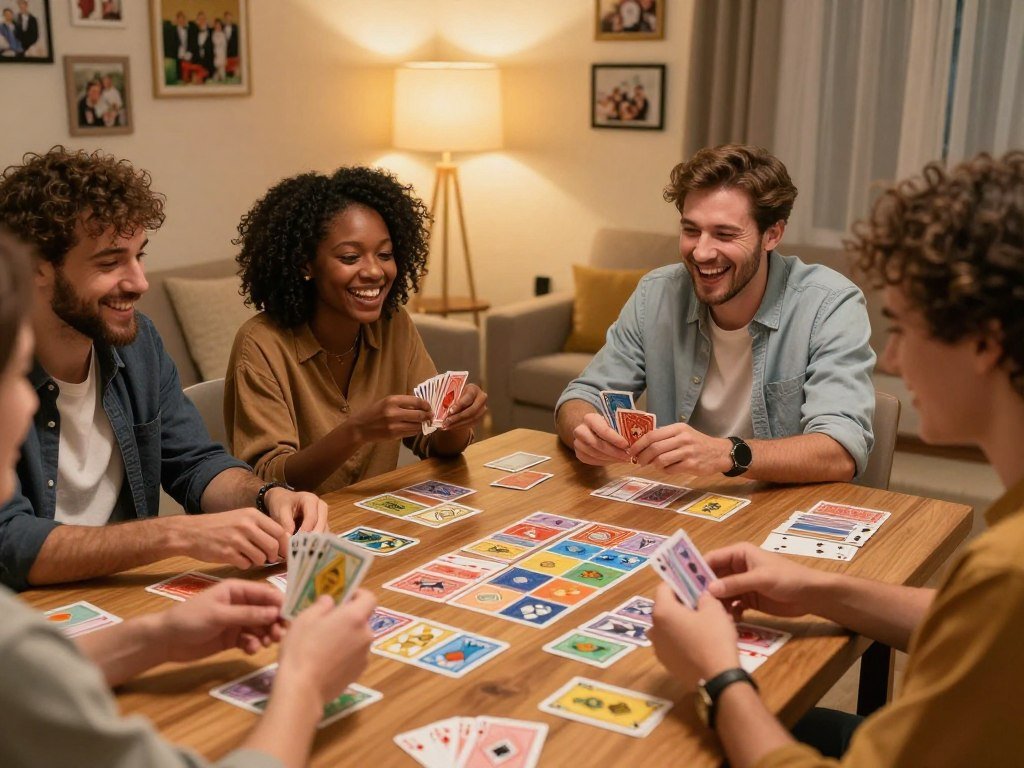
A lively game night can hinge on which best card games suit quick laughs, clever bluffs, or a longer strategy challenge. The right pick depends on who is playing and how they like to interact. Some groups want a family-friendly game with easy turns. Others prefer a party game, a quiet solo session, or a challenge that rewards careful planning.
This list covers quick picks, bluffing games, classic-deck favorites, and collectible games with player-built decks. You can use it to find a game that fits your group’s mood, experience, and available time. A familiar set of cards can work well, while a purpose-built deck can add new rules and actions. You do not need the most complex choice to make a good night; a clear goal and willing players matter more. A useful first step is to match the group’s size and mood before choosing a box or deck.
Key Takeaways
- Match the game’s player range to the people at your table.
- Pick quick turns for a casual party and deeper choices for a focused session.
- Check the rules and theme before game night.
- Classic card games can use a standard deck you already own.
- Trading card games add game-specific cards and deck-building choices.
How Can You Match a Card Game to Your Group?
Start by counting who will actually sit down, not who might arrive later. The box’s player range and play time offer a useful first check, but table mood matters too. Trick-taking is a card game format in which players contribute cards to a shared trick, and the highest eligible card wins it.
Choose a game whose minimum player count still works if one person drops out. These listed ranges show how different games fit different tables and time windows.
| Game | Listed players | Listed play time |
|---|---|---|
| Exploding Kittens | 2-5 | 15-20 minutes |
| The Resistance: Avalon | 5-10 | 30-45 minutes |
| Coup | 2-6 | 15-20 minutes |
| Sushi Go! | 2-5 | 15-20 minutes |
Choose a game whose minimum player count the group can meet even if one person drops out.
The Resistance: Avalon asks players to hide their aims and read one another, while Sushi Go! keeps choices centered on cards and combinations. A table that enjoys friendly accusations may welcome Avalon. A group that wants a calmer shared focus may prefer Sushi Go!
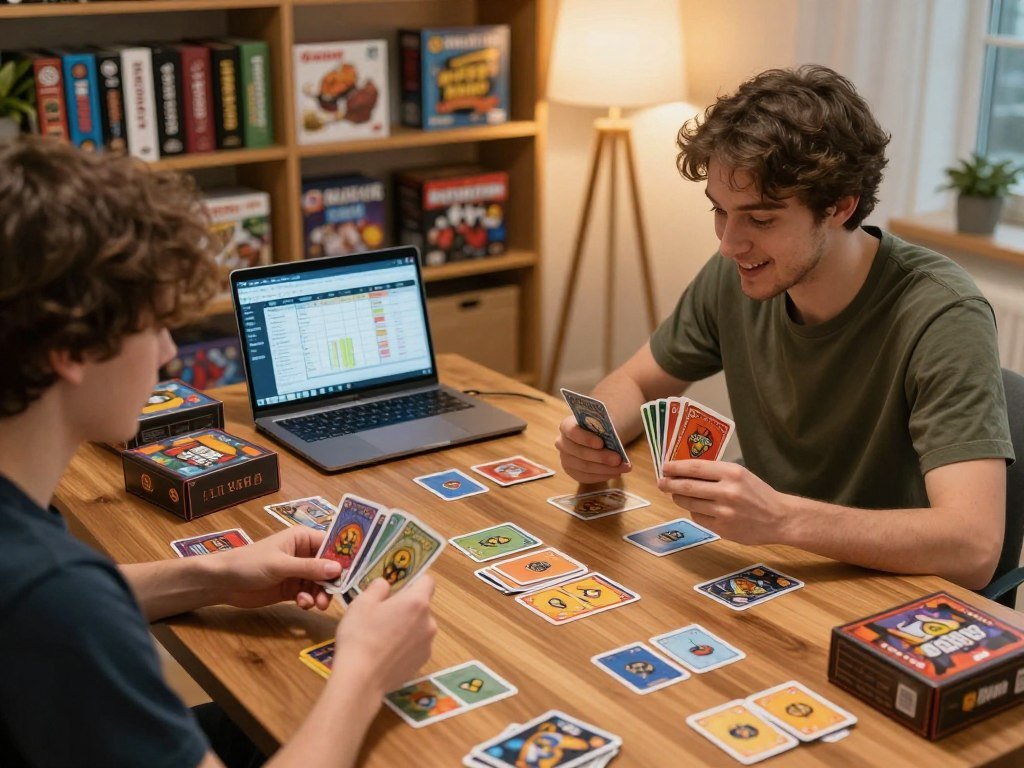
The maximum number on a box does not guarantee that every group size feels equally lively. Some games gain energy from more discussion, while others become harder to track as players join. A game’s listed time also describes a usual session, not the exact time every group will need.
Think about whether your players enjoy bluffing, deduction, or relaxed turns before settling on a title. A player who dislikes accusation may feel out of place in a hidden-role game, even when the group size fits. Leave enough room for a quick rules explanation, too, especially when several people are new.
Choose a game whose minimum player count the group can meet even if one person drops out.
Best Card Games for Friends by Play Style
Friends who want different kinds of fun can start with one of four simple matches: quick chaos, deduction, drafting, or solo play. The best card games for friends depend on whether the group wants to share a table or play independently. A quick choice can keep plans easy when the group has mixed experience.
Exploding Kittens is an accessible pick for a mixed group, while Avalon suits people who enjoy reading others. This short list pairs each mood with a fitting game.
| Group mood | Recommended pick | Why it fits |
|---|---|---|
| Quick, social fun | Exploding Kittens | Chaotic turns keep everyone watching |
| Hidden teams | The Resistance: Avalon | Players use deduction to spot spies |
| Card drafting | Sushi Go! | Players choose cards and build scoring sets |
| Independent play | Solitaire | One player works through a solo puzzle |
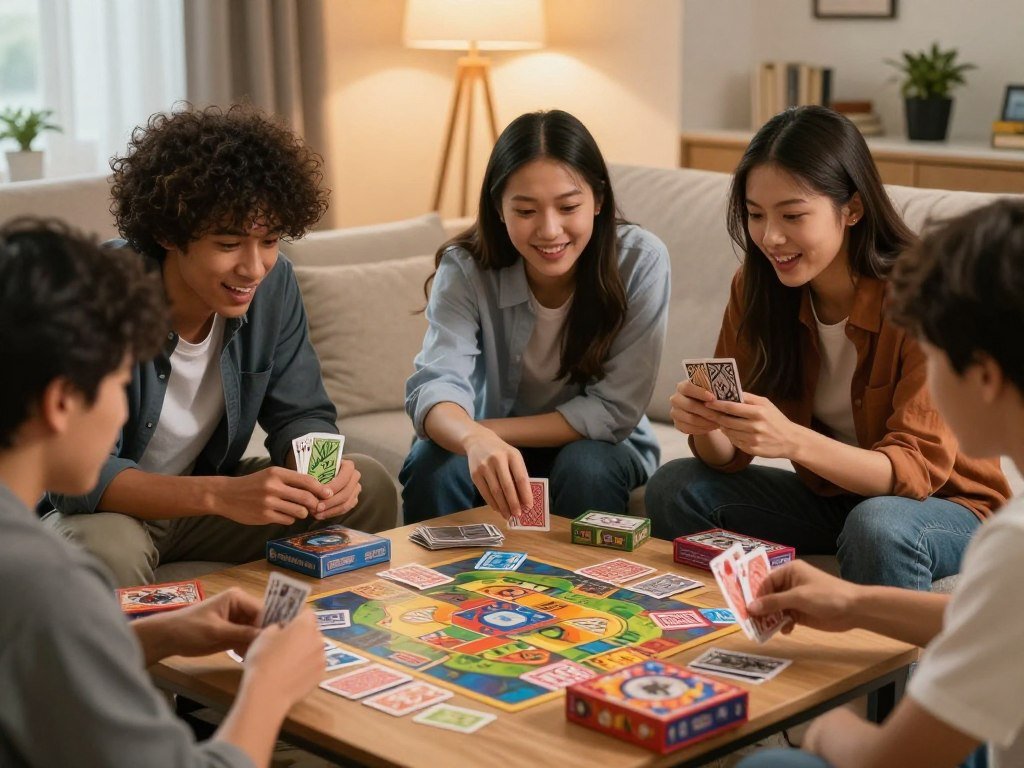
Exploding Kittens can help a new group get started without asking everyone to plan far ahead. Avalon gives conversation a bigger role, so it suits players who like to weigh claims and spot changing stories. Sushi Go! offers a shared table with less direct confrontation, since players focus on the cards they choose.
Solitaire is a different use case from a group game, not a substitute for one. It works when one person wants a quiet challenge between social sessions. If the friends are gathering to talk and play together, a solo game will not create the same shared experience.
A mixed group can also try a few sample turns before committing to a longer session. Let each person say which kind of play sounds fun, rather than assuming the most experienced player should choose. The first pick is more likely to land when new players feel welcome to ask questions.
For a first mixed-group pick, choose the format the least experienced player is most excited to try.
Which Quick Games Keep a Table Moving?
A quick game feels lively when each turn gives players an immediate decision rather than a long wait. Exploding Kittens makes a simple draw feel risky, while Flip 7 puts the choice to continue or stop in every player’s hands. The right amount of tension can keep a short session moving.
Push-your-luck games can frustrate players who dislike losing a round after a risky choice. Choose one when the group enjoys taking chances and laughing at a bad draw.
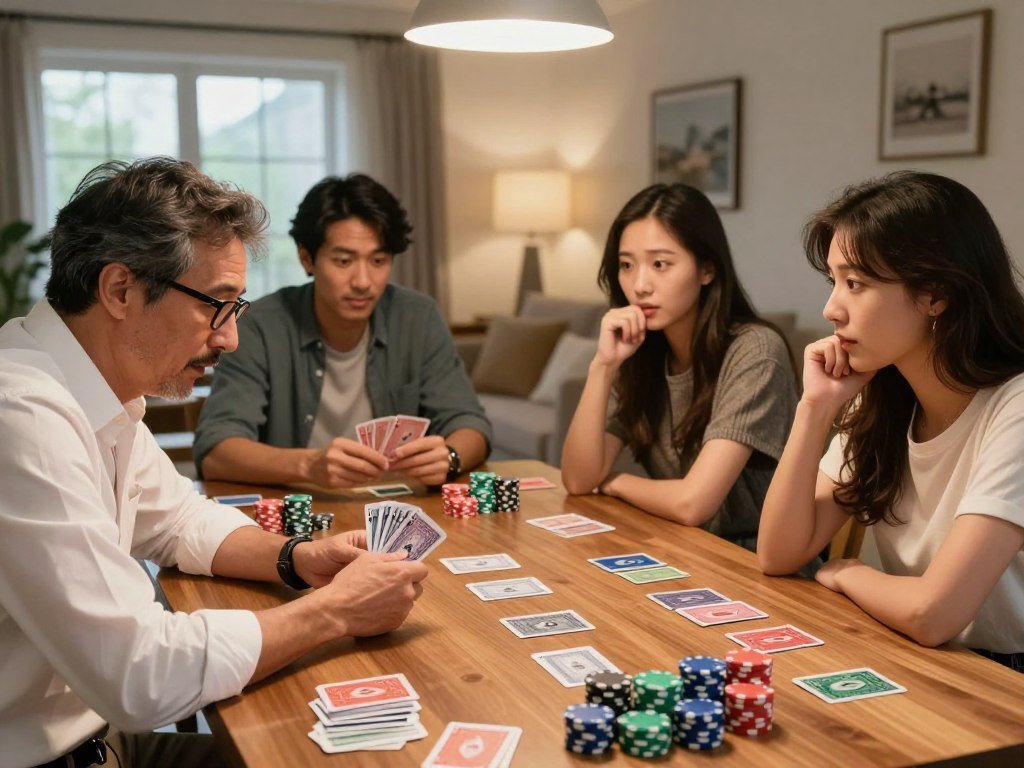
Exploding Kittens for immediate, chaotic turns
Exploding Kittens is a draw-and-avoid game. Players draw cards, hoping not to draw an Exploding Kitten; a player who draws one is eliminated unless they have a Defuse card. That clear threat gives each turn a quick burst of suspense.
The game works well when the group wants fast turns and does not mind a sudden change in who is still playing. One player can be out before the round ends, so the group should be comfortable with elimination. The Exploding Kitten and Defuse rule is easy to explain before the first draw.
Flip 7 and Flip 7 With a Vengeance for push-your-luck tension
Flip 7 asks each player to hit or stick. Players can keep taking cards to build a result, but repeated numbers make a player bust. The choice gives a round a clear rhythm: take another chance or protect what you have.
Flip 7 With a Vengeance adds more ways to affect the table. Some cards can discard or swap another player’s cards, while others can freeze a player out of a round. Those actions make the game less focused on each person’s own risk.
- Choose Exploding Kittens when a sudden elimination sounds funny to the group.
- Choose Flip 7 when players want to decide how far to push their luck.
- Choose Flip 7 With a Vengeance when the group welcomes extra interference.
A player who hates losing after a gamble may enjoy a game with more control over each turn. Before play, describe the risk plainly: a bold choice can pay off, but it can also end a player’s round. For a gentler first session, explain the basic risk choice before introducing optional variants.
Which Games Reward Bluffing and Reading People?
If the table enjoys testing each other’s stories, hidden roles turn conversation into the main event. Bluffing works best when players can challenge a claim without making the exchange feel personal. Coup and Avalon keep that social pressure in different forms.
Avalon needs at least five players, and social deduction works best when everyone is willing to accuse and be accused. Adults looking for a longer session can consider Secret Hitler if the group is comfortable with its theme.
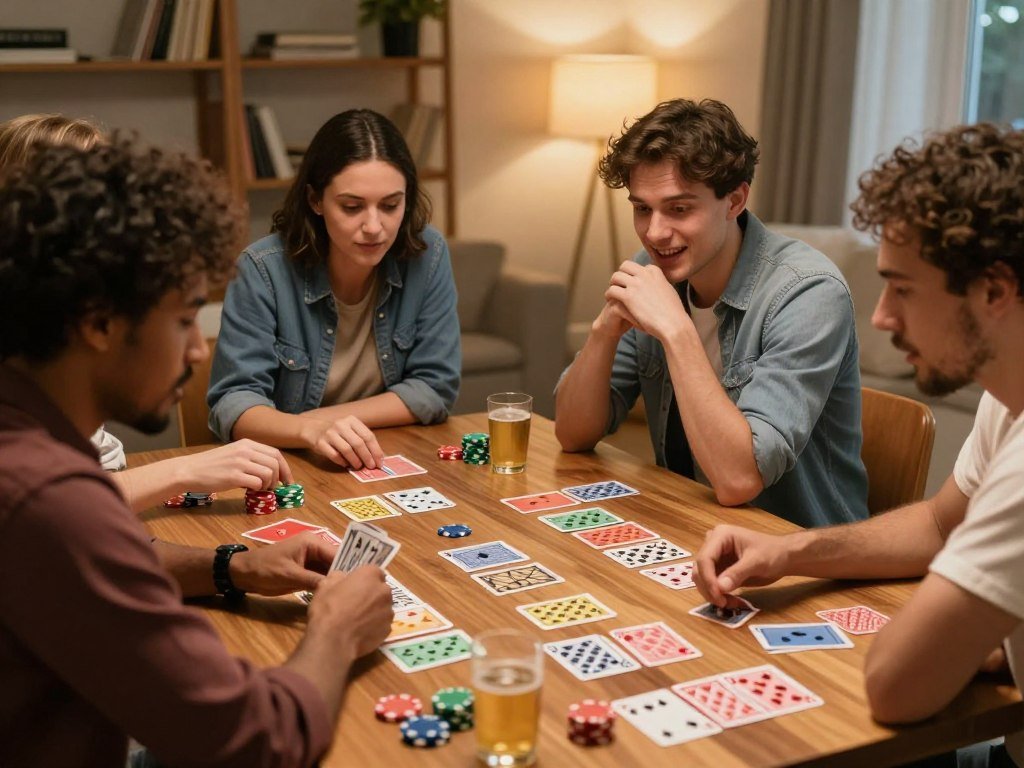
Coup for compact bluffing
In Coup, each player holds two hidden role cards. A player can claim an action tied to a role they do not hold, then another player can challenge that claim. The bluff-and-challenge loop makes each turn a test of nerve and judgment.
Players must decide whether to trust a claim, call it out, or protect their own position. A challenge can reveal a lie, but a wrong challenge can hurt the challenger. This creates sharp choices without requiring a large team or long round.
Avalon for team deduction
In The Resistance: Avalon, resistance players try to complete missions while hidden spies try to sabotage them without being identified. Players must work out whom to trust as teams form and missions unfold. The resistance wants success; the spies want to disrupt it quietly.
Avalon asks the whole group to follow the discussion, even when a player is not leading the current decision. People who enjoy comparing explanations and spotting small shifts may find that tension rewarding. Players who prefer quiet turns may find the debate tiring.
Adult groups looking for longer social deduction
Secret Hitler is a longer hidden-role option for groups willing to spend more time on discussion and deduction. It supports 5-10 players and has a listed play time of 45-75 minutes. Its theme can be uncomfortable for some people, so check the group’s comfort before choosing it.
Use this quick checklist to see whether social deduction fits the table:
- Players are willing to share claims and question them.
- The group can enjoy a mistaken accusation without holding a grudge.
- Everyone is comfortable with the game’s theme and tone.
People seeking the best card games for adults may enjoy these choices when the group likes debate as much as card play. A hidden-role game is less fun when one player dislikes being put on the spot. Agree on the group’s comfort with the theme before opening a hidden-role game.
Which Games Make the Most of Drafting and Sets?
These choices turn a hand of cards into a plan, whether players pass cards, hold a small set, or complete a challenge. Drafting asks you to choose from a changing group of cards, while set-building rewards useful combinations. Each format gives players a different way to look ahead.
A drafting game can feel less forgiving before a player learns which combinations score well. A short practice round can make the choices easier to read.
Sushi Go! for quick card drafting
In Sushi Go!, each player chooses one card from their hand and passes the remaining cards to another player. The cards players collect form combinations that set their scores. Every pick asks what helps your own plan and what you are willing to pass along.
The game rewards watching which combinations other players are collecting. If someone keeps taking a certain type of card, you may need to change your plan or deny them a useful choice. New players can focus on their own hand first, then notice the shared pattern as they learn.
Love Letter for a compact hand and shifting decisions
Love Letter uses a small deck of 16 cards. Its compact design keeps the focus on a few cards and the decisions they create, rather than a broad field of choices. Players can learn the core idea quickly, then pay closer attention to which cards may remain in play.
A small deck gives each card a clear role in the round. Players need to judge what to keep and what to play as the situation changes. The limited set of cards makes the game feel focused without requiring a large stack of components.
Phase 10 for a sequence of card challenges
In Phase 10, players work through ten challenges while drawing and discarding cards. Each challenge asks for a different card goal, so players build toward one task at a time. The staged structure gives the game a longer arc than a single quick round.
The changing goals can suit a group that likes to work toward a target, then start a new one. A player may need to adjust their hand when the current challenge is not coming together. Before the round begins, explain what the first challenge requires.
- Sushi Go! centers on choosing a card and passing the rest.
- Love Letter keeps decisions close with a 16-card deck.
- Phase 10 moves players through ten separate challenges.
Scoring combinations can seem opaque when a new player sees them for the first time. Show one example of a useful set before cards start moving, then let players make their own picks. Teach the scoring combinations before the first scored round so early choices feel purposeful.
Which Card Games Work Well for Families?
For a family table, a clear goal and a visible next move usually matter more than a deep strategy system. Simple choices let new players join without memorizing a long set of rules. Go Fish, Old Maid, and Crazy Eights all offer familiar turns with a standard deck.
A familiar game may still need simpler scoring or adult help for a very young player. Family members can explain one rule at a time, then let the next turn show how it works.
Go Fish for simple matching
Go Fish supports 2-6 players and asks them to collect sets of four matching cards. On a turn, a player asks someone else for a rank they need. If that person has the card, they hand it over; otherwise, the asking player draws from the deck.
The goal is easy to see because completed sets leave the hand. A player can also learn by watching which ranks others ask for. That small memory challenge gives the game more to notice without changing its basic matching idea.
Old Maid for hand-reading fun
Old Maid starts by removing one pair from the deck, leaving one card without a match. Players collect pairs and discard them, then draw from another player’s hand. The player left holding the unmatched card at the end loses.
Each draw creates a small moment of suspense. Players try to remember which cards they have seen and watch for clues in another person’s face. The game is playful, though a young child may need help keeping track of pairs.
Crazy Eights for changing suits
Crazy Eights supports 2-5 players. Players match the suit or rank of the card on top of the pile, and eights can be played as wild cards. A wild eight lets its player name the suit that the next person must match.
That one special rule gives players a way to shift the direction of their choices. A child who understands matching can often follow the main turn, then learn the wild-card effect with a quick example.
- Go Fish builds sets of four matching cards.
- Old Maid asks players to collect pairs and avoid the unmatched card.
- Crazy Eights matches ranks or suits, with eights as wild cards.
These games can use a standard deck, so families can start with cards already at home. A practice turn can help a young player understand asking, matching, or drawing before scores matter. Families planning a wider game night can also browse multiplayer games for family fun for a different kind of shared play.
Let the youngest player practice a sample turn before the first competitive round.
What Are the Strongest Two-Player Picks?
A two-person table can make every draw and discard feel consequential. Gin Rummy suits players who want to build useful card groups, while Texas Hold’em adds betting and shared information. The better fit depends on whether both players enjoy wagers and bluffs.
Poker is a poor fit when either player wants to avoid wagering or bluffing. Gin Rummy gives two players a direct contest without betting rounds.
Gin Rummy for set-building and discards
Gin Rummy is a two-player game in which players form sets and runs. A set groups cards of the same rank, while a run follows ranks in sequence within one suit. Players draw and discard as they try to improve their hand.
Each discard matters because the other player may take it. You must weigh the card that helps your own melds against the card you might give your opponent. That balance keeps the hand-building choices active until the round ends.
Texas Hold’em for betting and incomplete information
In Texas Hold’em, each player receives two private cards, and five community cards are dealt in stages. Players combine their private cards with the shared cards to make a hand. Betting rounds let each player stay in, raise, or fold as new information appears.
Because players cannot see an opponent’s private cards, they must judge the strength of their own hand and the choices across the table. Bluffing can be part of that judgment, but it is not required for every hand. Agree on whether bets are for points or real stakes before dealing any poker hand.
Which Games Fit a Four-Player Table?
Four players can make a trick-taking game feel social without turning every decision into a debate. Hearts pits players against one another, Spades pairs them into teams, and The Two Towers Trick-Taking Game adds a shared story challenge. Their central choices create very different table moods.
Pick Hearts for individual competition, Spades for partners, and The Two Towers for a themed chapter-by-chapter challenge. The table below shows how players are arranged and what they must decide.
| Game | Player arrangement | Central decision |
|---|---|---|
| Hearts | Four players, each on their own | Avoid hearts and the Queen of Spades |
| Spades | Usually four players in two partnerships | Bid how many tricks the team will take |
| The Two Towers Trick-Taking Game | 1-4 players working through chapters | Manage cards, including Orc cards that cannot win |
Hearts for avoiding penalty cards
Hearts is a four-player trick-taking game. Players try to avoid taking hearts and the Queen of Spades, which count as penalty cards. Each player must weigh the cards they can play against the risk of winning a trick they do not want.
The game creates a contest without fixed partners. Players watch what has already been played and decide when to shed a card that could cause trouble. It suits a group that likes individual results and careful timing.
Spades for partnership bidding
Spades is typically played by four players in two-player partnerships. Before play, each team bids how many tricks it expects to take. Partners then try to meet that shared target through their card choices.
The bid gives teammates a common goal, but each player still has to read the cards as they appear. A player may need to help a partner reach the target rather than chase a personal win. That team focus makes Spades a strong choice for pairs who enjoy planning together.
The Two Towers Trick-Taking Game for a compact cooperative challenge
The Two Towers Trick-Taking Game supports 1-4 players, has a listed age of 10+, and lists a 20-minute play time. Players move through chapters and manage the game’s special Orc cards. Orc cards cannot win tricks and can cause players to lose a chapter.
The game also accommodates a smaller table, including one player. That makes it a flexible option when the group changes or someone wants to try the challenge alone. The chapter structure gives the session a shared goal beyond winning individual tricks.
Choose Hearts for individual competition, Spades for partners, and The Two Towers when the group wants a themed chapter-by-chapter challenge.
Which Games Add Scoring and Planning?
A score-focused game suits players who like calculating the value of a hand as well as playing it. Play Nine uses golf-style scoring across several rounds, while Cribbage adds arithmetic and progress on a board. Both reward attention to the score as play unfolds.
Cribbage’s board adds a component beyond the cards, so it is not the lightest travel choice. Pick it when the group welcomes a little counting with its card play.
Play Nine for golf-style card scoring
Play Nine is a multi-round math game based on golf scoring and uses a deck of cards. Players compare card values and aim for a lower score across the rounds. Each hand matters, but the full result builds over more than one deal.
This format can appeal to players who enjoy tracking a score as it changes. The golf idea gives the scoring a familiar shape, even for someone learning the game. It also creates a reason to make choices with later rounds in mind.
Cribbage for arithmetic and pegged points
Cribbage uses combinations of cards to score points, then tracks progress with pegs on a scoring board. Players count the value of different combinations and work toward a target of 121 points. The board makes each score visible as the match moves along.
The counting is part of the appeal, though it can slow down a first game while players learn the combinations. A more experienced player can help check the count without taking over the hand. The board and pegs also add pieces to pack and set up.
- Choose Play Nine for multi-round golf-style scoring.
- Choose Cribbage for card combinations and pegged progress.
- Bring the Cribbage board and pegs along with the cards.
Play Nine fits players who want score changes without a separate board. Cribbage suits a group that enjoys counting and wants to watch progress move across the track. Choose Play Nine for golf-style scoring or Cribbage when the group wants the extra arithmetic and board.
Can You Play a Card Game Alone?
Yes, Solitaire gives one person a complete card-playing challenge without needing an opponent. Solitaire, also known as Patience, asks you to move cards onto four foundation piles in ascending order by suit. The aim gives a solo session a clear path.
Some solo card games depend on a specific deal and may not be winnable. A failed layout does not always mean you made a mistake.
Different Solitaire variations change the challenge. Klondike offers a familiar setup, while Spider and FreeCell use different ways to arrange and move cards. Each version asks you to plan around the cards you can reach.
Solo play can fit a quiet break when no one else is ready to sit down. It also lets you take time over a choice without waiting for another player. Choose a variation whose setup and difficulty suit the time you have.
What Makes a Trading Card Game Different?
A trading card game uses game-specific cards rather than dealing from one shared standard pack. Deck-building lets players choose cards to make a deck that follows that game’s rules. Magic: The Gathering and Pokémon are well-known trading card game product lines.
Collecting and customizing cards can add a separate commitment beyond learning how to play. The extra choices appeal to players who want to shape a deck around their plans.
A boxed card game usually comes with a fixed deck designed for its rules. A trading card game gives players game-specific cards and choices about which cards to use together. The deck itself can change from one player to another.
That freedom can make each player’s deck feel personal. It can also mean learning card effects and making choices before a match begins. Choose this format when customizing a deck is part of the appeal, not an extra chore.
Which Trading Card Lines Lead Marketplace Sales?
For Q3 2026, Magic: The Gathering ranked first by gross merchandise value among trading card game product lines on TCGplayer Marketplace. The next four were Pokémon, One Piece Card Game, Yu-Gi-Oh!, and Riftbound. The ten leading lines are listed below in order.
These are marketplace sales rankings, not direct rankings of skill, community size, or global play frequency. Gross merchandise value ranks the dollar value of items sold on that marketplace during the quarter.
- Magic: The Gathering
- Pokémon
- One Piece Card Game
- Yu-Gi-Oh!
- Riftbound
- Disney Lorcana
- Gundam Card Game
- Pokémon Japan
- Union Arena
- Dragon Ball Super Fusion World
Riftbound rose from sixth place in the previous quarter to fifth. Disney Lorcana moved from fifth to sixth, while Gundam Card Game climbed from eighth to seventh. Pokémon Japan fell from seventh to eighth.
| Q3 rank | Product line | Previous-quarter rank |
|---|---|---|
| 5 | Riftbound | 6 |
| 6 | Disney Lorcana | 5 |
| 7 | Gundam Card Game | 8 |
| 8 | Pokémon Japan | 7 |
| 9 | Union Arena | 11 |
Union Arena rose from eleventh to ninth, while Dragon Ball Super Fusion World moved from ninth to tenth. The quarter’s order shows which product lines led sales on this marketplace, but it does not tell you which game your own group will enjoy.
Treat this ranking as a marketplace sales snapshot, not a universal measure of which game a group will enjoy most.
How Can You Teach a New Game Without Losing the Group?
Teach the win condition and one ordinary turn before covering rare exceptions. One clear example helps players understand what to do with the cards in their hands. Go Fish and Crazy Eights both use simple matching decisions that are easy to show.
Avoid explaining every possible exception before players understand the basic turn. Too many rules at once can make a simple game feel harder than it is.
Start with the objective: what does a player need to collect, match, or avoid? Then demonstrate one normal turn with the cards on the table. In Go Fish, show how a player asks for a rank; in Crazy Eights, show a suit or rank match.
A standard deck has 52 cards divided into four suits. That familiar pack makes it easy to show a real hand and the next move. Add an unusual rule only when it comes up during play, so players can connect it to a clear situation.
Pause after the first practice turn and ask players to restate what they are trying to do.
Do You Need a Standard Deck or a Boxed Game?
Use a standard deck when flexibility and low setup matter more than game-specific components. Many classic games use regular playing cards, while a boxed game may rely on special cards or pieces. Solitaire can be played with a standard deck.
A standard deck has four suits with 13 ranks in each suit. It is handy to pack, but it cannot supply every custom action or component a boxed game may need.
Exploding Kittens uses a game-specific deck, with cards made for its own rules and effects. A regular pack cannot replace those cards without changing how the game works. Check what comes in the box before assuming that a deck alone is enough.
A standard pack leaves room for many games without a separate box. A purpose-built game can offer actions that regular suits and ranks cannot show. Check the components list before packing a boxed game for travel.
How Should You Check Age Fit and Theme?
A game can fit the group’s player count and still be the wrong choice if its theme makes someone uncomfortable. Check both the listed age guidance and the subject matter before play. A group may prefer a lighter theme even when everyone meets the age label.
Age labels are a starting point, not a guarantee that every player will enjoy the theme. Exploding Kittens is listed for ages 7+, and Sushi Go! is listed for ages 8+.
The Resistance: Avalon and Coup are listed for ages 13+. Secret Hitler is listed for ages 17+. Those labels can help families make an initial choice, but a player’s comfort with the subject still matters.
Ask about theme comfort before game night rather than after the first deal.
A person may enjoy the rules but dislike the setting or tone. Give everyone a chance to say what they prefer before choosing a game. Ask about theme comfort before game night rather than after the first deal.
Conclusion
The best match is the one your group is ready to play, not necessarily the one with the most complicated rules. For a mixed group, start with a short option that is easy to explain. Choose a more focused game when everyone already shares an interest in bluffing, strategy, or deck-building.
You can test a game with cards you already own or borrow a box before making it part of your collection. Pick one game from the shortlist, check that everyone is comfortable with its rules and theme, and schedule a first round.
FAQ
What are the 10 most popular card games?
The ten leading trading card game product lines by Q3 2026 gross merchandise value on TCGplayer Marketplace were Magic: The Gathering, Pokémon, One Piece Card Game, Yu-Gi-Oh!, Riftbound, Disney Lorcana, Gundam Card Game, Pokémon Japan, Union Arena, and Dragon Ball Super Fusion World. That order measures sales value on one marketplace, not the ten most-played card games overall.
What is considered the best card game?
Exploding Kittens is a good first pick for a mixed casual group, while Avalon suits people who enjoy social deduction. Gin Rummy offers a strong two-player choice, and Solitaire works for solo play. The best fit depends on the number of players and the kind of interaction they enjoy. A simple game can be a better choice than a complex one when several people are new.
What is the world’s #1 card game?
Magic: The Gathering ranked first by gross merchandise value among trading card game product lines on TCGplayer Marketplace in Q3 2026. That is a specific marketplace sales measure, not a universal global title. Sales value does not show how many people play a game or how often they meet. The most familiar or best-loved game can differ from one group to another.
What is the most famous playing card game?
Poker, especially Texas Hold’em, is a widely recognized playing-card game. That familiarity does not make it a measured worldwide popularity ranking. Texas Hold’em combines private cards with shared community cards and betting rounds. It may not suit players who want to avoid wagering or bluffing, so agree on the stakes before dealing.
What is the difference between a standard-deck game and a trading card game?
A standard-deck game uses a shared pack of regular playing cards, with suits and ranks that work across many games. A trading card game uses game-specific cards and rules for building decks. Magic: The Gathering and Pokémon are examples. Players can customize their decks, though collecting cards and learning their effects adds work beyond learning one fixed game.
Are trading card game sales rankings the same as player popularity?
No. Gross merchandise value measures the value of sales on a marketplace, not player counts, skill, or how often groups play. A product line can rank high in sales without being the most played game in every community. Use sales rankings as a snapshot of marketplace activity, then choose a game based on the players at your own table.