The GameCube’s commercial fortunes were modest, but its library still offers memorable adventures, competition, and experiments. It launched in 2001 and sold fewer units than every other console in its generation, just behind the original Xbox. Outside the Wii U, it remains Nintendo’s worst-selling home console.
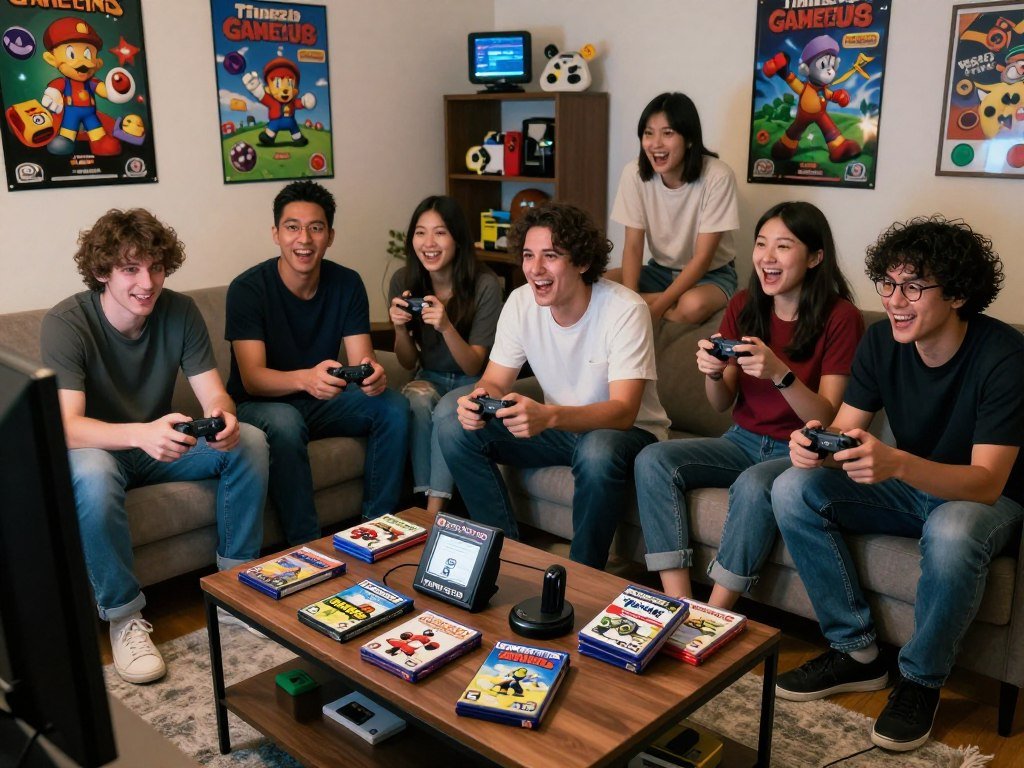
That modest sales record hides a library with lasting appeal. All but 11 GameCube titles failed to pass two million sales, yet many still have strong ideas and devoted fans. Local multiplayer means a mode in which multiple players use the same console to play together. This ranking is an editorial recommendation for different tastes, not a universal verdict.
Use the list to find a starting point, not to settle every debate about the console. You may want a sharp competition game, a long adventure, or something unusual enough to surprise you. The best pick depends on how you like to spend your time.
Key Takeaways
- Melee is the broadest first pick for competitive group play.
- Metroid Prime and The Wind Waker suit solo adventure fans.
- Mario games offer platforming, role-playing, and party play.
- Horror picks range from tense survival to strange psychological effects.
- Modern options include selected remakes, remasters, and catalog titles.
Treat the order as a starting point, then choose by the kind of play you enjoy most.
Which Best GameCube Games Should You Play First?
For the broadest first recommendation, start with Super Smash Bros. Melee; choose Metroid Prime instead if you want a single-player adventure. Melee brings a familiar cast into a fast, demanding contest, while Prime rewards patient exploration. Your best first game depends on whether you want company or a solo challenge.
This order reflects our editorial judgment, not a universal ranking. IGN staff placed Melee first, Super Mario Sunshine second, and The Legend of Zelda: Twilight Princess third in its all-time GameCube ranking. The list below takes a different path through the library and weighs variety alongside lasting appeal.
Choose a game by the kind of play you want, not by a ranking alone. A famous title can still be the wrong first pick for your taste.
- Super Smash Bros. Melee: A deep, quick fighting game with a broad Nintendo cast.
- Super Mario Sunshine: A lively platforming adventure built around movement and water-powered tools.
- The Legend of Zelda: Twilight Princess: A large fantasy quest with a darker mood.
- Metroid Prime: A careful first-person adventure where clues reward close attention.
- The Legend of Zelda: The Wind Waker: An expressive voyage through a bright ocean world.
- Paper Mario: The Thousand-Year Door: Funny writing and turn-based battles give this RPG its charm.
- Pikmin: Small creatures turn exploration into a game of planning and timing.
- Resident Evil 4: Tense action and focused combat make this horror game a standout.
- Mario Kart: Double Dash!!: Its unusual racing setup gives each kart a team dynamic.
- Fire Emblem: Path of Radiance: Tactical battles and character ties reward a long commitment.
- Animal Crossing: A relaxed life simulation built around small, repeat visits.
- F-Zero GX: A demanding racer for players who want speed and precision.
- Pikmin 2: More strategic creature management expands the first game’s core idea.
- Star Wars: Rogue Squadron II: Space combat delivers the thrill of piloting familiar ships.
- Tony Hawk’s Pro Skater 3: Trick-focused skating makes every course a score challenge.
- The Legend of Zelda: Four Swords Adventures: A cooperative Zelda game built for shared play.
- Metroid Prime 2: Echoes: A follow-up that extends Samus’s first-person exploration.
- Metal Gear Solid: Twin Snakes: Stealth action gives a familiar story a new version.
- Resident Evil: Fixed-camera survival horror builds tension through limited resources.
- Killer7: A striking, unusual action game with a style all its own.
- Skies of Arcadia Legends: A role-playing adventure suited to players who enjoy long stories.
- Beyond Good & Evil: A compact action-adventure with a strong story and varied play.
- Luigi’s Mansion: Ghost hunting gives Luigi a fun lead role and a focused setting.
- WarioWare, Inc.: Mega Party Games!: Rapid challenges turn a party into a test of reflexes.
- Eternal Darkness: Sanity’s Requiem: Psychological tricks make this horror game hard to confuse with another.
IGN’s list offers useful reference points, but its order differs from this one. It ranked Eternal Darkness 25th, WarioWare 24th, Luigi’s Mansion 23rd, Beyond Good & Evil 22nd, and Skies of Arcadia Legends 21st. Its next placements were Killer7 20th, Resident Evil 19th, Twin Snakes 18th, and Metroid Prime 2: Echoes 17th.
That spread shows how many kinds of games the console supported. If you are unsure where to begin, compare Melee’s group appeal with Prime’s quiet focus. The best first pick is the one that matches the kind of play you want to return to.
Which GameCube Games Make Multiplayer Nights Memorable?
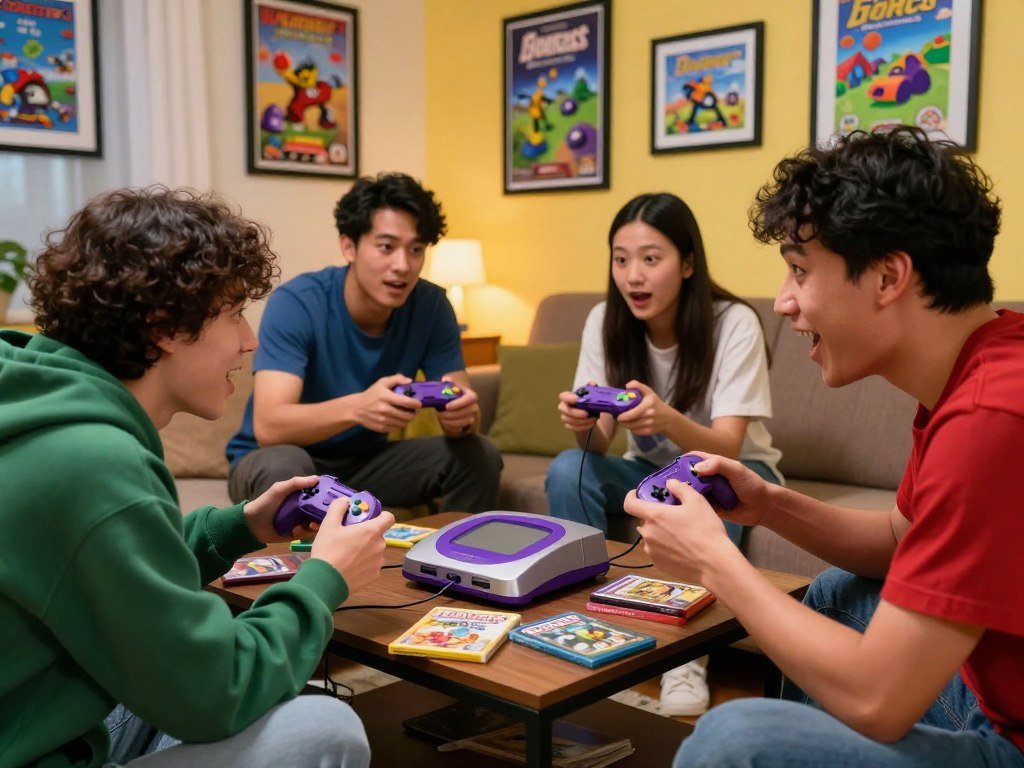
For a quick competitive session, choose Melee; for a looser party atmosphere, choose WarioWare. Those two games set very different expectations for players sharing one console. Pick the format that fits your group, not just the highest player count.
Melee rewards practice, while party games help new players join in quickly. Local player counts can vary by mode, but these four titles support up to four people on one console. For more ideas about group size and play style, see these multiplayer game suggestions.
| Game | Local player count | Style of play | Best fit |
|---|---|---|---|
| Super Smash Bros. Melee | 1-4 | Competitive fighting | Groups that enjoy practice and close matches |
| Mario Kart: Double Dash!! | 1-4 | Team-based kart racing | Friends who like racing and shared decisions |
| WarioWare, Inc.: Mega Party Games! | 1-4 | Fast party challenges | Mixed-skill groups seeking quick turns |
| Mario Superstar Baseball | 1-4 | Character-based sports | Groups who want a familiar team game |
WarioWare, Inc.: Mega Party Games! was developed by Intelligent Systems and Nintendo, then released by Nintendo on April 5, 2004. Its rapid pace suits short turns, while Melee can reward players who want to learn matchups and improve. A party game’s accessibility and a fighting game’s competitive depth appeal to different groups.
Before setting up a bracket, agree on how serious the match should feel. Match the game’s pace to the group’s appetite for competition before you set up a tournament.
What Makes These Multiplayer Classics Different?
These three multiplayer hits stand apart because each asks players to share the game in a different way. Melee favors precision, Double Dash!! adds teamwork, and WarioWare keeps the action moving through tiny challenges. The right choice depends on whether your group wants skill, cooperation, or quick laughs.
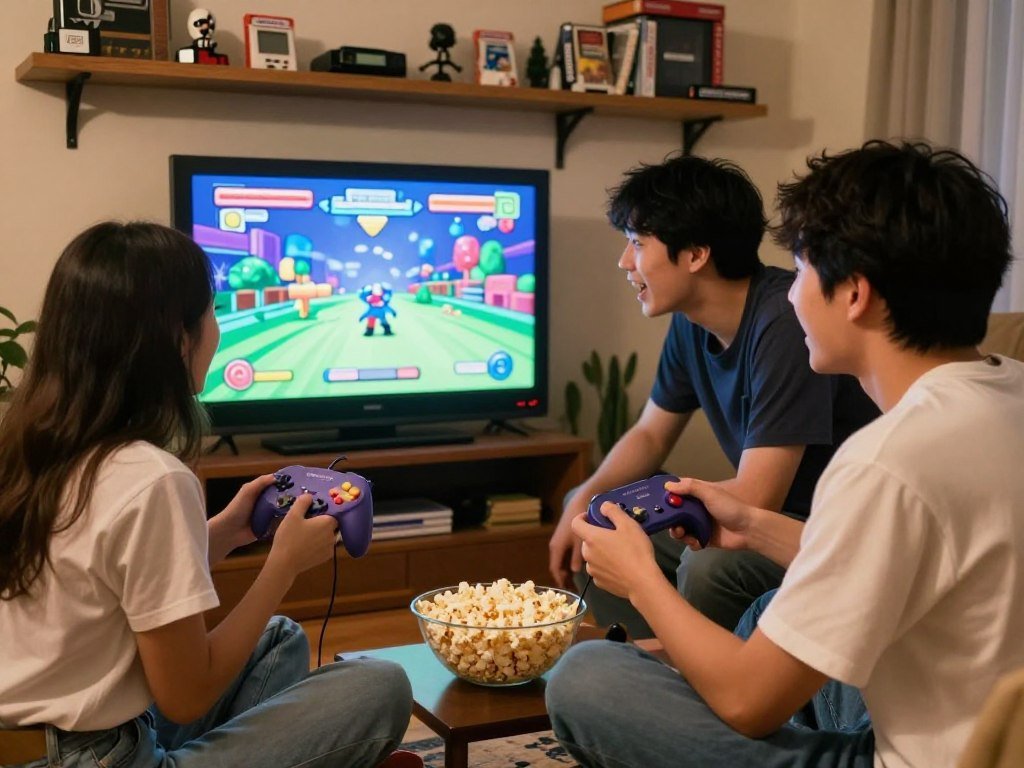
Super Smash Bros. Melee turns a familiar cast into a competitive fighting game
Melee uses Nintendo characters in a fighting game where players try to knock rivals from the stage. Its simple goal is easy to grasp, but timing, movement, and character choices create room for skill. A match can change fast when a player reads an opponent’s move and responds well.
That depth gives the game lasting appeal for competitive players. Newcomers can still enjoy the cast and quick rounds, but a large skill gap may make early matches one-sided. Melee works best when the group agrees on the level of competition, or when experienced players help newcomers learn. The combat feels direct, and every mistake can matter.
Mario Kart: Double Dash!! builds teamwork into racing
Double Dash!! lets two characters share one kart. One player drives while the other handles items, and teammates can switch roles during a race. That small change adds choices beyond steering and drifting. A team can save an item, use it at a key moment, or swap drivers to suit the course.
The setup makes racing feel more social than a simple contest for first place. It also gives players a reason to talk through a race, even when they are on the same team. Some groups may prefer solo control, but shared karts make this title easy to recognize among Mario Kart games. The item strategy adds another layer without turning every race into a serious test.
WarioWare, Inc.: Mega Party Games! makes quick challenges the main event
WarioWare builds its multiplayer play around short microgames. Each challenge asks for a quick action, often with little time to think. A player may need to react to a prompt, spot a detail, or press a button at the right moment. The fast changes keep the room engaged because no one waits long for a new challenge.
That format welcomes players who do not know fighting-game moves or racing lines. It can feel chaotic, though, and its rapid pace may not suit a group that wants long turns or careful tactics. Melee asks players to accept a steeper skill curve; WarioWare asks them to embrace the scramble. Pick the format your group will want to play again after the first round.
Which Mario Adventures Show the GameCube’s Range?
Super Mario Sunshine is the strongest pick here for players who want movement-led platforming. It keeps the action moving, while Luigi’s Mansion and Paper Mario take slower, more focused routes. Familiar characters do not guarantee familiar gameplay.
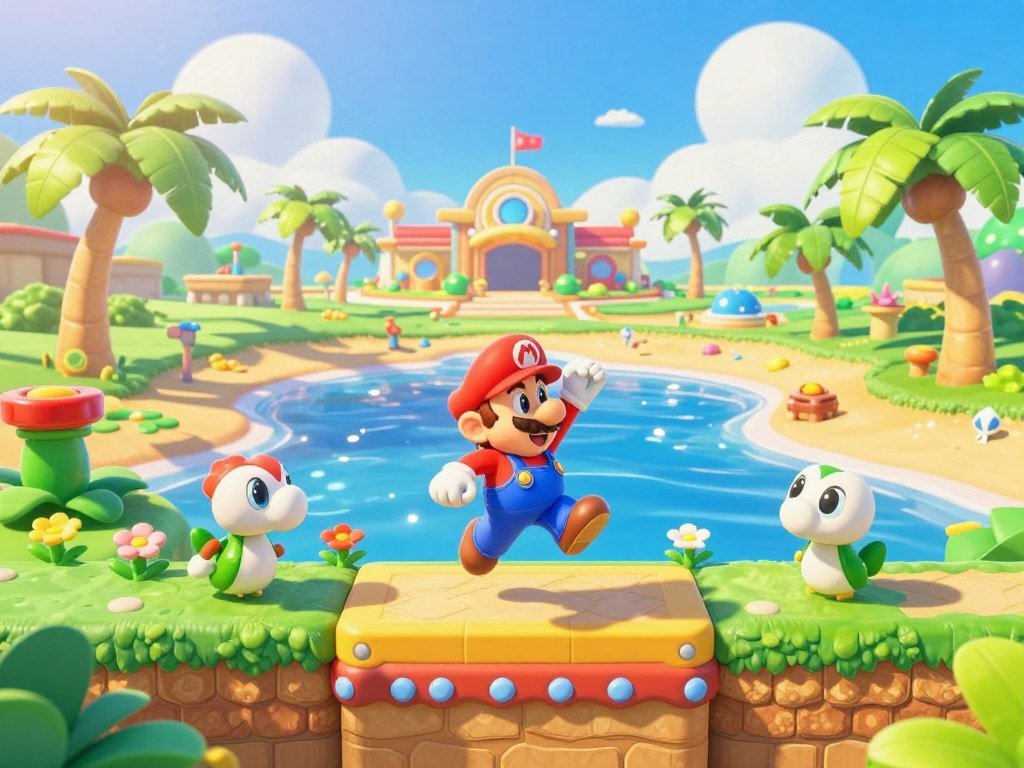
Super Mario Sunshine gives Mario a tropical platforming challenge
Sunshine sends Mario to Isle Delfino, where he uses FLUDD, a water-powered pack, to move and clean. Spraying water can help him reach places, adjust jumps, and deal with messes across the island. The tool changes how movement feels, so the platforming asks you to learn more than a basic jump.
Its bright setting and active pace suit players who like testing movement in open spaces. FLUDD can make some tasks feel less like a traditional platformer, especially if you want every challenge to rely on running and jumping. Still, the water pack gives the game a clear identity. Players who want a fast-moving Mario adventure will likely find Sunshine the easiest fit here.
Luigi’s Mansion makes the mansion its main attraction
Luigi’s Mansion puts Luigi in a house filled with ghosts. He uses a flashlight and a vacuum to reveal, stun, and capture them while searching the rooms. The mansion encourages you to check corners, notice changes, and return to places with new tools. Its spaces feel more contained than a large platforming world.
That close setting creates a different kind of Nintendo adventure. Luigi is nervous, and his reactions give the story a lighter tone even as he explores dark halls. Nintendo developed and published the game, which came out on November 18, 2001. Its ghost-hunting tools shape each room, so the fun comes from exploring and figuring out how to handle what appears.
Paper Mario: The Thousand-Year Door adds role-playing and comedy
The Thousand-Year Door uses turn-based battles, a paper-world look, and dialogue full of jokes. Mario explores a story-led world, meets a memorable cast, and chooses attacks during battles. Timing matters in combat, so the player stays involved instead of simply selecting a move and waiting.
This game suits you if characters and writing matter as much as action. It moves at a slower pace than a platformer, with more reading and story scenes between battles. Players seeking a traditional, fast-moving Mario platformer may prefer Sunshine over the story-led Paper Mario. Choose the adventure whose central activity sounds fun for a full play session, not just its familiar cast.
Which Zelda Games Are Worth Revisiting on GameCube?
Choose Wind Waker for a bright, exploratory journey, or Twilight Princess for a darker fantasy quest. Four Swords Adventures offers a different option built around cooperation. The three games suit players seeking distinct moods and ways to play.
The Wind Waker makes exploration feel open and expressive
The Wind Waker pairs cel-shaded visuals with ocean travel. Its expressive animation gives characters strong faces and clear movement, while the sea invites you to chart a course and discover islands. Sailing creates a sense of distance between places, so reaching a new shore feels like a small reward.
The open route suits players who enjoy choosing where to go and what to inspect. Some travel takes time, and the broad ocean can feel less focused than a tightly packed adventure. Still, the art style gives the world a warm, lively look that has aged well. Wind Waker is a strong pick when you want exploration with a lighter tone.
Twilight Princess offers a darker adventure
Twilight Princess brings a darker fantasy mood to the series. Its broader adventure balances exploration, combat, puzzles, and story, giving players many kinds of tasks. The world feels more grounded and serious than Wind Waker’s bright ocean setting, though it still has the familiar rhythm of a Zelda quest.
Choose this one if you prefer a more dramatic tone and a larger fantasy adventure. Its scale can ask for more time than a short, focused game, and its mood may feel heavy beside other Nintendo titles. The sword and other tools support the action, while puzzles break up the combat. It is a good fit for players who want a traditional-feeling epic with a darker edge.
Four Swords Adventures puts cooperation at the center
Four Swords Adventures turns Zelda into a cooperative game. Players guide separate versions of Link through levels, helping one another solve puzzles and defeat enemies. Cooperation shapes the action, but players can also compete for items and points. The shared goal makes it a different kind of Zelda experience from a solo quest.
Playing together takes more setup than passing a controller around. You need other players and compatible equipment, including the right connection between Game Boy Advance systems and the console. That requirement can make a group session harder to arrange. For Four Swords Adventures, check that your group can assemble the required multiplayer setup before committing.
Which Games Reward Careful Exploration?
Metroid Prime is the best fit for players who want to understand a world by examining it. Scanning matters, and environmental clues often explain what happened before you arrived. Prime’s combat supports exploration, rather than replacing it.
Metroid Prime makes the world part of the challenge
Metroid Prime stars Samus Aran and shifts the series into first-person play. Scanning objects and creatures reveals details that help you read the environment. A locked door, strange machine, or enemy can offer clues about the place and how to move forward. Careful attention often matters as much as quick aim.
The game rewards players who like to stop and look around. Combat is present, but it is not the whole point; backtracking, finding new routes, and reading the world make up much of the experience. Players expecting a straightforward first-person shooter may find the action slower than they want. Prime works best when discovery is part of the fun.
Metroid Prime 2: Echoes extends Samus’s first-person adventure
Echoes follows Prime with another first-person adventure starring Samus. It builds on the series’ mix of scanning, exploration, upgrades, and combat. The follow-up asks players to study their surroundings and use new tools to deal with obstacles. Its design will feel familiar to anyone who enjoyed learning Prime’s world through close observation.
Retro Studios developed Echoes, and Nintendo published it. The game came out on November 15, 2004. It continues the first-person format rather than replacing it with a faster, more direct shooter. That makes it a natural next step for players who want more of the same careful exploration, though newcomers may prefer to start with the first game.
Pikmin and Pikmin 2 turn exploration into strategy
Pikmin and Pikmin 2 make exploration a planning challenge. You direct a growing group of small creatures, each of which helps you move through the world and handle obstacles. The group can gather items, fight threats, and perform tasks while you decide where to send it. Time and careful choices shape each outing.
These games suit players who enjoy thinking about a group rather than controlling one hero. A poor plan can leave creatures exposed, while a smart route can make a task feel satisfying. Pikmin 2 expands the approach with more strategic play. Choose Pikmin if you prefer planning around a group rather than exploring alone as Samus.
Which GameCube Horror Games Still Stand Out?
Eternal Darkness is the most distinctive pick for players who want horror that interferes with their expectations. Its sanity system can alter what you hear and see. The unusual effects are its signature, though older combat can feel dated.
| Game | Horror approach | Defining mechanic | Strongest fit |
|---|---|---|---|
| Eternal Darkness: Sanity’s Requiem | Psychological and historical horror | Sanity effects alter audio and show anomalies | Players who like unusual tricks |
| Resident Evil | Survival horror | Fixed-camera rooms and limited resources | Fans of tense, slower encounters |
| Resident Evil 4 | Action-focused horror | More direct, combat-heavy play | Players seeking faster fights |
Eternal Darkness follows Alexandra Roivas as she investigates her grandfather’s unsolved murder at the family mansion. The story moves through Persia, Cambodia, France, and Rhode Island. When the sanity meter falls too low, the game can alter audio or create strange background anomalies. Nintendo’s first first-party GameCube game rated M, it takes an unusual route into horror.
The sanity effects remain the standout feature, but the fixed camera and older combat may feel dated. Resident Evil leans on survival horror, while Resident Evil 4 shifts toward more action-heavy combat. Pick the first when you want slow tension, or the fourth when you want more direct encounters. Choose between atmospheric unease and more action-heavy encounters before deciding which horror game to start.
Which Story-Driven Games Reward a Longer Commitment?
Start with Fire Emblem: Path of Radiance if turn-based tactics and a large cast appeal to you. Its battles reward patience, while the other two choices focus on exploration or action. Choose based on how much planning you want between story scenes.
- Fire Emblem: Path of Radiance: Tactical battles ask you to plan each move, while character relationships add weight to the campaign. A careful approach matters because each fight can change your options.
- Skies of Arcadia Legends: This role-playing game mixes exploration with a long adventure. It suits players who enjoy discovery, steady character growth, and a story that unfolds over many sessions.
- Beyond Good & Evil: Ubisoft’s action-adventure centers on a story and varied play. It is a good choice if you want a more direct adventure without as much tactical planning.
Path of Radiance was developed as a tactical role-playing game, so battles ask you to think about positions and risks. Skies of Arcadia Legends was developed by Overworks, published by SEGA, and released January 27, 2003. Beyond Good & Evil was developed and published by Ubisoft, then released December 10, 2003.
The tradeoff is time and system depth. Path of Radiance rewards patience with tactical planning, while players wanting a shorter or less system-heavy adventure should consider Beyond Good & Evil. Set aside time for the tactical RPG choice, since its battles reward planning rather than rushing.
Which Unusual Action Games Deserve a Place?
Try Killer7 if you value a singular visual style more than conventional action controls. Its presentation is striking, while Twin Snakes focuses on stealth. Killer7’s controls and limited interaction will not suit every player.
Killer7 uses a bold visual style and lets you switch between characters with different skills. Its movement and interaction are limited compared with standard action games. That makes it feel unusual, but it can also frustrate players who want broad control. The game asks you to accept its narrow approach before its strange world can work for you.
Metal Gear Solid: Twin Snakes takes a clearer route through stealth and careful movement. It remakes a familiar story with changes to the play and presentation, so it is not simply an unchanged copy. The GameCube version remains the only place to play that specific version. Choose it for sneaking and a distinct retelling, not for a direct port of the original.
For a more immediately readable fighting game, Soulcalibur II offers direct combat and a clear match goal. Its appeal is easier to grasp than Killer7’s unusual controls. These picks show how an action label can cover very different experiences. Pick Twin Snakes when stealth and a different take on a familiar story matter more than a faithful, unchanged remake.
Which Games Bring Speed and Spectacle?
Choose F-Zero GX for demanding speed, Tony Hawk’s Pro Skater 3 for tricks, or Rogue Squadron II for aerial combat. Each tests a different skill, from sharp racing lines to flight control. F-Zero’s speed and difficulty may frustrate players seeking a relaxed racer.
F-Zero GX is a futuristic racer that pushes speed and precision. Courses demand quick turns and careful timing, so a small mistake can cost you a strong position. It suits players who like practice and close control, not those looking for a gentle lap around a track.
Tony Hawk’s Pro Skater 3 turns courses into spaces for tricks and linked moves. You build score by finding lines, keeping a combo going, and making good use of ramps. It came out on November 13, 2001, carries a Teen rating, and has a Metascore of 91. Those facts mark the game, but its trick system is what gives each run its shape.
Star Wars: Rogue Squadron II focuses on space combat. You pilot ships through missions that ask you to aim, steer, and respond to threats in the air. It offers a different kind of speed from racing or skating, with objectives guiding each flight. Decide whether you want to master a course, a trick line, or a flight mission before you choose.
Which GameCube Games Are Good for Kids?
For younger players, begin by checking the ESRB rating and matching the game’s controls and reading demands to the child. Age and comfort matter as much as a familiar character. A cute art style does not by itself establish age suitability.
- Super Mario Sunshine: Active platforming suits children who enjoy movement and jumping challenges.
- Mario Kart: Double Dash!!: Shared racing gives players a lively way to enjoy a match together.
- Animal Crossing: A relaxed life simulation centers on routines and small choices.
- Pikmin: Strategy and planning suit a child who likes directing a group and solving problems.
Check the ESRB rating and content descriptors for each title. The ESRB’s parent rating tools explain how those labels help families assess game content. Also consider whether a child can manage reading, camera movement, and difficulty without constant help.
A child who reads comfortably may still struggle with a tricky camera or a fast challenge. Another child may enjoy planning but lose interest in a long story. Match the game’s demands to the player rather than relying on a character’s appearance or a familiar brand. Review the content descriptors for the individual title rather than assuming every Nintendo game is aimed at the same age.
Which Best GameCube Games Are Exclusive to the System?
“Exclusive” can mean a GameCube original, not necessarily a title that has never appeared in another form. The distinction matters if you want a specific version or the first release. A GameCube original is not a promise of permanent hardware exclusivity.
| Game | What “exclusive” means for this entry | Later release status | Why that distinction matters |
|---|---|---|---|
| Eternal Darkness: Sanity’s Requiem | Original GameCube release | No later release stated here | Its original form is tied to the console |
| Fire Emblem: Path of Radiance | Original GameCube release | No later release stated here | The original version remains the focus |
| Super Mario Sunshine | Original GameCube release | Later release on another system | A port does not change its first platform |
| The Legend of Zelda: Four Swords Adventures | Original GameCube release | No later release stated here | Its original setup is linked to the console |
These titles have a strong connection to the system, but exclusivity can describe different things. It may refer to where a game first appeared, or to a particular version that has not moved to another platform. A later port can make the game playable elsewhere without changing its original release.
That distinction helps you decide whether you want a console-era version or simply the game itself. Check whether you want the original GameCube release or simply a way to play the game today.
Which Sports and Life-Simulation Games Add Variety?
Mario Superstar Baseball is the pick for playful sports sessions, while Animal Crossing suits a slower daily routine. Both invite repeat play, but they offer different kinds of return. Choose a match for a set session or a world you can revisit.
- Mario Superstar Baseball: Character-based teams and simple sports action suit players who want a friendly match without realistic pressure.
- Animal Crossing: Its life-simulation play suits people who like small routines, familiar characters, and short visits spread over time.
- Mario Strikers: Its more energetic sports action suits players who want fast matches and a louder, less traditional take on soccer.
Mario Superstar Baseball uses Mario characters in a sports game, while Animal Crossing builds its appeal around day-to-day play. Their repeat value comes from different habits: one invites another match, while the other gives you reasons to return to a routine. Both broaden the console’s appeal beyond action and adventure.
If you want realistic sports rules and teams, a licensed sports title may suit you better. These games favor recognizable characters and their own playful style instead. Choose based on whether you want a match with a finish line or a world you can revisit at your own pace.
How Can You Play GameCube Favorites Today?
For modern hardware, check the specific Switch release or the Switch 2 Nintendo Switch Online catalog before assuming an original is included. Selected titles are available, not the full library. Each modern option offers a remake, remaster, or catalog game, not every original.
| Game or route | Platform | What the player gets |
|---|---|---|
| Metroid Prime Remastered | Nintendo Switch | A remaster released in 2023 |
| Paper Mario: The Thousand-Year Door remake | Nintendo Switch | A remake released in 2024 |
| Nintendo Switch Online GameCube catalog | Switch 2 | Selected GameCube games through a subscription catalog |
Nintendo confirmed GameCube titles for Nintendo Switch Online with Switch 2. The catalog offers selected games, so it is not a promise that the entire GameCube library is available. Metroid Prime Remastered and the Paper Mario remake are separate releases, not proof that every original has a modern version.
A standard Wii plays GameCube games, but the Wii Family Edition, Wii Mini, and Wii U do not. If you already own a Wii, confirm that it is the standard backwards-compatible model before relying on it for GameCube discs.
How Should You Choose Your First GameCube Game?
If you want one broadly appealing starting point, choose Melee for a group or Metroid Prime for solo play. Start with your preferred pace, then weigh genre and challenge. This list’s 25 picks form a focused shortlist, not a 100-game catalog.
- Super Smash Bros. Melee: Choose it for competitive multiplayer and quick matches with friends.
- Metroid Prime: Pick it for solo exploration, scanning, and steady discovery.
- Super Mario Sunshine: Start here if you want movement-led platforming and active challenges.
- Animal Crossing: Choose it for relaxed, repeat visits and a slower routine.
A 100-title list can help broad collectors explore more of the catalog. This 25-game selection is a tighter starting point for players choosing one first game. Your best fit depends on genre, solo or group play, and how much challenge you enjoy.
An acclaimed game can still be the wrong first choice if its genre or difficulty does not suit you.
Once you know whether you like fast matches, steady exploration, platforming, or routine-based play, your next choice becomes easier. A famous title does not have to be your first one. Pick one game that fits your preferred pace, then branch into a different genre once you know what you enjoy.
Conclusion
The GameCube is still worth revisiting because its best experiences range from social competition to carefully built solo adventures. Its strongest case is variety, not one genre. Melee gives groups a sharp contest, while Metroid Prime and The Wind Waker offer different ways to explore alone.
You do not need to settle the whole ranking before you play. Pick a title that fits the time and attention you want to give it. Start with Melee for shared play or Metroid Prime for exploration, then choose your next game from a different genre.
FAQ
What is the difference between Metroid Prime and Metroid Prime 2: Echoes?
Metroid Prime is Samus’s first-person exploration adventure, while Metroid Prime 2: Echoes is its follow-up. Prime introduces the scanning, exploration, and combat style that Echoes builds on. Start with Prime if you want the original experience and its first discoveries. Choose Echoes if you already know the series and want another adventure in that format.
Why is Mario Kart: Double Dash!! different from other Mario Kart games?
Double Dash!! puts two characters in each kart, giving players driver swaps and shared item choices. One character drives while the other handles items, and teammates can switch roles during a race. That changes the team strategy without changing the basic goal of racing. It is a clear choice if you want a Mario Kart game built around cooperation.
Can you play GameCube discs on a Wii U?
No, the Wii U does not play GameCube discs. A standard backwards-compatible Wii can play them, but not every Wii model has that feature. The Wii Family Edition and Wii Mini also lack GameCube support. If you own a Wii, check its model before buying discs or planning to use the console for older games.
Is the GameCube version of Metal Gear Solid: Twin Snakes available on another console?
No, the GameCube is the only place to play that specific version of Metal Gear Solid: Twin Snakes. The game offers a distinct remake of a familiar story, with changes to its presentation and play. That claim applies to this version, not every Metal Gear game. Choose it for the GameCube take on the story and its stealth action.
What makes Eternal Darkness: Sanity’s Requiem unusual for a horror game?
Eternal Darkness has a sanity meter that can alter audio and create background anomalies when it falls too low. Those effects play with what you expect to see and hear, making the game’s horror feel personal. The story also moves through several historical settings. Its unusual tricks stand out, though the fixed camera and older combat may feel dated.
Will Nintendo Switch Online include every GameCube game?
No, the Nintendo Switch Online GameCube catalog offers selected titles, not every game released for the console. GameCube titles are available through the service on Switch 2, while other games may have separate remakes or remasters. A catalog selection should not be treated as a full library. Check each game’s specific release route before choosing how to play it.