For smooth everyday writing, start with the Pentel EnerGel, then choose a finer, erasable, or color-focused option to suit the job. Your pen affects how notes look and feel, whether you mark a planner or fill a page with color. The right choice can make routine writing feel easier, while a poor match can leave you with lines that seem too thick or ink that does not suit your task.
This comparison covers 15 picks for everyday notes, fine marks, erasable planning, and art. Each pen has a different mix of tip, ink, and design, so match those details to how you write. The goal is a practical choice, not one winner for every hand or page. Pick the kind of writing you do most often before comparing the finer details.
Key Takeaways
- Pentel EnerGel is a strong first pick for everyday writing.
- Fine-tip choices suit compact notes and precise marks.
- Pilot FriXion pens suit notes you may need to revise.
- Sakura Gelly Roll pens offer art-focused colors and effects.
- Paper, ink flow, and drying time can change the writing feel.
- Try a pen on your own paper before buying a multipack.
How Does Gel Ink Differ From Other Pen Inks?
Gel ink combines a colorant with a thickener, giving it a smooth feel and room for saturated or decorative colors. Water, dye or pigment, and a gelling agent form a common ink formulation. The gelling agent thickens the liquid, while dyes or pigments provide its color.
Xanthan gum is a traditional gelling agent used to thicken gel ink. That thicker mix can make lines feel smooth as the ball moves across paper. “Gel” does not mean every pen has the same flow or drying time. Formulas vary by model, and the paper can also change how a line looks.
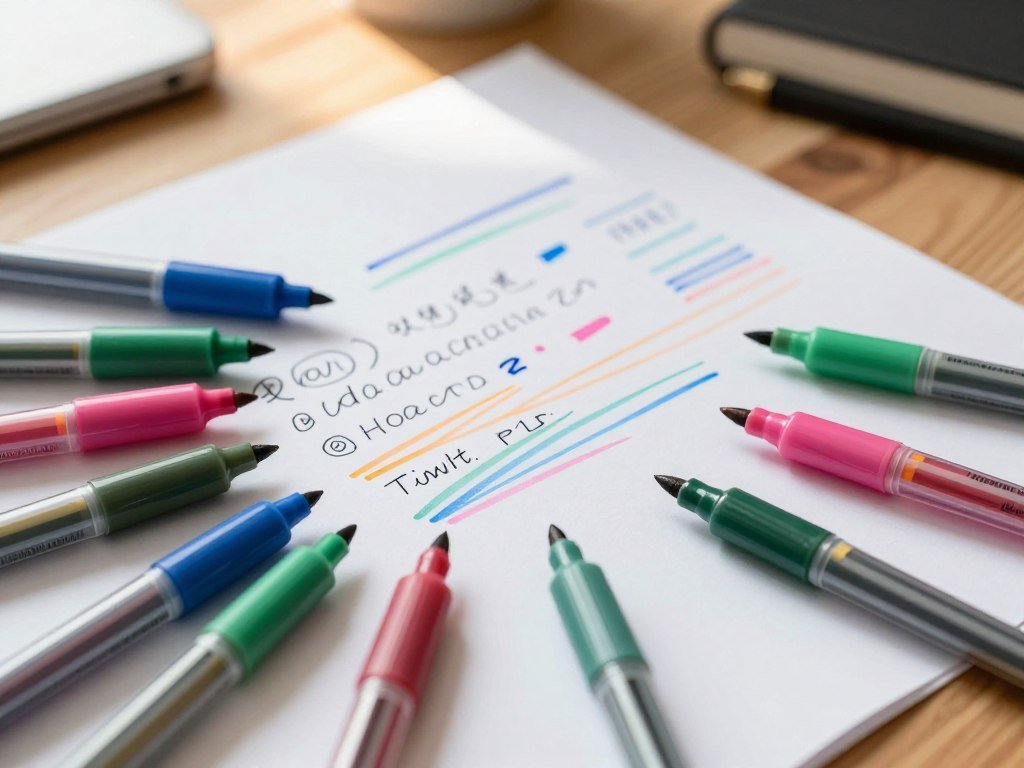
- Smooth everyday writing for notes, lists, and journals.
- Vivid color for headings, marks, and color-coded pages.
- Special effects, including metallic and glitter ink.
Gel ink can feel smooth and offer rich color, but one gel pen may flow or dry differently from another.
Fountain pen inks are a separate type of liquid ink, and their feel depends on a different pen system. A ballpoint pen uses a thicker paste-like ink, while gel ink offers another balance of flow and color. The label describes a broad ink type, not a promise of identical performance from all brands.
Some pen inks suit quick notes, while others suit careful lettering or decorative marks. A pen that feels right on one paper may drag or appear darker on another. Treat the ink formulation as one factor in a pen’s feel, not a guarantee that every gel pen writes the same way.
Which Tip Size Fits Your Handwriting and Paper?
For most note-taking, choose a 0.5 mm gel tip; move to 0.38 mm for cramped writing or to 0.7 mm for a bolder line. Tip size means the diameter of the small ball at the pen’s point, not the width of the line it leaves. The ball diameter and written line are different measurements.
At the same tip size, gel ink can look darker or slightly wider than ballpoint ink. That difference matters on ruled pages, where a dark line may take up more visual space. College-ruled paper has lines about 7.1 mm apart, a useful fit for a 0.5 mm gel pen or a 0.7 mm ballpoint.
| Tip size | Suitable use | Tradeoff |
|---|---|---|
| 0.38 mm | Tiny writing, planners, annotations | Fine lines may feel less smooth |
| 0.5 mm | Most notes and college-ruled paper | Less bold than a wider point |
| 0.7 mm | Bolder, wetter line | Uses more ink and may smudge |
A 0.38 mm point leaves room for small letters in a packed planner or notes beside printed text. A 0.5 mm point gives most writers a darker, smoother line without taking up too much space. The 0.7 mm option makes a broader mark, which can suit signatures or larger handwriting.
Thin paper can let gel ink bleed through, making the reverse side harder to use. Gel pens generally behave better on both sides of paper rated 90 to 100 gsm or higher. Paper finish and ink flow still affect the result, so test a sample first.
For a quick check, write on the same side and the reverse of a page from your usual notebook. Look for show-through as well as bleed-through, since a dark line may show through without soaking into the back. Test the pen on the exact paper you use if writing on both sides matters.
Best Gel Pens for Everyday Writing
For a smooth everyday writer with vivid colors, the Pentel EnerGel is the easiest first pick. Its 0.7 mm point lays down a smooth line, and its ink colors look bright. For most routine writing, EnerGel is the best starting point.
Other everyday pens make different tradeoffs in color, point size, and design. This list compares five options without treating one model as right for every writer. Check the feature that matters most to your daily pages.
| Pen | Distinguishing feature | Best-fit use |
|---|---|---|
| Pentel EnerGel | 0.7 mm point, smooth feel, vivid ink | Routine notes and colorful writing |
| uniball One | Rich-looking black line | Bold black notes |
| Sharpie S-Gel | Established U.S. shelf option | Easy-to-find daily pen |
| uniball Zento | 0.38, 0.5, and 0.7 mm; quick-drying liquid gel | Choice of point size |
| Muji Gel Ink Ballpoint Pen Cap Type | 0.38 mm point, water-based gel ink | Fine writing with a cap pen |
The uniball One produces richer-looking lines than the uniball 207/307, including in black. Its black 0.38 mm model performs as well as or better than the Signo DX. Colored inks may flow less freely than those in the Signo DX or Sarasa Clip.
The uniball Zento’s three tip sizes let you choose among a fine, middle, or broader point. Its quick-drying liquid gel ink may suit readers who value drying time. Sharpie S-Gel has gained shelf space in the United States, making it a familiar option without proving it beats a named rival.
The Muji cap pen suits writers who want a fine point and water-based gel ink. EnerGel is the straightforward choice for smooth, colorful daily notes, while the Zento offers more size options. Choose the uniball One when rich-looking black ink matters more than having its colored inks flow as freely.
Which Fine-Tip Gel Pens Make the Sharpest Lines?
For an even, dependable micro line, start with the uniball Signo DX 0.38 mm. Its point makes controlled marks without requiring a needle tip, and the rubber grip gives your fingers a steady place to rest. The Signo DX is the most consistent micro-tip choice here.
A fine point can make small letters and tight labels look neat. It can also feel scratchier than a wider point, so precision does not always mean smoother writing. These pens offer different ways to get a fine line.
Consistent micro-tip writing with the Signo DX and uniball One Limited Edition
The Signo DX 0.38 mm stands out for steady micro writing and strong non-black inks. Its rubber grip can help keep the barrel from shifting during careful work. It makes a practical choice when colored notes need a fine point.
The Uni-ball One Limited Edition also has a 0.38 mm tip, with high-density gel ink. That ink gives the pen a different character from a basic fine-line option. Choose between the pens by considering whether grip and colored ink flow matter more than a denser ink style.
Sharp lines and needle tips with the Sarasa Clip and Pilot Juice Up
The Zebra Sarasa Clip 0.4 mm produces a sharp line. Its 0.3 mm version flows better than the uniball Signo DX 0.28 mm, a useful difference at the very fine end. That makes the Sarasa Clip a strong option for fine writing that still needs steady flow.
The Pilot Juice Up 0.4 mm uses a needle tip and comes in a broad range of well-performing ink colors. A needle point can help you place a line with care, while the color range supports coded notes or small drawings. The point may feel more exact, but it is not automatically the smoothest option.
For a compact note, a 0.38 mm pen can keep letters distinct without making every mark look heavy. If you prefer a sharp line and need a fine size with stronger flow, choose the Sarasa Clip when a sharp line and stronger flow at the finest size matter most.
Are Erasable Gel Pens Practical for Students?
For revisable class notes and planning, the Pilot FriXion Synergy 0.4 mm is the most balanced starting choice. Its barrel style and point size make it a practical pick for students who want to write, then correct a mistake. Use erasable gel ink for notes that may change, not permanent records.
Erasable gel works best when revision is part of the task. It can help with a changing schedule, a draft outline, or a page of study notes. It is not the right choice where writing must stay unchanged.
Pilot FriXion Synergy for a balanced barrel and tip
The FriXion Synergy pairs a 0.4 mm point with a practical barrel style. That combination gives students a middle ground between a very fine point and a broader line. It suits class notes that need clear marks and occasional edits.
A pen barrel should feel comfortable through a long lesson, while the point should suit the size of your handwriting. The Synergy makes a balanced option for both needs. If you mostly make quick changes to a planner or notebook, its purpose is easy to understand.
Pilot FriXion Waai for thermo-sensitive ink
The Pilot FriXion Waai uses 0.5 mm thermo-sensitive gel ink. Friction creates heat that makes this ink erasable, so the pen can work for revisable notes and planning. It is a different choice from an ordinary gel pen that leaves a lasting mark.
Keep that difference in mind when you write dates, instructions, or information that must remain stable. Erasable ink is useful when corrections are expected, but that feature becomes a drawback for permanent records. Use an ordinary permanent-writing pen for records that must not be erased.
Which Gel Pens Work Best for Coloring and Art?
For drawing and coloring, Sakura Gelly Roll Classic is the best pick for fine marks, while Moonlight suits opaque colored accents. Gel pens work well for bright color, decorative effects, and controlled outlines. Choose Classic for line work and Moonlight for broader, opaque marks.
The right pen depends on the mark you want, not just the number of colors in a set. Fine pens can handle small details, while wider points fill spaces with more ink. For an art-focused gel pen, paper and drying behavior still matter.
Sakura Gelly Roll pens for fine and medium line work
Sakura Gelly Roll Classic fine pens make a 0.3 mm line with a 0.6 mm ball. The medium pen makes a 0.4 mm line with a 0.8 mm ball. These figures show why ball diameter and written line width are not the same measure.
Classic ink is waterproof, fade-resistant, and chemical-proof on paper. On most papers, it does not feather or bleed through, and it does not smear once dry. It meets ACMI non-toxicity standards, though paper type can affect how any ink behaves.
Fine pens suit narrow outlines and small patterns, while the medium line gives a little more weight to a drawing. The Classic line and ink details can help you choose between those marks. Test on your own sheet before using a favorite page for finished work.
Gelly Roll Moonlight for opaque pastel and neon accents
Sakura Gelly Roll Moonlight Bold Point pens use 0.7 mm points and opaque pastel or neon gel ink. Their broader mark can make a bright accent stand out beside fine outlines. Pick Moonlight when coverage and color impact matter more than tiny detail.
Pastel or neon ink can make headings, shapes, or small areas pop. A wide mark may also fill a space faster than a fine point. Use scrap paper to see how the color reads against the page before adding it to a finished design.
Coloring sets for broad palettes and long sessions
Shuttle Art sets generally flow smoothly, though some pens need extra scribbling to restart. Caliart pens have 0.7 mm to 1.0 mm tips and generous ink supplies. Some Caliart colors take longer to dry, so give a fresh mark time before touching it.
Soucolor sets include refills, a travel case, coloring sheets, and a color card. Kairsory gel pens typically have 0.5 mm tips and pigment gel ink. TANMIT’s 160-piece glitter gel pen set includes a case and testing paper, though some bright or fluorescent glitter pens occasionally skip.
| Model | Stated tip or line detail | Ink or use characteristic |
|---|---|---|
| Sakura Classic fine | 0.6 mm ball, 0.3 mm line | Fine line work |
| Sakura Classic medium | 0.8 mm ball, 0.4 mm line | Medium line work |
| Moonlight Bold Point | 0.7 mm point | Opaque pastel or neon ink |
| Shuttle Art | Set pens; size varies | Generally smooth flow; some need restarting |
| Caliart | 0.7 mm to 1.0 mm tips | Generous ink; some colors dry slowly |
Smart Color Art sets include glitter, metallic, pastel, neon, and standard shades, plus refills. AEN Arts sets had 80 colors and refills in a 2024 budget comparison. If you also make digital art, AI image tools for creators offer a different way to explore illustration and design.
Large sets provide variety, but they can take longer to sort and test than a small group of favorite colors. Glitter inks may skip, and slower-drying shades can mark a hand or the facing page. Test a glitter or slow-drying color on scrap paper before filling a detailed area.
Which Gel Pens Dry Fastest for Left-Handed Writers?
For left-handed writing, the Zebra Sarasa Clip is the most practical listed choice because its water-based gel ink dries quickly. It comes in sizes from 0.3 mm to 1.0 mm. Its quick-drying ink can lower the chance of a fresh line smearing under your hand.
A smaller point can lay down less ink, which often helps the line dry sooner. A 0.5 mm gel pen generally dries sooner than a 0.7 mm pen. Wider tips put down more ink and can stay wet longer.
- Use a smaller tip when it suits your handwriting.
- Let coated paper dry before sliding a hand over it.
- Test the exact ink and surface before writing a full page.
Coated paper can hold ink on its surface longer than ordinary writing paper. The Muji Gel Ink Ballpoint Pen Cap Type may smudge on coated paper because its ink takes longer to dry. Try a line on the exact surface before committing to a full page.
Hand movement also matters: a writer who moves across fresh writing may brush the line before it sets. Choose a tip that does not force you to press hard or slow your natural pace. On coated paper, allow extra drying time before moving a hand across a fresh line.
What Should You Check Before Buying a Gel Pen?
Compare the refill, barrel style, and expected ink use before deciding which pen is the better value for your routine. Upfront price is only one part of the cost, since gel pens often use more ink per page than ballpoints. A broader line may need more frequent replacement.
Check the practical details before choosing a model or set. A pen that feels good in hand may still be a poor fit if you cannot replace its ink or do not need its full color range. Use this checklist to compare options.
- Check whether the model offers a compatible refill.
- Choose a retractable design or capped design to fit your routine.
- Consider how much ink a broader line uses.
- Confirm the set size matches the intended use.
A click pen suits quick daily notes because you can open and close it with one hand. A cap pen can suit a longer drawing or journaling session, when you may want to keep the point covered between uses. Choose based on how the pen fits your desk, bag, and writing habits.
Gel pens tend to run out sooner than ballpoints because they lay down more ink per page. That can make them cost more to use over time, especially if you write often or prefer a broad line. Avoid judging the lasting value from the barrel alone.
AEN Arts advertised 40 percent more ink, though ink longevity varied between colors. Treat that claim as a feature to compare, not a promise that every color will last equally long. A large set may be useful for art, but it adds little value if you only use a few shades.
Refill access can keep a favorite barrel useful after its first ink supply runs out. Look for a compatible refill before you get attached to a particular grip or shape. If you write often, check refill compatibility before settling on a barrel you like.
Are Gel Pens Better Than Ballpoint or Fountain Pens?
Choose gel for smooth flow and color, ballpoint for lower ink use, and a fountain pen for a liquid-ink writing experience. Each type serves a different need, so the best choice depends on how you write. Gel lines are generally darker and slightly wider than ballpoint lines at the same tip size.
Gel pens can feel smooth and offer vivid colors or specialty effects. Ballpoint pens make sense when you want to use less ink per page. Fountain pens suit writers who want a separate liquid-ink system.
| Type | Ink or writing character | Strongest use and tradeoff |
|---|---|---|
| Gel | Smooth flow, vivid or specialty color | Color and feel; uses more ink than ballpoint |
| Ballpoint | Thicker, paste-like ink | Lower ink use; fewer decorative effects |
| Fountain pen | Liquid ink and a separate pen system | For writers who want that system; different care and feel |
Choose a gel pen when a smooth line or bright color matters more than saving ink. Ballpoint is a practical pick for forms, quick notes, and long writing sessions where ink use matters. Neither choice is best for every person or every page.
Pick the pen type that fits your writing habits: gel for smooth color, ballpoint for lower ink use, or fountain for liquid ink.
Fountain pens use liquid fountain pen inks, which may appeal if you want a different writing rhythm and ink system. The pen type changes how you handle ink as well as how the page looks. Match the ink type to the way you write most often, not just to the line you prefer on a sample page.
Conclusion
For a dependable everyday starting point, choose Pentel EnerGel; pick a specialist model only when a particular use calls for it. Its smooth writing makes it an easy first choice, while the best specialist option depends on whether you need tiny lines, erasability, or art-focused color.
Paper and hand feel can change how a pen performs, so try your chosen tip on your own notebook first. That quick test can show whether the line feels right and whether ink suits both sides of the page. Try one pen on your everyday paper, then buy a larger set only if its flow and line feel right.
FAQ
Are gel pens good for drawing?
Yes, gel pens are good for drawing, especially when you want bright colors, fine outlines, metallic effects, or glitter. An art-focused pen gives you more decorative choices than a basic writing model. Use a fine line for small details and a broader point for accents. Test the ink on scrap paper first, since color and drying time can vary by pen and surface.
What is the best Japanese pen brand?
Uni-ball is a strong choice for fine gel writing, with models such as the Signo DX and Uni-ball One. Zebra is a good option when you want quick-drying Sarasa pens. Pilot offers needle-tip choices like Juice Up and erasable FriXion models. The best brand depends on the point, ink, and task you prefer, rather than one brand leading in every use.
What is better, gel or ink pens?
Gel pens are a type of ink pen, so “gel” and “ink pen” are not separate categories. A more useful comparison is gel versus ballpoint. Gel pens often feel smoother and offer vivid or specialty colors, while ballpoints use less ink per page. A fountain pen is another option, with its own liquid-ink system and writing feel.
Which is no 1 gel pen?
Pentel EnerGel is the strongest first pick for everyday writing because it offers a smooth line and vivid colors. That makes it a practical starting choice for notes and routine pages. If your main goal is a fine, steady line, the uniball Signo DX is a better fit. Your handwriting and paper can affect which pen feels best.
Is 0.5 or 0.7 gel pen better?
A 0.5 mm gel tip is the smoother default for most notes and generally uses less ink per page. Choose 0.7 mm when you want a bolder, wetter line. The wider point can look darker, but it may take longer to dry. Try both sizes on your regular paper if line weight matters to you.
What are the disadvantages of gel pens?
Gel pens can use ink faster than ballpoints, smudge before drying, and occasionally bleed through thin paper. A broad point lays down more ink, which may raise the risk of smearing. Some gel pens also cost more to use over time. Paper finish and ink formula affect the result, so a short test can prevent surprises.
What type of pen writes the smoothest?
Gel pens are a smooth-writing option, and Pentel EnerGel is a strong everyday example. Still, hand feel and paper can change the result. A point that glides on one notebook may feel less smooth on a rough sheet. If you can, write a few lines with the pen before choosing it for daily use.
How long do gel pens usually last?
There is no dependable time span for every writer. Wider lines and frequent use consume ink faster, while refill access can keep the barrel useful longer. A fine point may stretch the ink supply compared with a broader line, but writing habits also matter. Check whether the model takes a compatible refill before buying it for regular use.



