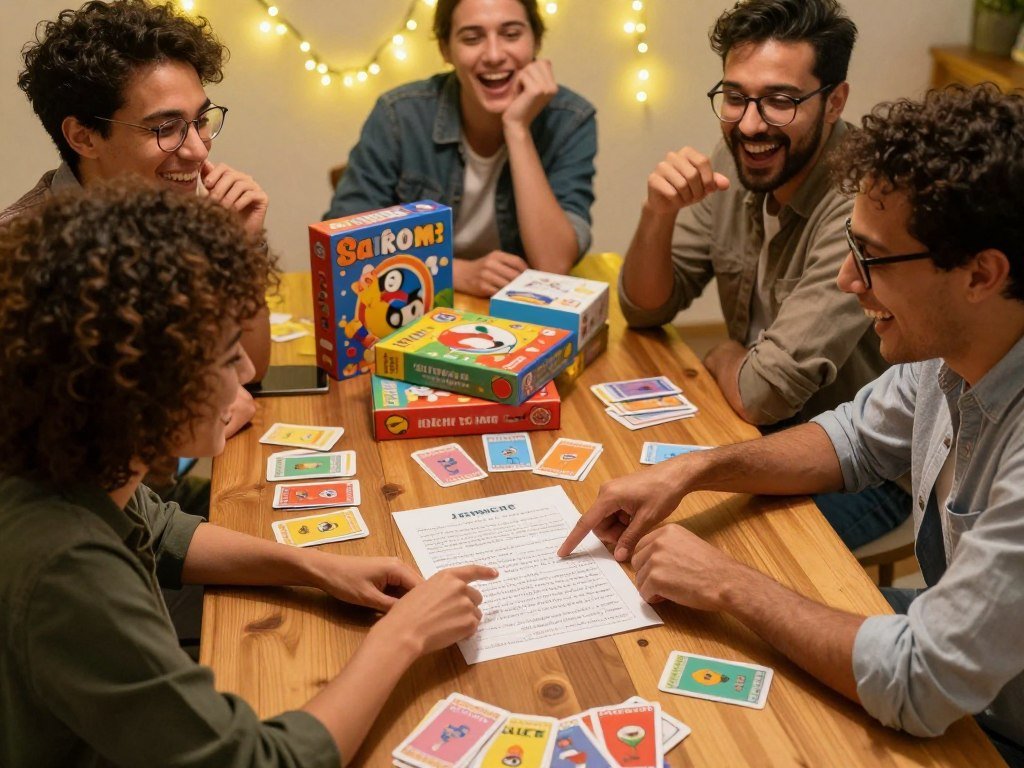
A good group activity gets people involved without making them wait through long turns or complicated rules. The best party games for groups make it easier to bring friends together and create fun experiences at a gathering. Your best pick depends on headcount, space, time, and how comfortable guests feel performing or competing. Parallel play means running the same game in separate circles or teams at the same time so more people can participate.
You can find no-prep openers, large-group games, indoor options, adult picks, and music-based activities here. Some work best with a few friends; others keep a crowded room moving. Start with the size of the group, then choose the mood you want in the room.
Key Takeaways
- Pick a game that fits your guest count and available space.
- Choose short rules when guests are still getting comfortable.
- Use team play or parallel play to keep a large group involved.
- Offer a choice between talking, guessing, drawing, and performing.
- Make personal prompts and drinking optional.
- Keep a simple backup ready in case the first game falls flat.
Best Party Games for Groups of Friends
For a group of friends who want to start talking without setting up a table, Two Truths and a Lie is an easy opener. Friends share three statements, with two true and one invented, while the other players guess the lie. Choose questions that suit the group’s comfort level, especially when guests do not know each other well.
Verbal games that need no materials
In 20 Questions, one player thinks of a person, place, or thing. Everyone else asks up to 20 yes-or-no questions to guess it. The Name Game uses a sticky note on each player’s forehead, with a name written where that player cannot see it. Players take turns asking yes-or-no questions until they guess their name.
Word association needs no equipment: one player says a word, and the next quickly replies with a related word. Never Have I Ever also needs no materials. Players take turns naming something they have never done, and others can share whether they have done it.
Paper-and-pen guessing games
Written Telephone starts with a phrase on paper. Players take turns writing what they think a drawing shows, then drawing the next written phrase. Drawing Telephone follows a similar chain, but players alternate between drawing and describing each picture. It suits roughly four to eight people at a table with paper and pens.
A charades round needs no cards or paper, either. A player acts out a word without speaking, while the group guesses. Pick a no-material option based on how much attention guests want:
- Two Truths and a Lie for personal stories.
- 20 Questions for quiet guessing.
- Word association for quick turns.
- Never Have I Ever for shared stories.
- Charades for guests who enjoy acting.
Let anyone pass on a personal prompt so a conversation game stays comfortable for the whole group.
These party games work well when friends want to talk, but guests can still keep their answers light. For an easy first round, use familiar words or everyday topics instead of private details.

Which Party Games Work for Large Groups?
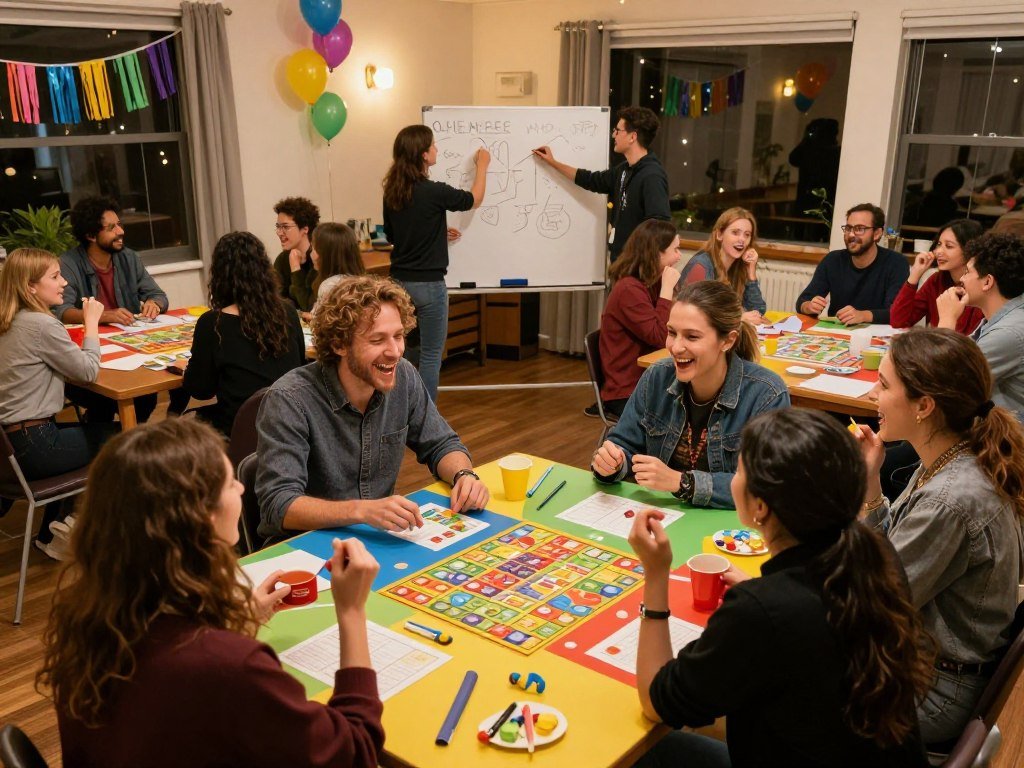
For a crowd, choose a team game or parallel activity so guests are not waiting for one person’s turn. Large-group games usually suit roughly 15 or more players, and parallel participation helps keep them involved. For 100 guests, choose a game whose listed range covers 100 or split everyone into simultaneous groups.
Team games for a lively room
Fishbowl works for 12-60 people and takes 30-45 minutes. Teams guess paper-slip prompts across three rounds: descriptions, one-word clues, and silent acting. The changing rules keep each round fresh without changing the prompts.
Werewolf supports 10-30 players per circle and takes 20-40 minutes. A moderator guides the hidden-role game, waking the werewolves, doctor, and seer in turn at night. Villagers win by voting out every werewolf; werewolves win when they equal the villagers.
For bigger teams, Team Trivia Showdown is listed for 20-200+ people and takes 45-60 minutes. Charades Tournament suits 20-80 people and takes 30-45 minutes. Two teams take turns sending up a silent actor, with an agreed time limit for each turn.
Whole-group games with quick turns
The Left-Right Story is listed for 20-300+ people and takes 5-10 minutes. Guests pass an item as a host reads a story with left and right cues. Other picks include Minute to Win It Stations for 24-120 people, Heads or Tails for 30-1,000+ people, and Human Bingo for 15-200 people.
| Game | Listed player range | Listed duration |
|---|---|---|
| Fishbowl | 12-60 | 30-45 minutes |
| Werewolf | 10-30 per circle | 20-40 minutes |
| Team Trivia Showdown | 20-200+ | 45-60 minutes |
| Charades Tournament | 20-80 | 30-45 minutes |
| The Left-Right Story | 20-300+ | 5-10 minutes |
Stations let several teams play at once, rather than lining up for one activity. Parallel circles do the same for social-deduction games, where each circle needs its own moderator. If your group likes video games, check each mode’s player limit and whether it supports local or online play in this guide to multiplayer Switch games.
Assign a moderator to every Werewolf circle before the first night begins.
Which Games Are Easy to Play Indoors?
For an indoor gathering, word games and drawing games are easy to set up around a table. Clue games suit guests who prefer talking over performing, while drawing rounds invite a shared laugh. Tabletop games need a clear surface and good visibility, so pick one that fits the room as well as the group.
Word and clue games around a table
Codenames uses 25 word cards and two teams. Each team’s clue giver offers a one-word clue that can link several cards, and teammates try to pick the right ones. A browser version supports room-based play and shareable URLs, which can help when guests use their own devices.
Just One is a cooperative party game for three to seven players. Each player writes a one-word clue for a guesser, but matching clues are removed before the guesser sees them. The group wins or loses together, so it works well when a head-to-head contest feels too tense.
Hues and Cues shifts the clues from words to color. A player gives one- or two-word clues, and the others place a pawn on the color square they think matches. It is a calm choice for guests who like visual puzzles.
Drawing games for a shared laugh
Telestrations mixes drawing and guessing in a chain, much like paper Telephone. A 12-player party box is one option for a larger table, and two eight-player copies can accommodate up to 16 players. Keep the pencils and boards spread out so each person has room to draw.
Fake Artist Goes to New York asks players to draw the same picture together. One person does not know the subject and tries to blend in with the real artists. The group studies the drawing to spot who is faking.
Werewords uses yes-or-no questions to guess a secret word before time runs out. A hidden opponent tries to confuse the group, so it blends clue-giving with social-deduction games. For browser play, make sure everyone can access the shared Codenames room. Shared access matters as much as the game itself.
Drawing and tabletop games need enough space for cards and clear sightlines; browser play needs guests to reach the shared room. Check that everyone can see the cards, drawings, or shared screen before starting.

What Games Suit Adults and Drinking Parties?
For adults who enjoy playful suspicion, Find the Imposter turns a missing secret word into a group discussion and vote. Most players know a secret word, while the imposter invents a clue without seeing it. Drinking can remain optional, and a nonalcoholic drink or no-drink version should be equally welcome.
Hidden roles and bluffing
Find the Imposter supports three to 15 players in local Pass & Play or an online room. Browser play is free and may show ads. After everyone shares a clue, the group discusses who seems to be bluffing, then votes.
Two Rooms and a Boom can start with seven players and works for groups of up to 20. Players split between two rooms and take on hidden roles. They talk, trade information, and try to meet their team’s goal before the game ends.
These social-deduction games may not suit guests who dislike bluffing or being singled out. Give people a way to sit out a round without explaining why. A no-drink version can still keep the competition lively.
Creative team games
Blank Slate rewards answers that match exactly one other player. Matching two or more earns less, while a unique answer earns no points. Players try to guess what will connect with one teammate, which makes this game about shared thinking rather than bluffing.
In Saboteur, players lay path cards toward gold while a hidden saboteur tries to block progress. The group must work out who is helping and who is quietly steering the tunnel off course. The role of saboteur brings a little tension without asking anyone to perform.
Snake Oil is the most theatrical choice. Players invent products and pitch them to customers represented by other players. It suits friends who enjoy making up silly sales lines, but guests can also take the customer role instead of pitching.
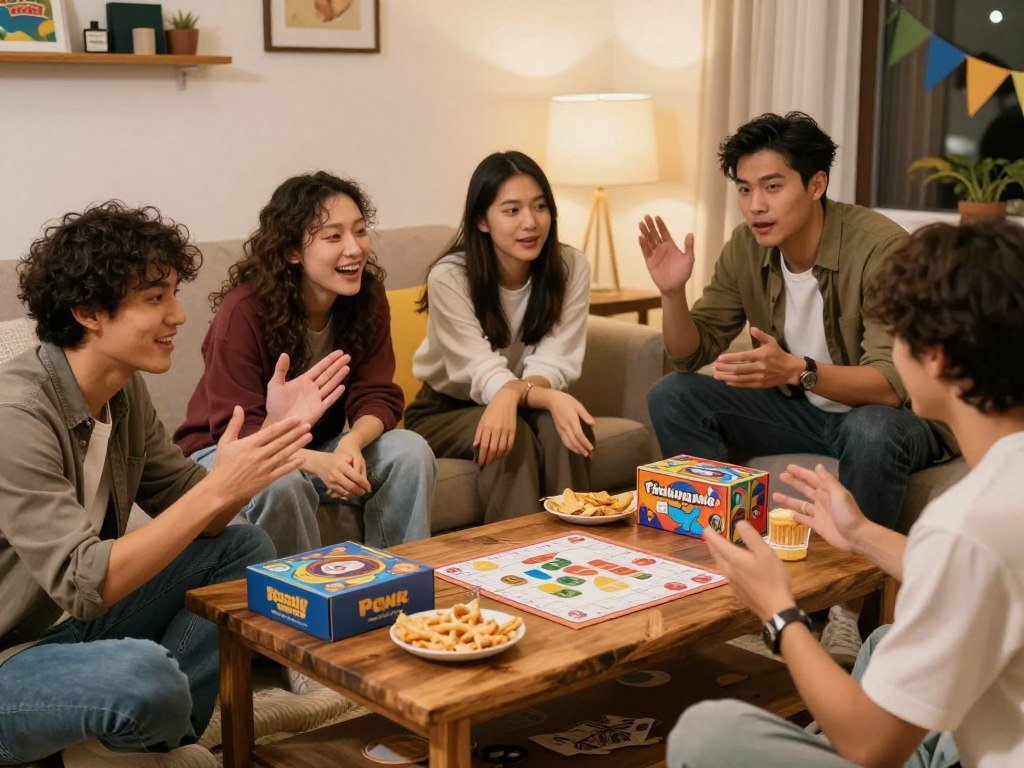
Agree on the room’s comfort level before choosing humor or performance prompts.
Which Quick Games Fit a Music-Filled Party?
Music Bingo is a quick way to turn a playlist into a shared activity, with a 5-minute setup. Song guessing suits guests who enjoy music trivia, while Lip Sync Battle gives them a performance option. Choose a round that can start and end without taking over the gathering.
Song-recognition rounds
Music Bingo works for 6-100+ players. Guests mark song titles on cards as clips play, and the first person to complete a row calls bingo. Name That Tune suits 4-30 players: guests identify each song from its opening five seconds, and the first to 10 points wins.
Music and mingling games
Lip Sync Battle takes 5 minutes to set up and works for 6-20 players. Pairs or teams perform a song, then guests vote for the winner. Birthday Bingo takes 10 minutes to set up and suits 8-50 players. Guests mingle to find people who match facts on custom bingo cards.
| Game | Listed player range | Setup or round timing | How a round is won |
|---|---|---|---|
| Music Bingo | 6-100+ | 5-minute setup | Complete a row and call bingo |
| Name That Tune | 4-30 | Opening five seconds per song | First to 10 points |
| Lip Sync Battle | 6-20 | 5-minute setup | Guests vote for the winner |
| Birthday Bingo | 8-50 | 10-minute setup | Find people matching card facts |
Music Bingo and Name That Tune put song recognition at the center, while Birthday Bingo gets people moving around the room. A playlist can supply the clips for a music round, and cards help guests follow along. Lip sync works best when the crowd enjoys watching a friendly performance.
Choose performance only if guests are comfortable being watched, and let voting stay friendly.
How Do You Choose a Game and Get Everyone Playing?
Narrow the options by checking the guest count, available minutes, room layout, and comfort with performance. Headcount comes first, because a game outside its listed range can leave guests out. Choose a stated player range that fits your group, then check whether everyone gets enough turns.
- Count the guests who plan to play.
- Set a time limit before picking a game.
- Check the room, surfaces, and materials you have.
- Decide whether guests want to perform, talk, or compete.
A game can fit the headcount on paper and still drag if most guests wait for one person’s turn. Large-group games usually suit roughly 15 or more players, so parallel play helps keep more people active. For shared video games, check the player mode and connection needs first. This PS5 game guide covers local and online options for group play.
For a group of roughly 15 or more, favor a format that keeps several people active at once.
Keep your first choice short enough to explain without a long speech. If guests hesitate, start with one sample turn before asking the whole group to join.
Conclusion
A successful game night does not need an elaborate setup, just a format that suits the people in the room. The best fit is usually a game guests can understand quickly and join comfortably. A relaxed first round can help friends settle in without making anyone feel put on the spot.
Choose one short opener and one backup that needs fewer materials or less space. That way, you can adjust if the room feels quieter or busier than expected. Pick one opener, gather what it needs, and explain the rules in a sentence before everyone joins.
FAQ
What are good games to play with a group of people?
Two Truths and a Lie is a good low-prep game for a group of people. Each player shares three statements, with two true and one invented, and the group guesses the false one. For quieter guests, try 20 Questions or word association. Headcount and comfort with performing help narrow the choice, so check those before setting up.
What are fun group activities for an adult party?
Fun adult party activities include conversation games, bluffing games, and light performance games. Two Truths and a Lie starts a chat, while Find the Imposter adds guessing and group discussion. Snake Oil suits guests who enjoy making up a pitch. Keep participation optional, and make drinking optional too, so guests can join in a way that feels comfortable.
What are some fun group activities?
Fun group activities can involve talking, guessing, drawing, or music. Try word association for a no-material option, 20 Questions for guessing, or Drawing Telephone for a chain of sketches. Music Bingo works when guests want to listen and play at once. Choose one style that matches the room’s energy, rather than expecting every guest to enjoy performing.
What are some fun easy party games?
Two Truths and a Lie, 20 Questions, and word association are easy party games with little or no setup. Each has short turns, and players can learn the rules as they go. For word association, one person says a word and the next replies with a related one. Use familiar topics so guests can join without pausing to think of complex answers.
What games are good for adults?
Social-deduction games and creative team games are good choices for adults who enjoy shared guessing or making things up. Find the Imposter and Saboteur bring hidden roles, while Snake Oil invites playful pitches. Bluffing or performing may not suit every group, so offer a different role or let guests pass. No one needs to drink to take part.