
A great strategy game makes a smart decision feel rewarding, whether you have a whole evening or a short break. The best strategy games give you room to plan, react, or test a bold idea, but the right choice depends on your habits. This list spans PC and mobile, with turn-based planning, real-time battles, empire-building, and tactical missions.
You can jump to a pick based on the way you like to play. Some games ask for careful choices across a long campaign; others make a single match or mission the main event. The goal is to help you spend your gaming time on a style that feels fun, not like another task.
Use the quick guide first, then follow the sections that match your platform and pace. You will find familiar series, unusual hybrids, and focused mobile picks. Each offers a different kind of challenge, so you can find a fit without treating one title as the winner for everyone.
The right fit is the one whose decisions keep you curious about your next move.
Key Takeaways
- Choose by pace first: short missions, quick matches, or long campaigns.
- Pick turn-based planning when you want time between moves.
- Choose real-time strategy when you enjoy issuing orders as action unfolds.
- PC and mobile both offer tactical, empire-building, and defense-focused options.
- Try an opening mission before committing to a long campaign.
How Do You Choose the Best Strategy Games for Your Play Style?
If you want a safe first RTS pick, start with Age of Empires IV; choose turn-based play instead when you want time to consider each move. A 4X game uses a structure built around exploring, expanding, exploiting resources, and exterminating rivals. Your best starting point depends on whether you enjoy quick choices or plans that stretch across a campaign.
Match the pace of the game to the time and focus you want to give it. A turn-based strategy game pauses between turns, while real-time strategy (RTS) keeps battles moving as you issue orders. Tactics games focus on smaller teams and specific missions. Empire management asks you to guide a society, faction, or colony over time.
Turn-based role-playing games can also mix combat choices with story decisions. Civilization VII and Crusader Kings III focus on different forms of long-term planning. XCOM 2 centers on tactical combat, while RimWorld blends colony management with changing events. Europa Universalis IV and Frostpunk 2 also show how wide grand strategy and colony sims can be.
Slipways is a useful option when you want a contained run: one game typically takes about 45 minutes to a couple of hours. That length suits a focused session better than an open-ended campaign. For co-op or competitive play, check the mode you want, since a game’s player limits and match rules can vary.

| Game | Main style | Best fit |
|---|---|---|
| Age of Empires IV | Historical real-time strategy | Players who want active battles |
| Civilization VII | Turn-based empire building | Players who like era-spanning plans |
| Total War: Warhammer III | Campaign map and real-time battles | Fantasy war and tactical fights |
| Door Kickers | Real-time squad tactics | Players who plan SWAT operations |
| Slay the Spire 2 | Turn-based deckbuilding | Run-based choices and card play |
A short-session player should favor a compact run, while a long-campaign fan can prioritize a game with a persistent map or story.
Choose a format you will enjoy repeating, not just one that sounds impressive. A sprawling map can be exciting, but it asks for patience and regular attention. A compact mission may offer more satisfying decisions when you only have a little time.
A short-session player should favor a compact run, while a long-campaign fan can prioritize a game with a persistent map or story.
Is Slay the Spire 2 the Right Roguelike Strategy Pick?
If you enjoy building a plan from a small set of options and adapting when it changes, Slay the Spire 2 is the turn-based pick to try. Its roguelike deckbuilding format makes card choices shape each run. Every choice matters, because your deck and route affect the tools you have later.
Slay the Spire 2 launched in early access in 2026. During its early-access launch window, it reached a monthly peak of more than 362,000 concurrent Steam players. That monthly peak records the highest concurrent player count during that month, rather than an average across all hours.
Its 24-hour Steam player peak was around 173,000 in 2026. During peak hours that year, about 83,000 Steam players were active at any given time. These figures describe different time windows, so they should not be treated as the same measure.
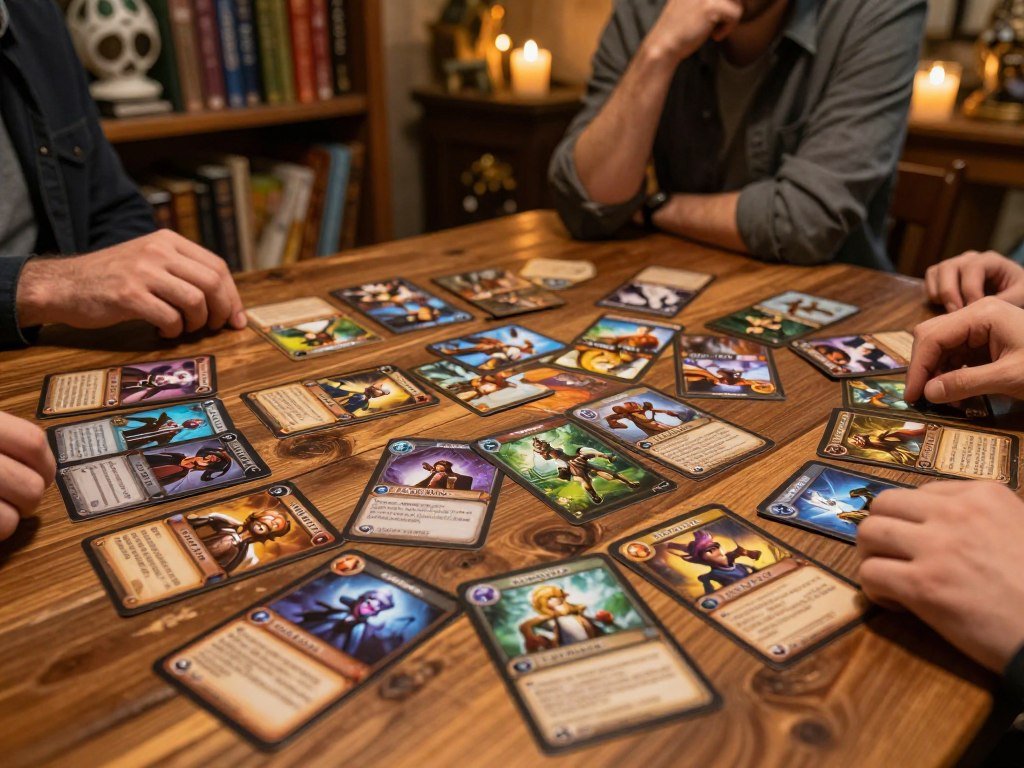
The appeal is the changing puzzle: a card that helps one run may not suit the next. You weigh what to add, what to skip, and how much risk to accept. This gives each attempt a clear arc without asking you to manage an empire or direct a full battlefield.
Popularity can help you see that a game has a large audience, but it cannot tell you whether deckbuilding feels good to you. If you prefer direct control of units, card choices may feel too narrow. Players who enjoy adapting a plan from limited options will find more to work with.
Early access means the game is still an evolving version, and the experience can change as development continues. Treat the player figures as signs of interest, not proof that the game suits every player. Choose it for its run-by-run decisions rather than its player count.
Treat early access as an evolving version of the game, and choose it for its run-by-run decisions rather than its player count.
Does Civilization VII Reward Long-Term Planning?
Civilization VII is the pick for a player who wants to shape a society through several historical eras, not just win individual battles. It launched in early 2025, and its Age system resets civilizations as the campaign moves through history. The reset changes what long-term planning means in this series.
Each Age reshapes the campaign instead of carrying one unchanged civilization through the whole run. That structure can make a late stage feel like a fresh strategic problem. You respond to a new era and adjust your decisions rather than simply extending the same empire.

Players familiar with Civilization VI may expect a more continuous empire-building experience. Civilization VII takes a different route by resetting civilizations across historical eras. The shift asks you to adapt instead of relying on one fixed national identity from start to finish.
That change can suit you if each new era sounds like a chance to reconsider your priorities. You might enjoy choosing a fresh direction, then finding a new path through its challenges. The campaign still rewards planning, but the plan must change with its structure.
The same feature can frustrate players who want one civilization to grow without interruption. If you prefer a single society with a steady identity, the resets may feel like a break in the story. That preference is less about difficulty than the kind of long campaign you want.
Good long-term planning depends on knowing when a game expects you to adjust. Civilization VII makes that shift part of its design, so a flexible player may find more to consider. A fixed plan can feel less useful when each era brings a new shape to the campaign.
Choose it when a changing campaign structure sounds like a fresh strategic problem rather than an interruption.
Which Age of Empires Game Suits an RTS Fan?
For an RTS player who wants historical factions and an active ranked structure, Age of Empires IV is the clearest fit. It has seasonal ranked play and ongoing DLC civilizations. That live structure gives competitive players reasons to return, while the setting stays rooted in history.
Choose Age of Empires IV for ranked play, or Age of Mythology: Retold for myth and divine powers. Retold uses mythological factions with distinct identities and godly abilities. Its setting changes the feel of a match without leaving the familiar real-time strategy format behind.
Red Alert 3 offers an alternate-history campaign with a humorous tone. It has three campaign scenarios and supports co-op, so you can play through its story with another person. For a science-fiction contrast, StarCraft II brings three distinct races and timed campaign objectives.
The Command & Conquer series and Red Alert games offer a different flavor from historical strategy. Their bold settings and fast action can suit you if you like a dramatic campaign. StarCraft II also makes faction choice central, with each race offering a distinct way to approach combat.
Before choosing, weigh what you want from the match itself. Do you care most about the setting, the ranked scene, or building and defending a base? Your answers can point to a better fit than a broad label like RTS games.
- Preferred setting: historical, mythological, alternate history, or sci-fi.
- Interest in competitive play: ranked matches or mainly campaigns.
- Appetite for base-building: a core focus or a smaller part of play.
Pick the setting you will want to return to after the novelty of a new faction wears off.
Is Age of Empires II Still One of the Best Strategy Games of All Time?
For a classic historical RTS that is easy to start and rewarding to master, Age of Empires II is the all-time pick. It centers on gathering resources, growing a base, and taking control of a map. The basics are clear, but skilled play asks for sharp timing and smart counters.
Its maps can be randomly generated from selectable layouts. That gives familiar matches a different shape without changing the core rules. You can choose a map layout, then face a fresh arrangement of land and resources.
The series has had two major remasters: the HD Edition arrived in 2013, and the Definitive Edition followed in 2019. Those releases helped keep the game available to players across different years. Its long-running appeal also rests on a simple loop that new players can learn.
Gathering, building, and making an army gives you an easy starting point. From there, you can learn when to expand, which units counter an enemy, and how to time an attack. That room to improve helps each match feel like more than a repeat of the last one.
Age of Empires II suits you if you want a traditional historical RTS, rather than a game built around unusual rules. You can focus on a familiar plan or test a new approach as the map changes. The game keeps its main ideas easy to grasp, even when good play takes practice.
For many players, the strongest matches begin with a plan and then force a quick change. A new map can move key resources or make one route harder to defend. Try a different map layout when a familiar strategy starts making every match feel the same.
Who Should Play Total War: Warhammer III?
Choose Total War: Warhammer III if the idea of planning across a huge fantasy map and resolving conflicts in battles is the draw. Its Immortal Empires campaign brings factions from all three Warhammer games together on one map. The scale is the point: strategy and combat both matter.
Its main appeal comes from combining campaign planning with real-time battles. You make choices across the map, then see conflicts play out through direct battlefield command. That shift gives the game two linked rhythms, rather than one steady type of decision.
Immortal Empires makes the map feel broad because it combines factions from three games. You can focus on expansion, rivals, or the next battle, while the campaign gives those fights a larger purpose. The fantasy factions add variety to a war that stretches across a wide region.
Northgard offers a different kind of strategy experience. Its clans and winter survival give the game a sharper focus on managing a community under pressure. It is not a substitute for a huge fantasy campaign, but it may suit you if survival decisions sound more appealing.
Dune: Imperium is a tabletop strategy game designed for 2-4 players. Its appeal comes from planning around other people at the table, not directing a real-time campaign. It offers a separate way to enjoy strategy when you want a shared session.
Think about whether you want both map decisions and tactical battles in the same game. If you mainly want quick battlefield matches, the campaign may feel like extra work. If you enjoy building toward a conflict, the two layers can support each other.
Check that you want both campaign management and tactical battles, since the game’s appeal depends on the combination.
Why Do Company of Heroes 3 Battles Feel Tactical?
Company of Heroes 3 is a strong fit when you want a World War II RTS where unit positioning and skirmish decisions matter. Its skirmish modes and 1v1 ranked scene support both solo practice and direct competition. Small choices count when squads fight over useful ground.
The series puts squads and cover at the center of combat. That differs from an approach based mainly on producing large armies and sending them forward. Protecting units and choosing where they move can matter as much as building strength.
The original Company of Heroes is a useful reference for the series. It is a World War II RTS built around squads and cover. That focus helps explain why a battle can turn on where a unit takes shelter, not just how many units you bring.
Map control creates pressure to hold key ground while keeping your force safe. A squad caught in the wrong place can lose its value, even if you have more units nearby. You must watch the battlefield and make choices about when to advance or pull back.
Skirmish modes let you practice these decisions without taking on a long campaign. Ranked 1v1 play gives players a more direct contest, where each move meets another person’s response. The mode you choose can change how much pressure each small decision carries.
Players who enjoy close combat decisions may welcome that focus. It offers a different sort of challenge from building a large base and managing a broad economy. A player who prefers uninterrupted base expansion over close unit management may be happier with a more traditional RTS.
Which Turn-Based Tactical Game Fits Your Squad?
Choose Warhammer 40,000: Tacticus for a mix of campaign progression and competitive modes, or Rebel Cops when stealth is the priority. Tactical Breach Wizards is a puzzle-like alternative with plans you can rewind. Your preferred mission matters more than the shared turn-based label.
Tacticus includes PvE campaigns, live events, guild raids, and PvP. That range gives you several ways to use a squad, from campaign progress to player-versus-player matches. Its modes suit people who want more than a string of stand-alone missions.
Co-op and competitive modes can also change the feel of a session, so check the mode before joining friends. Rebel Cops blends turn-based tactics, stealth, and role-playing elements. Its missions reward careful movement and choices about how to deal with threats.
Campaigns and PvE progression
Tacticus works for players who want a steady mix of campaign tasks and live activities. Guild raids add a group goal, while PvP pits your squad against another player. Progress comes in layers, so you can choose the mode that fits your mood.
- PvE campaigns
- Live events
- Guild raids
- PvP
Stealth, rewinds, and mission puzzles
Tactical Breach Wizards turns missions into small planning puzzles. Its 35 missions use parties of three characters, later growing to four. You can rewind plans, which makes it easier to test a risky move and learn from its result.
| Game | Core tactical hook | Best fit |
|---|---|---|
| Warhammer 40,000: Tacticus | Campaigns and multiple modes | Players who want ongoing progression |
| Rebel Cops | Stealth and role-playing choices | Players who favor careful missions |
| Tactical Breach Wizards | Rewindable plans and small squads | Puzzle-minded tactical players |
Players who dislike restarting or revising a plan should favor the game whose mission structure best matches their tolerance for setbacks.
Can Door Kickers Make Real-Time Tactics More Deliberate?
Door Kickers is a good fit if you want to map out a SWAT operation, watch it unfold, and pause when the plan needs changing. You assign waypoints and real-time instructions to your team. Planning comes first, but you still need to react when events shift.
You can pause the action and change directives before play resumes. That lets you plan a route without issuing every order in a rush. You can set instructions, observe how they work, then adjust the team’s response.
The game focuses on SWAT team operations, not empire building or large-scale warfare. Each mission asks you to guide a small team through a defined situation. That close scale puts attention on routes and orders rather than managing a broad base.
Waypoints give your team a path, while instructions shape what each member does along the way. You can lay out a plan, then use the pause option if a new threat makes it unsafe. Changing a directive does not mean the original plan failed; it means the situation changed.
That mix can feel more thoughtful than a fast RTS, but it still has real-time action. The team carries out orders while the mission unfolds, so a plan may need another look. A careful route can run into a new problem once combat starts.
Take time to make each order clear before the operation begins. Give each team member a clear route and instruction before letting the action run. A vague order can leave a squad member exposed or out of place.
Does Spore Offer More Than One Kind of Strategy?
Spore is the genre-bending pick for players who want a single game to move from microscopic survival toward space exploration. It released on September 7, 2008, and has an 84 Metascore. Its scope keeps changing as your focus grows beyond one organism.
The game moves through six phases: Tidepool, Creature, Tribal, City, Civilization, and Space. Each stage shifts what you manage and how wide the world feels. The sequence starts with survival and ends with interstellar exploration.
In Tidepool, you guide an organism through early survival. The Creature phase expands that focus to life on land. Tribal play moves the action toward a group, then the City phase asks you to guide a growing settlement.
The Civilization phase widens the challenge to a society, while Space opens the door to interstellar exploration. Your decisions stretch from the needs of one creature to contact with far-off worlds. Few games shift scale in quite the same way.
That variety is the main reason to choose Spore. It does not ask you to spend the whole game mastering one narrow strategy loop. Each phase brings a new kind of focus, so the experience can feel more like a sequence of related games.
The release date and review score identify the game, but they do not prove every phase has equal depth. You may enjoy the broad sweep while finding some stages more engaging than others. Choose it for the variety of its evolutionary journey, not for a single, narrowly focused strategy loop.
Which Kingdom Rush Game Should Tower-Defense Fans Try?
Start with Kingdom Rush Tower Defense TD for a direct tower-defense pick, or consider Kingdom Rush 5: Alliance TD if you want the newer named entry. The series gives you focused defense choices, with enemies pressing along set routes. Placement is the heart of each stage.
Kingdom Rush Tower Defense TD had a 4.7-star Google Play rating in 2026. Kingdom Rush 5: Alliance TD had a 4.6-star rating on Google Play in 2026. Ratings offer a quick snapshot, but the game’s defense style is a better guide to whether you will enjoy it.
As of 2026, the Kingdom Rush series had seven games, with an eighth on the way. A new player can begin with the straightforward entry or choose the newer named option. The choice depends on whether you want a clear starting point or a more recent installment.
Tower defense turns each stage into a set of choices about where to place defenses and how to improve them. You watch enemy routes, then decide which lane needs more help. A strong setup can save resources, while a poor one leaves a gap at the wrong time.
The style suits you if you enjoy repeating a focused loop and making small changes between stages. It may not be the best match if you want an open map or long-form empire management. The main challenge stays close to the lanes and the defenses you place.
- Preferred entry point: the direct starting game or another installment.
- Interest in a newer installment: try Kingdom Rush 5: Alliance TD.
- Appetite for lane-based defense: consider how much you enjoy holding set routes.
Try a single stage first to see whether placing and upgrading defenses is the kind of repeated decision you enjoy.
Which Mobile Strategy Game Works Best Online?
For alliance-based mobile play, start with Clash of Clans; for short competitive rounds, try Clash Royale. The match structure sets the pace, whether you are building with others over time or facing a rival in a quick contest.
Clash of Clans is the core pick for online alliance play, while Clash Royale suits shorter competitive matches. Rise of Kingdoms: Lost Crusade, Age of Empires Mobile, and Top Lords offer other mobile strategy options. Their ratings can help you compare them, but each game asks for a different kind of attention.
Alliance building and long-term play
Clash of Clans fits players who want group activity and ongoing progress. Rise of Kingdoms: Lost Crusade and Top Lords also suit players who want longer mobile play. The feel of multiplayer depends on the game’s match structure, not just whether other players are involved.
Online play needs a reliable internet connection. Some games ask for regular participation, so free-to-play does not always mean low commitment. Primitive Era: 1000 BC is a freemium game, which means it is free to start and may offer optional purchases.
Short competitive matches
Clash Royale is the pick when you want a faster head-to-head match. The best free-to-play strategy games can still ask for your time and ongoing participation. Check how a game handles events and group play before you build your routine around it.
| Game | Mobile focus | Google Play rating in 2026 |
|---|---|---|
| Clash of Clans | Alliance-oriented base play | 4.5 stars |
| Clash Royale | Short competitive matches | 4.4 stars |
| Rise of Kingdoms: Lost Crusade | Long-term strategy play | 4.5 stars |
| Age of Empires Mobile | Mobile empire strategy | 4.1 stars |
| Top Lords | Online strategy play | 4.7 stars |
Choose an online game whose match and alliance demands fit the amount of time you can reliably give it.
Which Strategy Games for Android Suit Short Sessions?
For a mobile village-building option, Primitive Era: 1000 BC is the clearest pick, while the rated alternatives span tactics, action, and defense. It is a freemium village-building strategy game for iOS and Android. Your session style can help narrow the other options.
Pick tactics for squad choices, lane defense for enemy waves, or village building for steady growth. Warline: Sniper Strike, Abalon: Roguelike Tactics CCG, and Stick War: Legacy bring different kinds of action. Plants vs. Zombies and Kingdom Rush Tower Defense TD offer lane defense.
Tactical and lane-defense options
Warline: Sniper Strike had a 4.9-star Google Play rating in 2026, while Abalon: Roguelike Tactics CCG had a 4.8-star rating. Stick War: Legacy also had 4.8 stars. These figures reflect ratings in 2026, not a promise that every player will like the same style.
Plants vs. Zombies had a 3.5-star Google Play rating in 2026. The Kingdom Rush Tower Defense TD rating was 4.7 stars that year, and it is included here as a reference from the previous section. The options range from tactical choices to familiar lane defense.
Village building and quick action
Primitive Era: 1000 BC is the core pick if you want village growth on a mobile device. Its village-building focus differs from a mission built around quick combat. Choose by the kind of decision you want to make when you open the game.
| Game | Style | Google Play rating in 2026 |
|---|---|---|
| Warline: Sniper Strike | Tactical action | 4.9 stars |
| Abalon: Roguelike Tactics CCG | Roguelike tactics and cards | 4.8 stars |
| Stick War: Legacy | Action strategy | 4.8 stars |
| Plants vs. Zombies | Lane defense | 3.5 stars |
| Kingdom Rush Tower Defense TD | Lane defense, covered earlier | 4.7 stars |
Check whether a game’s session loop lets you stop comfortably before choosing it for quick breaks.
Is Mindustry a Good Fit for Factory-Building Strategy?
Mindustry is the pick for a player who wants to build a working production network and defend it at the same time. It combines tower defense, resource management, and conveyor-belt factory building. Production and defense depend on each other throughout play.
You gather resources, route them through belts, expand output, and protect the base. The factory is not a separate mode from combat. Production decisions shape how well you can meet defensive pressure.
A resource path can look simple at first, then become harder to manage as the factory grows. Belts carry materials from one part of your system to another. A poor route can slow output before you notice the shortage.
Base layout matters because production and defense share space. You need room to move resources while protecting the areas that keep the factory running. Building more machines will not solve a bottleneck if the needed materials cannot reach them.
The loop can appeal to you if you like tracing a problem through a system. A short supply line may improve output, while a weak defense can leave production exposed. Each fix affects the rest, so an efficient design needs more than one good idea.
- Resource flow: check what materials your factory needs.
- Belt routing: trace how materials reach each machine.
- Factory layout: place production where supplies can reach it.
- Defensive coverage: protect the base and its working lines.
When a line of production stalls, trace the resource path before expanding the factory.
Expansion can add output, but it can also create a longer path to maintain. The best next step may be fixing a belt rather than adding another machine. When a line of production stalls, trace the resource path before expanding the factory.
Are Iron Marines 1 and 2 Good for Short RTS Missions?
Choose Iron Marines 1 or 2 if you want mobile RTS missions that put squad control ahead of building a sprawling empire. Both are real-time strategy games designed for mobile, with drag-and-drop squad controls and short missions. The smaller scale keeps the action focused on your units.
Iron Marines 1 and 2 suit players who prefer direct squad orders over long base-building matches. You move squads by dragging them to new positions, then respond as combat unfolds. The missions give you a clear task without asking for a sprawling campaign session.
A PC RTS often centers on larger bases, more units, and longer matches. Iron Marines keeps its focus closer to the squad, which can work well on a phone or tablet. You still need to make real-time choices, but the scale is easier to pick up in a short session.
The controls make touch input part of the experience. Dragging a squad is a direct way to set a new position, but it may feel different from using a mouse. Your comfort with the device can affect how smoothly you respond under pressure.
Both games are good candidates if you want compact sci-fi combat and hands-on orders. The missions give you a defined goal, while the action asks you to watch your units. This is a tighter RTS format than managing a large base over a long match.
- Check your comfort with touch controls.
- Decide whether you prefer shorter missions.
- Look for real-time squad orders, not broad empire management.
Use the first mission to see whether drag-and-drop orders feel comfortable on your device.
Choose the game that feels easy to control during its first fight. Use the first mission to see whether drag-and-drop orders feel comfortable on your device. A comfortable control style can make a quick session feel much more enjoyable.
Conclusion
The best choice is the game whose decisions match the way you like to spend your play time. Start by picking a pace and decision style, then narrow your choices by platform. That simple order can keep a deep campaign from landing on a phone when you wanted a quick match.
Choose one title from the shortlist and try its opening mission, campaign, or match before you commit to long-term play. Notice whether its choices make you want to continue, or whether you would rather try a different style. Pick one title that fits your platform, start its first mission or match, and see whether you want to make the next decision.
FAQ
What is the difference between real-time and turn-based strategy games?
Real-time strategy games keep the action moving while you issue orders, while turn-based strategy games give players separate turns to plan. In real-time play, you may need to manage several tasks as events unfold. Turn-based play lets you pause between moves and think through choices before acting. The right pace depends on whether you enjoy pressure or careful planning.
Are strategy games hard for beginners?
Some strategy games are easy to start, while others ask you to learn many systems at once. Tutorials and short missions can teach basic controls before a bigger challenge begins. A focused tower-defense game may feel simpler than a sprawling campaign with diplomacy and resource management. Try an opening mission to see whether the game explains its rules clearly.
Can strategy games be played offline?
Many single-player campaigns can be played offline, but ranked matches, live events, and other online modes need a connection. Offline access can also depend on the game and the device you use. If you expect to play without internet, check whether the mode you want works offline. A game’s online features may need a connection even when its campaign does not.
Are mobile strategy games usually free to play?
Some mobile strategy games are freemium, meaning you can start for free but may see optional purchases. Others may ask you to pay before playing, and free games can still include time-based events or extra items. Check the app listing for current terms before installing. Also consider whether optional purchases affect the kind of play you want.
What makes a strategy game a 4X game?
A 4X game uses four core ideas: explore, expand, exploit resources, and exterminate rivals. You may send units into unknown areas, grow your territory, manage supplies, and compete with other groups. Many 4X games use turn-based play, but the label describes the game structure rather than one fixed pace. The four ideas can appear in different forms from game to game.
Which strategy games are good for short play sessions?
Iron Marines offers short missions, while Slay the Spire 2 uses run-based play that suits a focused session. Compact matches and missions are often easier to fit into a break than a long campaign. Session length still depends on how quickly you play and whether you finish a run. Choose a game that lets you stop at a clear point.