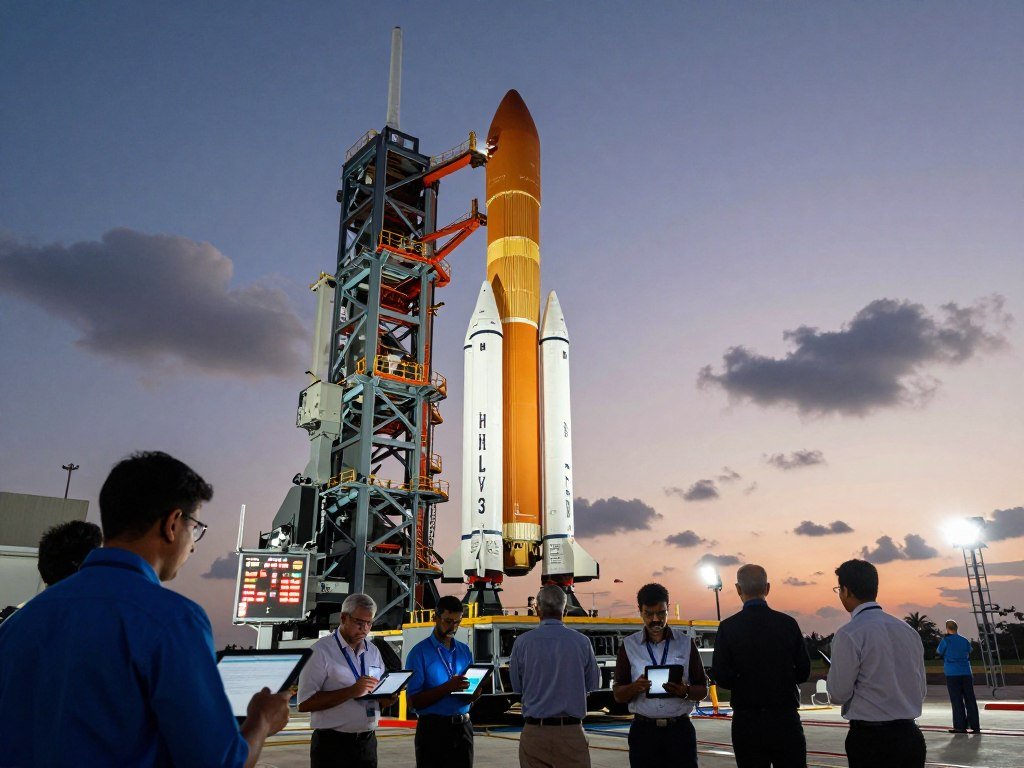
The key question is not simply whether the rocket is ready, but what kind of readiness has been demonstrated. For India’s crewed-spaceflight plans, that difference matters: a completed test milestone is not the same as a crewed launch. As of October 2026, people following the 2026 launch schedule need to separate work completed on the ground from results still expected in flight.
This overview explains how to read readiness updates, from vehicle work to spacecraft tests, uncrewed flights, and support for astronauts. It also puts mission timing in context: the next planned step is an uncrewed test, while no firm crewed launch date has been published. The useful measure of progress is how each uncrewed flight reduces risk before astronauts fly.
Key Takeaways
- Ground qualification and flight proof are different milestones.
- The next planned Gaganyaan flight is uncrewed.
- HLVM3 is a human-rated version of the LVM3 launcher.
- Escape, spacecraft, recovery, and crew-support systems all matter.
- ISRO has not published a firm crewed launch date.
Gaganyaan HLVM3 Human Rated LVM3 Readiness 2026: What Is Complete?
HLVM3 has cleared its reported ground-testing milestone, but that alone does not mean astronauts are about to fly. Human-rating is the process of adapting and verifying a vehicle and its systems to meet crew-safety requirements.
As of October 2026, development and ground testing of all HLVM3 propulsion stages and structures were complete. The first-flight launch campaign had also begun, while the planned first flight remained uncrewed. Ground readiness is not the same as proof from an orbital flight with people aboard.
“Human-rated” marks a qualification milestone, not a promise that a crewed launch is imminent.
ISRO said LVM3 human-rating was complete by December 2024, with systems tested for enhanced reliability. That work adapted the launch vehicle for human-safety requirements, but a successful flight still has to show how the integrated systems perform in actual mission conditions.
The distinction is important because ground tests and launch-campaign work answer different questions. Testing can check parts, structures, and systems under planned conditions. A flight can expose how those parts work together through launch, orbit, and return.
The first planned flight is an uncrewed mission. Its results will add evidence about the launch vehicle and spacecraft before a crew is assigned to a flight. Updates about the campaign should be read as progress reports, not as proof that every mission risk has been removed.
The term human rated describes a vehicle configuration and its qualification work. It does not, by itself, state that the vehicle has completed a crewed mission or that a launch date is set.
ISRO’s HLVM3 update records the December 2024 human-rating milestone and the start of stacking for the first uncrewed flight.
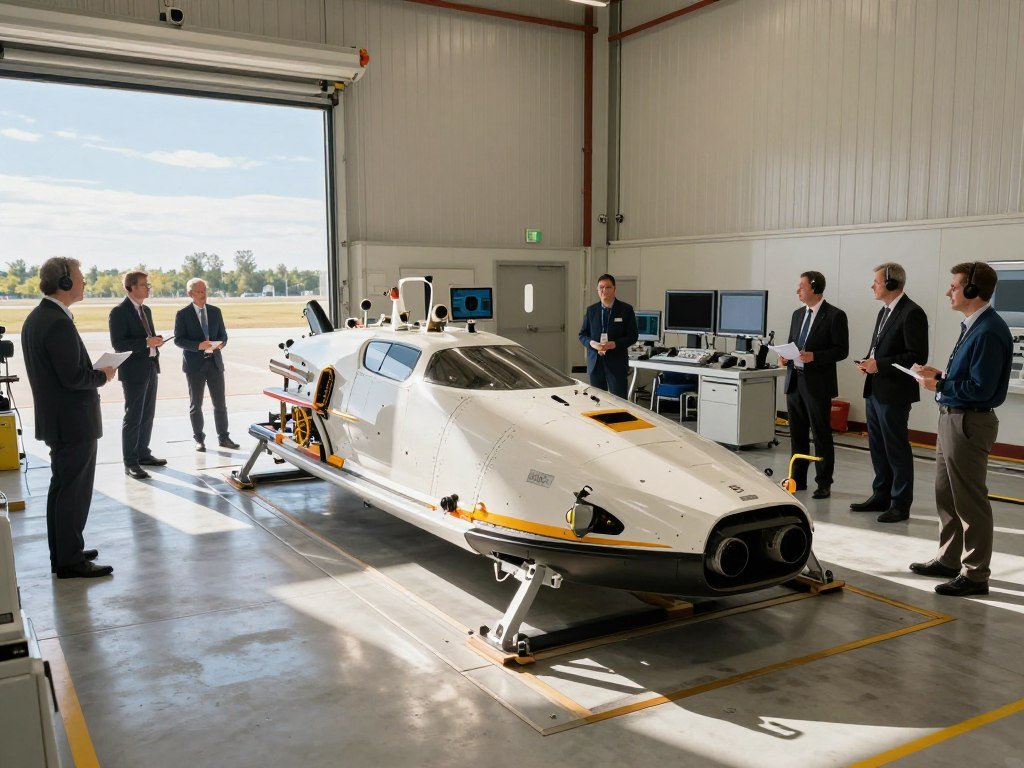
Treat “human-rated” as a qualification milestone, not a synonym for “crewed launch imminent.”
What Is HLVM3, and How Is Its Three-Stage Vehicle Built?
HLVM3 keeps the three-stage architecture of LVM3 but is configured for crew-safety requirements. Its solid, liquid, and cryogenic stages provide thrust in sequence as the launch vehicle climbs through ascent.
The three propulsion stages use different fuels and serve different parts of the climb. Together, they carry the spacecraft from the launch pad toward low Earth orbit, where the mission payload separates from the rocket.
Solid, liquid and cryogenic stages
The HS200 is the solid motor used at the start of flight. Solid propulsion supplies strong initial thrust as the vehicle leaves the pad. The L110 liquid stage then adds thrust during the next part of ascent.
The C32 cryogenic stage operates later in the flight. It uses the CE20 engine, which burns liquid hydrogen and liquid oxygen. This upper stage provides the push needed to place a payload into orbit.
| Stage | Propulsion type | Role |
|---|---|---|
| HS200 solid motor | Solid | Initial lift from the pad |
| L110 liquid stage | Liquid | Continued thrust during ascent |
| C32 cryogenic stage | Cryogenic | Upper-stage push toward orbit |
Vehicle size, payload and engine qualification
The human-rated LVM3 is 53 meters tall and weighs 640 tonnes, as stated in December 2024. Its stated payload capacity is about 10 tonnes to low Earth orbit. That figure describes a destination and capacity, not a fixed load for every flight.
Engine testing is one part of preparing the upper stage. Ground qualification tests for the CE20 cryogenic engine version used in HLVM3 were completed, with the final round held on February 13, 2024. That milestone checked the engine under ground-test conditions.
Vehicle size, mass, engine performance, and payload capacity describe different features. They should not be treated as a single measure of launch readiness. Payload also depends on the mission configuration and destination.
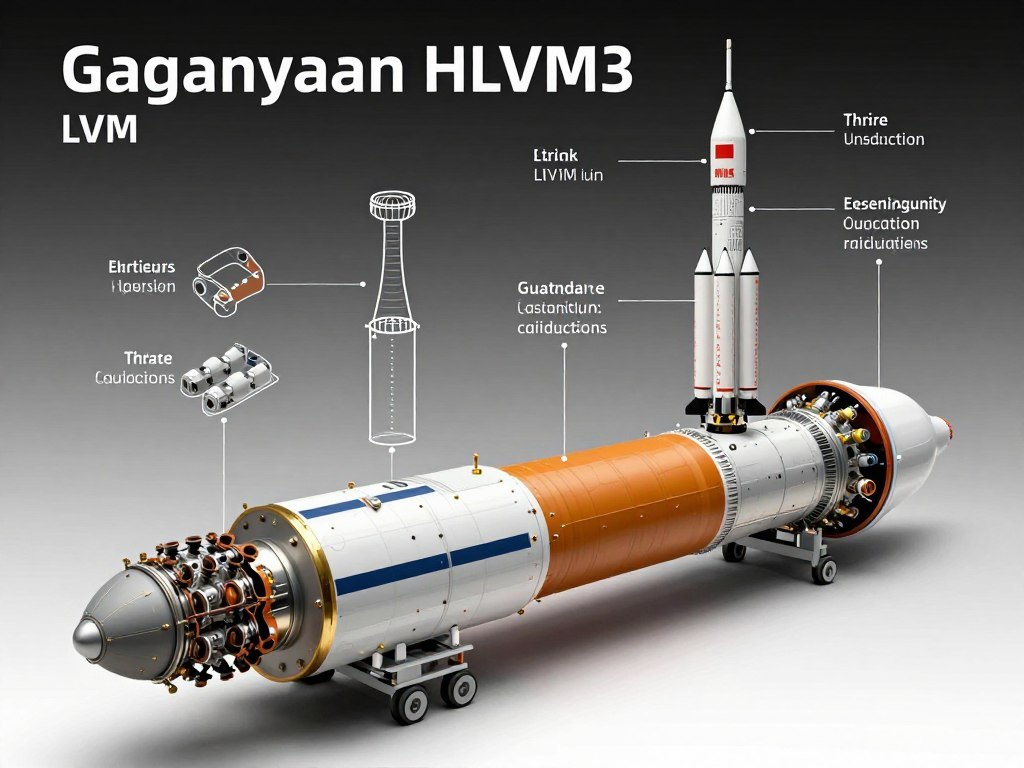
Keep payload capacity in context: it is a low Earth orbit figure, not a promise about every mission configuration.
How Does the Crew Escape System Protect Astronauts?
A crew escape system is designed to separate the crew module from the launch vehicle if an emergency makes continuing unsafe. HLVM3’s crew escape system, or CES, is intended to move the capsule away from the rocket during covered ascent phases.
ISRO stated that CES coverage begins at the launch pad and continues until separation after the atmospheric flight regime. ISRO also said an escape provision was available during every ascent phase through orbital injection. Coverage describes when an escape option is available, not an automatic response to every fault.
The CES depends on motors that can pull the crew module away. By October 2026, ISRO had developed and static-tested five types of CES motors. TV-D1, a Test Vehicle mission, then validated the escape system in flight.
Static tests and a flight demonstration answer different questions. A static test fires a motor while it stays on a test stand, allowing engineers to check its performance. TV-D1 tested the escape system in flight, showing how system parts worked together in a real flight setting.
- ISRO had developed and static-tested five CES motor types by October 2026.
- TV-D1 successfully validated the crew escape system in flight.
- Stated coverage runs from the launch pad through separation after the atmospheric flight regime.
Escape coverage does not guarantee that every malfunction will trigger an abort. The system is designed around defined operating conditions and flight phases, so coverage alone does not describe every possible fault or response.
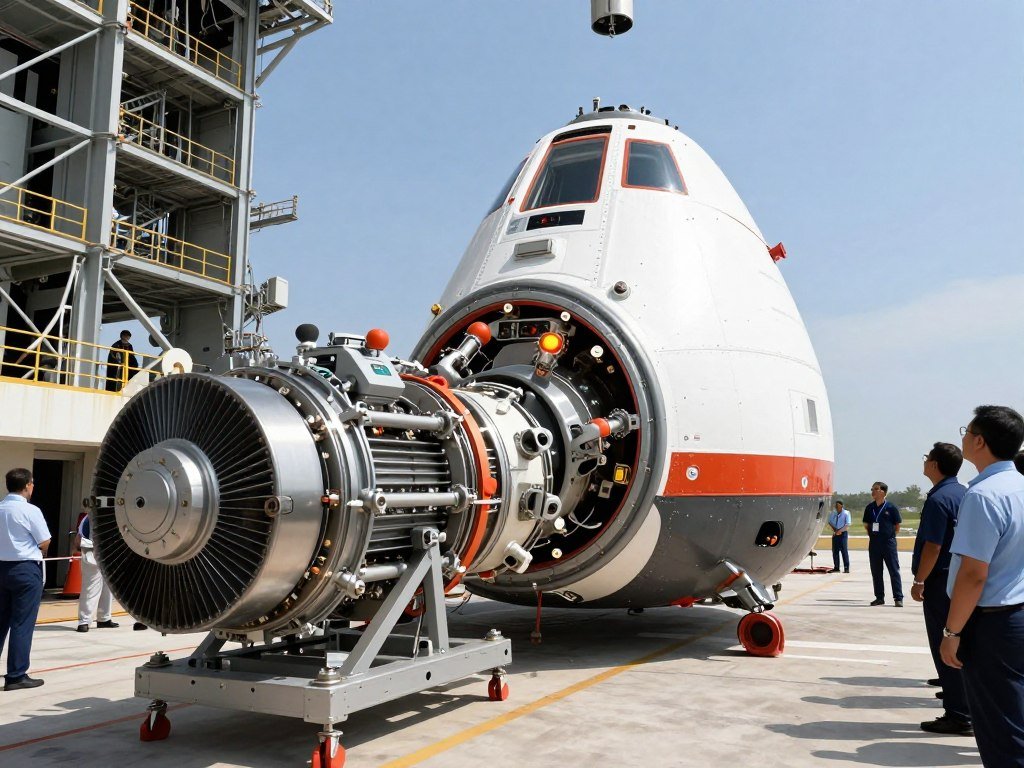
The practical test of an abort system is whether its coverage matches the flight phase where it may be needed.
Which Crew Module Safety Tests Have Been Completed?
Crew safety depends on tested spacecraft hardware as well as a launch abort system. In July 2026, ISRO reported three Crew Module qualification tests involving flotation, component separation, and structural response.
Each test checked a defined piece of hardware under a set condition. The results provide evidence about those test goals, rather than proof of every spacecraft function in flight. The July tests were:
- The primary inflation module of the Crew Module Uprighting System was tested for flotation deployment and inflation time. It met the requirements across the operating range of gas-bottle pressures.
- CSU-2 separated cleanly from a simulated Crew Module. The test also checked the structural stability of the Crew Module panel and its interfaces.
- A simulated Crew Module faced about 1.75 times the estimated apex-cover separation reaction loads. Measured strain and deformation confirmed design margins and structural integrity.
The apex-cover test used a simulated Crew Module, not an occupied capsule. Engineers applied loads linked to apex-cover separation, then measured how the structure responded. The strain and deformation results showed that the tested design stayed within its margins under those loads.
The CSU-2 result concerned separation of one component from a simulated Crew Module in July. It was not the same test as the later Crew Module and Service Module separation tests conducted for Gaganyaan-1 in October 2026.
Separation tests matter because spacecraft parts must part in the planned order. A clean result helps confirm that a particular interface and its hardware can separate under the tested conditions. It does not answer how every system will act during a full mission.
ISRO’s July 2026 test update reports the flotation, CSU-2 separation, and apex-cover load results.
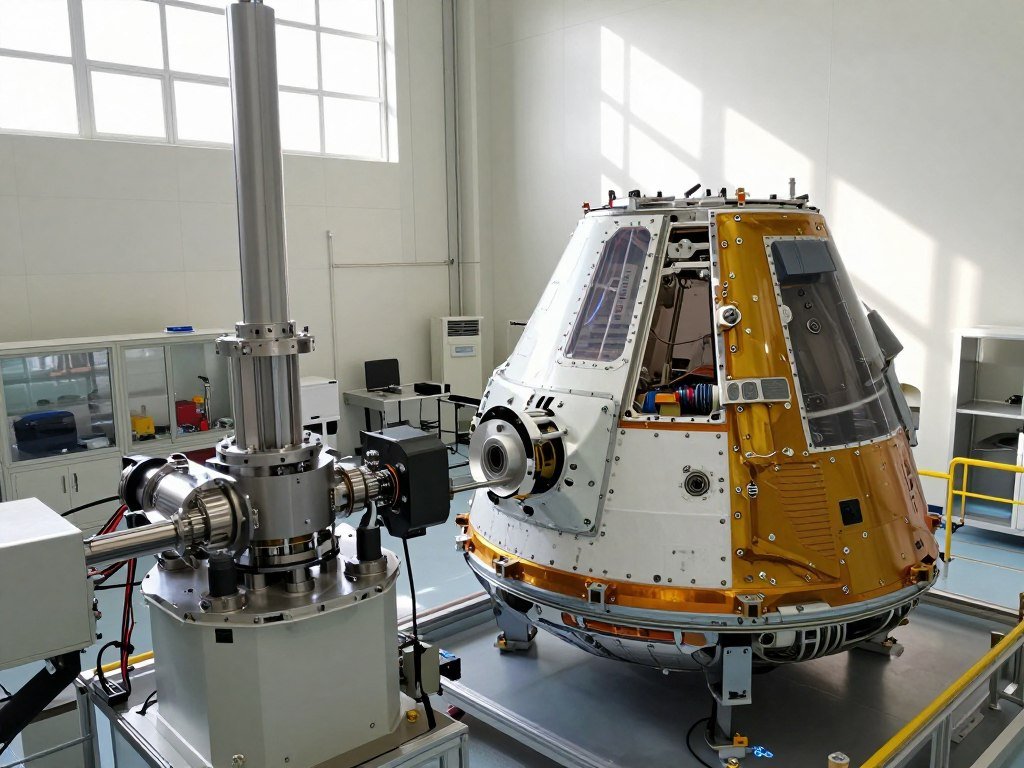
A clean separation result answers a specific hardware question, not every question about an end-to-end flight.
What Will the Gaganyaan-1 Uncrewed Flight Test?
Gaganyaan-1 is an uncrewed orbital test planned for the fourth quarter of 2026, not the first crewed flight. It is planned to check the Crew Module and Service Module in low Earth orbit, along with life-support, crew-escape, and re-entry technologies.
The flight will gather system data without a human crew aboard. Vyommitra is planned to simulate astronaut conditions and provide data on life-support and environmental systems. An unpressurized engineering model of the Environmental Control and Life Support System, or ECLSS, will also fly.
Vyommitra and the spacecraft in orbit
Vyommitra is a robot designed to help test how the spacecraft behaves under conditions linked to human spaceflight. It can provide data while the mission checks how systems perform together in orbit. A robot and instrumented systems offer test information without exposing astronauts to the first orbital flight.
The planned orbit is 170 × 408 kilometers. Circularization, a change that makes an orbit more circular, is planned at the third orbit. These figures describe the intended flight plan, not a completed result.
| Mission element | Planned detail | Test purpose |
|---|---|---|
| Vyommitra | Robot aboard | Simulate astronaut conditions and collect system data |
| Planned orbit | 170 × 408 km | Check the planned orbital profile |
| CM and SM | Low Earth orbit flight | Validate the Crew Module and Service Module |
| Unpressurized ECLSS engineering model | Engineering model aboard | Collect life-support and environmental system data |
Life-support and mission validation
The ECLSS helps control conditions that people need inside a spacecraft. Gaganyaan-1 will carry an unpressurized engineering model, which can provide test data without serving as a pressurized crew cabin. The flight is also planned to validate life-support technologies alongside other mission systems.
Orbital testing can reveal how the capsule, service module, and onboard systems work as a group. Data from the mission will inform later flights, but its value depends on what the instruments record and how the hardware performs.
Read the orbit figures as a planned profile, including circularization at the third orbit, rather than as a completed mission result.
How Will Gaganyaan Test Crew Module Recovery?
The return sequence is a safety system of its own, beginning well before the capsule reaches the water. Gaganyaan-1’s parachute system includes 10 parachutes intended to deploy in sequence, slowing the Crew Module for a sea landing and recovery.
Air-drop tests check the return hardware without waiting for an orbital mission. On April 10, 2026, an Indian Air Force Chinook helicopter dropped a Gaganyaan-1 Crew Module from about 3 kilometers over a designated sea drop zone near the coast.
The drop used a simulated mission context, not the actual return of Gaganyaan-1. It helped test parts of the descent and recovery sequence. Integrated Air Drop Test-01 and Integrated Air Drop Test-02 had validated the deceleration system.
The planned sequence links several actions:
- A Chinook helicopter lifts the test Crew Module to about 3 kilometers.
- The drop exercise checks the module and its deceleration system.
- Ten parachutes are intended to deploy consecutively and slow the descent.
- The module reaches the sea, where recovery teams can retrieve it.
Deceleration matters because a capsule must slow before it reaches the water. The parachutes are designed to deploy in a set order, with each deployment supporting the overall descent plan. The air-drop exercise lets teams assess hardware and recovery steps in a sea-zone setting.
Recovery forms part of readiness because a landing is not the end of the operation. Teams need to reach the module, secure it, and bring it back after splashdown. The condition of the capsule and the sea environment affect what recovery crews must do.
A successful splashdown still needs a recovery team and an upright, recoverable module.
What Is the Planned First Crewed Mission Profile?
The planned human mission is a three-person, three-day trip to a 400 km orbit with a return to Indian sea waters. The spacecraft has a listed launch mass of 8,200 kilograms, including the Service Module.
The planned three-day mission and the spacecraft’s seven-day design life describe different limits. The design life refers to the listed spacecraft capability, while the mission profile sets the planned time in orbit. Those numbers should not be read as interchangeable.
The Orbital Module, or OM, consists of the habitable Crew Module, or CM, and the supporting Service Module, or SM. The CM is the crew’s living space. The SM supports the spacecraft during the mission.
The Crew Module is listed as 3.5 meters in diameter and 3.58 meters high. The spacecraft is listed with an 8 cubic meter volume. These measurements describe the vehicle and its available volume, not the number of days the crew will stay in orbit.
During the planned flight, three crew members will travel to orbit for three days. The return plan calls for the spacecraft to land in Indian sea waters. A sea landing means recovery operations must be ready to meet the module after splashdown.
Mass figures also need context. The 8,200-kilogram launch mass includes the Service Module, so it describes the spacecraft package at launch. It is not the mass of the Crew Module alone.
Keep the mission duration and spacecraft design life separate, since they describe different things.
How Does LVM3 Flight Heritage Relate to HLVM3?
A successful operational LVM3 flight adds flight history to the launcher family, but it is not a crew-safety certification for HLVM3. LVM3-M6 was the sixth operational LVM3 flight in 2025 and successfully placed the BlueBird Block-2 satellite into its intended orbit.
Launcher heritage and human-rated qualification are separate kinds of evidence. The operational flight shows that an LVM3 vehicle completed a satellite mission. It does not, by itself, prove that the human-rated configuration meets crew-safety requirements.
| Evidence | Concrete example | What it establishes |
|---|---|---|
| LVM3 operational flight heritage | LVM3-M6, sixth operational flight in 2025 | Successful satellite placement in the intended orbit |
| HLVM3 human-rating work | Adapted, tested human-rated configuration | Vehicle-specific crew-safety qualification work |
| Gaganyaan uncrewed testing | Planned orbital and spacecraft checks | Flight data before astronauts are added |
LVM3-M6 placed BlueBird Block-2 into its intended orbit. That result matters as family flight history, but the satellite mission did not test a crewed spacecraft or certify HLVM3 for astronauts.
The distinction helps you read claims about reliability. A record of operational launches can inform understanding of the launcher family. The human-rated vehicle still needs evidence from its own qualification work and Gaganyaan flights.
ISRO and NewSpace India Limited identify LVM3-M6 as the sixth operational flight in the LVM3-M6 mission brochure. Its payload was the BlueBird Block-2 satellite, not a crew module.
Treat flight heritage as supporting evidence, not a substitute for testing the human-rated configuration.
How Is Gaganyaan-1 Being Prepared for Launch?
Gaganyaan launch preparation involves a dedicated set of facilities at SDSC’s Second Launch Pad, not just the rocket stages. Gaganyaan missions are planned to use the Second Launch Pad at Satish Dhawan Space Centre, where teams prepare, stack, and check flight hardware.
Assembly turns separate hardware into one integrated launch vehicle and spacecraft. That work depends on precise fit, alignment, and checks at each stage. A stacking milestone is one part of a longer campaign.
Second Launch Pad facilities
The Orbital Module Preparation Facility supports work on the Orbital Module before it joins the launch vehicle. Changes to the Second Vehicle Assembly Building support Gaganyaan’s assembly needs. These facilities give teams space to prepare and handle mission hardware.
A Crew Access Arm provides a route for crew members to reach the spacecraft at the pad. Ground systems must support safe access and connect the crew with the vehicle before launch. The pad setup therefore includes people and equipment, not only rocket hardware.
Stacking and vehicle integration
HLVM3-G1/OM-1 stacking began at SDSC at 8:45 a.m. on December 18, 2024. The first reported step fitted the S200 motor’s nozzle-end segment with a full flex-seal nozzle.
The S200 motor is a large part of the vehicle, so its placement and fit matter to later assembly steps. Teams must align components and confirm that interfaces match before adding more hardware. Small errors during integration can affect later checks and launch procedures.
The initial stacking milestone marked the start of assembling the flight vehicle at the launch center. It did not mean the full vehicle was assembled or ready to launch. Further integration, inspection, and campaign work remained necessary.
A stacking milestone marks assembly progress, while vehicle checks and launch procedures remain part of the campaign.
What Flights Are Planned Before Astronauts Fly?
ISRO’s plan places two more uncrewed flights in 2027 before the first crewed orbital mission. The published sequence gives the program more chances to test spacecraft and mission systems before people fly.
Two additional uncrewed Gaganyaan flights are targeted for 2027. A target window is a planning aim, not a confirmed launch date. ISRO has not published a firm date for the crewed launch.
Each uncrewed mission can test hardware and procedures under flight conditions. The results may show where teams need to make changes before adding a crew. A later flight can then check the updated systems and build more evidence.
That step-by-step approach matters because ground tests cannot reproduce every part of a full flight. Uncrewed missions let teams check how hardware and operations work together without placing astronauts aboard. The evidence comes from what each flight actually tests and records.
A schedule target can change as testing and preparation continue. The number of planned flights is useful context, but it does not set a date for the first crewed mission. Any firm claim about timing needs to match a published ISRO schedule.
For readers tracking launch timing, the key difference is between a target year and a set launch date. The first describes the program’s aim; the second would identify a planned day or window. The crewed flight remains ahead of the planned uncrewed sequence.
Use the published flight sequence, rather than an assumed date, to judge whether a crewed-launch claim is credible.
What Else Must Be Ready for Human Spaceflight?
A human mission needs trained astronauts and a functioning control and recovery operation as well as qualified hardware. The Astronaut Training Facility in Bengaluru provides classroom, physical-fitness, simulator, and flight-suit training.
Generic training is not the same as mission-specific preparation. Gaganyatris completed generic training at Glavkosmos in Russia, while mission-specific training was in progress at the Bengaluru facility. Readiness involves both the people and the support teams.
Training covers several kinds of work, including:
- Classroom and flight-systems instruction.
- Fitness and aero-medical preparation.
- Simulator sessions and procedure practice.
- Flight-suit training.
- Recovery and survival training.
Classroom lessons help astronauts learn flight systems and procedures. Fitness and aero-medical preparation help them get ready for the physical demands of spaceflight. Simulator practice lets them work through tasks before they face them in flight.
Training also includes flight suits, recovery, and survival skills. Those skills prepare crew members to act after landing and while waiting for help. The work connects astronaut preparation with the wider recovery operation.
The program includes a Gaganyaan Control Centre, recovery assets, and a worked-out recovery plan. Control teams track mission events and support the flight from the ground. Recovery teams and equipment must also be ready to reach the capsule after landing.
A trained crew cannot make a mission ready on its own; control teams and recovery assets must be prepared too.
Readiness includes the crew’s mission-specific preparation and the people and assets that support recovery.
Conclusion
The clearest picture of readiness comes from watching what each test and uncrewed flight proves. Qualification milestones show that hardware has met defined test goals; flight results show how systems work under mission conditions.
Use those two kinds of evidence separately when judging claims about reliability or launch timing. A completed ground test is meaningful progress, but it cannot stand in for an uncrewed flight result or a crewed mission.
For the latest schedule, check ISRO’s official Gaganyaan updates before relying on a launch date.
FAQ
Does a successful LVM3 commercial flight prove HLVM3 is safe for astronauts?
No. An operational LVM3 flight adds flight history to the launcher family, but it does not certify HLVM3 for crew safety. The human-rated configuration has its own qualification work, and uncrewed Gaganyaan flights are planned before astronauts fly. A satellite mission and a crewed-spaceflight test have different goals, hardware, and evidence.
What is Vyommitra meant to do on Gaganyaan-1?
Vyommitra is meant to simulate astronaut conditions and provide data about life-support and environmental systems. The robot will fly aboard the uncrewed Gaganyaan-1 mission, allowing teams to collect information without a human crew. That data can help assess how systems perform in orbit and support later mission planning.
What happens if the launch vehicle has a problem during ascent?
The crew escape system is designed to provide an escape option across ascent, with stated coverage from the pad until separation after the atmospheric flight regime. It is intended to move the Crew Module away from the launch vehicle when an emergency makes flight unsafe. Coverage does not mean every fault will trigger an abort.
How was the crew module’s flotation system tested?
In July 2026, the primary inflation module of the Crew Module Uprighting System demonstrated flotation deployment and inflation-time requirements. The test covered the operating range of gas-bottle pressures. It checked whether the module’s flotation hardware could deploy as required, rather than testing every part of sea recovery in one exercise.
How many parachutes are planned for Gaganyaan-1?
Gaganyaan-1’s parachute system has 10 parachutes intended to deploy consecutively. Their planned sequence helps slow the Crew Module during descent before it reaches the sea. Air-drop exercises and deceleration-system tests check parts of the return plan, while a recovery team must still retrieve the module after splashdown.
Does the 7-day design life mean astronauts will stay in orbit for a week?
No. The planned crewed mission lasts three days, while seven days is the spacecraft’s listed design life. Mission duration describes the planned time for the crew’s flight. Design life describes the spacecraft’s stated operating life, so it does not mean astronauts will remain in orbit for seven days.