
AI can affect the environment through the electricity, water, land, and materials needed to build and run the systems behind it. That matters because people use this technology for work, school, and creative tasks, while its costs can fall far from the people who benefit.
AI relies on physical computing infrastructure, not just software. Inference is the computing a trained AI model uses to produce an answer, prediction, image, or other output. Each task draws on real resources, even when the result appears on a screen.
Its environmental effects include electricity use and emissions, water demand, and materials used in hardware. AI may also help people tackle climate problems, though a potential benefit needs proof.
A useful assessment weighs those costs against a specific, measurable benefit rather than assuming every AI task is either harmless or harmful.
Key Takeaways
- AI depends on physical equipment and supporting infrastructure.
- Training models and running everyday prompts use electricity.
- Water footprints include both on-site and indirect water use.
- Hardware production and disposal add material and waste impacts.
- Some AI tools support environmental work, but results need measurement.
- The impact depends on the task, power supply, and infrastructure.
How Does AI Affect the Environment Through Electricity and Emissions?
AI’s electricity footprint comes from both training models and running them repeatedly for everyday tasks. Those workloads differ, and their emissions depend on how the grid supplies their power.
AI can affect climate change negatively when additional electricity comes from carbon-intensive generation. The same computing task can produce different emissions on grids with different power mixes.

A 2026 study projects AI data-center electricity use at 239-295 terawatt-hours (TWh) by 2030, up from about 118 TWh in 2024. That would equal about 1% of global electricity demand.
Training models and running everyday prompts
Training teaches a model to find patterns in data, while inference runs the trained model to create outputs. GPT-3 training in 2021 used 1,287 megawatt-hours (MWh) and produced about 552 tons of carbon dioxide.
Routine use adds up because people send prompts repeatedly. Daily use may account for 80-90% of AI energy demand, and one AI service processes about 2.5 billion prompts each day.
| Workload | Reported energy comparison | What the comparison measures |
|---|---|---|
| GPT-3 training | 1,287 MWh; about 552 tons CO2 | One model-training run in 2021 |
| ChatGPT query | About 5 times a simple web search | Electricity for one query |
| Image generation | More than 1,000 times simple text classification | Energy for one image-generation task |
Image generation can use far more energy than simple text classification, while video generation requires more still. Compare tools with the same prompt and output size, such as in this AI image generator comparison.
Why task type and electricity supply matter
A generative AI training cluster can use seven or eight times the energy of a typical computing workload. Yet AI is only part of data-center computing, which also supports many non-AI services.
AI’s added emissions depend on the electricity source, not just the amount of computing.
Global data-center electricity demand, including non-AI operations, may reach around 945 TWh by 2030. That total is not an AI-only forecast.
Environmental impact of AI in 2026 also sits within a wider emissions picture: global emissions reached an estimated 29.7 billion tonnes of CO2e in the first half of 2026, up 0.2% from the same period in 2025.
Road transportation drove the largest share of global emissions growth in that period, adding 68.3 million tonnes of CO2e, or 2.0%. A comparison is only meaningful when it names the task, the electricity source, and whether it counts training, use, or the wider data-center system.
How Much Water and Hardware Does AI Require?
Cooling servers uses water directly, but the water footprint also includes water consumed while generating the electricity that powers them. Both paths matter when you assess AI’s water consumption.
Indirect water use accounts for 71% of AI servers’ total water footprint, while direct water use accounts for 29%. The shares show why cooling towers alone cannot capture a facility’s full water impact.
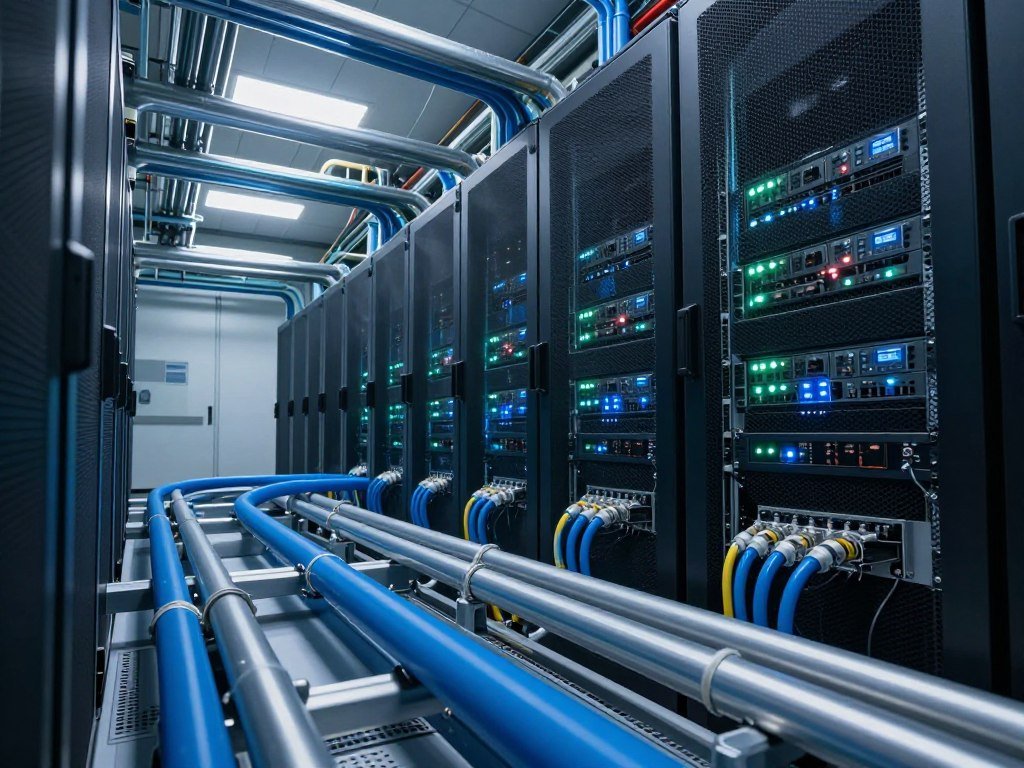
A U.S. study estimates AI-server deployment could create an annual water footprint of 731-1,125 million cubic meters between 2024 and 2030, depending on expansion scale. That range is not a forecast for every data center or community.
AI water consumption could equal the basic annual domestic needs of 1.3 billion people by the end of the decade. This broad estimate describes a global scale, not a local water bill or a single facility.
AI can be bad for the environment through water use when cooling or electricity production competes with local supplies. A facility’s effect depends in part on where it draws water and how its electricity is made.
The hardware has a material footprint too. Making a roughly four-pound computer housed in a data center requires about 1,763 pounds of raw materials.
Producing chips and servers involves mining and processing materials such as cobalt, silicon, and gold. Transport adds more impacts, and old equipment eventually needs reuse, recycling, or disposal.
These supply chains connect computing demand to mines, factories, shipping routes, and waste systems. The companies supplying AI hardware include chipmakers, cloud providers, memory suppliers, and networking firms.
Those links can make a data center’s footprint larger than the site itself. Ask whether a facility’s water accounting includes both on-site cooling and the electricity supply, not just the water visible at the building.
Who Bears AI’s Local Environmental Costs?
The benefits of an AI service can travel widely, while the land, water, and infrastructure used to support it stay in particular places. That split can put pressure on nearby communities and distant supply-chain regions.
AI’s environmental costs can fall hardest where data centers, mines, and waste sites are built. More than 90% of projected AI computing capacity in a 2026 analysis lies in North America, Western Europe, and Asia-Pacific.

Large data centers can add demand to local power grids and compete for water. Their sites can also take land from farms or natural areas, with pressure on habitats and nearby ecosystems.
Data centers put pressure on nearby resources
The AI land footprint may exceed 14,500 square kilometers. That total could include land used for facilities and related infrastructure, not just server buildings.
Local impacts vary with the site. A region with spare grid capacity faces a different strain from one where a new facility adds a large load to an already tight system.
- Grid demand can strain local power systems.
- Water competition can affect households, farms, and ecosystems.
- Land use can fragment habitats or change nearby ecosystems.
- Unsafe e-waste disposal can expose people and soil to hazards.
Hardware supply chains and e-waste cross borders
Mining and materials processing can shift environmental pressure to places far from the people using AI services. More than 150 nations lack significant domestic AI infrastructure, so they may have little control over where equipment is made or discarded.
AI infrastructure could generate up to 2.5 million tonnes of e-waste each year by 2030. Old electronics can contain hazardous materials such as mercury and lead, which may threaten workers and the environment when handled poorly.
A UNU-INWEH report describes these wider land, mineral, and e-waste effects across AI infrastructure. AI’s effects on polar bears are indirect climate and habitat pressures, not a demonstrated direct effect of an individual prompt.
Check who has a voice in siting decisions and who will manage the equipment when it reaches the end of its useful life.
Can AI Help Protect the Environment?
AI can support environmental work when it helps people measure impacts, use resources more carefully, or respond to ecological problems. Specific uses can help with climate and conservation work, but broad promises need evidence.
AI affects the environment positively when a real application conserves resources or improves an environmental decision. The benefit should be clear enough to measure, not just a claim about what a model might do.

Using AI to support conservation and climate work
AI tools can help track emissions, forecast weather and renewable power, and spot signs of wildfire. Buildings can use models to manage energy, while crop monitoring can help farmers respond to changing field conditions.
Research also tests AI for cleaner materials and conservation tasks. MIT researchers used AI to find more sustainable ingredients for concrete, and The Ocean Cleanup uses AI to speed up plastic removal from the oceans.
AI agents have produced life-cycle inventories for electronic devices in under a minute. They estimated carbon emissions with less than 19% deviation from expert assessments, as described in a Nature Electronics report.
Measure the benefit against the footprint
Faster analysis can help a team compare products or spot where emissions arise. Yet a faster result does not prove that a project cuts emissions or saves resources after deployment.
For example, a weather forecast tool may help grid operators plan for wind and solar power. Its value depends on whether the improved forecast changes a real decision and reduces waste or fossil-fuel use.
AI can also support crop monitoring, but farmers still need to judge whether the tool improves decisions on their land. The same test applies to conservation: a useful prediction matters only if it leads to better protection.
Count the energy, water, hardware, and deployment needed to deliver the claimed result. Treat a climate benefit as credible only when the result can be measured against the resources the AI system consumes.
What Can Reduce AI’s Environmental Footprint?
The most dependable reductions combine efficient computing with decisions that limit unnecessary demand and account for local resource constraints. Good choices can lower the footprint without assuming every task needs a large model.
Efficiency gains do not guarantee lower total resource use if demand grows faster than each task gets cheaper. Track total consumption as well as energy use per task.
Make computing more efficient
Model design and hardware settings can reduce the computing needed for a result. Cutting data-center GPUs’ energy use to about three-tenths of its original level had minimal effects on model performance and made hardware easier to cool.
About half the electricity used to train one AI model went toward gaining its last two or three percentage points in accuracy. A training tool also avoided about 80% of wasted computing cycles without reducing accuracy.
| Approach | Measured result | Constraint or qualification |
|---|---|---|
| Reduce GPU energy use | About three-tenths of original use | Minimal effects on model performance |
| Avoid wasted training cycles | About 80% fewer wasted cycles | No reduction in model accuracy |
| Apply server best practices | Up to 73% lower emissions; 86% lower water footprint | Energy-infrastructure limits reduce effectiveness |
New model architectures have been doubling in efficiency every eight or nine months, solving problems with less computing. These gains still need careful tracking as more people use the tools.
Choose and govern AI use deliberately
Practical checks can help teams keep AI use tied to a real need:
- Use a simpler non-AI tool when it can do the job.
- Choose a model and output type suited to the task.
- Avoid unnecessary repeat generations.
- Ask companies or institutions for energy and water transparency.
- Include energy, water, and local infrastructure in procurement and planning.
For creative work, a short draft can help you judge an output before requesting more versions. You can compare AI video tools and limits while keeping each test tied to a clear need.
Text editing also benefits from a tool matched to the task, followed by a human review for meaning and accuracy. This matters in school and work, where a polished rewrite still needs the writer’s judgment; AI text editing tools cannot replace that check.
Efficiency can lower the cost of use and increase demand, a pattern called the rebound effect. For an organization, track total electricity and water use over time so efficiency gains do not conceal a growing footprint.
Measure total resource use, because better efficiency per task can still accompany rising demand.
Conclusion
AI’s environmental impact is neither invisible nor fixed: choices about its design and use can change the footprint. The effect depends on the task, the infrastructure behind it, and the value it delivers to people.
Before making a service the default for routine work, check its energy and water policies. Clear reporting can help you judge whether the tool fits your sustainability goals and the task at hand.
Before making AI your default, ask whether it is necessary for the task and whether its benefits justify its resource use.
FAQ
Is ChatGPT destroying the environment?
No, ChatGPT is not literally destroying the environment, but its use adds to data-center electricity and water demand. The impact depends on how many people use it, what tasks they run, and how facilities get power and cooling. One prompt is a small part of a larger system, while billions of prompts can add up.
Is AI bad for the environment in 2026?
AI has environmental costs in 2026, though their size depends on the task and infrastructure. AI data centers used about 118 TWh of electricity in 2024, with projections of 239-295 TWh by 2030. That AI-specific range is different from the roughly 945 TWh projection for all data centers, including non-AI operations.
Is AI going to make climate change worse?
AI can add to climate change when its extra electricity comes from carbon-intensive sources. The amount depends on the power supply and how much computing people use. Some applications may also support environmental work, such as forecasting or emissions tracking. Those benefits count when they lead to measurable improvements that outweigh the resources used.
How damaging is AI to the environment?
AI can affect electricity use, emissions, water, material supply chains, land, and e-waste. A single task has a different footprint from the full infrastructure built to serve many users. Training a model, generating an image, and running a large data center are not equal comparisons. The task and the system boundary matter.
Does AI waste a lot of water?
AI can use substantial water, both at data centers and through electricity generation. For AI servers, indirect water use accounts for 71% of the total water footprint, while direct water use accounts for 29%. Those shares describe the full footprint, not just water used for on-site cooling. Local effects depend on the facility and water supply.
Is AI worse for the environment than cars?
There is no fair answer without matching the comparison. One AI task should be compared with a specific car trip using similar boundaries, such as energy and emissions. Comparing all AI infrastructure with the full life cycle of the transportation sector is another question. The answer changes with distance, power supply, vehicle, and computing task.
What are 5 negative effects of AI?
Five possible effects are higher electricity demand and emissions, water use, land pressure, mineral extraction, and e-waste. These harms do not happen at the same level everywhere. A data center can affect local power and water systems, while mining and disposal burdens may occur in other regions. The scale depends on demand and infrastructure choices.