
Private deals can place a value on OpenAI, but they do not create a public stock-market price. A post-money valuation estimates a company’s equity value after a funding round’s new capital is included.
That difference matters if you want to judge a possible stake or learn whether shares are available. Investors adjust estimates as users grow, artificial intelligence advances, and funding needs shift over time. Last year, private share sales offered another kind of clue.
Key Takeaways
- Private valuations come from deals between investors and a company.
- A proposed funding round is different from a completed deal.
- Private shares do not trade like public stocks.
- Revenue growth can support expectations, while costs can weigh on them.
- Treat any single private-market figure as a snapshot of investor expectations, not a guaranteed sale price.
How Much Is OpenAI Worth Today?
OpenAI’s latest proposed round points to a $1.25 trillion pre-money valuation. Its completed March 2026 round set an $852 billion post-money valuation. The proposed figure is not a completed deal.
Pre-money means the company’s estimated value before new funding enters. Post-money includes that new capital.

The latest proposed round and the last completed round
The table separates a secondary share sale from funding rounds. In a secondary sale, existing shares change hands rather than new capital going to the company.
| Transaction | Capital or shares | Valuation | Status and key investors |
|---|---|---|---|
| October 2025 employee share sale | $6.6 billion in shares | $500 billion | Secondary sale involving Thrive Capital, SoftBank, Dragoneer Investment Group, MGX, and T. Rowe Price |
| March 2026 funding round | $122 billion | $852 billion post-money | Closed; co-led by SoftBank, Andreessen Horowitz, and D. E. Shaw Ventures |
| Proposed round | Up to $30 billion | $1.25 trillion pre-money | Led by investors from the United Arab Emirates and Coatue |
A proposed round is an investor plan, not a closed sale.
The proposed round is led by investors from the United Arab Emirates and Coatue. A closed round, by contrast, records capital raised under completed terms.
What a funding valuation does and does not measure
A funding valuation reflects the price investors accept for a particular deal. It does not set a public stock price or guarantee what every share could sell for.
The employee sale offers another marker, but it prices existing shares under that sale’s terms. Individual investors cannot assume they can buy at the same price or access those shares.
The phrase “valuation 852 billion” refers to the March 2026 post-money figure. For a broader look at private and public AI investments, see AI stocks to buy now.
ChatGPT launched in November 2022. The nearest dated valuation benchmark after that launch was $28 billion on April 17, 2023, not a 2022 funding round.
Check whether a figure refers to a proposed deal, a completed funding round, or a secondary share sale before comparing it with another valuation.
Is OpenAI Profitable, and What Drives Its Valuation?
OpenAI is not yet profitable: its reported operating losses exceeded $20 billion in 2025 even as revenue reached $13.1 billion. Growth is not profit, and revenue and profit are different measures.
OpenAI reported $2 billion in revenue per month in March 2026. Monthly revenue is a single month’s measure, not annual revenue. More than 900 million weekly active users and 50 million subscribers used ChatGPT as of March 2026.

Reports put 2026 revenue targets at $50 billion, below an earlier $70 billion projection. The same reported financials show $20.9 billion in 2025 operating losses on $13.1 billion revenue. The 2025 operating-loss figures show how far costs exceeded sales.
Reported quarterly losses reached $12.3 billion in the second quarter of 2026. OpenAI told investors it aimed for roughly $600 billion in total compute spending by 2030.
Revenue growth and user gains can support investor expectations, but infrastructure and compute costs weigh on the case. For another view of how revenue differs from operating income, read this guide to AI stocks.
The key test is whether revenue growth can eventually cover the compute and infrastructure costs required to build and run its AI systems.
Who Owns OpenAI, and What Comes Before an IPO?
OpenAI began as a nonprofit research organization in 2015, but its current ownership and governance are separate questions. Its structure changed in 2025, when the for-profit entity became OpenAI Group PBC and the nonprofit became the OpenAI Foundation.
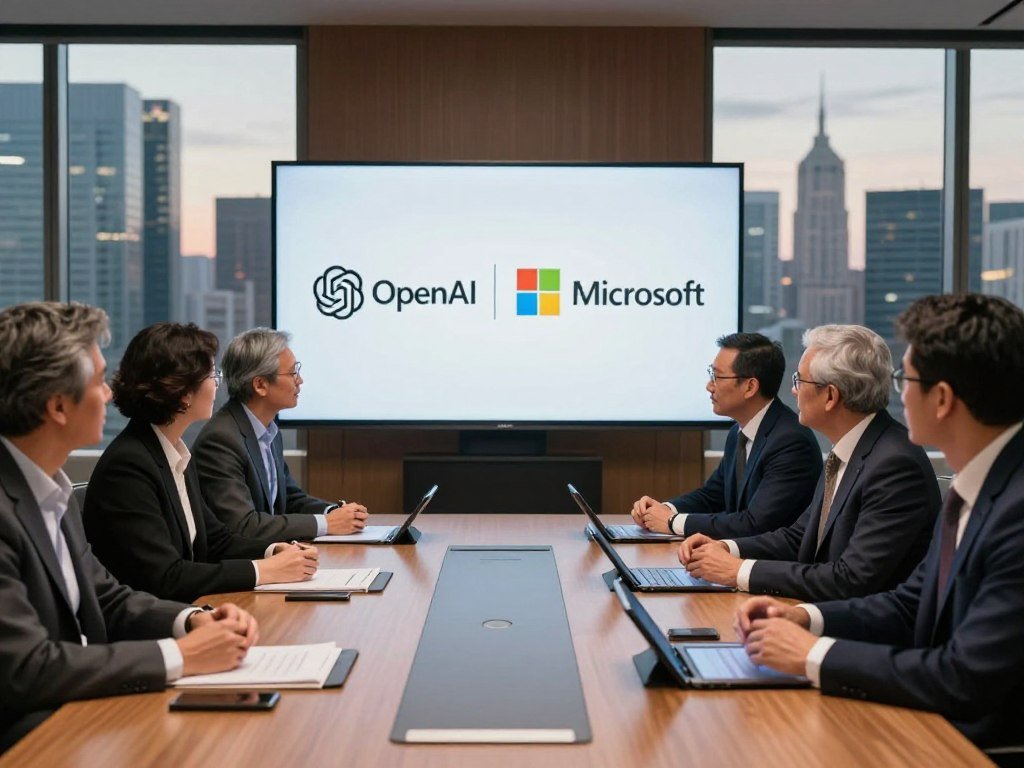
The OpenAI Foundation appoints the OpenAI Group PBC board. Microsoft’s ownership stake does not give it control of that board.
Who founded OpenAI?
Sam Altman, Elon Musk, and others founded OpenAI in 2015 as a nonprofit research organization. Its early mission focused on artificial intelligence research. ChatGPT launched in November 2022, bringing the company’s work to a much wider audience.
Who owns and controls OpenAI today?
The ownership breakdown gives the OpenAI Foundation the largest single share, while Microsoft and employees also hold large stakes.
- OpenAI Foundation: around 26%
- Microsoft: roughly 27%
- Employees: approximately 25%
- Other investors: approximately 22%
Microsoft remains OpenAI’s primary cloud partner. OpenAI products ship first on Azure unless Microsoft cannot and chooses not to support the required capabilities. OpenAI can serve its products to customers through any cloud provider.
Microsoft’s non-exclusive license to OpenAI intellectual property for models and products runs through 2032. Under the amended 2026 agreement, Microsoft’s revenue-share payments to OpenAI ended.
OpenAI’s payments to Microsoft continue through 2030 at the same percentage, subject to a total cap. To follow broader technology and AI news, you can choose topics in the newsletter.
An ownership share and the power to appoint a company’s board are different forms of control.
When could OpenAI go public?
OpenAI confidentially filed its prospectus with the SEC in June 2026, but it has not disclosed a planned IPO date. A confidential filing is not the same as a public listing. A report on confidential SEC filings explains why that step does not itself confirm an offering.
In August 2026, CFO Sarah Friar told employees OpenAI would be a public company in 2027. She said an earlier IPO was possible if the business continued to grow.
Until OpenAI gives a public listing date, treat 2027 as an expectation rather than a scheduled IPO.
Conclusion
OpenAI’s valuation is best understood as an investor expectation shaped by both growth and the cost of scaling AI. Private deal prices offer useful clues, but they do not guarantee what shares would fetch in a public market.
Keep two points in view: future revenue must be weighed against compute and infrastructure costs, and a proposed deal can change before it closes. Those details matter more than a headline number on its own.
For continuing technology coverage, you can choose topics through the site’s newsletter. Before relying on a newer headline figure, confirm whether it reflects a completed deal or only a proposed round.
FAQ
Is OpenAI making a profit?
No, OpenAI reported $20.9 billion in operating losses on $13.1 billion in revenue in 2025. Revenue shows money earned from business activity, while operating loss measures costs that exceeded operating income. The company’s user base and sales can grow even while it spends more than it earns. Profitability depends on eventually covering those costs.
Is Elon Musk co-founder of OpenAI?
Yes, Elon Musk was among the people who founded OpenAI in 2015. The group started it as a nonprofit research organization focused on artificial intelligence. Sam Altman was also among the founders. Musk’s role as a co-founder does not mean he owns or controls the current company today.
Does Microsoft own 27% of OpenAI?
Yes, Microsoft holds roughly 27% of OpenAI Group PBC. That stake makes Microsoft a major shareholder, but it does not control the board. The OpenAI Foundation appoints the board, so ownership percentage and board authority are separate parts of the company’s structure.
What does a pre-money valuation mean?
A pre-money valuation estimates a company’s value before new funding is added. A post-money valuation includes the new capital raised in that funding round. The difference matters because a stated post-money value reflects both the company’s prior value and the incoming funds. Always check which term a deal uses.
Can you buy OpenAI shares on the stock market?
No, OpenAI has not disclosed an IPO date, so its shares are not available on the public stock market. The company confidentially filed a prospectus with the SEC in June 2026. That filing is a step in the process, not a confirmed public listing or an announcement that trading has begun.