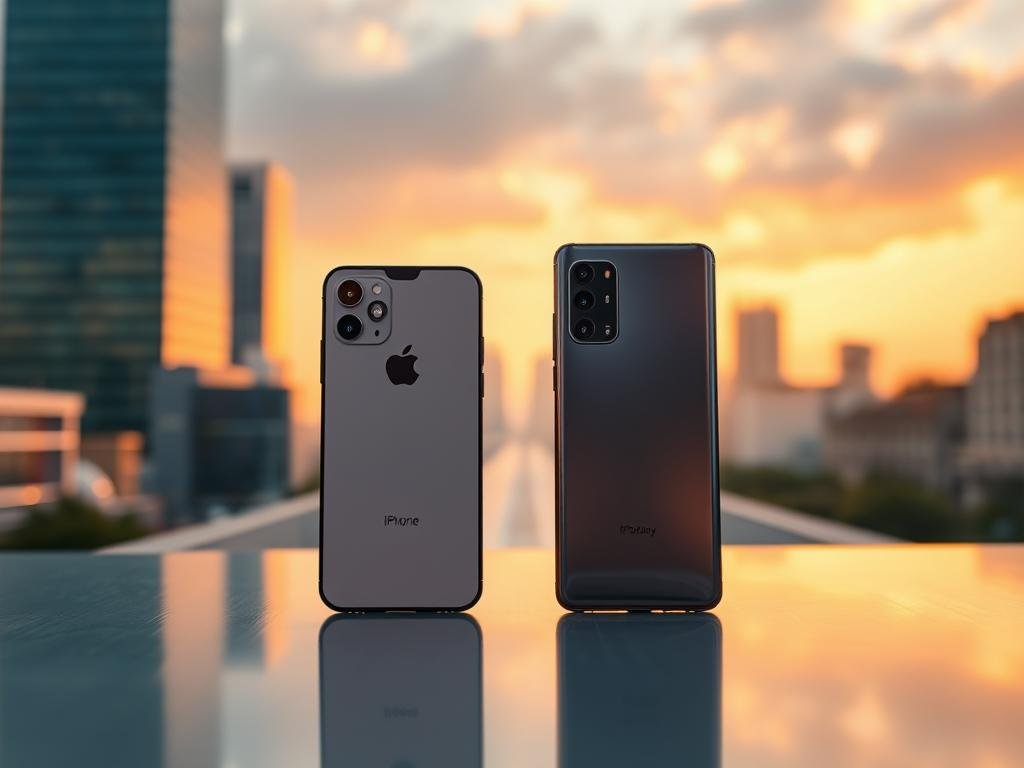
A shopper weighing Apple’s iPhone 18 Pro Max against Samsung’s Galaxy S26 Ultra is choosing between two top-tier phones, not two identical approaches to a flagship. The title uses “iPhone 18” and “Galaxy S26” as shorthand for these larger models.
Both phones offer premium features and large screens, but they serve different needs. Price, battery life, performance, cameras, and everyday software habits can all shape your choice.
A variable aperture is a camera opening that changes size to control how much light reaches the sensor and how much of the scene appears in focus. That feature is one example of how the phones take different paths.
This comparison gives you a clear way to weigh the strengths that matter in daily use. The right pick will depend most on your preferred software ecosystem and the features you will actually use.
Key Takeaways
- The detailed comparison focuses on the Pro Max and Ultra models.
- Both phones have 6.9-inch screens and 120Hz refresh rates.
- The Galaxy has two dedicated telephoto cameras and an integrated S Pen.
- The iPhone works closely with Apple devices and services.
- Storage, SIM type, and seller can affect the buying decision.
Which exact iPhone and Galaxy models are being compared?
The phone-to-phone comparison here is between Apple’s iPhone 18 Pro Max and Samsung’s Galaxy S26 Ultra. The specifications below describe those two larger flagships, not the standard-size iPhone 18 and Galaxy S26.
The iPhone 18 Pro Max went on sale September 18, 2026, and the Galaxy S26 Ultra launched in February 2026. The Samsung phone is available in the United States.
Why this matchup means Pro Max versus Ultra
The Pro Max and Ultra are Apple’s and Samsung’s largest flagship models in this comparison. Their screens, cameras, and batteries suit shoppers who want more room and more high-end features.
The standard iPhone 18 and Galaxy S26 are separate phones. Their names do not mean they share every part of the larger models discussed here.
Compare the iPhone 18 Pro Max with the Galaxy S26 Ultra when you want the closest match at the top flagship tier.
Is the iPhone 18 Pro the same as the Pro Max?
No. The iPhone 18 Pro and Pro Max are distinct models, even though they share the Pro name.
Searches comparing the Samsung S26 Ultra with the iPhone 18 Pro often mix up the Pro and Pro Max. Here, camera, screen, and battery details refer to the Pro Max.
Apple’s iPhone Pro models can share key features while differing in size or other details. Confirm the exact model name on any listing before comparing a Pro model with the Pro Max.
How much do the iPhone 18 Pro Max and Galaxy S26 Ultra cost?
The iPhone 18 Pro Max starts at $1,299, while the Galaxy S26 Ultra’s US list price is $1,399.99. At 256GB, Samsung’s listed price was lower on October 10, 2026, when Amazon sold the phone.
The prices below compare the same storage tiers where a Samsung list price is given. Samsung’s dated price is a snapshot, not a promise of future sale pricing.
| Storage | iPhone 18 Pro Max US price | Galaxy S26 Ultra US list price | Galaxy S26 Ultra 256GB price as of October 10, 2026 |
|---|---|---|---|
| 256GB | $1,299 | $1,399.99 | $1,099.99 |
| 512GB | $1,499 | Price not listed | Not applicable |
| 1TB | $1,899 | Price not listed | Not applicable |
Samsung offers the Galaxy S26 Ultra with 256GB, 512GB, or 1TB of storage. The table gives no list price for its 512GB or 1TB versions.
Apple also sells a 2TB iPhone 18 Pro Max for $2,499. That option gives you more room for large video files, apps, and photos, but adds a substantial cost.
At the base tier, a sale can change which phone costs less on a given day. The list price and sale price are different ways to compare the same purchase.
Storage needs matter as much as the entry price if you keep many files on your phone. Compare the exact storage tier and the seller’s current price before treating either phone as the cheaper buy.
How do the phones compare in size and display?
Both phones give you a 6.9-inch display with a 120Hz refresh rate, but the Samsung panel has higher resolution and pixel density. The Galaxy is sharper on paper and lighter, while the iPhone has the higher stated peak brightness.
Resolution and peak brightness numbers alone do not establish which screen looks better in every setting. Screen reflections, color settings, and the content you view can change what you notice.
Screen sharpness and brightness
The Galaxy S26 Ultra has a 3,120 × 1,440 resolution and about 500 pixels per inch, or ppi. The iPhone 18 Pro Max has 2,868 × 1,320 resolution and about 460 ppi.
| Attribute | iPhone 18 Pro Max | Galaxy S26 Ultra | Practical difference |
|---|---|---|---|
| Diagonal and refresh rate | 6.9 inches, 120Hz | 6.9 inches, 120Hz | Same size and refresh rate |
| Resolution | 2,868 × 1,320 | 3,120 × 1,440 | Galaxy has more pixels |
| Peak brightness | 3,000 nits | 2,600 nits | iPhone has a higher stated peak |
| Pixel density | About 460 ppi | About 500 ppi | Galaxy has more pixels per inch |
| Weight | 249g | 214g | Galaxy weighs 35g less |
Weight, dimensions and one-handed handling
The iPhone measures 163.4 × 78 × 8.8mm. The Galaxy is 163.6 × 78.1 × 7.9mm, so both have nearly the same height and width.
The 35g weight gap can matter during long calls or reading sessions. The thinner Galaxy may also feel less bulky, though both phones have large bodies.
Neither phone is a compact choice for one-handed use. If you often use a phone outdoors, consider brightness and reflections together rather than choosing by resolution alone.
Which phone has the stronger camera setup?
The iPhone gives photographers a variable-aperture main camera, while the Galaxy offers two dedicated telephoto lenses. The best fit depends on whether you value hands-on controls or more native zoom choices.
A variable aperture lets the iPhone change how much light reaches its main camera sensor. It can also affect how much of a scene appears in focus.
Main cameras and hands-on controls
The iPhone 18 Pro Max has a 48MP main camera, a 48MP ultra-wide camera, and a 48MP 4× telephoto camera. Its front camera is 18MP.
| Camera role | iPhone 18 Pro Max | Galaxy S26 Ultra | Practical distinction |
|---|---|---|---|
| Main | 48MP, variable aperture | 200MP | Different controls and pixel counts |
| Ultra-wide | 48MP | 50MP | Both have a dedicated ultra-wide camera |
| Telephoto | 48MP, 4× optical | 10MP 3× and 50MP 5× optical | Galaxy offers two optical zoom choices |
| Front camera | 18MP | 12MP | Different sensor resolutions |
The iPhone’s native Camera app includes controls for aperture, shutter speed, white balance, and manual focus. Those settings give you more direct control over how a shot looks.
A photographer-focused iPhone review also describes the variable aperture and the camera app’s manual controls. Those features are useful if you like shaping a shot before pressing the shutter.
Telephoto reach, ultra-wide shots and selfies
The Galaxy S26 Ultra has a 200MP main camera and a 50MP ultra-wide camera. It adds a 10MP 3× telephoto and a 50MP 5× telephoto camera.
Its two dedicated telephoto cameras give you native 3× and 5× optical options. The iPhone has one 4× telephoto camera, with digital zoom reaching 40×; Samsung’s digital zoom reaches 100×.
Digital zoom can make a faraway subject larger, but a higher zoom number does not by itself mean more detail. Megapixel count alone does not guarantee better photos, either.
Both front cameras can handle everyday selfies and video calls, while their listed resolutions differ. Choose the camera system by the focal lengths and controls you will use, not by the largest megapixel number.
Which phone is better for video recording?
The Galaxy S26 Ultra is the choice if 8K recording is a must, while the iPhone 18 Pro Max tops out at 4K60 in the stated comparison. Galaxy offers higher recording resolution; the iPhone offers creator-focused capture tools.
For the iPhone, 4K at 60 frames per second, or fps, is the stated ceiling. The Galaxy can record at up to 8K, which can preserve more detail when your editing or viewing setup supports it.
Apple ProRes RAW and Apple Log 2 are available video tools on the iPhone 18 Pro Max. They can help with advanced editing, but everyday clips do not require either format.
Resolution is only one part of a video workflow. File size, editing tools, color choices, and the screen or service where you share the clip can matter just as much.
Higher-resolution recording can use more storage, and many viewers will not see a benefit in every clip. A 4K file may suit a project better when your editing tools or delivery service do not support 8K.
HDR and Dolby Vision support can also affect how video looks on compatible screens, but the stated comparison does not give a full format list for both phones. Check the format you need before building a workflow around it.
Pick the phone that fits the footage you actually make, rather than recording in the largest format by default. Match the recording format to where you will edit, store and watch the footage.
Which phone lasts longer and charges faster?
Apple’s iPhone playback rating reaches up to 45 hours, while the Galaxy S26 Ultra recorded 31 hours in CNET’s video-playback test. Those figures use different methods and are not a direct head-to-head battery test.
The iPhone result is Apple’s rating for video playback. CNET’s Galaxy result comes from its own test, so the numbers should not be read as matching measurements.
Battery endurance and capacity
The iPhone 18 Pro Max battery measures 5,391mAh in the physical-SIM version and 5,567mAh in the eSIM-only version. The Galaxy S26 Ultra has a 5,000mAh battery.
Battery capacity in mAh is one part of runtime, not a direct forecast. Screen settings, software, signal strength, and the work you do also affect how long a charge lasts.
The two iPhone capacity figures reflect different versions of the same model. Apple rates the Pro Max for up to 45 hours of video playback, while CNET’s Galaxy test ran for 31 hours.
Wired and wireless charging
In CNET’s charging test, the iPhone added 77% in 30 minutes. The Galaxy supports 60W wired and 25W wireless charging.
The Galaxy reached 76% from 0% in 30 minutes in CNET’s lab test. CNET’s 30-minute Galaxy charging result is a test outcome, not a guarantee for every charger or condition.
The results put the phones close in that test window, but charging gear and conditions matter. A charger’s power, the phone’s temperature, and use during charging can affect the result.
Wireless charging can be useful when you want to set a phone down rather than plug in a cable. Treat any runtime or charging result as a benchmark, since screen use, signal strength and workload change everyday battery life.
How do A20 Pro and Snapdragon 8 Elite Gen 5 compare?
The iPhone 18 Pro Max leads the supplied Geekbench 6 results in both single-core and multi-core performance. Its score advantage matters most when you push demanding apps, not during routine messaging.
The iPhone uses Apple’s A20 Pro processor, while the Galaxy S26 Ultra uses Qualcomm’s Snapdragon 8 Elite Gen 5. Tom’s Guide measured 4,741 single-core and 12,789 multi-core for the iPhone.
The Galaxy scored 3,785 in single-core and 11,563 in multi-core Geekbench 6 testing. That puts the iPhone ahead in both measured areas.
The gap matters more for demanding games, video exports, and editing than for routine browsing. Most daily tasks do not push a flagship phone as hard as a benchmark does.
The Galaxy S26 Ultra has 12GB of RAM with 256GB storage. Its 512GB and 1TB versions have 16GB of RAM.
A benchmark is a limited snapshot, not a promise that every app or game will feel faster. The iPhone 18 Pro review roundup discusses early performance results, including different Geekbench testing.
Terms such as “GHz Oryon Phoenix” do not replace app tests or real use when you compare phones. The Snapdragon Elite Gen name identifies Samsung’s processor choice, while the benchmark gives a narrow performance measure.
Use the benchmark gap as context for heavy workloads, not as the sole reason to switch platforms.
What changes when you choose iOS or Android?
Software is the more personal dividing line: iOS favors a consistent Apple experience, while Android gives you more room to customize. Both platforms offer AI tools, but their features can vary by market and service.
iOS 27 became available September 14, 2026. Siri AI was available as a beta on compatible Apple devices, while the Galaxy S26 Ultra launched with One UI 8.5 and Galaxy AI.
Siri AI and Galaxy AI availability
Siri AI and Galaxy AI can help with tasks such as writing, search, and photo changes. The exact tools depend on the phone, software version, region, language, and service.
Siri AI has regional limits described for the European Union and China. Those limits do not mean the same restrictions apply in every country.
You can compare AI features for everyday phone tasks to see how these tools may fit daily routines. Check their limits before relying on an AI result for an important task.
Customization, updates and switching checks
iOS keeps its core look and controls fairly consistent across Apple phones. Android lets you change more parts of the home screen, default apps, and system behavior.
Samsung promises the Galaxy S26 Ultra seven years of operating-system and security updates. That commitment gives you a clear support window for the phone.
Switching platforms can also change where your data and habits live. Review these four areas before moving your main phone:
- App purchases and subscriptions
- Photo and cloud libraries
- Messaging and file-sharing habits
- Accessibility and voice-assistant settings
The checklist can reveal costs or routines that are easy to miss during a device comparison. Check that your essential apps and services work on the destination platform before changing ecosystems.
Which extras and protections set the phones apart?
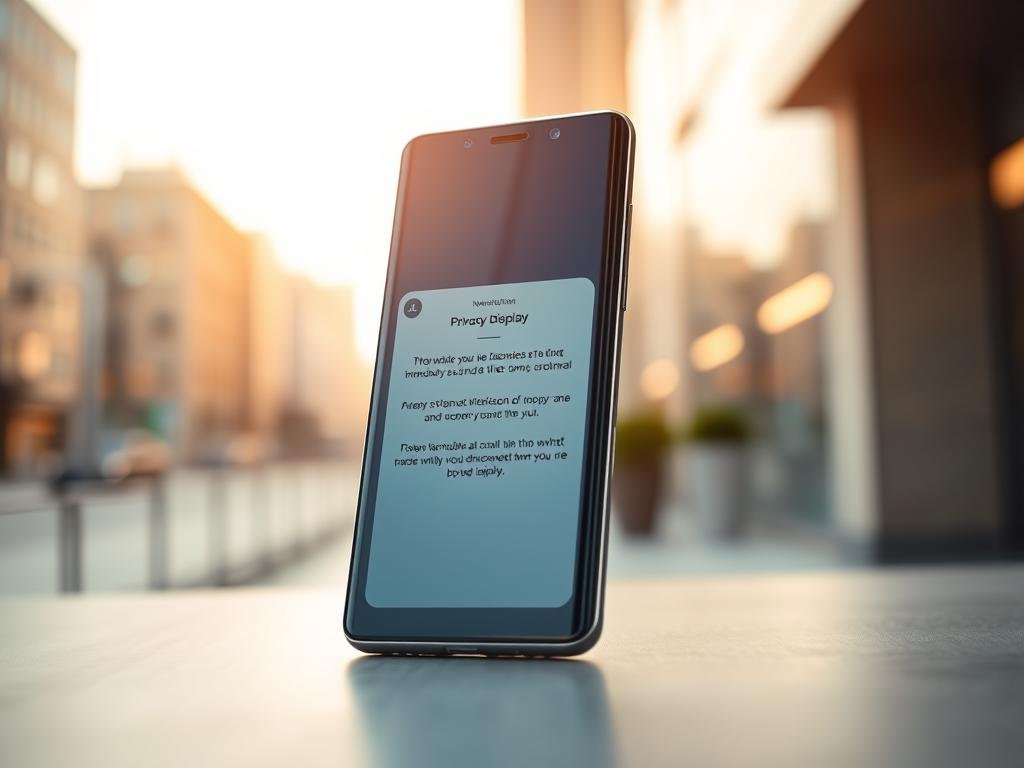
Samsung’s clearest hardware extras are Privacy Display and PowerShare, while the iPhone’s US version has a different SIM setup. Both phones have an IP68 rating, but their tested submersion depths differ.
Privacy Display can obscure selected apps or notifications when someone views the screen from an angle. Wireless PowerShare lets the Galaxy charge another device wirelessly.
US versions of the iPhone 18 Pro Max are eSIM-only. The Galaxy S26 Ultra has a physical-SIM option, which can help if you swap SIM cards.
Both phones are rated IP68, but that label does not mean the same tested depth. Samsung tested the Galaxy to 1.5 meters for 30 minutes; Apple tested the iPhone to 6 meters for 30 minutes.
Consider which features matter in your routine:
- Need to hide selected screen content
- Need to charge another device
- Swap physical SIM cards
- Need water resistance at a particular tested depth
The Galaxy’s off-angle screen feature may help in a crowded place, while PowerShare can help when another device needs a charge. Water resistance is not a reason to deliberately submerge either phone, and liquid damage terms can differ from the rating.
iPhone 18 vs Galaxy S26: Which one should you buy?
For most shoppers who want more built-in hardware flexibility, the Galaxy S26 Ultra is the stronger default, while established Apple users have a good reason to stay with the iPhone. Choose based on your current devices and routines, not a universal score.
The Galaxy pairs Android customization with an integrated S Pen stylus. Samsung DeX can also give you a desktop-style interface on an external display.
Choose the Galaxy for Android workflows
The Galaxy S26 Ultra suits you if you want more control over your phone’s layout and settings. Its stylus and DeX add options for notes, marking up files, or using an external screen.
That flexibility can make the Samsung Galaxy a useful fit if you already use Android devices. Its hardware extras also give you more ways to work without adding accessories.
Choose the iPhone for Apple continuity
The iPhone 18 Pro Max makes more sense when you rely on Apple devices and services. AirDrop, Handoff, iCloud, AirPods, Apple Watch, and Mac can work together across your routine.
These profiles can help make the choice more concrete:
- Existing Apple Watch or Mac owner: favor the iPhone.
- Android customization user: favor the Galaxy.
- Person who uses a built-in stylus: favor the Galaxy.
- Creator who relies on Apple workflows: favor the iPhone.
For the S26 Ultra versus iPhone 18 Pro Max, these use cases give a more useful answer than declaring one phone best for everyone. Make your choice around the devices and routines you already depend on, not status assumptions about either brand.
Is a cheaper iPhone a smarter alternative?
You do not have to buy a Pro Max or Ultra to get a capable iPhone. The iPhone 17 is a notable lower-cost option if you want current features without stepping up to the top tier.
CNET named the iPhone 17 its best iPhone overall in 2026 and listed a $929 starting price. It starts with 256GB of storage, and it lasted 35 hours in CNET battery tests, the second-longest result among 35 phones tested.
The iPhone 16 starts with 128GB, which is a smaller base storage tier than the iPhone 17. An older model may still suit you if its storage and condition fit your needs.
Consider these three routes if you are comparing iPhone prices:
- iPhone 17 as the newer alternative
- iPhone 16 as an option with a smaller base storage tier
- Refurbished iPhone 12 or iPhone 13 listings as older-model possibilities
Best Buy lists refurbished iPhone 12 64GB and iPhone 13 128GB models among its US iPhone listings. Refurbished iPhone listing options can change, so check availability and condition at the time you buy.
Refurbished availability and condition can change, so judge the specific phone in front of you rather than assuming every listing is alike.
A lower upfront cost does not tell you how much storage you get or what condition the phone is in. Compare storage and the phone’s condition as carefully as its upfront price when considering an older model.
Conclusion
Choose the Galaxy S26 Ultra if its flexibility fits your daily habits, or the iPhone 18 Pro Max if staying in Apple’s ecosystem matters more. The best choice is the phone that fits the services, accessories, and tools you already use.
If neither flagship’s price or size feels right, the iPhone 17 offers another route. Before buying, verify the model name and configuration you intend to use.
FAQ
Is the Samsung Galaxy S26 better than the iPhone?
The Galaxy S26 Ultra is a better fit if you value Android flexibility and built-in hardware extras. The iPhone 18 Pro Max suits you if you depend on Apple workflows and devices. Neither is the best choice for every buyer. Your existing apps, accessories, and daily habits matter more than a broad brand ranking.
Which iPhone is equivalent to the Samsung S26?
The iPhone 18 Pro Max is the closest comparison to the Galaxy S26 Ultra at the top flagship tier. These are the larger models, not the standard-size iPhone 18 and Galaxy S26. The Pro Max and Ultra comparison covers their cameras, screens, and batteries. Check model names carefully because Apple’s Pro and Pro Max are distinct phones.
What is the best iPhone to buy right now?
CNET named the iPhone 17 its best iPhone overall in 2026 and listed a $929 starting price. It starts with 256GB of storage, which may suit you if you keep many photos and apps. The Pro Max is a higher-tier option, but its larger feature set may not matter for every person or budget.
Can the US iPhone 18 Pro Max use a physical SIM?
No. US versions of the iPhone 18 Pro Max are eSIM-only, so they do not use a physical SIM card. The Galaxy S26 Ultra has a physical-SIM option. If you often move a SIM between phones, that difference can change how easy it is to switch devices or cellular plans.
Why do iPhone 18 Pro Max battery capacities differ by model?
The physical-SIM version has a 5,391mAh battery, while the eSIM-only version has a 5,567mAh battery. Those capacities apply to different versions of the same phone. A capacity number alone does not predict how long a charge lasts, since screen use, signal, and apps affect battery life.
Can Galaxy S26 Ultra wirelessly charge other devices?
Yes. The Galaxy S26 Ultra supports Wireless PowerShare, which lets it charge another device wirelessly. It can help when compatible gear needs a quick boost and no outlet is close. The feature does not replace a charger for regular use, and the amount of power available depends on the phone’s remaining battery.
How many years of updates does Galaxy S26 Ultra get?
Samsung promises the Galaxy S26 Ultra seven years of operating-system and security updates. That commitment gives you a stated support period for new system versions and security fixes. Update timing can still depend on software releases and region. If you keep phones for many years, the promise is a useful part of your buying decision.