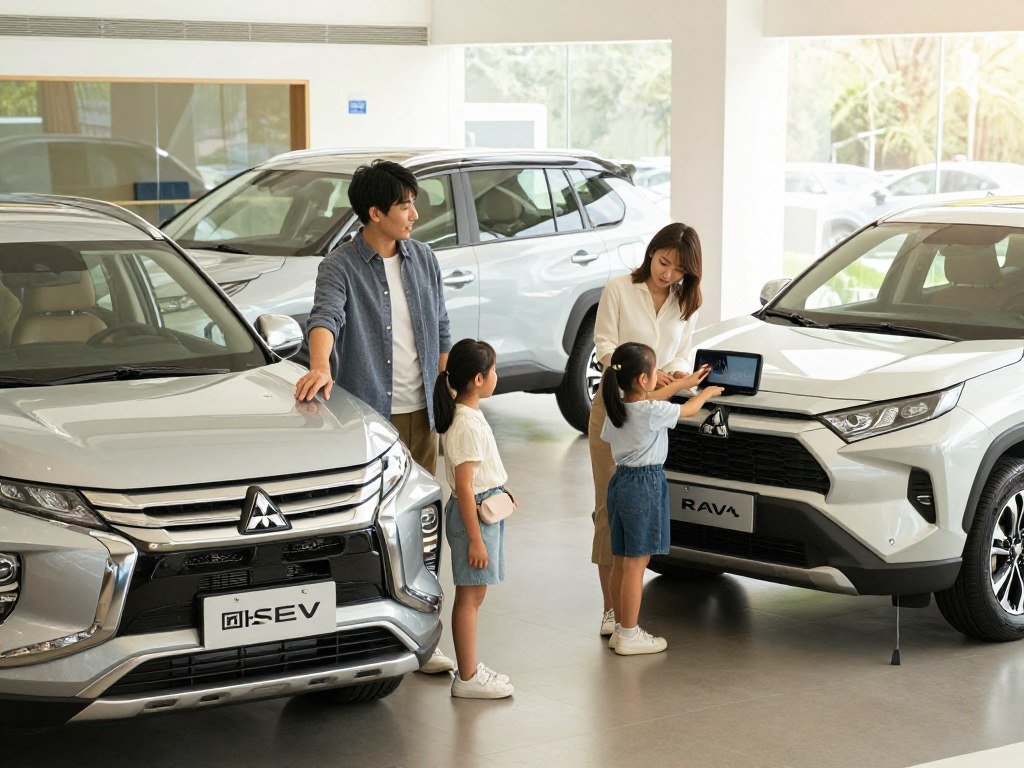
A household that needs an occasional third row has a different shortlist from one comparing the 2026 Mitsubishi Outlander PHEV with the 2026 Toyota RAV4 Plug-in Hybrid. The choice affects family seating, daily electric driving, towing, and long-term ownership. These plug-in hybrid SUVs serve different household needs, so neither is the right pick for everyone.
MPGe means miles per gallon equivalent, a measure that lets you compare electricity use with gasoline energy. It helps describe efficiency, but it cannot tell you how well either vehicle fits your routine. Your charging access and passenger count matter just as much.
This comparison will help you weigh the Outlander’s extra seating against the RAV4’s electric-driving and towing strengths. It also looks at price, cabin features, and coverage, so you can focus on the trade-offs that affect your own family. The right pick starts with the job you expect the SUV to do most often.
Key Takeaways
- Choose the Outlander when you need occasional seating for seven.
- The RAV4 Plug-in Hybrid suits households that want more electric range.
- The Toyota has a higher maximum tow rating on listed trims.
- Home charging habits shape the value of either plug-in hybrid.
- Compare real passenger, cargo, and equipment needs before choosing a trim.
How Does Mitsubishi Outlander PHEV 45 Miles Three Rows vs RAV4 2026 Compare?
The Outlander PHEV is the more practical match for a household that needs a third row, while the RAV4 Plug-in Hybrid is stronger for a two-row household focused on electric range or towing. The best comparison starts with how many people ride with you most days.
Toyota changed the model’s name for 2026: it is now the RAV4 Plug-in Hybrid, not RAV4 Prime. The 2026 Mitsubishi Outlander PHEV and 2026 Toyota RAV4 Plug-in Hybrid are both plug-in hybrid vehicles, but their seating layouts and strengths differ.
| Category | Outlander PHEV | RAV4 Plug-in Hybrid |
|---|---|---|
| Powertrain type | Plug-in hybrid | Plug-in hybrid |
| 2026 model name | Mitsubishi Outlander PHEV | Toyota RAV4 Plug-in Hybrid |
| Best-fit priority | Occasional third-row seating | Electric range or towing |
Use passenger count as your first filter: choose the Outlander for a needed third row, or the RAV4 when two rows meet your needs.
Both vehicles can run on electricity and gasoline, which gives you more flexibility than a vehicle that depends on one fuel. Your home charging setup affects how often the gasoline engine runs, while passengers can rule out one layout quickly.
The Toyota’s new name also matters when you search for trim details or compare listings. Older information may call its predecessor the RAV4 Prime, but the 2026 model uses the Plug-in Hybrid name.
Use the number of passengers you routinely carry as the first filter, not a trim badge.
How Far Can Each Go on Electricity and Gasoline?
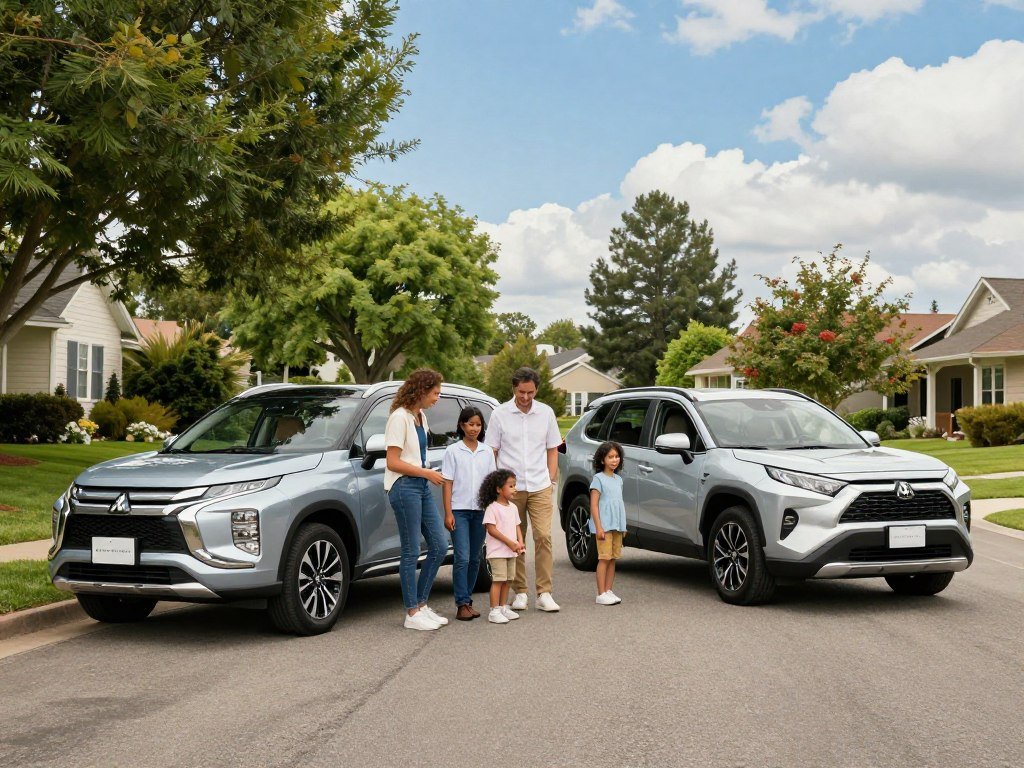
The RAV4 Plug-in Hybrid SE has the longer EPA-estimated electric range, while the Outlander PHEV pairs its electric miles with a 420-mile combined driving range. The Toyota’s extra range can matter most when your daily commute approaches either vehicle’s electric limit.
The 2026 Outlander PHEV has an EPA-estimated all-electric range of up to 45 miles. Its 22.7-kWh battery pack supports that electric driving, while its combined rating is 73 MPGe.
| Metric | Outlander PHEV | RAV4 Plug-in Hybrid |
|---|---|---|
| EPA-estimated electric range | Up to 45 miles | SE: 54 miles |
| Combined MPGe | 73 MPGe | SE and XSE: 98-107 MPGe |
| Gasoline-only combined mpg | 27 mpg after battery depletion | SE and XSE: 37-41 mpg |
Toyota’s 2026 RAV4 Plug-in Hybrid specifications list the SE at 54 electric miles. Toyota’s SE and XSE fuel-economy estimates vary by configuration.
After the Outlander’s battery charge runs down, its combined gasoline rating is 27 mpg. The Toyota SE and XSE are estimated at 37-41 mpg combined on gasoline, depending on configuration.
A commute near the electric-range limit makes the Toyota’s added miles more useful. Regular charging makes gasoline-only efficiency less central because you can use electricity for more daily trips.
Driving speed, cold weather, hills, and cabin heating can change how far you travel before the engine starts. A short local trip may fit within electric range, while highway miles can use the charge faster.
Compare your round-trip commute with a realistic cushion for weather, speed and accessory use rather than planning around the label maximum.
What Charging Options Does Each PHEV Support?
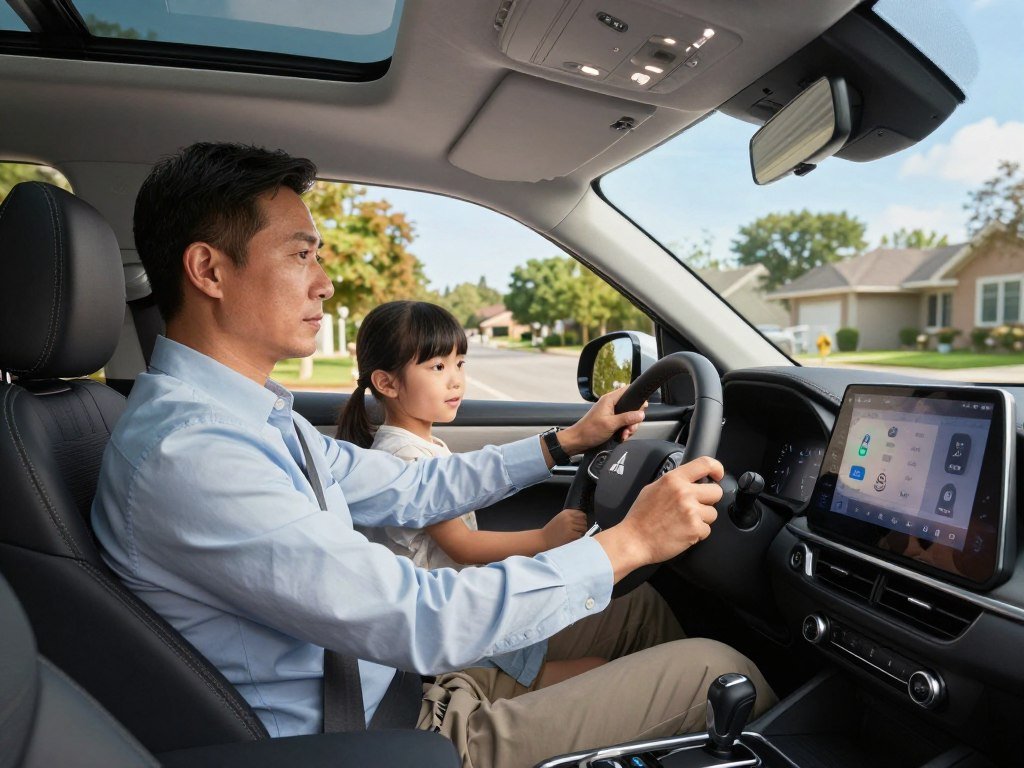
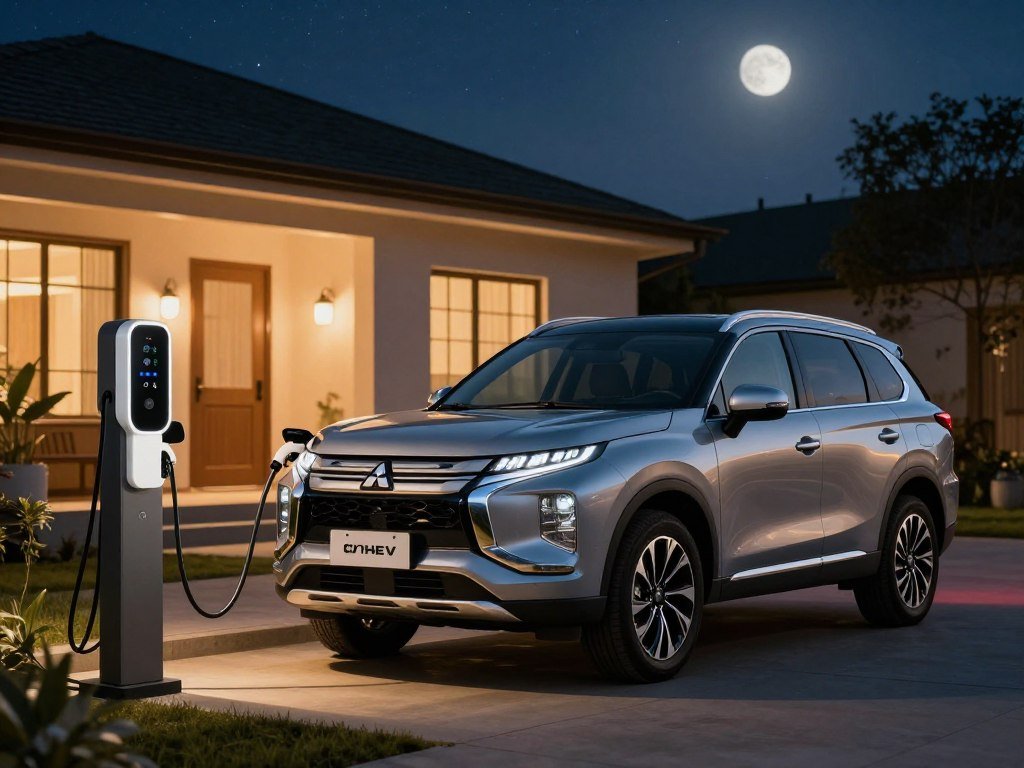
The Outlander PHEV supports home charging and DC fast charging, but its fast-charge connection is CHAdeMO only. For most owners, home charging is the simplest way to add electricity during an overnight stop.
A conventional 120-volt outlet takes about 16.5 hours to charge the Outlander. A 240-volt outlet cuts the stated time to about 6.5 hours.
A CHAdeMO DC fast charger can bring the battery to 80% state of charge in about 29 minutes. That can help during a public stop, but CHAdeMO access is not available at every charging location.
The connector limit matters if you expect public fast charging to be part of your routine. A home outlet may cover daily driving, while longer routes can depend on where compatible chargers sit.
Use this checklist to see whether the Outlander’s charging setup fits your week:
- Home outlet type: confirm whether you have a 120-volt or 240-volt outlet.
- Charging time: compare the stated charge time with the hours your vehicle stays parked.
- Public CHAdeMO access: check compatible stations along your usual routes.
- Home-charge coverage: consider whether home charging covers most of your daily miles.
Do not assume a public fast charger will be open, working, or compatible when you arrive. A charging map can help you spot gaps before a trip, but your usual parking routine is still the daily test.
Before buying, check the charging locations on the routes you actually drive, not just near your home.
Which SUV Is Stronger for Towing and Acceleration?
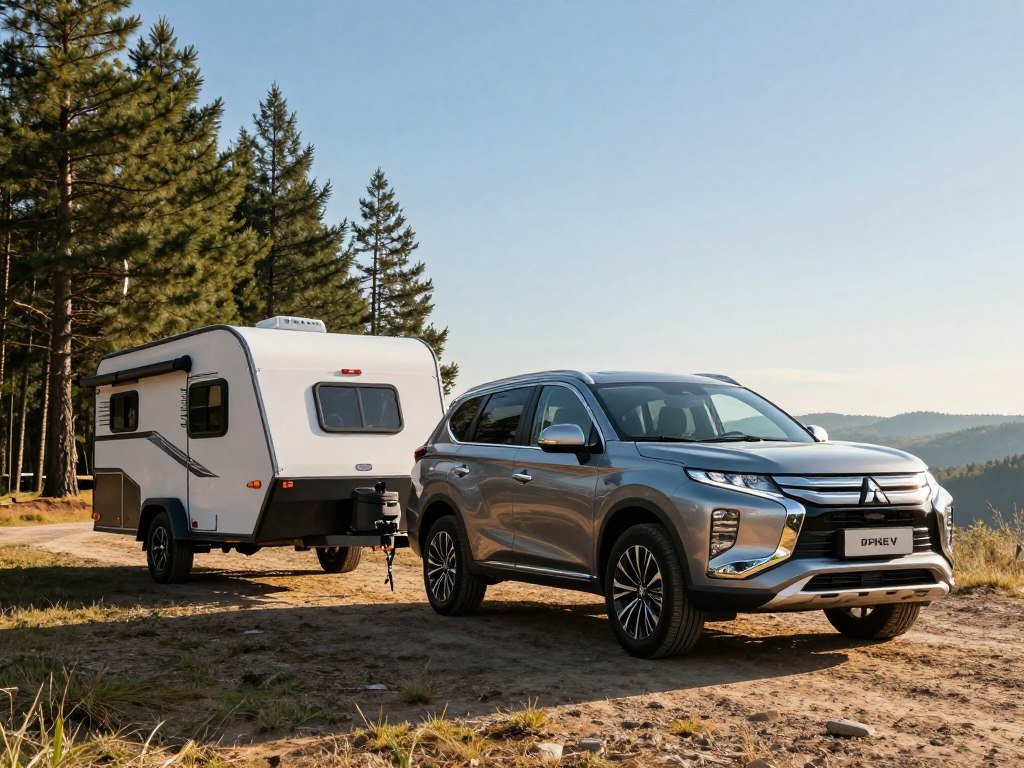
The RAV4 Plug-in Hybrid combines more horsepower with a higher maximum tow rating, making it the clearer pick for heavier trailers. Its higher tow limit makes a real difference if you plan to pull camping or utility gear.
The Outlander PHEV uses a 2.4-liter four-cylinder engine with front and rear electric motors. Together, they produce 297 combined horsepower, and electric motors on both axles provide standard all-wheel drive.
| Capability | Outlander PHEV | RAV4 Plug-in Hybrid |
|---|---|---|
| Combined horsepower | 297 hp | 324 net combined hp |
| All-wheel-drive layout | Standard, electric motors on both axles | All-wheel drive |
| Maximum towing | 1,500 pounds with factory hitch | 3,500 pounds on Woodland, SE, and XSE |
The RAV4 Plug-in Hybrid reaches 60 mph from a stop in 5.4 seconds. Toyota lists its 3,500-pound tow rating for Woodland, SE, and XSE trims.
The Outlander PHEV’s maximum tow rating is 1,500 pounds with the factory-installed towing hitch. Toyota’s 3,500-pound rating applies to specific trims, not every version of the lineup.
Trailer weight is only part of the load. Passengers, cargo, accessories, and options can reduce how much the Mitsubishi can tow safely.
Do not assume the same tow limit applies across every trim or equipment package. A hitch’s presence also does not raise the vehicle’s rated capacity.
Check the exact vehicle’s tow rating and the loaded trailer weight before hitching anything.
Does the Outlander Third Row Work for Real Passengers?
The Outlander adds two seats, but its third row is best suited to small children or short trips. The RAV4 Plug-in Hybrid is a five-passenger vehicle, so only the Outlander offers seating for seven.
That extra row can help when you need a seat for a child’s friend or a short ride across town. It should not be treated as a full-size row for regular adult use.
Who fits comfortably in the Outlander’s third row?
The Outlander PHEV’s third row is too cramped for people taller than about four feet, even with the second row moved forward. That makes the rear seats a better fit for small children than for teens or adults.
Ask the passengers who will use the row to join your test drive. Have them climb in and sit there while the second row stays in its normal position.
Access matters as much as the seat itself. If a child has trouble climbing through the gap, the row may be less useful during busy school or activity runs.
What changes when all three rows are in use?
When every seat is occupied, you have less room to arrange people and their things. A family that uses all seven seats often should test the seating layout with its usual passengers.
The second row’s position can affect both access and comfort in the back. Moving it forward may create more room behind it, but that can take space from passengers in the middle row.
Think about how often you need the extra seats, not just the number printed in the brochure. A seven-seat layout helps on occasional trips, but regular adult passengers need room to sit comfortably.
The RAV4 keeps a simpler two-row cabin for five passengers. If your household never needs a sixth or seventh seat, those extra places may not solve a real problem.
Test the third-row access and comfort with the second row set where your regular passengers would actually leave it.
Which SUV Gives You More Cargo Room?
Cargo needs depend on whether you are carrying gear behind the passengers or folding seats to make room for a larger load. The RAV4 Plug-in Hybrid lists 34 cubic feet behind its rear seats and 64 cubic feet with those seats folded.
Those Toyota figures describe a two-row vehicle, where the rear seats form the back edge of the passenger cabin. The Outlander PHEV’s longer body does not, by itself, show which vehicle will fit your particular load better.
The 2026 Outlander PHEV measures 185.8 inches long and has a 106.5-inch wheelbase. The RAV4 Plug-in Hybrid is 181.0-182.9 inches long, with a 105.9-inch wheelbase.
Exterior length and wheelbase tell you about the vehicle’s footprint, not the shape of its cargo opening. A stroller may fit through one opening more easily, while a long sports bag may sit better on another floor.
Separate cargo needs into two cases: space behind occupied seats and maximum room with seats folded. You may need the first for a family trip and the second for bulky gear.
Bring a stroller, sports equipment, or another regular item when you visit the showroom. Check whether the cargo floor and opening make loading easy, not just whether the item can squeeze inside.
A few inches can matter when you load a wide box or lift a stroller over the bumper. The number of seats in use also changes which cargo area you can access.
Bring the bulkiest item you expect to carry and check the actual opening and floor shape.
What Changes in the 2026 Cabins and Tech?
The Outlander’s 2026 refresh adds cabin and audio updates, while Toyota varies its touchscreen size and seat equipment by trim. The most important display detail is that the Outlander’s instrument cluster is not its center touchscreen.
The redesigned 12.3-inch instrument cluster sits in front of the driver. It shows driving information, while the center touchscreen handles other cabin tasks.
Which interior updates does the Outlander PHEV get?
The 2026 Outlander PHEV adds USB-C ports and LED cabin lighting. It has two USB-C charging ports in front and two more in the second row.
A standard eight-speaker Yamaha audio system is included. An available 12-speaker Yamaha system adds speakers in the front headrests.
Do not read the 12.3-inch cluster size as the size of the center touchscreen. The 2026 cabin updates include the cluster, lighting, ports, and audio, but the cluster serves a different purpose.
How do RAV4 displays and trim features differ?
The RAV4 Plug-in Hybrid SE has a 10.5-inch touchscreen, while the XSE has a 12.9-inch touchscreen. The XSE also has heated and ventilated front seats with SofTex and synthetic-suede trim.
Toyota offers four trims: SE, Woodland, XSE, and GR Sport. Their cabin features differ, so a model name alone does not tell you which screen or seat materials are fitted.
The screen is a practical difference if you rely on the center display for maps or other functions. Seat material and ventilation can matter more if you spend long hours in the front seats.
Compare the cluster, center screen, and audio system as separate items when you inspect a vehicle. A large driver display does not confirm that the center screen is equally large.
Check the window sticker for the exact display and audio configuration instead of assuming every trim gets the top equipment.
How Much Do the 2026 PHEV Trims Cost?
Toyota’s listed SE price is lower than the Outlander’s estimated starting price, but the figures do not share the same destination-fee basis. The price gap is hard to judge until you compare matching trims and fees.
The Outlander PHEV is estimated to start at $44,990, including a $1,795 destination fee. A specific Outlander PHEV SE S-AWC has an MSRP of $48,060, excluding destination and handling, taxes, title, license, dealer charges, and options.
Those Mitsubishi numbers describe different price measures. An estimated starting price includes destination, while the SE S-AWC MSRP excludes several charges and equipment costs.
| RAV4 Plug-in Hybrid trim | MSRP | Buyer positioning |
|---|---|---|
| SE | $41,500 | Entry trim |
| Woodland | $45,300 | Outdoors-focused trim |
| XSE | $47,200 | Upscale trim |
| GR Sport | $48,500 | Sport-focused trim |
Toyota lists the RAV4 Plug-in Hybrid SE at $41,500, with the Woodland at $45,300. The XSE is $47,200, and the GR Sport is $48,500.
Before comparing those prices with an Outlander quote, check what each vehicle includes. Options, dealer charges, and destination treatment can change the amount due at purchase.
Use this three-point price check before choosing a trim:
- Destination treatment: confirm whether the listed price includes the fee.
- Options and dealer charges: add the equipment and fees on the written quote.
- Matching equipment: compare trims with similar features, not just similar prices.
The out-the-door price is the total amount due at purchase. It gives you a more useful comparison than a starting price that leaves out charges.
Compare written out-the-door quotes for the trims you would actually buy, not just the lowest number on each lineup.
Which SUV Has Stronger Warranty Coverage?
Mitsubishi offers the longer powertrain coverage, while Toyota provides the longer battery-mileage limit. Coverage details matter because each company uses different terms for the powertrain, battery, and hybrid parts.
The Outlander PHEV has a five-year/60,000-mile limited warranty and a 10-year/100,000-mile powertrain warranty for the original owner. It also includes five years of roadside assistance with unlimited mileage.
Mitsubishi includes two years or 30,000 miles of limited maintenance for the original owner. The original-owner condition applies to the listed powertrain term and maintenance plan.
The RAV4 Plug-in Hybrid has a five-year/60,000-mile powertrain warranty and a 10-year/150,000-mile battery warranty. Toyota also covers hybrid components for eight years or 100,000 miles, whichever comes first.
Toyota’s battery warranty and hybrid-component coverage are separate terms. The longer battery mileage limit does not replace the shorter limit for the other covered hybrid parts.
Use this checklist to compare the terms that apply to your ownership plans:
- Original-owner condition: note where coverage depends on the first owner.
- Time and mileage: compare both limits, not just the longer number.
- Full terms: read the coverage rules and exclusions for each vehicle.
Roadside help and scheduled maintenance can affect the first years of ownership. For longer ownership, pay close attention to which parts each warranty covers and when coverage ends.
Compare the coverage terms that match how long you plan to keep the vehicle and how many miles you expect to drive.
Which PHEV Fits Your Driving Routine?
A family that regularly uses the extra row has a different best choice from a driver who prioritizes longer electric trips or towing. The best match depends on the jobs your SUV handles week after week.
A Mitsubishi Outlander PHEV review should judge family use alongside efficiency. A seven-seat cabin may matter more than a small difference in daily driving if you often carry extra passengers.
When does the Outlander suit a family or mixed-surface routine?
The Outlander suits households that value an extra row, Mitsubishi’s S-AWC drive modes, or longer powertrain coverage. Its seven selectable modes include Gravel, Snow, Mud, Tarmac, and Power.
Those settings give you choices for different surfaces and driving conditions. They do not change the vehicle’s limits, so match the mode to the road and the conditions you face.
The Outlander may also fit a family that wants occasional extra seating without moving to a larger vehicle. The useful question is whether those seats solve a regular problem for your household.
When is the RAV4 the stronger match?
The RAV4 Plug-in Hybrid fits buyers who do not need the extra row and prioritize longer electric trips or heavier towing. Toyota’s electric range and tow rating support those priorities.
For outdoor trips, the Woodland trim has 18-inch wheels with all-terrain tires and raised roof rails with cross bars. Those features can help carry gear, but they do not prove off-road performance.
The best hybrid SUV for 2026 depends on what you need from a plug-in hybrid. Choose the Mitsubishi when seating and its ownership terms fit better, or the Toyota when range and towing matter more.
Think about your most common drive, such as a school run, commute, or weekend trip. A rare vacation route should not outweigh the needs you face all year.
Choose the Outlander for the family needs you meet often; choose the RAV4 when longer electric trips or heavier towing matter more.
Your charging routine also affects which vehicle makes sense. If you cannot plug in regularly, a plug-in hybrid’s electric-driving advantage may play a smaller role.
Choose the vehicle that fits your most frequent trip, not the rare outing you imagine taking once a year.
What Safety Equipment Should You Compare?
Both vehicles include multiple airbags and driver-assistance features, but their standard and trim-dependent equipment differs. Compare the exact trim, since features can vary across a model lineup.
The Outlander PHEV has 11 airbags, including a front-center airbag. The RAV4 Plug-in Hybrid has eight airbags, but an airbag count alone does not show crash-test performance.
Toyota Safety Sense 4.0 and a Drive Recorder are standard on the RAV4 Plug-in Hybrid. Full-Speed Range adaptive cruise is also standard across its trims.
MI-PILOT Assist is available on the Outlander SE trim and above. It includes adaptive cruise with stop-and-go and lane assistance.
A 2026 Mitsubishi Outlander PHEV review should treat safety features as trim-specific equipment to check, not as a stand-alone safety verdict. A feature list does not replace crash-test results or a close look at the model you plan to buy.
Use this checklist when comparing the two vehicles:
- Adaptive cruise: check whether it is standard or trim-dependent.
- Lane assistance: compare the systems included on each exact trim.
- Airbag equipment: check the count and listed locations.
- Window sticker: confirm the safety equipment on the vehicle for sale.
Names can sound similar even when equipment differs. Check that the specific vehicle has the feature you expect, rather than relying on a trim name alone.
Compare safety equipment by exact trim, and treat airbag counts as one detail rather than a full safety rating.
Confirm the exact safety package on the vehicle’s window sticker before comparing it with another trim.
Conclusion
Pick the Outlander PHEV for family flexibility you will use, or the RAV4 Plug-in Hybrid for the strengths that matter more to your daily routine. The Outlander is the better fit when a third row fills a real need.
The RAV4 is the stronger match when your household can do without that row and puts more weight on electric range or towing. Compare the price and equipment on the trims you would actually choose.
Arrange back-to-back test drives with your usual passengers and a representative piece of cargo. Test-drive both with your regular passengers and the gear you carry most often before making the final call.
FAQ
Which is better, the RAV4 PHEV or the Outlander PHEV?
The Outlander PHEV is better for households that need occasional third-row seating, while the RAV4 Plug-in Hybrid suits buyers who prioritize electric range and towing. The Toyota has five seats, and the Mitsubishi offers seven. Your regular passenger count is the clearest first test. If you rarely need extra seats, compare the Toyota’s range and tow capacity against your own daily drives.
What is a better car, the Toyota RAV4 Hybrid or the plug-in hybrid?
A plug-in hybrid is a better fit if you can charge regularly and want some trips powered by electricity. A conventional hybrid can suit you better if plugging in is not part of your routine. Both types use gasoline, but only the plug-in model can charge its larger battery from an outlet. Consider where you park and how often you drive before choosing.
Is the 2026 Mitsubishi Outlander PHEV a good car?
Yes, the 2026 Mitsubishi Outlander PHEV can be a strong family choice when you need a third row and value long powertrain coverage. Its seven-seat layout adds flexibility for occasional passengers. The back row is cramped for taller riders, and its tow rating is lower than the Toyota’s. It also uses CHAdeMO for DC fast charging, which can limit public charging options.
Should I buy a Mitsubishi Outlander PHEV?
Buy the Outlander PHEV if its seven-seat layout, home charging routine, and warranty terms suit your needs. Its extra seats can help when you carry children or additional passengers now and then. Compare the RAV4 Plug-in Hybrid if you need more electric range or heavier towing. Before deciding, consider how often you would use the extra row and whether charging at home works for you.
Is Mitsubishi just as good as Toyota?
Neither brand is the better choice for every buyer, because each vehicle answers a different need. Mitsubishi offers the Outlander PHEV’s three-row layout, while Toyota leads on electric range and towing in this comparison. You may also weigh the warranty terms, cabin features, and price of the trims you want. Compare the vehicles by the work you expect them to do, not brand name alone.
How long will the Outlander PHEV battery last?
The battery’s exact lifespan depends on use and care, and its warranty does not promise a set number of years. The Outlander PHEV has a 10-year/100,000-mile powertrain warranty for the original owner. That term describes coverage, not a prediction of when the battery will need service. Read the warranty terms to see what parts and conditions the coverage includes.
What are the downsides of the Mitsubishi Outlander?
For the Outlander PHEV, the main trade-offs are a cramped third row, a lower tow rating than the RAV4 Plug-in Hybrid, and CHAdeMO-only DC fast charging. The third row is best for small children or short rides, not regular adult use. The charging connector may also limit public fast-charge choices. Check whether these limits affect your normal passenger, trailer, and charging needs.



