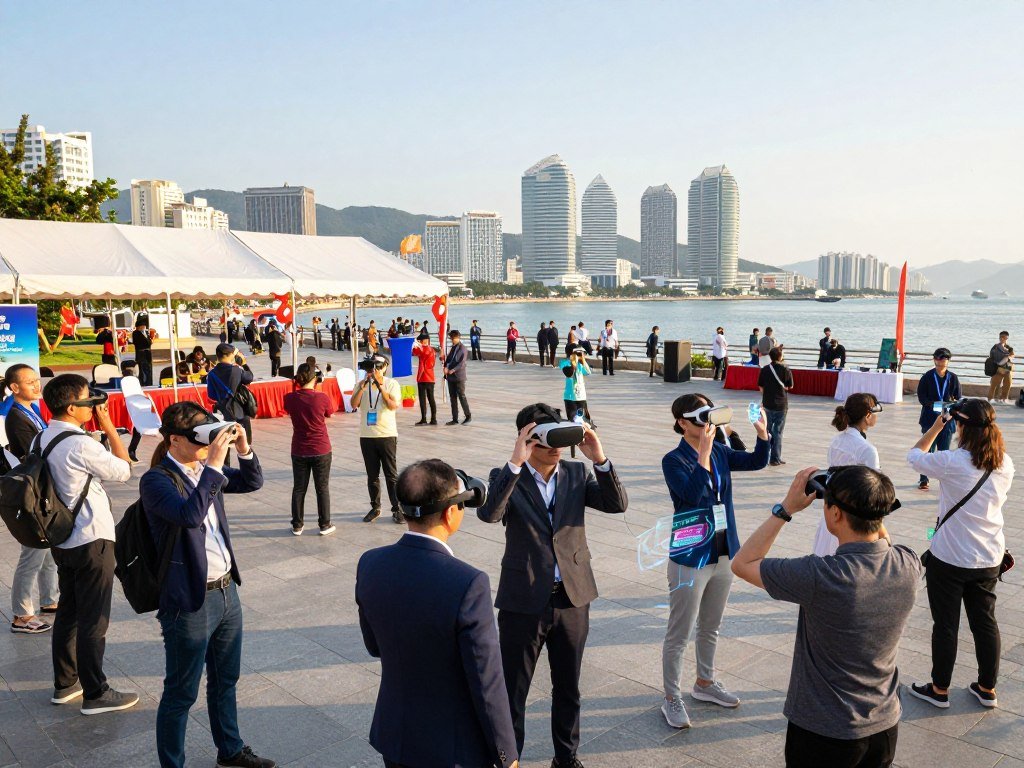
Nha Trang hosted a three-day VR experience that placed visitors inside a defining scene from Vietnam’s independence history. The public program, “Returning to the Sacred Moment,” gave residents and visitors a new way to encounter a landmark event through digital technology. Its timing made the presentation timely for people following local events and Vietnamese history. The program brought a national story into a shared public space.
For families, tourists and history fans, the experience offered more than a look at a display. It invited people to explore a historic setting through a headset, while the event also formed part of a wider provincial festival. The presentation ran from October 24 to 26, 2026, at April 2nd Square.
Key Takeaways
- The public VR experience recreated a scene from Vietnam’s independence history.
- Visitors used headsets to look around the digital setting.
- The Nha Trang presentation was part of a provincial technology festival.
- The program paired a public event with a history lesson.
- Its local dates were October 24-26, 2026.
How the Nha Trang VR Ho Chi Minh Declaration Independence 1945 2026 Program Recreates the Speech
Visitors wore VR headsets to look around a digital recreation of Ba Dinh Square rather than watch the scene on a fixed screen. That difference lets each person turn toward different parts of the digital space. The program recreates the place where Ho Chi Minh read the declaration of independence.
Visitors could look around the square from multiple perspectives. Their glasses showed the platform and the crowds from within the scene, not through one set documentary frame. The experience was presented in Nha Trang Ward, Khanh Hoa Province.
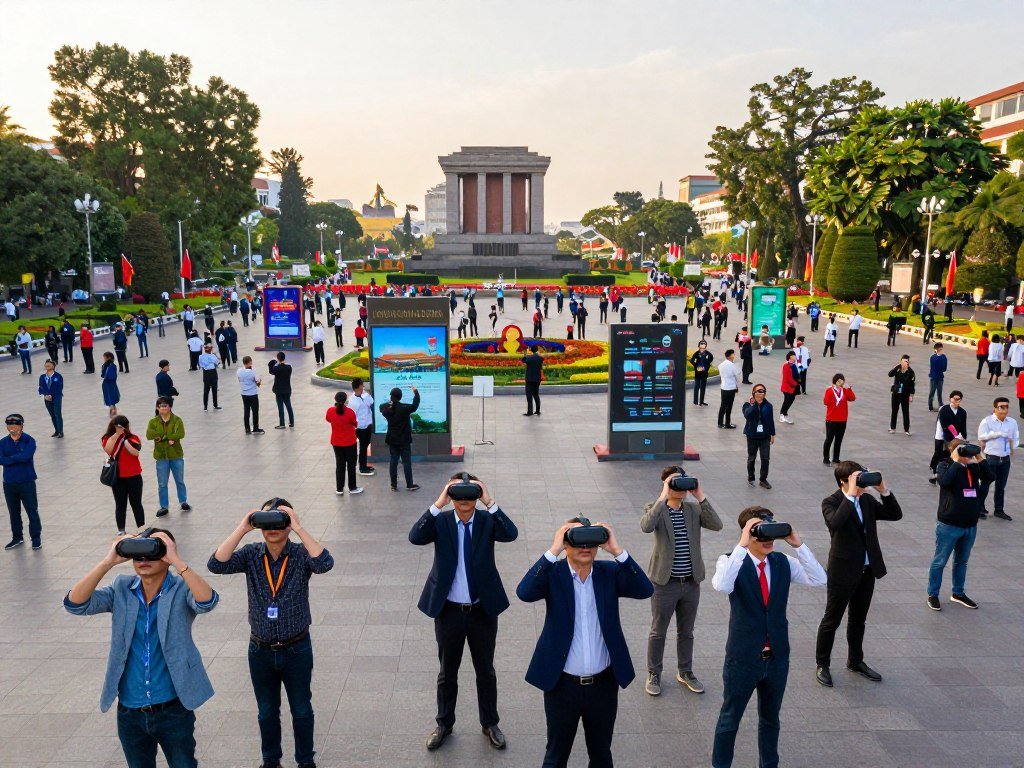
A digital reconstruction offers an interpretation of a historic place, not a surviving live view of the square.
A 360-Degree View of Ba Dinh Square
360-degree virtual reality is a digital scene that lets viewers look around in every direction by moving their heads. Visitors can shift their gaze across the square and view the setting from more than one angle.
That freedom differs from watching a documentary frame chosen by a camera operator. A fixed frame guides the viewer toward one view, while a VR scene lets people choose where to look.
The program uses this format to place viewers within a digital version of Ba Dinh Square. The scene remains a designed reconstruction, even as the head movement makes the space feel more open.
The Scene Visitors Encounter
The recreated square includes a raised platform and crowds gathered around it. At the center of the scene, Ho Chi Minh reads the Declaration of Independence.
Audio adds the sound of the speech, followed by the crowd’s cheers and applause. The mix helps viewers connect the visual setting with the public moment being represented.
The presentation focuses on the speech rather than a general tour of the square. Visitors hear the declaration while looking around the crowd and platform.
The program makes the historic scene available as a spatial experience, rather than a single image or clip. The scene centers on the platform, the crowd and the sound of the declaration.
What Happened on September 2, 1945, in Ba Dinh Square?
On September 2, 1945, Ho Chi Minh proclaimed Vietnam’s independence in Hanoi before a crowd of hundreds of thousands. His declaration announced the founding of the Democratic Republic of Vietnam after Japan’s surrender and Emperor Bao Dai’s abdication. September 2 became Vietnam’s National Day.
Ho Chi Minh drafted the declaration during the five days before presenting it in public. The text opened with the 1776 U.S. Declaration of Independence and its claim that people are created equal.
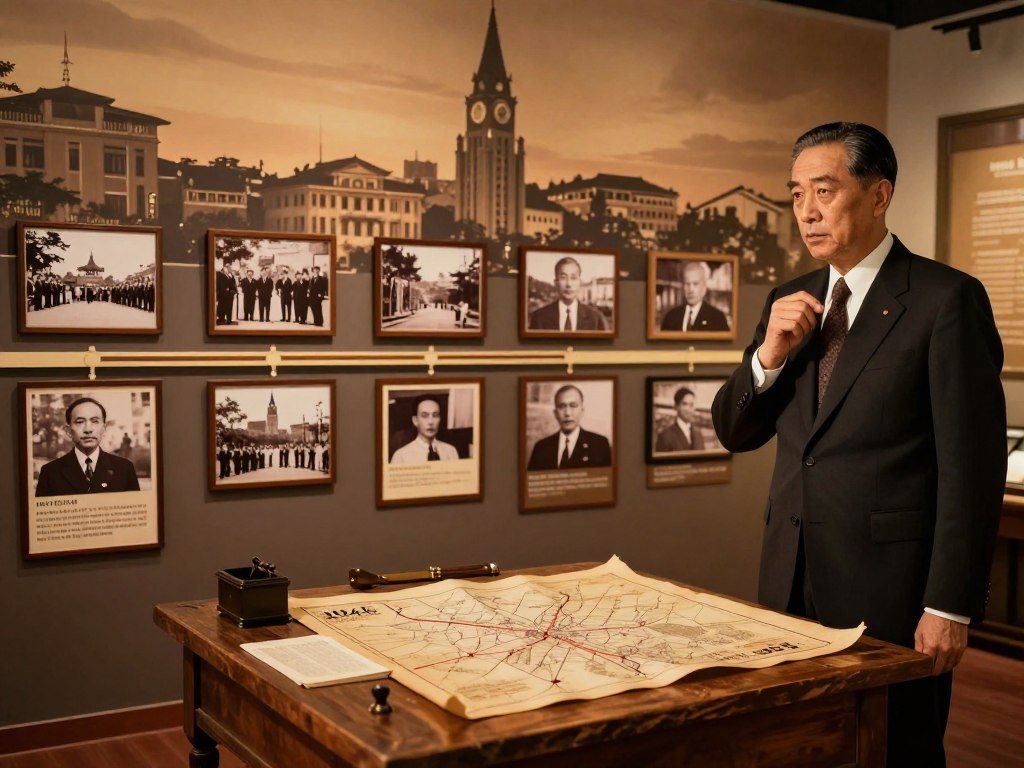
It cited people’s rights to life, liberty and the pursuit of happiness. It also invoked the French Revolution’s 1791 Declaration of the Rights of Man and of the Citizen.
The declaration set out the hardship and political events behind the announcement. It said more than two million people in Vietnam died from starvation between late 1944 and early 1945.
It also stated that Japan disarmed French troops on March 9, 1945. After Japan surrendered and Bao Dai abdicated, the declaration announced a new republic.
| Date | Historical detail | Connection to the declaration |
|---|---|---|
| 1776 | U.S. Declaration of Independence | Its claim of equal rights was quoted |
| 1791 | French Declaration of the Rights of Man and of the Citizen | The document was invoked |
| March 9, 1945 | Japan disarmed French troops | The event was cited in the text |
| September 2, 1945 | Ho Chi Minh proclaimed independence | The Democratic Republic of Vietnam was announced |
For many people, the date links the founding of the republic with the end of colonial rule and wartime upheaval. The anniversary of that declaration is Vietnam’s National Day.
What Did Visitors Experience in the VR Reconstruction?
For Nha Trang Ward resident Nguyen Thi Yen Phi, the experience became a way to share the story with her son. She said it strengthened her patriotism and brought him along to understand the historic moment. For her family, the visit joined a history lesson with time together.
Her comments describe one resident’s personal response, not a measured result for every visitor. That distinction matters: people arrive with different interests, family backgrounds and knowledge of the past.
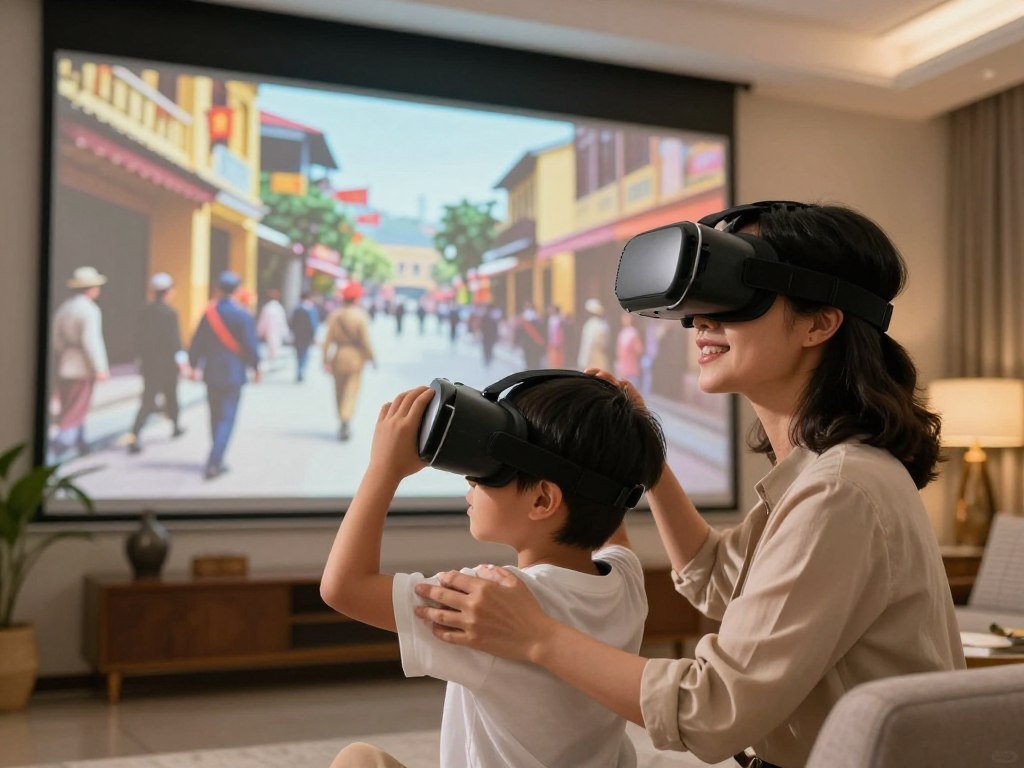
A foreign visitor also tried the program in Khanh Hoa, showing that the event reached beyond local residents. Visitors and tourists could approach the subject through a shared public experience, even if they came with different levels of familiarity.
At an earlier Independence Palace presentation, veterans, young people, families and international visitors also tried the experience. That range of groups suggests the format can draw people with varied reasons for attending, though each event has its own audience.
For parents, bringing a child can turn a visit into a chance to talk about the past. The headset gives the family a common setting to discuss, while the historical story gives that setting meaning.
Yen Phi’s account offers a specific example of why the sacred moment mattered to one household. Her account shows why the event appealed as both a family outing and a history experience.
Where Has “Returning to the Sacred Moment” Traveled?
The Nha Trang presentation was one stop in a program that had already reached audiences in several parts of Vietnam. It first appeared publicly in Hanoi during the 2025 National Day anniversary, drawing more than 35,000 participants. From there, the program moved through cities and historic sites.
Earlier presentations drew more than 35,000 participants in Hanoi and over 8,000 at the Independence Palace. It also visited Quang Ninh and Kim Lien National Special Historical Site in Nghe An.
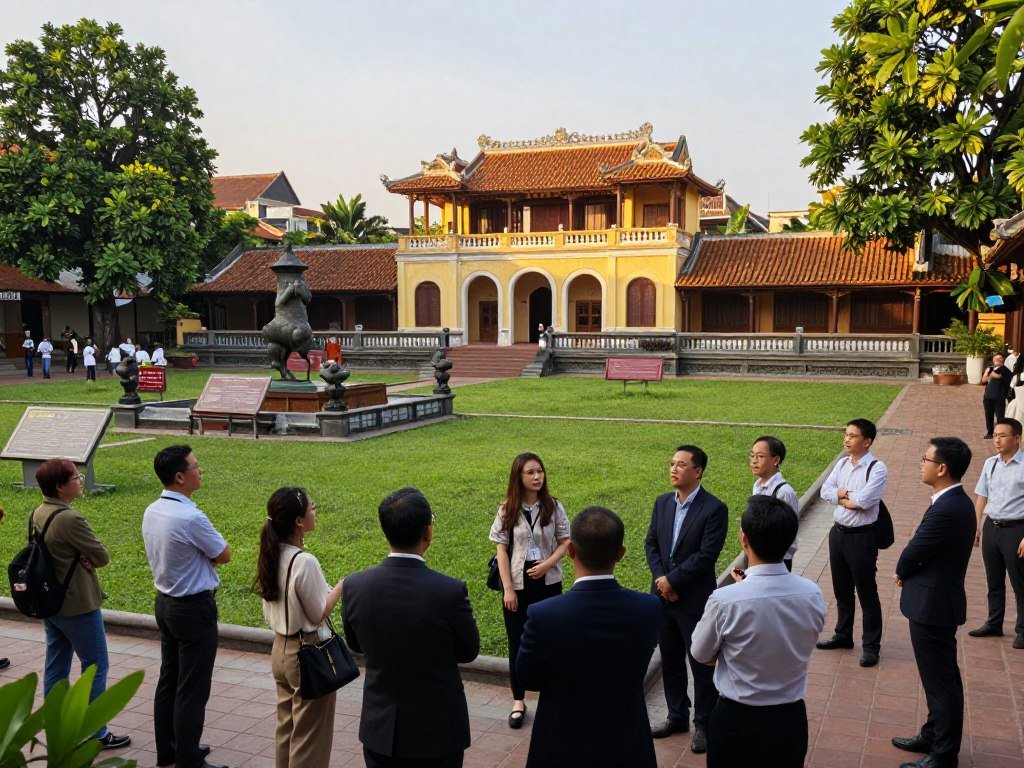
The Independence Palace presentation in Ho Chi Minh City ran August 19-21, 2026. In Da Nang, the program reached APEC Park from September 2-4, 2026.
| Location | Dates or occasion | Participants |
|---|---|---|
| Hanoi | 2025 National Day anniversary | More than 35,000 |
| Independence Palace | August 19-21, 2026 | Over 8,000 |
| APEC Park, Da Nang | September 2-4, 2026 | Over 5,000 locals and tourists |
Reported figures give a sense of the scale at these named stops. They do not describe the number of people who attended in Nha Trang.
Vietnamnet Global reported about 35,000 visits in Hanoi and more than 8,000 at the Independence Palace. Its program history and attendance figures also describe the planned Da Nang presentation.
The Independence Palace event launched on August 19, 2026, as another stop in the program’s tour. Coverage of the palace presentation describes its audience, including families and international visitors.
The figures show substantial attendance at those named stops, without making them a count of Nha Trang participants.
Who Organized the Nha Trang Presentation and Why?
In Nha Trang, the VR program was presented as part of Khanh Hoa Province’s Digital Technology Festival 2026. The partnership joined national and provincial groups to bring the experience to the public. The festival connected digital technology with a public history event.
The Voice of Vietnam, or VOV, and the Khanh Hoa People’s Committee directed the program. VTC News and the Khanh Hoa Department of Science and Technology jointly organized the presentation.
The festival aimed to bring digital technology closer to the public. The program also offered younger generations a visual way to approach history alongside other forms of learning.
Officials took part in the opening event. Their roles and presence were reported as follows:
- VOV and the Khanh Hoa People’s Committee directed the program.
- VTC News and the provincial Department of Science and Technology organized it.
- Vice Chairman Nguyen Thanh Ha spoke at the opening.
- Vo Hoan Hai attended as head of the Provincial Party Committee’s Propaganda Department.
The provincial festival gave the program a local public setting, while the named partners brought different roles to its delivery. The partnership linked a public history experience with the province’s digital transformation program.
What Can VR Add to the Teaching of Vietnam’s Independence?
A VR reconstruction can help learners picture a historical setting, while its educational value depends on the material and context behind the scene. The key is balance: the digital experience can support learning, but it cannot replace the records historians use. VR works best beside, not instead of, historical source material.
Books, photographs and documentary films give learners ways to study the past. A virtual reality presentation adds a spatial view that lets viewers look around a recreated place from different angles.
Immersion can help make a setting easier to picture, but context must explain what the reconstruction can and cannot show.
The Historical Material Behind the Reconstruction
The program’s reconstruction draws on four kinds of input. Each can help shape a visual account, while history experts help keep its meaning tied to the record.
- Archival footage
- Photographs
- Audio recordings
- Input from history experts
These materials inform the digital recreation; they do not turn it into original footage of the 1945 event. Viewers need to understand that distinction when studying a scene built from records and expert input.
Immersion as a Learning Tool
Books and documentary films guide attention through words, still images or a camera’s chosen frame. VR adds a sense of space, allowing learners to turn and examine different parts of a reconstructed setting.
That choice can help younger audiences connect a name or date with a place. It may also prompt questions about who gathered there, what they heard and what the historical record says.
A visual experience works best when teachers or other guides explain the evidence behind it. Learners can then compare what the scene suggests with information in books, images and documentary films.
Digital media can make a past setting feel closer, but feeling present is not the same as witnessing the original event. Pairing immersive media with historical context gives viewers a clearer way to explore the past.
Conclusion
The Nha Trang program brought a significant moment in Vietnam’s history into a public digital experience. It gave residents a way to picture a major national event through an immersive format, rather than encounter it only through a page or screen.
That format works best when viewers also learn how the scene was made and what historical records support it. The setting can make history feel more tangible, while context helps keep the reconstruction in perspective.
Before traveling to another stop, check VOV or Khanh Hoa event announcements for current dates and venue details.
FAQ
What dates was “Returning to the Sacred Moment” held in Nha Trang?
“Returning to the Sacred Moment” ran October 24-26, 2026, at April 2nd Square in Nha Trang Ward. The three-day presentation was part of Khanh Hoa Province’s Digital Technology Festival 2026. Visitors could attend the public event at the square during those dates and explore the historic setting through a VR headset.
What does the “Returning to the Sacred Moment” VR experience show?
The VR experience shows a digital recreation of Ba Dinh Square as Ho Chi Minh reads the Declaration of Independence. Visitors wear a headset and can look around the scene in every direction by moving their heads. Audio includes the speech and the crowd’s cheers and applause. It presents a reconstructed setting, rather than one fixed documentary frame.
What historical materials helped create the VR reconstruction?
The reconstruction draws on archival footage, photographs, audio recordings and input from history experts. These materials help shape the digital account of the historic setting. They do not make the VR scene original footage of the event. The experience is best understood alongside books, images and documentary films that provide further historical context.
Who organized the Nha Trang VR program?
VOV and the Khanh Hoa People’s Committee directed the program, while VTC News and the Khanh Hoa Department of Science and Technology jointly organized it. The presentation was part of the province’s Digital Technology Festival 2026. Vice Chairman Nguyen Thanh Ha spoke at the opening, and Vo Hoan Hai attended as head of the Provincial Party Committee’s Propaganda Department.
How many people attended earlier presentations of the program?
More than 35,000 people attended the Hanoi presentation during the 2025 National Day anniversary. The Independence Palace stop drew over 8,000 participants in August 2026. In September 2026, APEC Park in Da Nang drew over 5,000 locals and tourists. Those totals belong to the named earlier stops, not the Nha Trang presentation.
What did Ho Chi Minh announce on September 2, 1945?
Ho Chi Minh proclaimed Vietnam’s independence and announced the founding of the Democratic Republic of Vietnam. The declaration followed Japan’s surrender and Emperor Bao Dai’s abdication. Ho Chi Minh presented it publicly in Hanoi before a crowd of hundreds of thousands. September 2 is now Vietnam’s National Day, marking the anniversary of that announcement.
Is the VR presentation the same as watching original footage of the declaration?
No. The presentation is a reconstruction informed by archival footage, photographs, audio recordings and input from history experts. It is not simply a documentary screening, and it should not be mistaken for original footage of the 1945 declaration. The headset lets viewers look around a digital scene, while historical records and context explain its basis.