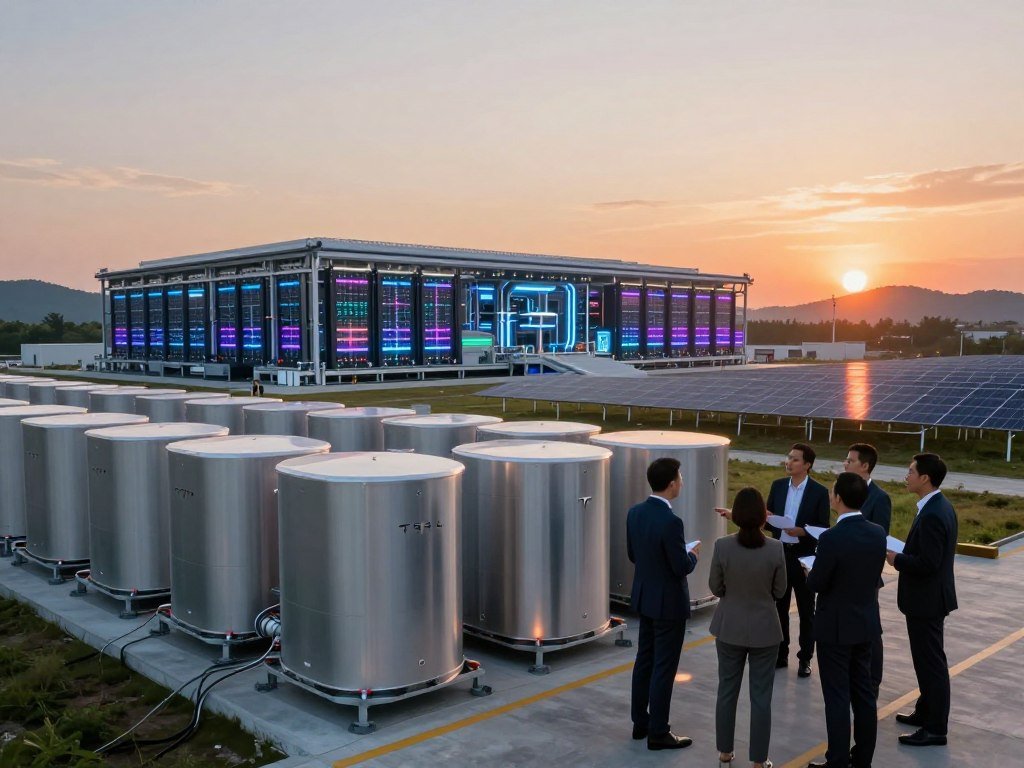
AI data centers need dependable electricity as well as computing equipment, putting large-scale storage in the infrastructure spotlight. Tesla Megapack supply matters because projects need power equipment ready when their buildings open. A data center can draw a great deal of electricity, and its needs may change over time.
Nameplate capacity means a facility’s designed maximum production over a year, not its actual output or shipments. Battery storage can support a power plan, but it cannot fix every limit on electricity supply. The issue is how quickly Tesla can make and deliver equipment as demand grows.
Readers tracking AI infrastructure can follow the difference between projected demand and completed projects. The figures matter to utilities, developers and data center operators planning large loads. They also matter to investors watching whether production can keep pace with orders.
The central question is whether Tesla can turn strong orders into delivered Megapacks quickly enough.
Key Takeaways
- Tesla said its expected 2027 Megapack supply is nearly committed.
- That statement does not mean every 2027 unit is sold.
- U.S. data center power demand is forecast to rise through 2027.
- Scheduled projects may not come online on their announced dates.
- Factory nameplate capacity is not the same as delivered storage.
- Buyers need written schedules and project-specific terms.
Tesla Megapack Almost Sold Out 2027 AI Data Centers 2026: What Did Musk Actually Say?
Musk’s wording was “almost sold out,” a meaningful supply warning that stops short of saying every 2027 unit is spoken for. Almost signals tight expected supply, not a complete sellout or a public tally of booked units.
Tesla CEO Elon Musk said the company was ramping production as quickly as possible to meet demand. CFO Vaibhav Taneja also described strong data center demand during the Q3 2026 earnings call. The comments point to a busy order pipeline, but they do not say how many units remain available.
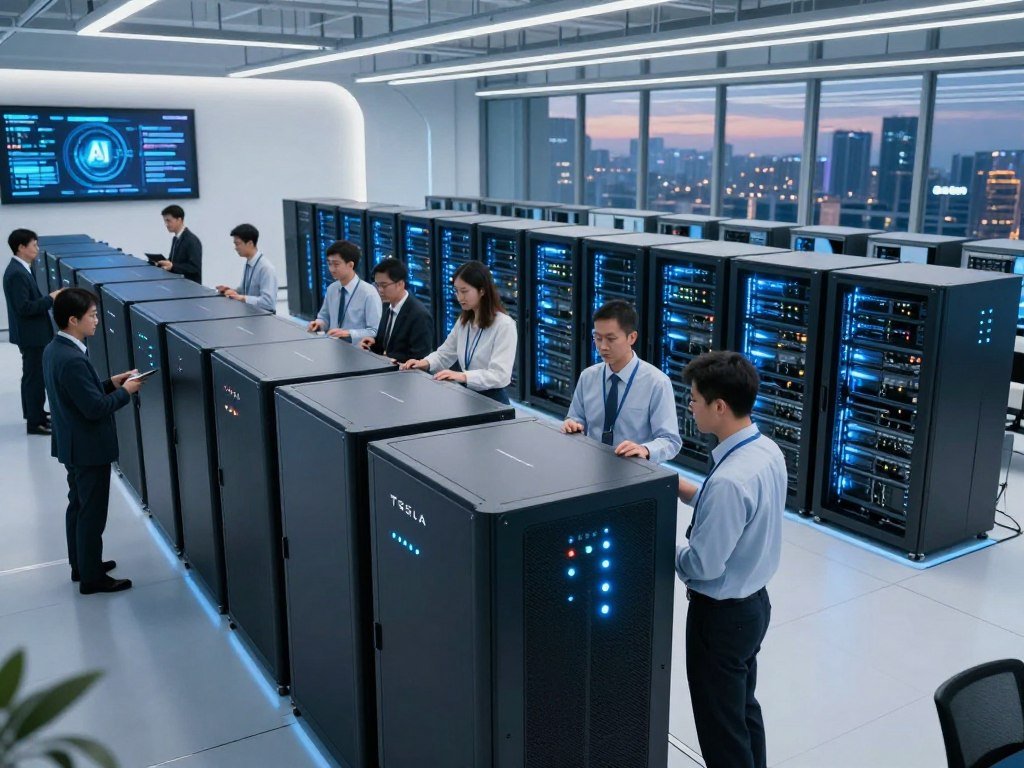
“Almost sold out” is not a claim that Tesla has sold every Megapack planned for 2027. The wording describes an expected supply position, rather than a confirmed count of orders or firm commitments.
Treat the statement as a sign that expected 2027 supply is tight, not proof that every unit is committed.
Tesla sells Megapacks to utilities, renewable-energy developers and data centers. The AI connection is important, yet it does not show that every order comes from an AI buyer. Power companies may use large batteries for other grid and energy projects.
The company’s supply statement also does not provide a delivery schedule for a specific customer. That detail matters because project timelines and equipment needs differ. Buyers should read the comment as a broad business signal, not an offer with set terms.
Treat the statement as a signal of tight expected supply, not a published count of remaining units.
Why Do AI Data Centers Need Battery Storage?
A data center’s power challenge is not just how much electricity it uses, but how reliably its supply can match changing demand. Storage gives operators another tool for managing that challenge, though it does not replace the grid or power plants.
A Megapack is a utility-scale battery system that can store up to several megawatt-hours per unit. That broad scale helps explain why large sites may consider battery systems alongside other power equipment. A Megapack stores electricity; it does not generate new electricity.
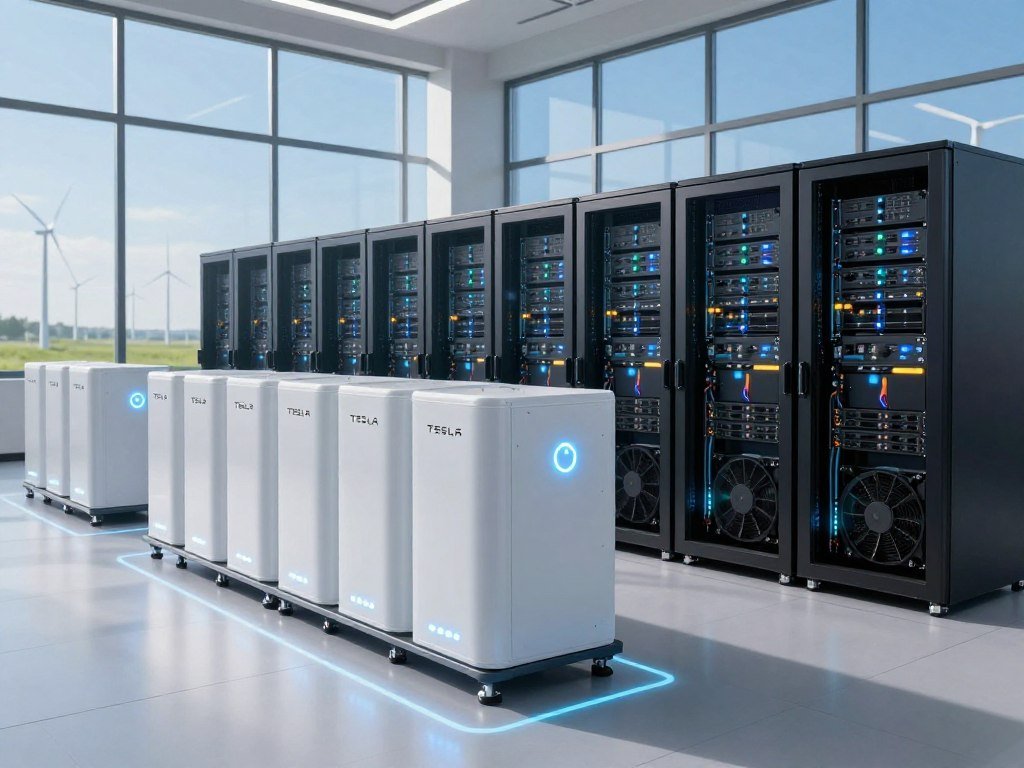
Smoothing fast-changing electricity loads
Computing equipment can change how much power a facility draws as workloads shift. Storage can respond by releasing electricity when a site needs support, which may reduce sudden changes in its draw from the grid.
That support can help operators manage energy use during busy periods. It does not guarantee uninterrupted service, since the data center still depends on its full power system and equipment.
Some facilities also use cloud platforms for AI workloads rather than running every task on site. This cloud platform comparison gives context for the computing services behind AI demand, though it does not describe a power plan.
Holding energy for later use
A battery can charge when energy is available and discharge later when a facility needs added support. The energy comes from a power source, such as the grid or a generation system. Charging stores that electricity for another time; it does not create more energy.
Storage may help a site shift some electricity use across the day. The best fit depends on the facility’s load, its power supply and the job assigned to the batteries.
Buyers should size storage around the facility’s load profile and intended use, rather than treating battery capacity alone as a complete power plan.
How Fast Is U.S. Data Center Power Demand Growing?
The forecast rises from 31 gigawatts of U.S. data center power demand in 2025 to 66 gigawatts in 2027. That growth signals a fast-moving national buildout, but it does not predict the power needs of any single facility.
Data centers are also projected to take a larger share of peak summer electricity demand. The forecasted share reaches 8.5% in 2027, up from 4.1% in 2025. The Goldman Sachs Research forecast covers national power use and project timing.
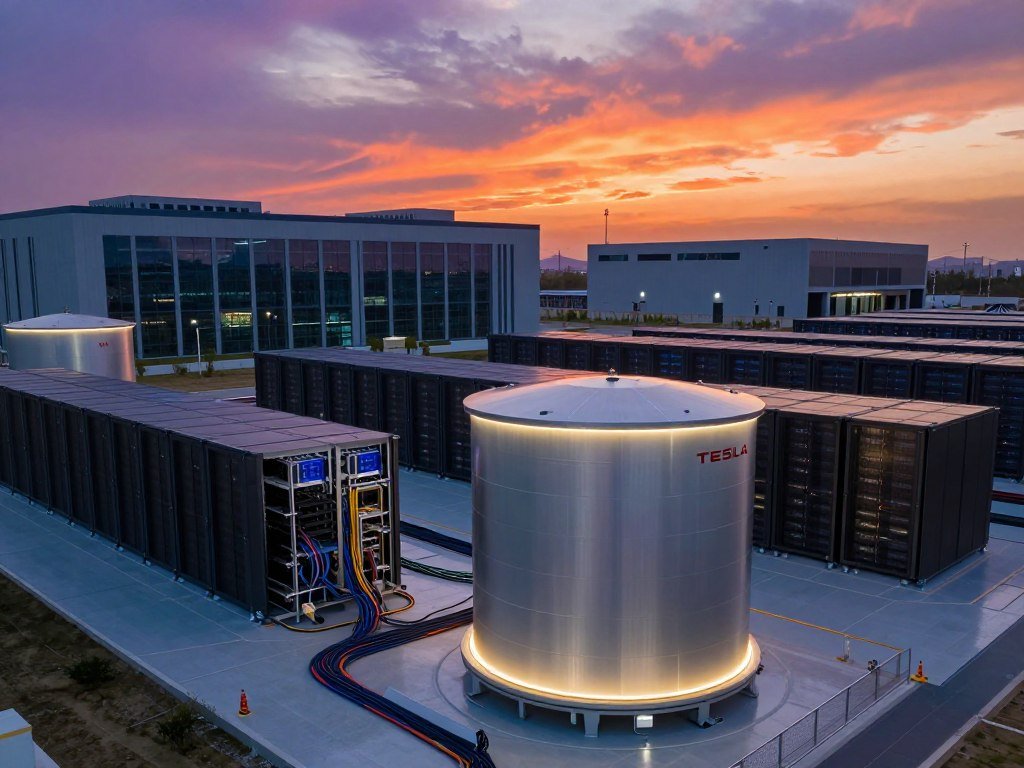
Forecast demand and peak-summer share
| Year | Forecast data center power demand (GW) | Share of total peak summer power demand |
|---|---|---|
| 2025 | 31 | 4.1% |
| 2026 | 41 | 5.3% |
| 2027 | 66 | 8.5% |
The demand figure measures expected electricity use across U.S. data centers. Peak summer share compares that use with the country’s total peak summer power demand. Neither measure says how much electricity one site will need.
Forecasts also reflect expected growth in AI workloads and related computing. Broader AI infrastructure spending forecasts point to investment plans, not proof that any one company will capture that spending.
Scheduled capacity additions
Scheduled U.S. data center capacity additions total 13.6 gigawatts in 2026 and 36.3 gigawatts in 2027. These additions describe projects planned to enter service, while power demand measures electricity expected to be used.
The two measures are linked but distinct. A scheduled building may take time to open, and its electricity use can differ from its planned capacity once operating.
Keep demand forecasts separate from the capacity projects scheduled to come online, since the figures describe different stages of growth.
Will Planned Data Center Capacity Come Online on Time?
The scheduled buildout is uncertain: the estimated on-time share is lower for projects further out than the historical four-quarter benchmark. Current estimates put roughly 60% of next-year capacity on time and about 50% of capacity scheduled within two years.
For comparison, about 72% of data centers scheduled to activate within the following four quarters came online on time historically. That historical rate is a comparison, not a promise for upcoming projects.
| Schedule or comparison period | Estimated share coming online on time | Meaning |
|---|---|---|
| Capacity scheduled for the next year | Roughly 60% | Current estimate |
| Capacity scheduled in the next two years | Roughly 50% | Current estimate |
| Data centers due within the following four quarters | About 72% | Historical comparison |
A typical data center takes 18 to 24 months to build after permits are secured. The work involves more than putting up a building. Several milestones can change the planned opening date:
- Permits
- Construction
- Grid connection
- Equipment commissioning
Each step can affect when a facility can draw power. A delay in grid connection, for example, can hold up operations even if the building is ready. These estimates describe groups of projects, not the odds for a specific site.
Developers may also revise project plans as equipment and power needs change. That makes an announced pipeline useful for tracking intent, but weaker than a record of operating facilities.
A project’s announced date should be treated as a schedule target, not proof that its power demand will arrive on time.
What Do Tesla’s Q3 2026 Energy Results Show?
Tesla’s Q3 2026 energy business presented a mixed picture: deployment and gross margin were strong, while revenue fell year over year. Each measure tracks a different part of the business, so they can move in different directions during one quarter.
Tesla deployed 13.7 gigawatt-hours of energy storage, its second-best quarterly performance. Energy generation and storage revenue fell 16% year over year to $2.88 billion. Gross margin reached 33.1%, up from 20.4% in Q2 2026.
Tariff-related customer refunds contributed to the revenue decline. Higher selling prices and warranty adjustments contributed to margin improvement. Those factors help explain the quarter, but they do not prove future margins will rise or give the decline one cause.
Here is what the three measures capture:
- Deployed energy measures storage delivered during the quarter.
- Revenue measures sales recognized in the company’s accounts.
- Gross margin measures revenue left after the cost of goods sold.
Order activity points to potential future business, while deployment records completed deliveries. Revenue depends on recognized sales, and margin reflects the relationship between sales and costs. Those stages need not match within one quarter.
The 13.7 GWh deployment total shows substantial delivery activity, while the revenue decline shows that delivery volume alone does not explain quarterly sales. Refunds and timing can affect reported revenue, and price or warranty changes can affect margin.
Read the revenue decline alongside delivery timing and the cited adjustments, rather than treating it as a direct measure of order demand.
How Is Tesla Expanding Megapack Manufacturing?
Tesla’s Texas factory adds a designed 50 gigawatt-hours of annual capacity to a manufacturing network that also includes California and Shanghai. The new site began producing Megapacks in Q3 2026.
The Brookshire, Texas, Megafactory has a nameplate capacity of 50 GWh. California has reported capacity of 40 GWh, while Shanghai has 20 GWh. Together, the three facilities have roughly 110 GWh of nameplate capacity.
| Facility | Location | Designed or reported annual capacity |
|---|---|---|
| Brookshire Megafactory | Texas | 50 GWh |
| California facility | California | 40 GWh |
| Shanghai facility | Shanghai | 20 GWh |
Nameplate capacity describes a facility’s designed maximum annual production. It is not a report of actual production or shipped units. A new factory may need time to approach its designed output as its work and supply systems ramp up.
Tesla began delivering Megapacks with in-house LFP batteries. The first units used cells from its Nevada factory. Those deliveries show the company is using its own battery cells, but they do not establish future delivery volume.
Tesla scheduled Megapack 3 and Megablock to begin production in Texas in 2026. The product ramp adds another part of the manufacturing plan, while the Texas factory’s designed output remains distinct from finished deliveries.
A report on the planned Tesla and LG Energy Solution battery plant describes another planned source of LFP cells, with production scheduled to begin in 2027.
Compare a factory’s nameplate capacity with actual quarterly deployments before judging how quickly new supply is reaching customers.
What Should Megapack Buyers Do About Tight 2027 Supply?
A project that needs storage in 2027 should get a firm, written delivery window before treating the supply slot as secured. A written schedule gives developers a basis for planning their construction work and power needs.
The “almost sold out” statement concerns Megapacks planned for 2027, but gives no public remaining-unit count. Buyers should focus on project terms rather than assume that a broad supply comment confirms their own place in line.
Confirm schedule and commercial terms
Ask for a written delivery window and a project-specific quote. Request the warranty terms and a clear description of what the quoted scope covers, including equipment and installation responsibilities.
Project-specific pricing depends on the system configuration and installation scope. A quote for one project may not match another site’s needs, even when both use the same battery product.
Protect the project against a missed slot
A construction plan can lose time if storage delivery slips. These steps can keep the project from relying on one unresolved schedule:
- Qualify an alternative supplier.
- Confirm the utility interconnection schedule.
- Design for phased storage installation.
- Check site compatibility with different battery systems.
- Align equipment delivery with construction milestones.
Compatibility checks matter because battery systems can differ in size and site needs. Phased installation can also help developers match delivery to construction progress, if the project design allows it.
Keep the equipment scope and schedule tied to the same project plan. A clear quote helps teams compare what each offer includes, rather than judging only the headline price.
Keep a second supply path viable until the delivery schedule and project scope are documented.
What Do SpaceX’s Megapack Purchases Show?
SpaceX’s Megapack purchases offer a named example of an AI-focused company investing in large-scale battery storage. One customer can show how AI infrastructure connects to storage, but cannot represent Tesla’s entire customer base.
SpaceX bought $506 million of Tesla Megapack products in 2025. It then bought $295 million worth in Q2 2026, bringing first-half 2026 spending to $329 million.
The Q2 purchase made up most of SpaceX’s reported first-half spending. These figures show that the company bought a large amount of Tesla storage across the stated periods.
SpaceX’s purchases support the connection between AI infrastructure and Tesla storage. They do not reveal what share of Tesla’s total orders came from SpaceX, or how many other buyers placed orders.
Data centers are one part of a wider market for large energy storage systems. Utilities and renewable-energy developers also buy storage, so the SpaceX example should not be read as a full picture of demand.
The spending amounts also do not show delivery timing, system count or the specific use of every Megapack. Dollar totals describe the value of purchases, not total installed capacity.
Use the SpaceX figures as a customer example, not as a substitute for Tesla’s overall backlog.
Can Batteries Solve Data Center Power Reliability Problems?
A Megapack can improve power flexibility, but it cannot generate the electricity a data center consumes. Its role is to store power made elsewhere and release it when the facility needs support.
Batteries can help provide power during outages or supply constraints, depending on how the system is set up. They are one part of a power plan, not a complete replacement for generation and grid supply.
A battery can store electricity from different sources, including fossil-fuel and renewable generation. Possible pairings include:
- Grid electricity
- Renewable generation
- Fossil-fuel generation
Intermittent renewable sources can make storage useful for shifting when energy is available. A battery may charge when generation is strong, then release energy later. The stored supply is limited by the system’s configuration and charge.
Backup duration depends on the facility’s load and storage configuration. A system sized for critical equipment may run longer than one serving the full site, since a larger load uses stored energy faster.
Data centers also need plans for power equipment, grid access and generation. Storage can add flexibility, but it cannot remove every risk tied to supply or equipment failure.
Operators should plan storage as one part of a layered power strategy, with backup duration matched to critical loads.
Which Signals Will Show Whether Tesla’s Energy Demand Is Holding Up?
Tesla’s highest-ever quarterly energy storage order rate is a strong demand signal, but it does not by itself establish how much product has shipped. Orders come first in the business process, while deliveries and recognized sales follow later.
Musk and CFO Vaibhav Taneja highlighted extreme demand from data centers. Their comments and the record order rate indicate interest, not delivery totals or guaranteed future revenue.
Order rate, backlog, deployments, revenue and margins measure different stages of business performance. An order rate tracks activity over a period, while backlog refers to orders not yet completed. Deployments show delivered storage, and financial measures record sales and costs.
Readers can follow four signals in future company updates:
- Energy storage deployments
- Energy revenue
- Energy gross margin
- Order-rate or backlog commentary
Changes in these measures can tell different stories. More orders may point to future demand, while deployment growth shows that equipment is reaching customers. Revenue and gross margin help show the business results of those deliveries.
Executive comments about extreme demand data centers should be weighed alongside later operating results. A high order rate is useful information, but it does not state how large the backlog is or when products will ship.
Investors can also compare Tesla’s activity with broader AI-related company growth signals, while keeping spending forecasts separate from sales captured by any one business.
Demand comments and record order rates do not guarantee future deliveries or revenue.
Judge follow-through by comparing reported orders with later deployments and the energy business’s financial results.
Conclusion
Tesla’s near-full 2027 Megapack supply points to a real constraint in AI infrastructure: getting reliable power equipment on time. Strong data center demand and rising production are important signals, but actual deliveries remain the clearest test of execution.
Nameplate capacity can grow before factories reach their designed output, and planned data centers can miss schedules. Those gaps make timing as important as demand for developers planning large power needs.
Buyers planning a project should request a written delivery window and project-specific quote before committing to a construction schedule.
FAQ
What does GWh mean in an energy storage project?
GWh means gigawatt-hour, a unit of energy equal to 1,000 megawatt-hours. It measures stored or used energy, not instantaneous power. A battery rated in energy terms describes how much electricity it can hold, while its power rating describes how quickly it can deliver electricity. Both measures help operators match a system to the site’s needs.
Does Tesla’s Megapack demand come only from data centers?
No, Tesla sells Megapacks to utilities and renewable-energy developers as well as data centers. Those buyers may use storage for different grid or energy projects. Data center demand is one part of the market, not the full customer base. SpaceX offers a clear example of an AI-related buyer, but its purchases do not show how all other orders are split.
Can a battery keep a data center running during a grid outage?
Yes, a battery can provide backup power during an outage when the system is configured for that role. How long it can support the facility depends on stored energy and the critical load drawing power. A system serving only essential equipment may last longer than one supporting the full data center. Batteries do not guarantee uninterrupted service.
Does a Megapack generate electricity?
No, a Megapack stores electricity produced by a power source and can release that energy later. The source may be grid power, renewable generation or fossil-fuel generation. Charging moves electricity into storage; it does not create new energy. The battery can help shift when available power is used, but the facility still needs a way to supply electricity.
Does an announced data center project guarantee that its power demand will arrive on schedule?
No, announced projects can miss their expected dates. Roughly 60% of capacity scheduled for the next year is estimated to come online on time, compared with roughly 50% for capacity scheduled within two years. The historical on-time share for data centers due within the following four quarters was about 72%. These group estimates do not predict one project’s result.
How should a buyer compare a battery quote with another supplier’s offer?
Compare the delivery window, system scope, warranty terms, site compatibility and commissioning responsibilities, not headline price alone. A lower quote may cover different equipment or services, so buyers need to compare like with like. Installation scope can also affect the total price. Project teams should match each offer against their site design and construction schedule.