
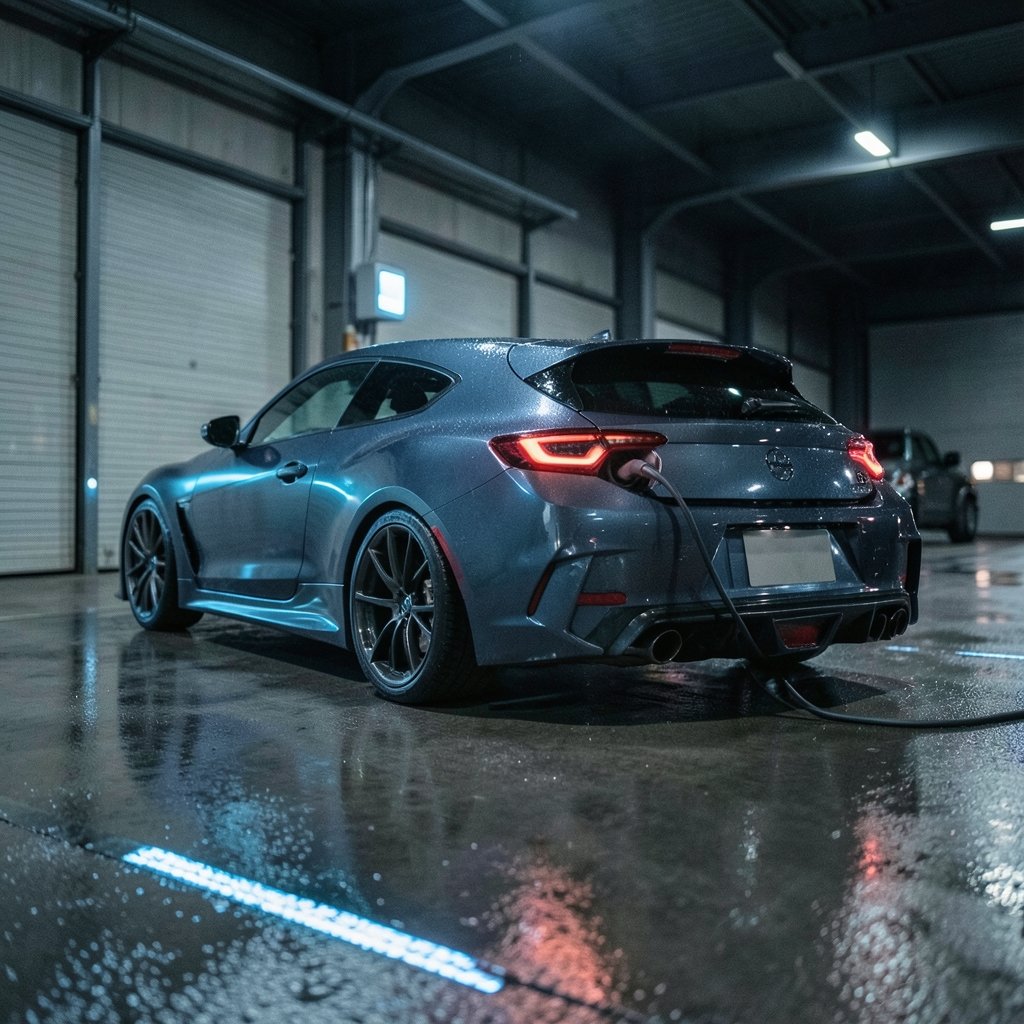
What happens when Audi’s most famous compact performance car goes hybrid? That question sits at the heart of everything surrounding the 2027 Audi RS5. The car isn’t just another model-year refresh. It marks a turning point: the first RS-badged Audi expected to carry a plug-in hybrid powertrain, built on a platform that already rewrote the company’s naming rules. Some details are solid. Others are still guesswork dressed up as fact. This guide separates the two, explains what the shift means for drivers, and shows where the RS5 fits against its oldest rivals.
Why the 2027 RS5 Is a Bigger Deal Than a Normal Redesign
Audi spent years telling anyone who would listen that electrification was coming for its fast cars. The RS5 is where that promise gets tested in public. The car sits on the B10 generation of Audi’s compact lineup, the family unveiled in July 2024 when the company renamed the A4 line to A5. Under the new naming scheme, odd numbers denote combustion and hybrid models, while even numbers go to electric cars. That single decision tells you plenty: the RS5 keeps a combustion engine, but it no longer stands alone.
The bigger headline is the powertrain. Audi confirmed in 2024 that the next RS5 would be a plug-in hybrid. That makes it the first RS model to combine a combustion engine with a battery large enough to drive on electricity alone. For a badge built on V8 rumble and later a raspy twin-turbo V6, that’s a genuine identity shift, not a marketing tweak.
There’s also a clock ticking in the background. Audi has said its last combustion-engine model launches would land around 2026, with a fully electric lineup targeted from 2033, subject to market conditions. Read those two facts together and the RS5 becomes something rare: one of the final combustion-era RS cars, and possibly the most technologically complicated one Audi has ever built.
What Audi Has Actually Confirmed
It helps to draw a hard line between confirmed facts and speculation, because the internet blurs them constantly. Here’s the honest scorecard.
Confirmed or well established:
- The B10 A5/S5 generation debuted in July 2024, replacing the A4/S4 line.
- Audi’s naming scheme now uses odd numbers for combustion and hybrid cars, even numbers for EVs.
- Audi stated in 2024 that the next RS5 would be a plug-in hybrid.
- The RS5 is expected to keep a V6 rather than dropping to four cylinders, a position reported around 2024 and 2025.
Unconfirmed or speculative:
- Final horsepower and torque figures.
- Battery capacity and electric-only range.
- Curb weight, which matters enormously for a performance PHEV.
- Exact launch timing and which markets get which body styles.
- Pricing for any region.
That last point deserves emphasis. Any specific price or power number you see circulating should be treated as a rumor unless it traces back to Audi itself. Enthusiast forums love a leaked spec sheet, and those sheets are wrong more often than they’re right.
The Powertrain: A Twin-Turbo V6 With a Battery
The expected heart of the 2027 RS5 is a development of Audi’s 2.9-litre twin-turbo V6, paired with an electric motor and a battery pack. Early speculation pointed toward a V8, but the weight and packaging penalties of a plug-in hybrid V8 in a compact car make that unlikely. A V6 plus electric assistance is the more sensible engineering answer, and it’s the one Audi has hinted at.
Why keep the V6 at all? Because a plug-in hybrid needs a combustion engine that can handle sustained high-speed load without draining the battery in minutes. A small four-cylinder works in a commuter car. In a performance sedan that may spend time on a track or an autobahn, a six-cylinder gives engineers more thermal headroom and more effortless mid-range punch.
The practical upside for owners is real. A PHEV can cover short daily trips on electricity alone, then fire up the engine for longer journeys without range anxiety. The trade-offs are equally real: extra weight, added complexity, and a driving experience that depends heavily on how well the software blends electric and combustion power. Get the calibration wrong and the car feels heavy and hesitant. Get it right and the electric motor fills the torque gaps that turbochargers leave behind.
Body Styles and Practicality
The RS5 will likely be offered as both a saloon and an Avant estate, mirroring the A5 and S5 range. The Avant is the one enthusiasts gravitate toward, and for good reason: it pairs performance with genuine cargo space, and it has historically held its value well.
One caution for buyers outside Europe: whether the US market gets the Avant is unconfirmed. Historically, Audi’s American lineup has favored the sedan and Sportback shapes, leaving wagon fans to admire from a distance. Anyone planning a purchase around the estate version should wait for an official announcement rather than assume.
How the RS5 Stacks Up Against Its Rivals
The compact performance segment has changed dramatically, and the RS5’s main competitors have already made their moves. Here’s the broad picture.
| Model | Powertrain approach | Status |
|---|---|---|
| 2027 Audi RS5 | Twin-turbo V6 plug-in hybrid (expected) | Confirmed as PHEV; specs unconfirmed |
| BMW M3 successor | Plug-in hybrid expected | Timing reported around 2027–2028; unconfirmed |
| Mercedes-AMG C63 S E Performance | Four-cylinder plug-in hybrid | On sale since 2022 |
The C63 is the cautionary tale here. Mercedes replaced its beloved V8 with a four-cylinder plug-in hybrid, and the reception was mixed at best. Critics praised the raw performance but mourned the soundtrack and the added weight. Audi appears to have watched that reaction closely, which helps explain the decision to keep six cylinders. If the RS5 delivers similar pace with a more satisfying engine note, it could win over buyers the C63 lost.
BMW, meanwhile, is taking its time. The next M3 is expected to go plug-in hybrid around 2027 or 2028, though that timing isn’t confirmed. For a year or two, the RS5 may have the hybrid performance niche largely to itself among German rivals.
What to Watch Before You Buy
If you’re seriously considering a 2027 RS5, a few practical habits will serve you well.
Wait for official specs, not leaks. Audi’s press materials are the only reliable source for power, range, and weight. Treat forum screenshots as entertainment.
Test the electric-only mode carefully. Ask how far the car actually goes on battery power in real conditions, and how quickly the engine kicks in under load. A PHEV’s appeal collapses if the electric range is too short to cover a normal commute.
Check the charging situation at home. A plug-in hybrid only makes financial and environmental sense if you can charge regularly. Without a home charger, you’re carrying a heavy battery for little benefit.
Drive the Avant and the saloon if both are offered. They behave differently, and the wagon’s extra practicality costs very little in dynamics.
Look at insurance and tire costs early. Performance hybrids tend to eat tires, and the added weight accelerates wear. Budget accordingly.
The same discipline applies across the wider Audi range. If you’re comparing infotainment, driver assistance, or connected features between models, it helps to know which systems are genuinely useful and which are marketing filler. Guides like this roundup of the 10 best AI chatbots, from GPT-5 to Claude, under the hood in 2027 show how quickly in-car software is evolving, and buyers increasingly judge a car by its digital experience as much as its engine.
The Bigger Picture: Audi’s Electrification Tightrope
The RS5 PHEV isn’t an isolated product decision. It’s a symptom of a company trying to satisfy two audiences at once. On one side are regulators pushing hard for lower emissions, with CO2 standards shaping what automakers can sell in Europe. On the other are loyal customers who associate RS badges with a specific kind of mechanical drama.
A plug-in hybrid is the compromise. It lowers official emissions figures, allows short electric-only journeys in cities, and keeps the noise and character that fans expect. Whether that compromise survives the next decade is an open question. Audi’s stated ambition of an all-electric lineup from 2033, contingent on market conditions, suggests the RS5 may be a bridge rather than a destination.
There’s a broader lesson here about how fast technology reshapes buying decisions. The tools people use to research, compare, and even negotiate car purchases have changed dramatically. Translation tools now let buyers compare specifications across markets in seconds, as this look at the best AI translation tools of 2027, comparing DeepL, ChatGPT, and Google, demonstrates. That matters more than it sounds: a German press release or a Japanese spec sheet is no longer a barrier for a curious buyer. (8 best ai podcast editing tools 2027 cleaner audio faster)
Common Mistakes Enthusiasts Make With This Car
A few traps catch people out again and again when a high-profile performance model is still months from launch.
Treating rumors as confirmed specs. A single unverified post can circulate for months and harden into “fact.” Always trace a number back to its origin.
Assuming the US gets every body style. Audi’s American range has never matched Europe’s, and the Avant question remains unanswered.
Ignoring the weight question. Plug-in hybrids are heavy. Weight affects braking, tire wear, and agility. It’s the single most important unconfirmed figure for anyone who cares about driving feel.
Overestimating electric range. Official figures come from standardized tests. Real-world range in cold weather is typically lower.
Forgetting the depreciation curve. Early adopters of new powertrain technology often absorb the steepest depreciation. Leasing can soften that risk.
Conclusion
The 2027 Audi RS5 is shaping up to be one of the most consequential cars in the brand’s recent history. It keeps a twin-turbo V6, adds plug-in hybrid power, and arrives as one of the last combustion-era RS models before Audi’s electric transition accelerates. That combination makes it fascinating and frustrating in equal measure, because so much remains unconfirmed. Power figures, battery size, electric range, weight, pricing, and even which markets get the Avant are all still open questions.
What’s clear is the direction of travel. Audi has committed to a hybrid RS5, its rivals have already moved, and the segment is being rebuilt around electrified performance. Buyers who wait for official specifications, test the electric mode properly, and think carefully about charging at home will be well placed to judge whether the compromise works for them. Everyone else can enjoy the debate, which promises to run right up until the first press embargo lifts.
Frequently Asked Questions
Is the 2027 Audi RS5 definitely a plug-in hybrid?
Audi confirmed in 2024 that the next RS5 would be a plug-in hybrid, making it the first RS-badged model with that powertrain. The exact specifications, including battery size and electric range, have not been confirmed.
Will the 2027 RS5 keep a V6 engine?
Reports from around 2024 and 2025 indicate Audi intends to retain a V6 rather than downsizing to four cylinders. The expected unit is a development of the existing 2.9-litre twin-turbo V6, paired with an electric motor, though final output figures remain unconfirmed.
Will there be an RS5 Avant estate?
The RS5 is likely to be offered as both a saloon and an Avant, mirroring the A5 and S5 range. However, whether the Avant will reach markets like the United States is unconfirmed, so buyers should wait for an official announcement.
How does the RS5 compare with the Mercedes-AMG C63?
The C63 S E Performance uses a four-cylinder plug-in hybrid setup and has been on sale since 2022. The RS5 is expected to keep six cylinders, which could give it an advantage in engine character and soundtrack, though both cars prioritize electrified performance over traditional displacement.
When will the 2027 Audi RS5 go on sale?
Launch timing is unconfirmed and varies by market. Audi has said its last combustion-engine model launches would come around 2026, with a fully electric lineup targeted from 2033, subject to market conditions. Buyers should watch for official announcements rather than rely on rumored dates.
Should I wait for the RS5 or buy a current performance car?
That depends on your priorities. Waiting means getting the latest hybrid technology but also accepting first-year risk, unconfirmed specifications, and likely higher prices. Buying an existing model means proven reliability and known running costs. Test-driving both, once the RS5 is available, is the only reliable way to decide.



