
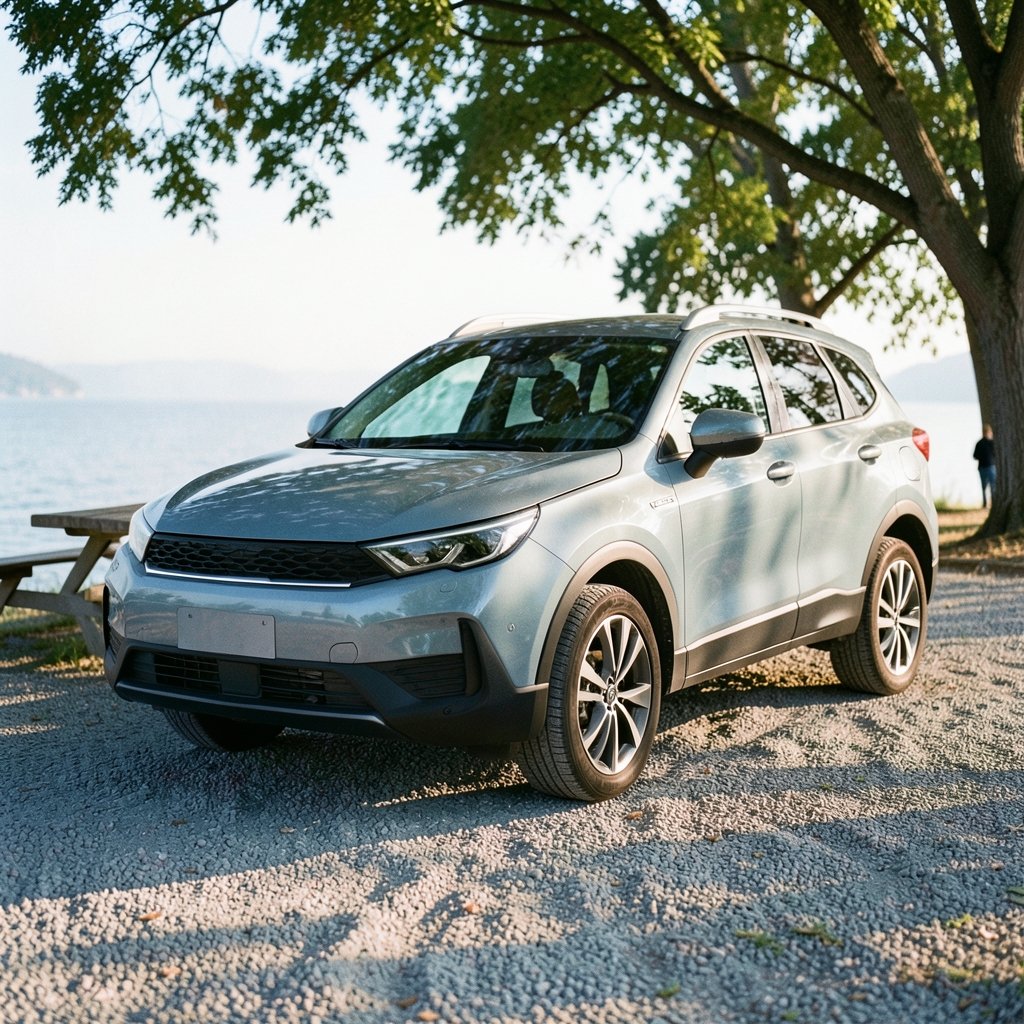
What happens when a compact SUV that was completely rebuilt for 2025 heads into its third model year? That is the question hanging over the 2027 Chevy Equinox, and the honest answer is more interesting than a spec sheet suggests. The fourth-generation Equinox arrived in January 2024 and went on sale as a 2025 model, which means a 2027 version would be a later model year of that same generation, not a fresh redesign. Anyone shopping, leasing, or simply curious should understand what that distinction means before assuming big changes are coming.
This guide walks through what is solidly known about the current Equinox, what remains genuinely uncertain about 2027, and how to separate marketing noise from facts you can actually use at a dealership.
The 2027 Equinox Is a Carryover, Not a Reinvention
The single most useful thing to know is that the current Equinox generation launched for model year 2025. A 2027 model would sit roughly two years into that lifecycle. Automakers typically reserve major overhauls for four-to-six-year intervals, so a 2027 Equinox is far more likely to be a carryover with minor trim or equipment adjustments than a ground-up redesign.
That matters for buyers in two ways. First, if you are waiting for a dramatically different Equinox, you may be waiting past 2027. Second, if you like the current design, a carryover year often brings better availability and more negotiating room than a launch year, when dealers hold firm on price.
It also means the core architecture, engine, and interior layout described below should carry forward largely intact unless the automaker announces otherwise. Treat any claim of a 2027 redesign as unverified until an official announcement exists.
Powertrain: The 1.5L Turbo and the CVT Question

The 2025 Equinox launched with a 1.5-liter turbo four-cylinder producing roughly 175 horsepower. Front-wheel-drive models pair it with a continuously variable transmission (CVT), while all-wheel-drive versions use a conventional automatic. That split is worth understanding because it changes the driving feel more than the spec sheet implies.
The CVT prioritizes smoothness and fuel economy. It keeps the engine in its efficient range and generally returns better highway numbers. The trade-off is that CVTs can feel rubbery under hard acceleration and produce a droning engine note when you ask for power. The conventional automatic on AWD models tends to feel more conventional and predictable, which some drivers prefer.
A practical tip from experience with CVT-equipped compact SUVs: test-drive the exact drivetrain you plan to buy rather than whichever trim the dealer has on the lot. A ten-minute highway merge in the FWD CVT model tells you more than any review. If the drone bothers you, the AWD automatic is the answer, and you get all-weather traction as a bonus.
Common mistake: buyers assume AWD is only about snow. In practice, the automatic transmission pairing is a big part of why some drivers choose AWD on this vehicle, even in mild climates.
Trims and Interior Tech That Should Carry Forward
The 2025 redesign simplified the lineup to LT, RS, and Activ trims, dropping the old LS and Premier. The RS leans sporty with darker accents, while the Activ adds a more rugged, outdoors-oriented look. That three-trim structure is likely to remain the backbone of the 2027 lineup.
The bigger story is inside. The redesign brought a standard 11-inch center touchscreen and an 11-inch driver display, a meaningful jump from the smaller screens in the previous generation. Available on some trims is Super Cruise, the hands-free driver-assistance system for compatible highways. These features are the ones most likely to trickle down to lower trims over time, which is exactly the kind of change a carryover year tends to deliver.
If tech is your priority, pay attention to which trims include Super Cruise and whether the subscription terms fit your budget. Hands-free systems are increasingly common, and understanding how they compare across brands helps. A broader look at how AI-driven interfaces are reshaping in-car and online tools appears in this breakdown of the best AI chatbots under the hood in 2027, which is useful context for anyone tracking how software is becoming the differentiator in modern vehicles.
Gas Equinox vs. Equinox EV: Do Not Confuse Them
Here is a distinction that trips up a surprising number of shoppers. The Equinox EV is a separate battery-electric vehicle that launched for model year 2024. It is not a variant of the gasoline Equinox. They share a name and little else underneath.
That means an article or dealer conversation about the “2027 Equinox” could refer to either vehicle depending on context. If you are cross-shopping, clarify which one you mean before comparing prices or specs. The gasoline model runs on the 1.5L turbo; the EV runs on electricity only.
This naming overlap is a classic source of confusion. Automakers increasingly reuse nameplates across powertrains, and the Equinox is a textbook case. When researching, always check whether a source says “Equinox” or “Equinox EV” in the headline.
Pricing: What Is Known and What Is Not
The 2025 Equinox started in the high-$20,000s according to early reporting, but exact figures vary by trim, destination charges, and region. For 2027, pricing is genuinely unknown. Anyone quoting a precise 2027 MSRP today is guessing.
The practical approach is to budget from the current model year and expect modest increases. Compact SUV prices tend to drift upward a few percent per year with inflation and added equipment. Build a cushion of a few thousand dollars above today’s sticker if you are planning a 2027 purchase.
It also pays to compare total cost of ownership beyond MSRP. Insurance, fuel, and resale all move the needle. On the fuel side, the 1.5L turbo’s economy is respectable but not class-leading, and how you drive matters enormously. If you are the kind of driver who tracks efficiency closely, the same discipline that makes a difference at the pump shows up in EV range testing, as this analysis of a 2027 Chevy Bolt EV at 75 mph with a 197-mile range result demonstrates. The lesson transfers: real-world numbers depend on speed, load, and conditions, not brochure figures.
Production and Safety: What to Verify
The gasoline Equinox has been built at the automaker’s Ramos Arizpe plant in Mexico, with historical production in Ingersoll, Ontario. The Equinox EV has been assembled at Ramos Arizpe and Spring Hill, Tennessee. Plant assignments can shift, so confirm the build location if that matters to you.
On safety, the current-generation Equinox should be evaluated through official channels rather than dealer claims. Crash-test ratings and recall information are published by model year, and those databases are the only reliable source. Do not rely on a salesperson’s summary of safety scores.
A practical habit: before signing, look up the specific model year’s ratings and open recalls. Recalls are free to fix and often handled before delivery, but knowing about them protects you from surprises.
Hybrid Rumors and the 2027 Question
The automaker has discussed hybrid plans for North America broadly, and that has fueled speculation about a hybrid Equinox. Here is the honest position: there is no verified confirmation of a 2027 Equinox hybrid. Treat any specific claim about a hybrid powertrain, its availability, or its pricing as unconfirmed until an official announcement.
This is where careful buyers separate signal from noise. A rumor repeated across forums can feel like fact after enough repetition. The antidote is simple: check primary sources, meaning official press releases and the manufacturer’s own product pages, before you build a purchase plan around a powertrain that may not exist.
If a hybrid does arrive, it would likely slot between the gasoline model and the Equinox EV, giving shoppers a middle option. But until it is announced, plan around the 1.5L turbo.
How to Shop Smart for a 2027 Equinox
If you are seriously considering one, a structured approach saves money and regret. Here is a sequence that works in practice.
- Confirm the model year’s official specs and trims through the manufacturer’s own materials before visiting a dealer.
- Decide on FWD or AWD based on the transmission pairing and your climate, not traction alone.
- Test-drive the exact drivetrain and trim you intend to buy, including a highway merge.
- Check official safety ratings and open recalls for that model year.
- Get out-the-door pricing in writing, including destination and dealer fees, from at least two dealers.
- Verify Super Cruise availability and subscription terms if that feature matters to you.
Common mistakes cluster around steps three and five. Buyers test-drive a loaded AWD model and then purchase a base FWD, discovering the difference after the fact. And they negotiate on sticker price while ignoring fees that quietly add thousands. Ask for the full out-the-door number early.
The same discipline applies to the digital tools around car buying. Dealerships increasingly use automated chat to handle inquiries, and knowing when that helps versus when it frustrates is worth understanding. This look at when not to use an AI chatbot in 2027 offers a balanced view that applies directly to online car-shopping experiences.
Where the Equinox Fits in the Compact SUV Market
The compact SUV segment is brutally competitive, and the Equinox competes on value, tech, and a simplified trim structure rather than outright performance. Its 175-horsepower turbo is adequate rather than thrilling. Its strength is the cabin technology and the straightforward lineup.
Buyers cross-shopping should weigh three things: how much screen and driver-assist tech they want, whether they need AWD, and how important fuel economy is relative to purchase price. The Equinox tends to win on tech-per-dollar and lose on driving excitement. That is a fair trade for many families.
It also helps to think about how quickly in-car software is evolving. Features that felt premium two years ago are now expected. A carryover year like 2027 may see software updates and equipment shuffling rather than hardware revolutions, which is often the smarter buy for value-focused shoppers. For a sense of how fast tooling is changing across the board, this roundup of the best AI translation tools in 2027 shows how quickly “standard” features get redefined.
Conclusion
The 2027 Chevy Equinox is best understood as a later model year of a solid, tech-forward generation rather than a dramatic new chapter. The 1.5L turbo, the CVT-versus-automatic split, the LT/RS/Activ trims, and the dual 11-inch displays should carry forward. Pricing, any hybrid variant, and 2027-specific changes remain unverified and should be confirmed through official sources before you commit.
The smart play is patience plus verification. Test the exact drivetrain, check official safety data, get out-the-door pricing in writing, and do not build a purchase plan around rumors. Do that, and the Equinox remains a genuinely sensible compact SUV choice, carryover year or not.
FAQ
Is the 2027 Chevy Equinox a new generation?
No. The current fourth generation launched for model year 2025, so a 2027 model would be a later year of that same generation. Expect a carryover with minor adjustments rather than a redesign, unless an official announcement says otherwise.
Does the 2027 Equinox have a hybrid option?
There is no verified confirmation of a 2027 Equinox hybrid. The automaker has discussed hybrid plans broadly for North America, but that is not the same as a confirmed Equinox hybrid. Treat specific claims as unconfirmed until an official release exists.
What engine does the Equinox use?
The current generation uses a 1.5-liter turbo four-cylinder making roughly 175 horsepower. Front-wheel-drive models pair it with a CVT, while all-wheel-drive models use a conventional automatic transmission.
Is the Equinox EV the same as the gas Equinox?
No. The Equinox EV is a separate battery-electric vehicle that launched for model year 2024. It shares a name with the gasoline Equinox but is a distinct vehicle with a different powertrain.
How much will the 2027 Equinox cost?
Pricing for 2027 is not yet known. The 2025 model started in the high-$20,000s in early reporting, and modest year-over-year increases are typical. Budget from the current model year and add a cushion for inflation and added equipment.
What trims are available?
The current lineup uses LT, RS, and Activ trims, having dropped the previous LS and Premier. That three-trim structure is likely to carry into 2027, though equipment levels per trim can shift between model years.



