
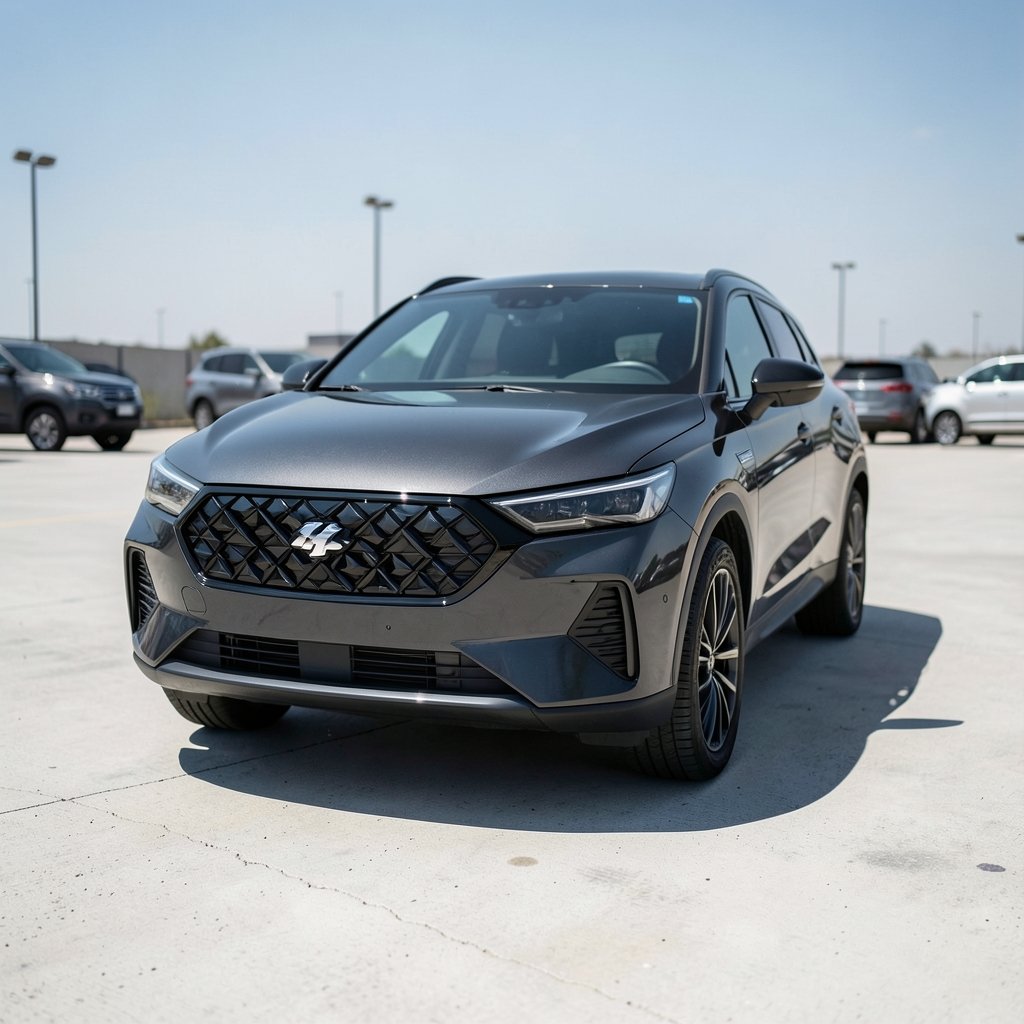
Will the 2027 Hyundai Tucson be a mild refresh of today’s crossover, or the start of something entirely new? That question sits at the center of nearly every shopping conversation about Hyundai’s best-selling SUV. The current fourth-generation Tucson arrived for the 2022 model year with its polarizing “parametric jewel” grille, and it has carried the brand’s compact crossover sales ever since. A 2027 model year sits right around the point where Hyundai typically introduces a full redesign, which makes this one of the most anticipated vehicles in the compact SUV segment.
Here is the honest situation: as of late 2026, Hyundai has not published a complete, confirmed specification sheet for a 2027 Tucson. Some details are well established by the brand’s public direction, and others remain rumor, projection, or dealer speculation. This guide separates what is solid from what is still guesswork, so buyers can plan with clear eyes instead of marketing hype.
Why the 2027 Model Year Matters So Much
Compact crossovers are the single most competitive slice of the new-car market. The Tucson competes directly with the Toyota RAV4, Honda CR-V, Nissan Rogue, Mazda CX-5, and Kia Sportage, which shares much of its underlying engineering. In that crowd, a model year is never just a number. It signals whether a vehicle is mid-cycle, due for a facelift, or ready for a clean-sheet redesign.
Hyundai has historically run roughly five-year product cycles on core models. The fourth-generation Tucson launched for 2022, which puts a fifth-generation redesign squarely in the 2026 to 2028 window. That timing is the strongest single reason the 2027 model year draws attention. If Hyundai follows its own pattern, a 2027 Tucson could be the first year of an all-new generation, or it could be a heavily updated version of the current platform. Both outcomes are plausible, and neither has been officially locked down in public documentation.
What Is Confirmed, What Is Likely, and What Is Speculation

Buyers deserve a clear scorecard. The table below sorts the major talking points by confidence level based on publicly available information and established brand patterns.
| Topic | Confidence | What It Means for Buyers |
|---|---|---|
| Tucson nameplate continues | High | Hyundai has used the Tucson name since the 2004 model year and shows no sign of retiring it |
| Electrified powertrains expand | High | Hyundai has been steadily adding hybrid and plug-in hybrid options across its lineup |
| Full redesign for 2027 | Medium | Fits Hyundai’s typical five-year cycle, but timing is not officially confirmed |
| All-new exterior styling | Medium | A redesign usually brings new sheet metal, but specifics are unverified |
| Pricing and trims | Low | No official 2027 pricing has been published |
| Fully electric Tucson variant | Low | Hyundai has separate EV nameplates; a battery-electric Tucson is not confirmed |
The practical takeaway: treat any specific horsepower figure, price, or trim name you see online for a 2027 Tucson as unverified unless it comes directly from Hyundai. Dealer blogs and aggregator sites frequently recycle projections as if they were facts, and that is the single most common mistake shoppers make when planning around a future model year.
The Electrification Question
The clearest trend in Hyundai’s lineup is electrification. The brand has invested heavily in hybrid, plug-in hybrid, and dedicated electric vehicles, and the current Tucson already offers hybrid and plug-in hybrid variants in many markets. For 2027, the safe expectation is that electrified trims will be at least as prominent as they are today, and possibly more so.
What remains genuinely uncertain is the mix. A redesigned Tucson could lean harder on hybrid power, add a plug-in hybrid with more electric range, or introduce a new electrified powertrain architecture. Hyundai has not published those details for a 2027 model year. Buyers who need a specific answer, such as whether a plug-in hybrid will be available in their region, should confirm directly with a dealer rather than rely on forum speculation.
It is also worth separating the Tucson from Hyundai’s dedicated electric models. The brand has built a distinct identity around its battery-electric nameplates, which means a fully electric Tucson is not a safe assumption. If pure EV ownership is the goal, shoppers should look at Hyundai’s dedicated electric offerings rather than wait on an unconfirmed Tucson EV.
Design and Interior: What a Redesign Usually Brings
If 2027 does mark a new generation, history suggests a few predictable changes. Redesigns typically deliver:
- A new exterior design language, often moving away from the previous generation’s most controversial styling cues.
- A revised interior with updated screens, materials, and storage layout.
- Improved driver-assistance features and updated infotainment software.
- Structural and chassis changes aimed at ride comfort, noise, and efficiency.
The current Tucson’s grille treatment has been divisive since launch. Some buyers love the bold look, while others find it busy. A redesign is the natural moment for Hyundai to evolve that design, though no official images or descriptions have been released. Interior improvements are equally speculative in detail but likely in direction, since cabin technology and material quality are where compact crossovers fight hardest.
For anyone cross-shopping technology features, it helps to understand how much cabin software now shapes the buying decision. Modern crossovers lean on voice assistants, connected apps, and in-car AI, and the differences between implementations are bigger than most shoppers expect. A useful comparison of how these systems actually perform is available in this breakdown of the 10 best ai chatbots gpt 5 claude under hood 2027, which explains what separates a genuinely helpful assistant from a gimmick.
Practical Buying Advice for Anyone Waiting on a 2027 Tucson
Waiting for a future model year is a real strategy, but it comes with tradeoffs. Here is what actually works in practice, based on how model-year transitions typically play out.
Do not wait if you need a car now. The gap between a confirmed redesign and dealer availability can stretch well over a year. If your current vehicle is failing, waiting on an unconfirmed 2027 Tucson is a gamble, not a plan.
Watch for the official reveal, not the rumor cycle. The moment Hyundai publishes official images and specifications, the speculation phase ends. Until then, treat every “leaked” spec sheet with suspicion.
Expect early-production pricing pressure. First-year redesigned models often sell at or above sticker because demand outpaces supply. Buyers who wait a model year frequently get better incentives and ironed-out early production issues.
Test the current generation anyway. Driving a 2025 or 2026 Tucson tells you a great deal about seat comfort, visibility, cargo space, and how the brand’s infotainment feels in daily use. Those impressions usually carry forward even when the sheet metal changes.
Confirm regional availability. Powertrain and trim lineups vary by market. A hybrid configuration sold in one country may not be offered in another, and this is especially true during a model-year transition.
A common mistake is assuming that a redesign automatically means a better buy. First-year models sometimes carry new-software bugs, parts availability friction, and higher insurance costs. The last year of a well-sorted generation can be the smarter purchase for value-focused buyers.
How the Tucson Fits Into a Broader Tech Shift
The compact SUV is no longer just a mechanical product. Buyers increasingly judge crossovers on their digital experience, from phone integration to over-the-air updates. That shift matters for the 2027 Tucson because Hyundai’s competitiveness will depend as much on software as on horsepower.
Retailers face the same pressure, and the lessons translate directly to how vehicles are sold. Dealerships and online stores alike now lean on automated assistants to handle inquiries and follow-ups, and the strongest examples are covered in this look at 10 best ai chatbots e commerce 2027 that rescue abandoned conversations. The same principle applies to car buying: the tools that answer questions quickly and accurately win the sale.
There is also a cautionary side. Automation is not always the right answer, and knowing when to keep a human in the loop is a skill. That balance is explored well in this piece on when NOT to use an AI chatbot in 2027: 7 honest cases, and it maps neatly onto dealership experiences where a real person still closes the deal better than a screen.
For buyers who care about how well a vehicle’s digital layer performs under real conditions, judging output quality rather than marketing claims is essential. A comparison of deepseek vs chatgpt vs gemini judge output quality 2027 shows how to evaluate these systems critically, which is the same mindset worth applying to any in-car assistant demo.
What to Watch Between Now and Launch
A few concrete signals will tell buyers when real information is arriving. Official Hyundai press releases, auto show debuts, and government fuel-economy or safety filings are the reliable markers. Fuel-economy databases and crash-test results often appear before a full marketing launch, and they tend to be more accurate than anonymous forum posts.
Buyers should also watch how Hyundai positions the Tucson against the Kia Sportage, which shares platform DNA. When one brand reveals a redesign, the sibling model usually follows closely, and cross-referencing the two can reveal details neither brand has officially confirmed. That pattern has held for years and remains one of the most useful early-warning tools available to shoppers.
Finally, keep an eye on the broader market. Compact SUV pricing has been volatile, and incentives swing with inventory. A 2027 Tucson launched into a crowded, discount-heavy market could look very different from one launched into tight supply. That context matters as much as the spec sheet.
Conclusion
The 2027 Hyundai Tucson is best understood as a model year full of potential rather than a settled product. The Tucson nameplate is secure, electrification is clearly the direction of travel, and the timing fits Hyundai’s usual redesign rhythm. Beyond that, the specifics remain unconfirmed, and buyers are better served by verified information than by confident-sounding speculation.
The smart approach is straightforward. If you need a vehicle soon, shop the current generation and negotiate hard. If you can wait, follow official Hyundai announcements, watch sibling-model reveals, and test-drive the outgoing Tucson to learn what you actually value. Treat every leaked price and horsepower figure with skepticism until the brand confirms it. Patience plus verified information is what separates a good purchase from an expensive guess.
FAQ
Will there be a 2027 Hyundai Tucson?
Yes, a 2027 model year Tucson is expected as part of Hyundai’s ongoing compact SUV lineup. However, Hyundai has not published a complete official specification sheet for that model year, so buyers should confirm details with a dealer before making plans around specific features or trims.
Is the 2027 Tucson a full redesign?
That is not officially confirmed. The current fourth-generation Tucson launched for the 2022 model year, and Hyundai has historically run roughly five-year product cycles, which makes a redesign plausible around 2026 to 2028. Buyers should treat redesign claims as projections until Hyundai publishes official information.
Will the 2027 Tucson be electric?
A fully electric Tucson is not a confirmed product. Hyundai already offers hybrid and plug-in hybrid versions of the current Tucson in many markets, and the brand has separate dedicated electric nameplates. Shoppers who want a pure EV should look at those dedicated models rather than assume a battery-electric Tucson is coming.
How much will the 2027 Hyundai Tucson cost?
No official 2027 pricing has been released. Compact SUV prices vary by market, trim, and powertrain, and first-year redesigned models often sell near or above sticker due to limited supply. Buyers should budget based on current-generation pricing plus a reasonable increase, then confirm with a dealer.
Should I wait for the 2027 Tucson or buy now?
It depends on urgency. If you need a vehicle soon, buying a well-sorted current-generation Tucson is usually the safer financial choice. If you can wait comfortably, following official announcements lets you decide with verified information rather than rumor, though first-year redesigns often carry higher prices and early production quirks.
What should I check before trusting 2027 Tucson rumors?
Verify the source. Official Hyundai press releases, auto show debuts, government fuel-economy and safety filings, and confirmed sibling-model reveals are reliable. Anonymous forum posts, dealer blogs recycling projections, and aggregator sites that present speculation as fact are the most common sources of misinformation about future model years.



