
A low monthly payment is useful only when you know what you must pay upfront and what the contract allows you to drive. In the United States, a lease budget needs more than one advertised number. Compare the contract term, mileage allowance, due-at-signing amount, and eligibility conditions alongside the payment.
The amount used to start the lease calculation is the adjusted capitalized cost, the negotiated vehicle amount after eligible reductions. A quote can also depend on your credit profile and the first month payment. Those details help you judge whether the offer fits your cash flow, not just whether its monthly figure looks small.
This comparison focuses on the terms that shape a real offer. It can help you compare monthly payment options and decide what to ask for in writing, but it cannot promise a payment for every shopper or location. Set a monthly budget that includes both the payment and the cash due at signing.
Key Takeaways
- Compare the term and mileage allowance with every payment.
- Include all due-at-signing cash in your budget.
- Match the quote to the exact model year, trim, and drivetrain.
- Check eligibility conditions before treating an advertised offer as yours.
- Compare total scheduled payments, not the monthly rate alone.
How Do Ford Ranger Lease Deals Compare by Trim?
The 2026 Ranger starts at $33,550 for the XL before its $1,895 destination and delivery charge. That charge is additional to every starting price below. The four trims serve different needs, so the best new Ford Ranger for you depends on more than its initial price.
These starting prices show the range between an entry trim and an off-road performance truck. A trim’s price can help frame a lease, but it does not set a monthly payment by itself. Ford Ranger lease deals depend on the selected truck and the terms of the specific offer.
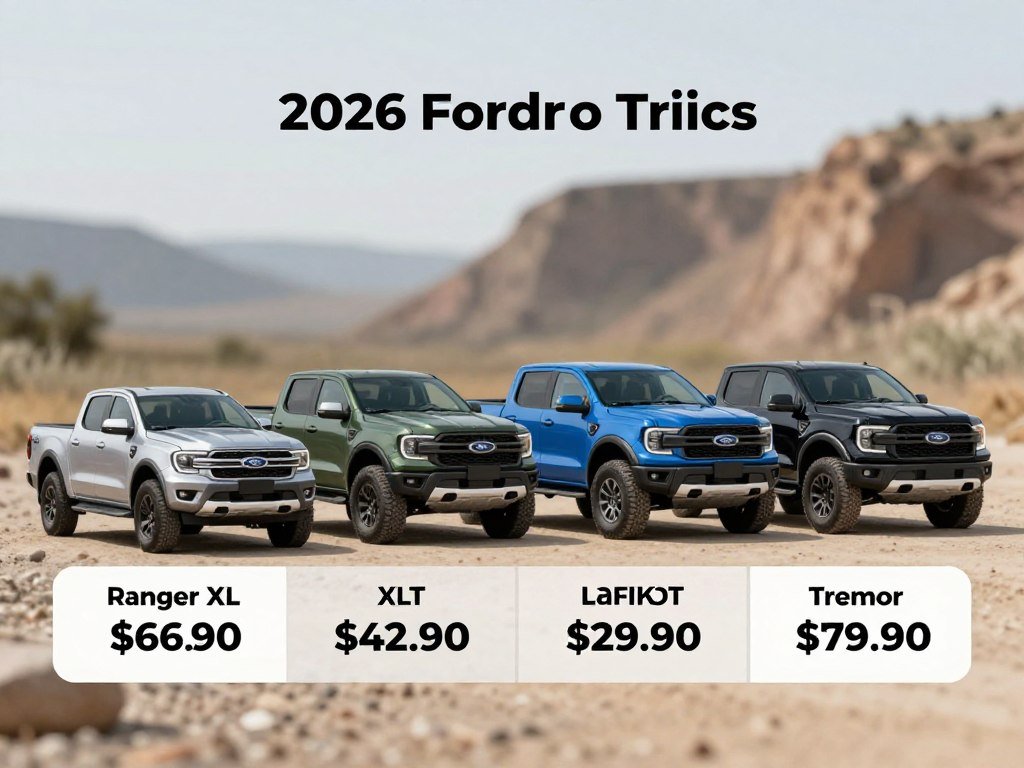
| Trim | Starting MSRP before destination and delivery | General role |
|---|---|---|
| XL | $33,550 | Entry trim |
| XLT | $35,575 | Core trim |
| Lariat | $43,955 | Premium trim |
| Raptor | $57,270 | Off-road performance trim |
The $1,895 destination and delivery charge is not included in those listed starting prices. Local taxes and other charges can also change the final figures on a written quote. Specials may apply only to certain trims, applicants, or contract terms.
A payment advertised without its due-at-signing cash, term, mileage, taxes, and eligibility is not a useful comparison.
Ask which truck and contract terms the offer uses before you compare it with another. Compare the amount due at signing as carefully as the advertised monthly payment.
What Changes Between the 2025 and 2026 Ford Ranger?
A 2025 Ranger offer is not automatically an offer for a 2026 truck, even when the trim names look familiar. The model year and vehicle identification number, or VIN, identify the actual truck. A promotion for a prior model year should not be assumed to apply to a 2026 Ford.
The 2026 Ranger has a SuperCrew cab and a 4.97-foot box. Its XLT SuperCrew seats five, measures 210.6 inches long and 75.5 inches wide, and reaches 86.7 inches wide with its mirrors out. Those details help you judge passenger room and fit in a garage or parking space.
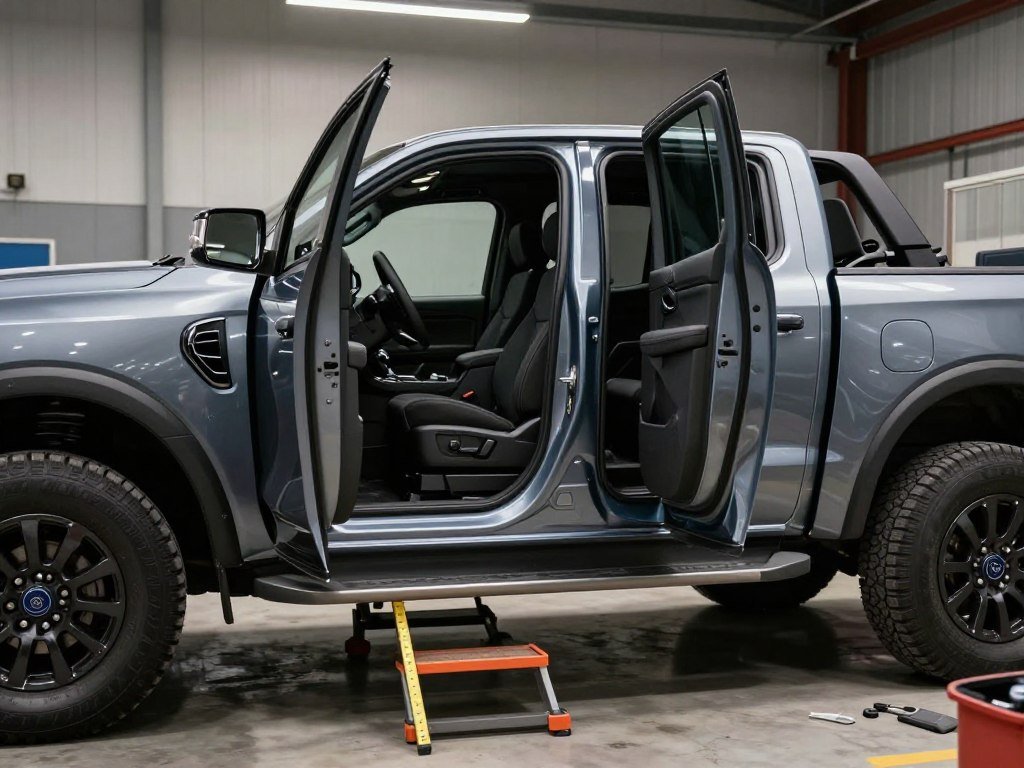
The XLT 4×4 SuperCrew has a 4,408-pound curb weight and 1,717-pound payload. The rear-wheel-drive version has a 4,187-pound curb weight and 1,821-pound payload. The 4×4 model also has 9.3 inches of ground clearance.
The XLT’s standard 2.3L engine pairs with a 10-speed automatic transmission. Check four details on the vehicle and written offer:
- Model year and VIN
- Cab and bed
- Drivetrain and trim
- Included equipment
A listing can use a familiar trim name while describing a different configuration. Check the VIN and model year on the actual vehicle before comparing its lease terms.
How Is a Ford Ranger Lease Payment Calculated?
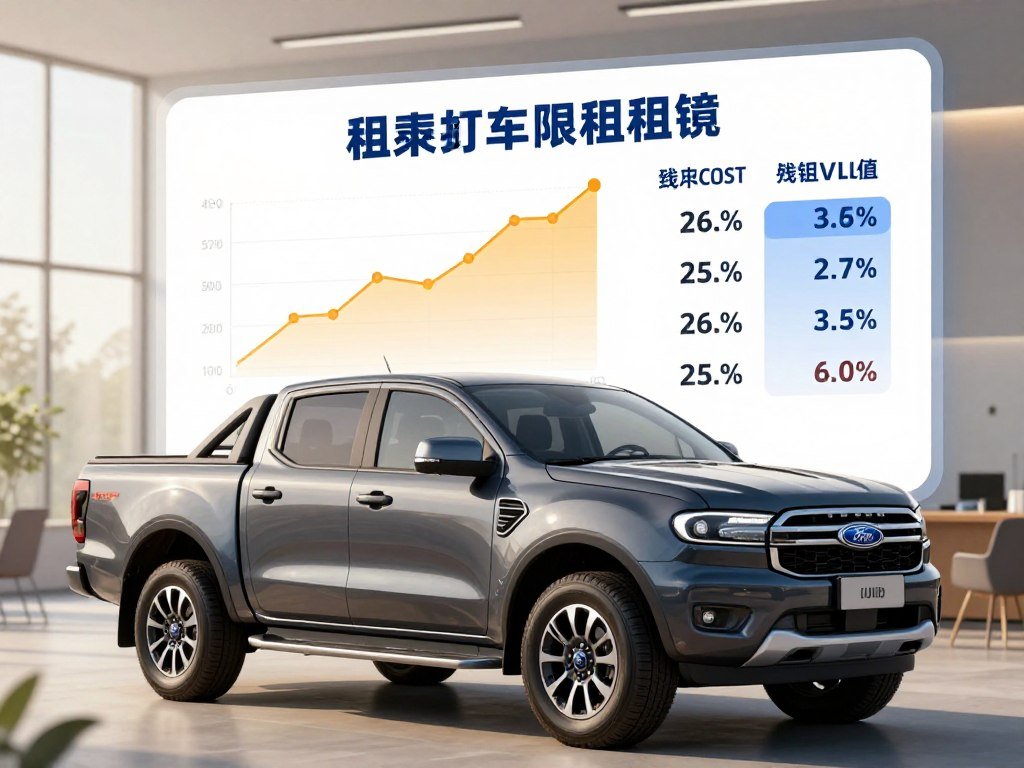
A monthly lease payment is built from more than the sticker price. It commonly includes depreciation, a rent charge, and applicable taxes. The adjusted capitalized cost and residual value shape the depreciation portion.
The adjusted capitalized cost is the negotiated vehicle amount used as the starting balance in a lease calculation, after eligible reductions. The residual value is the estimated value of the vehicle at lease end under the contract. The gap between these amounts helps set the depreciation charge across the term.
The vehicle amount and residual value
A lower adjusted capitalized cost generally means less value to cover through monthly payments, if other terms stay the same. A higher residual value can also reduce the depreciation portion. The exact figures belong in the written lease terms.
The rent charge, term, and taxes
The rent charge reflects the cost of leasing the vehicle. Lease length, taxes, and eligible incentives also affect the payment. A credit offer may lower the starting amount when its rules apply, but eligibility matters.
A $199 Ford Ranger lease payment is only comparable when its term, mileage allowance, due-at-signing cash, and eligibility are clear. A small monthly figure can pair with a large upfront amount or a short term. Read the full offer rather than treating the advertised payment as the whole cost.
The monthly payment is different from the total scheduled cost over the lease. Add all scheduled payments to the due-at-signing cash to understand the planned outlay. Compare the total of scheduled payments and due-at-signing cash, not the monthly figure alone.
What Do You Pay at Signing, Beyond the Monthly Rate?
The first payment is only one possible part of the cash due when a lease begins. Due at signing is separate from the monthly payment. The written quote should show what you must pay upfront and whether any amount reduces the lease calculation.
Inspect these five items in the offer:
- First monthly payment
- Acquisition fee
- Registration charges
- Government fees and taxes
- Any cap-cost reduction or security deposit
A cap-cost reduction lowers the amount used in the lease calculation. It also puts more of your cash at risk upfront, so compare offers with similar signing cash. A security deposit may apply under the contract.
Charges and deposit requirements depend on the contract and your location. Some amounts may be required, while a cash reduction can be optional. Ask the dealership to distinguish required charges from optional cash you choose to put down.
Keep the breakdown with the full offer, so you can compare the same costs across quotes. Ask for a written breakdown that labels each signing charge and identifies any optional cash reduction.
Which 2026 Ford Ranger Trim Fits Your Work and Budget?
The right trim depends on whether you value work-ready equipment, added power, or off-road performance most. Match the engine and trim to the jobs you expect the truck to do. The 2026 Ford Ranger offers three engine choices across its four trims.
The engine affects how the truck feels in everyday use, while equipment varies by the exact truck. Compare what the quoted vehicle includes rather than relying on a trim name alone.
| Engine | Output | Best-fit use |
|---|---|---|
| 2.3L EcoBoost I-4 | 270 hp and 310 lb-ft | Everyday work and driving |
| 2.7L EcoBoost V6 | 315 hp and 400 lb-ft | Shoppers seeking more power |
| 3.0L EcoBoost V6 | 405 hp and 430 lb-ft | Raptor off-road performance |
XL, XLT, and Lariat for everyday use
The XL, XLT, and Lariat are the everyday-use choices. The 2.3L EcoBoost I-4 makes 270 horsepower and 310 pound-feet of torque. The available 2.7L EcoBoost V6 makes 315 horsepower and 400 pound-feet of torque.
A shopper who wants more power can compare the available V6 with the standard engine. Equipment can differ by configuration, so check the exact truck’s features before deciding whether its price and lease terms fit.
Raptor for off-road performance
The Ford Ranger Raptor is the performance-focused choice, with a 3.0L EcoBoost V6 that makes 405 horsepower and 430 pound-feet of torque. Its focus may not suit a work-oriented setup you need for regular tasks. For another off-road vehicle comparison, consider this guide to sport UTV models.
Pick based on your real driving, not simply the highest output. Match the lease quote to the exact engine and trim shown on the vehicle.
How Much Can a 2026 Ford Ranger Tow and Carry?
The XL, XLT, and Lariat can tow up to 7,500 pounds when properly equipped, while the Raptor’s maximum is 5,510 pounds. Those maximum ratings require the right equipment. The rating for an individual truck depends on its configuration.
Compare the trim’s maximum rating with the trailer you plan to pull. These figures do not replace the limits for the specific vehicle you lease.
| Trim | Maximum towing rating | Condition |
|---|---|---|
| XL | 7,500 lb | Properly equipped |
| XLT | 7,500 lb | Properly equipped |
| Lariat | 7,500 lb | Properly equipped |
| Raptor | 5,510 lb | Properly equipped |
The 2026 Ranger’s maximum payload is 1,767 pounds for the rear-wheel-drive 2.3L configuration. Payload includes people and items carried by the truck, not just cargo placed in the bed.
A trailer adds more than its listed cargo to the towing setup, so consider the load inside the truck too. The door-jamb label on the individual vehicle governs its payload and towing limits. Check the specific truck’s door-jamb label against the trailer and payload you plan to carry.
What Fuel Economy Does the 2026 Ford Ranger Get?
The published combined ratings range from 17 mpg for the Raptor to 23 mpg for the 2.3L rear-wheel-drive configuration. The EPA combined rating offers a way to compare powertrains. Your own fuel use can change with the route and load.
The 2.3L EcoBoost rear-wheel-drive Ranger is rated at 23 mpg combined by the EPA. The four-wheel-drive version is rated at 21 mpg combined, while the available 2.7L EcoBoost V6 four-wheel-drive setup is rated at 20 mpg combined.
| Powertrain or configuration | EPA combined rating | Configuration detail |
|---|---|---|
| 2.3L EcoBoost rear-wheel drive | 23 mpg | Standard engine |
| 2.3L EcoBoost four-wheel drive | 21 mpg | Four-wheel drive |
| 2.7L EcoBoost V6 four-wheel drive | 20 mpg | Available V6 |
| 3.0L EcoBoost V6 | 17 mpg | Raptor |
The Raptor’s 3.0L EcoBoost V6 configuration is rated at 17 mpg combined. On the XLT SuperCrew, the rear-wheel-drive version is rated at 21 mpg city, 26 highway, and 23 combined. The 4×4 XLT SuperCrew is rated at 19 mpg city, 26 highway, and 22 combined.
Commutes, loads, and driving conditions affect real-world fuel use. The EPA rating is a comparison point, not a promise about your personal results. Compare the EPA rating for the exact engine and drivetrain on your quote.
Is the 2026 Ford Ranger a Good Truck for Your Needs?
A Ranger can make sense if you need a midsize pickup with room for five, but its fit depends on how you use it day to day. The SuperCrew pairs five-passenger seating with a pickup bed. Parking space and daily routes still matter.
A rear seat can help when you carry passengers, while the bed serves jobs that a car cannot handle as easily. Consider the places you park and the roads you use before choosing a truck for daily driving.
The 2026 Ranger has four NHTSA stars overall, five stars on every crash test, and three stars for rollover. NHTSA uses a one-to-five-star scale, with each category describing a different part of the vehicle’s safety performance.
Those ratings should not be treated as one single score for every risk. Review the safety information for the exact model year and configuration you are considering. Check the vehicle’s dimensions and the full safety-rating categories against your own routine before committing to a lease.
What Maintenance and Wear Costs Should You Plan For?
A lease payment does not mean you can ignore the truck’s service schedule or return condition. Your contract sets maintenance duties and return standards. Routine upkeep differs from excess wear, which the agreement addresses at lease end.
Plan to check oil service, tire condition, brakes, and filters. These basic items help you follow the vehicle’s service schedule and spot issues before they grow. Your exact duties depend on the lease agreement.
Ordinary use is not the same as excess wear. The contract sets the standard used to assess the truck’s condition, so read it before daily use creates marks or damage. A maintenance plan or warranty does not automatically remove every lease-return obligation.
Keep records for service visits and repairs. A dated record can help show which upkeep you completed and when. Save those papers with the agreement instead of relying on memory at turn-in.
Ask what the contract expects if a repair or warning light appears during the lease. Keep service records with the lease paperwork so you can show how the truck was maintained.
How Do Mileage Limits and Lease Length Change the Deal?
A low payment can become a poor fit if the annual mileage allowance is below your real driving. Many consumer leases allow about 10,000-15,000 miles per year, but your signed agreement controls. The term and allowance should fit your normal routine.
Estimate a full year rather than judging from one quiet month. Add the miles you drive for your commute, weekly errands, regular trips, and work use.
Estimate your annual driving
Use this checklist to build a realistic estimate:
- Commute
- Weekly errands
- Regular trips
- Work driving
Many consumer vehicle leases commonly run about 24-48 months. The exact term depends on the offer. Consider how often you drive and whether the contract length fits your plans.
Match the lease term to your plans
A shorter term may not suit you if you expect to keep the same vehicle for years. A lease sets a planned period of use, so think about your likely needs over the whole term, not just your current schedule.
Confirm the mileage allowance and excess-mileage charge in the contract before choosing. Choose the mileage allowance from a realistic year of driving, not an unusually quiet month.
Is Leasing or Buying Better for a 2026 Ford Ranger?
Leasing is more likely to fit a driver who values a planned term, while buying is more likely to fit someone who wants long-term ownership or drives heavily. No one choice is automatically better for every 2026 Ranger shopper. Your mileage and plans matter.
A lease gives you use of the vehicle for the contract term. It can suit you if you prefer changing vehicles on a set schedule, stay within the agreement, and do not need ownership at the end.
Buying can suit high-mileage drivers and people who expect to keep the truck beyond the payment period. Purchase financing pays toward ownership, but the payment alone does not show the full cost of owning the vehicle.
Interest, taxes, maintenance, and eventual resale all affect the cost of buying. A truck you keep for years may serve your plans better than a set lease term, while a lease may suit a planned vehicle change.
Compare the paths using how long you expect to keep the truck and whether you want to own it after payments end. Decide how long you expect to keep the truck before comparing the total cost of each path.
How Does Credit Affect a Ford Ranger Lease?
Credit can affect both whether a lease is approved and which terms are available to you. A lessor may review credit history, income, and existing debt. The lender’s criteria and offer eligibility determine the result.
Equifax, Experian, and TransUnion are the three nationwide credit bureaus. A bureau report gives information about your credit history, but it is not itself a lease approval. The lessor makes its decision under its own criteria.
Some offers may apply only to highly qualified applicants. Do not assume a payment advertised for those applicants applies to every credit profile. The written offer’s eligibility rules matter to your own application.
Review your credit information before you apply, and check that the terms shown match the offer you are considering. Review your credit information before applying and ask which eligibility conditions apply to the written offer.
How Do Ranger, Tacoma, and Frontier Lease Offers Compare?
Compare a Ford Ranger, Toyota Tacoma, and Nissan Frontier only after matching the terms that drive the payment. Use the same trim, drivetrain, contract length, mileage allowance, and due-at-signing amount. This gives you a fairer comparison between offers.
Toyota Tacoma lease deals and a Nissan Frontier lease should use the same fields as a Ranger quote. Compare the exact trim and drivetrain, then review the contract length, mileage allowance, due-at-signing cash, and included fees.
A lower advertised payment does not prove that one truck costs less overall. The offer may use a different term or require more cash upfront. Read each quote as a full contract proposal, not as one number.
Make sure all three offers describe the vehicle configuration you want. Put the three written offers side by side using the same annual mileage and signing-cash assumptions.
How Do You Find Ford Ranger Lease Deals Near You?
Start a local lease check with your ZIP code and the exact Ranger trim you want. A local offer can depend on ZIP code, inventory, configuration, local charges, and applicant qualifications. Available lease deals can differ between locations.
Use these four steps to check a local offer:
- Enter your ZIP code.
- Select the exact trim and drivetrain.
- Request the full lease terms.
- Confirm the vehicle is available for that offer.
A $199 payment near you needs its location, term, mileage allowance, upfront amount, and eligibility conditions before you can compare it. The same monthly figure can describe different contracts with different costs.
Ask the dealership to show the complete offer for the vehicle and location you selected. Get the complete written offer for your location before making a trip to a dealership.
How Do You Negotiate a Ford Ranger Lease in 2026?
Ask for the vehicle amount and the lease’s core figures before negotiating over a monthly payment. Request the adjusted capitalized cost in writing. That figure gives you a clearer place to begin than a payment alone.
Keep each part of the quote visible. A lower payment can hide a larger upfront reduction or different contract terms.
Negotiate the vehicle amount
Discuss the vehicle amount before focusing on monthly payment specials. Review the adjusted capitalized cost and ask what eligible reductions the quote includes. Keep the response with the itemized offer.
Compare the final quote with the exact truck and configuration you want. A payment can look lower when more cash goes toward the lease at the start.
Compare each lease term separately
Compare residual value, rent charge or money factor, lease term, mileage allowance, due-at-signing cash, and fees separately. The four core figures are adjusted capitalized cost, residual value, rent charge, and lease term.
The “90% rule” is not a standard federal consumer auto-lease formula. If someone uses that term, ask which contract provision or calculation they mean. Do not let an unexplained rule replace the written figures.
- Adjusted capitalized cost
- Residual value
- Rent charge or money factor
- Term, mileage allowance, cash due, and fees
Avoid accepting a lower payment created by a larger upfront reduction without comparing total cash paid. Keep the itemized quote and the final contract together so you can verify that the agreed terms match.
What Happens When a Ford Ranger Lease Ends?
At lease end, your main choices are to return the Ranger, purchase it under the contract, or arrange another vehicle. Excess-mileage and excess-wear charges depend on your signed agreement and the truck’s condition. There is no general charge that applies to every lease.
Review the contract for any purchase option and its terms. If you return the truck, follow the listed process and prepare the records you kept during the lease.
Use the signed agreement to understand any excess-mileage or wear charge, not a general estimate.
Before the return, use this four-item checklist:
- Confirm the return date and process.
- Check mileage against the allowance.
- Review condition and wear standards.
- Gather service records and contract paperwork.
Those checks help you prepare for the return without assuming what a charge will be. Review the return instructions and any purchase option in your contract before the final inspection.
Conclusion
A workable Ranger lease starts with the right configuration and a complete set of terms. The useful offer fits your trim, contract term, mileage, due-at-signing amount, and eligibility. It should also fit your budget and the way you drive.
Ask for a written quote on the exact Ranger you want, then compare it with an offer built on similar terms. Request an itemized quote for your preferred trim and compare its total scheduled cost with your budget.
FAQ
Is a Ford Ranger a good truck to buy?
A Ford Ranger can be a good buy if you need a midsize pickup’s passenger space, bed, or towing capability. Choose a configuration that suits the work and trips you actually expect. Check the truck’s size against your parking space and daily routes. A well-matched trim matters more than choosing the most powerful version by default.
How much would it cost to finance a Ford Ranger?
A monthly finance payment depends on the negotiated price, down payment, APR, loan term, taxes, and fees. Use the exact truck and lender terms in a calculator to estimate the payment. Then compare the total amount paid over the loan, not just the monthly figure. A longer term can lower the payment while extending how long you owe.
What car can I lease for $300 per month?
A car fits a $300 monthly budget only if the full offer works after due-at-signing cash, taxes, term, and mileage. Do not assume a Ranger qualifies based on the monthly figure alone. Compare the total scheduled payments and upfront cash with your budget. Eligibility rules can also affect whether an advertised offer applies to you.
What month is the best month to lease a car?
Month-end, quarter-end, or year-end can be useful times to compare lease offers, but none guarantees the best deal. Incentives and eligible inventory change, so read the current written terms. Compare the exact trim, term, mileage allowance, and cash due at signing. A strong offer should fit your needs even without relying on a calendar date.
Is it better to lease or buy a car in 2026?
Leasing can fit predictable mileage and a planned vehicle change, while buying can suit high mileage or long-term ownership. Compare both paths using your expected driving, budget, and plans after payments end. Buying also involves interest, taxes, maintenance, and possible resale value. The best choice depends on how you use the vehicle and its total cost.
Should a 72 year old buy or lease a car?
Age alone does not decide whether someone should buy or lease a car. Compare expected mileage, planned ownership length, budget, and comfort with return obligations. Leasing may suit someone who wants a set vehicle term, while buying may suit someone who wants to keep the car. Choose based on personal use rather than age.
How to negotiate a car lease in 2026?
Request an itemized quote and compare the vehicle amount, residual value, rent charge, term, mileage allowance, due-at-signing cash, and fees. Ask for the adjusted capitalized cost in writing before focusing on a monthly payment. Check that the final contract matches the quote. A lower payment may come with more cash due upfront.
What is the biggest downside to leasing a car?
Mileage limits and return-condition duties can lead to extra charges, and a lease does not give you ownership equity at the end. The signed agreement sets the mileage allowance and the standards used to assess the vehicle. Leasing can still fit drivers who want a planned term and do not need to own the car. Weigh those limits against your driving habits.