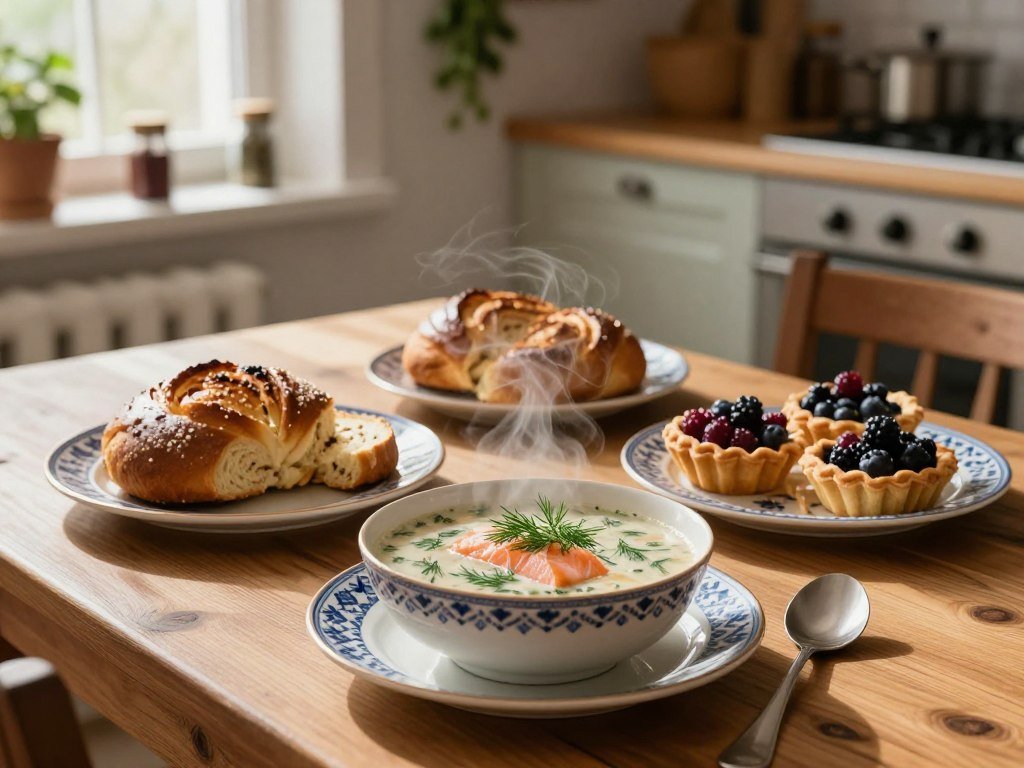
A first taste of Finnish cooking can come from a pot of soup, a pan of potatoes, or something sweet from the oven. If you want to try a new cuisine, you can start with ingredients found in many American grocery stores. These ten traditional Finnish picks cover filling meals, quick skillet food, pancakes, pies, and buns. The flavors are often mild, with dairy, herbs, root vegetables, and berries doing much of the work. A bilberry is a small wild berry often called a European blueberry, distinct from the larger cultivated blueberries common in the United States. You can use familiar foods to explore Finnish food without turning your kitchen upside down. Some dishes suit a slow afternoon, while others make good use of leftovers. You can begin with familiar supermarket ingredients and choose the dish that suits your time and appetite.
Key Takeaways
- Letut are thin pancakes cooked one at a time in a pan.
- Pannukakku bakes as one sheet for easy sharing.
- Lohikeitto brings salmon, potatoes, and dill together in soup.
- Pyttipannu is a handy choice for cooked potatoes and leftover meat.
- Mustikkapiirakka works with cultivated blueberries from American stores.
Which Easy Finnish Recipes at Home Should You Try First?
If you want to serve pancakes one by one, letut are the stovetop pick; for a single pan to share, bake the batter instead. Both styles use simple ingredients, and either makes a friendly first recipe when you want something sweet or filling. The batter is flexible, so you can pick the cooking method that fits your morning.
Letut are thin pancakes cooked in a pan, while pannukakku bakes the same basic batter as one sheet. The difference is mainly the cooking method, not a wholly separate ingredient list. That means you can mix one batch, then decide whether to stand at the stove or bake it all together.
How thin-pan letut cook
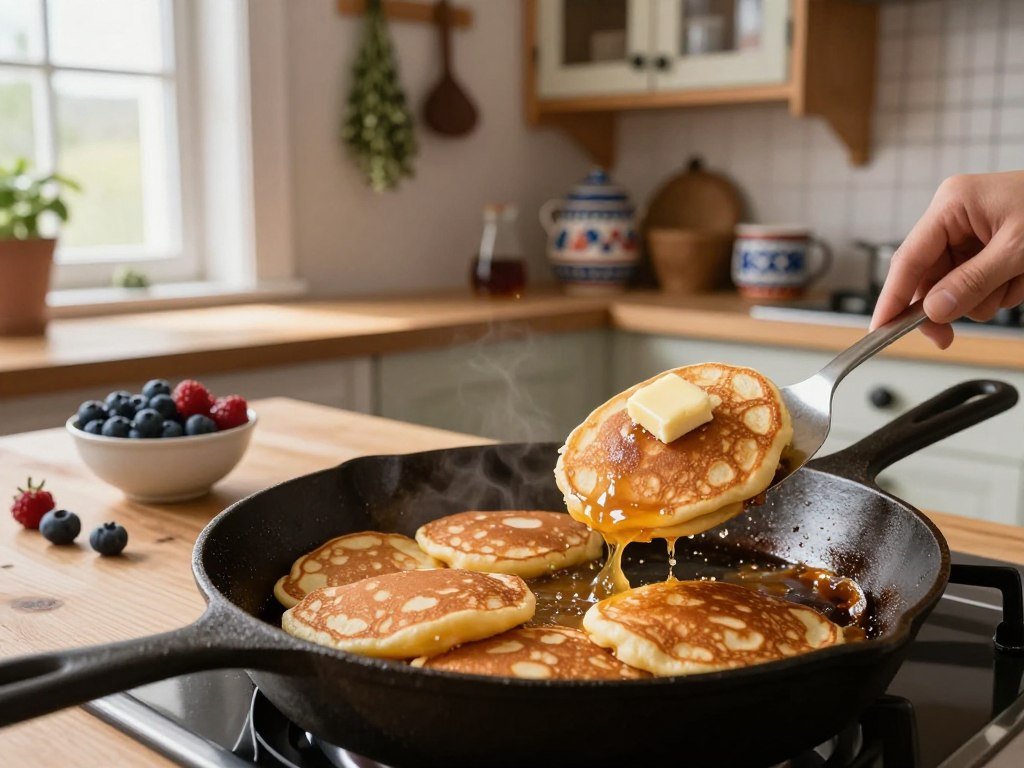
For a basic letut recipe, use 0.5 L milk, 1.5 dl flour, 2 eggs, and about 1 tsp salt. If you prefer a cream-based batter, use 2.5 dl cream and 2.5 dl water instead of the milk. Mix the ingredients into a smooth batter, then cook thin pancakes in a lightly greased pan.
Let the batter rest briefly if you have time, so the flour can absorb the liquid. Pour in a small amount and tilt the pan to spread it thinly. Turn each pancake when the underside has browned and the top looks set. The thin shape makes letut easy to stack and pass around.
Let the pan-fried pancakes brown gently so the thin edges stay tender rather than crisping too fast.
What makes pannukakku different
Pannukakku uses that same basic batter, but you pour it into an oven pan and bake it as a sheet at 225°C. The oven method cooks one large batch at once, so you can cut it into portions at the table. Eggs help the batter set, while a little sugar can add sweetness if you want a dessert-like pancake.
- Choose letut when you want individual pancakes cooked as you go.
- Choose pannukakku when you want one batch baked together.
- Serve either style with jam or berries for a simple finish.
Jam gives a sweet contrast, while berries bring a fresher taste. You can keep the topping plain or add it at the table, so each person can choose. The same batter can move from stovetop to oven without making two separate recipes.
What makes Finnish salmon soup a satisfying first meal?
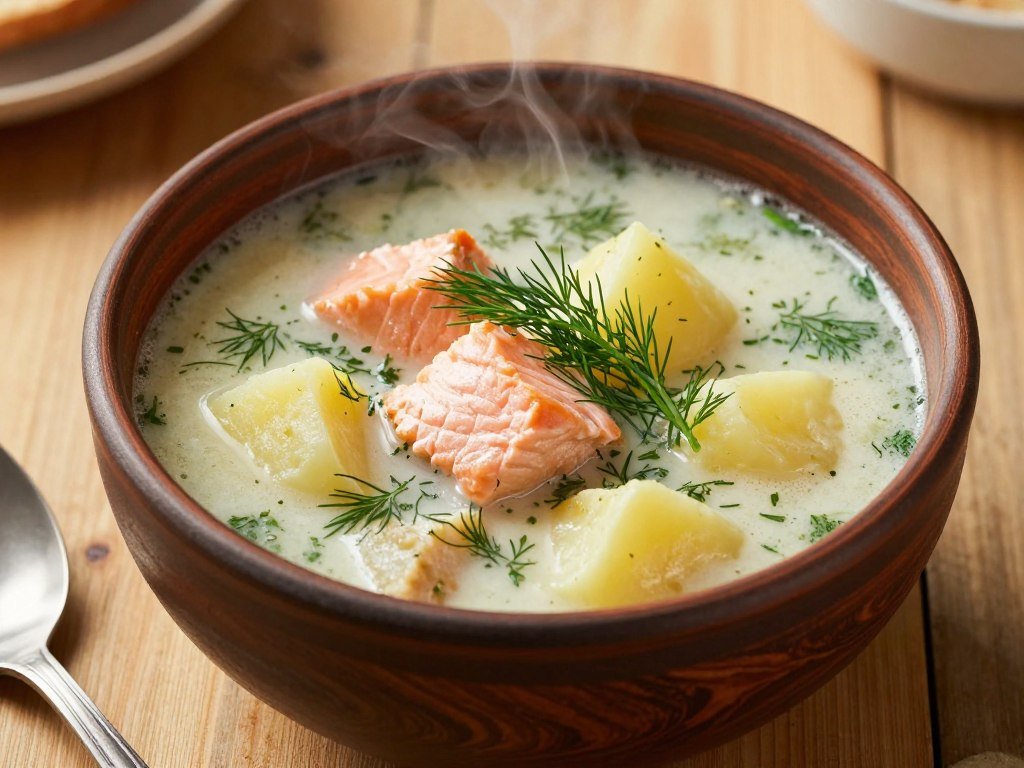
A bowl of lohikeitto gives you salmon, potatoes and dill in one mild, creamy meal. The fish and potatoes make it filling, while a milk or cream finish keeps the broth gentle. This Finnish salmon soup is a welcoming meal when you want one pot with familiar ingredients.
Ready fillets skip the fish-bone broth step. A basic fish soup serves 4-5 and may start with 1 kg fish or 300-400 g ready fillets, 1 L water, four large potatoes, and 4 dl milk. If you use fish with bones, simmer them in the water for about 20 minutes to build the broth.
Build a milk-based fish soup
After the broth is ready, remove the bones and add the potatoes. Simmer them for about 15 minutes, then add the fish and cook it for about five minutes. Stir in milk for a mild finish, then add dill near the end for its fresh, green flavor.
The short fish-cooking time helps keep the pieces whole. If you start with ready fillets, add them after the potatoes soften rather than making broth from bones. This shortcut gives you a direct route to fish soup on a busy day.
Choose a cream finish or clear broth
Kainuu fish soup offers another regional style, often made with about 0.5 kg filleted fish, 1-1.5 L water or stock, and four to five potatoes. A cream-finished salmon soup uses cream instead of milk for a richer taste. These versions share a fish-and-potato base, but the liquid and finish change the bowl.
| Soup style | Fish | Liquid | Potatoes |
|---|---|---|---|
| Basic fish soup | 1 kg fish or 300-400 g fillets | 1 L water | 4 large potatoes |
| Kainuu fish soup | About 0.5 kg filleted fish | 1-1.5 L water or stock | 4-5 potatoes |
| Cream-finished salmon soup | Salmon | Cream instead of milk | Potatoes |
You can use the table to choose a broth that suits the fish you have. A clear broth gives the fish and potatoes more room to stand out, while cream makes the soup feel richer. Add the fish near the end of cooking so its pieces stay intact.
How do you make Finnish macaroni casserole a family-style meal?
For a hands-off dinner that feeds more than one person, Makaronilaatikko turns pasta and ground meat into a single baked dish. Its easy structure is macaroni, cooked meat, and an egg-milk mixture that sets in the oven. The result is a warm, filling macaroni casserole that you can portion at the table.
The egg-milk mixture binds the pasta and meat as the casserole bakes. Start with cooked macaroni and cooked ground meat, then combine them in an oven-safe dish. Pour the egg and milk mixture over the top so it can settle between the pasta pieces.
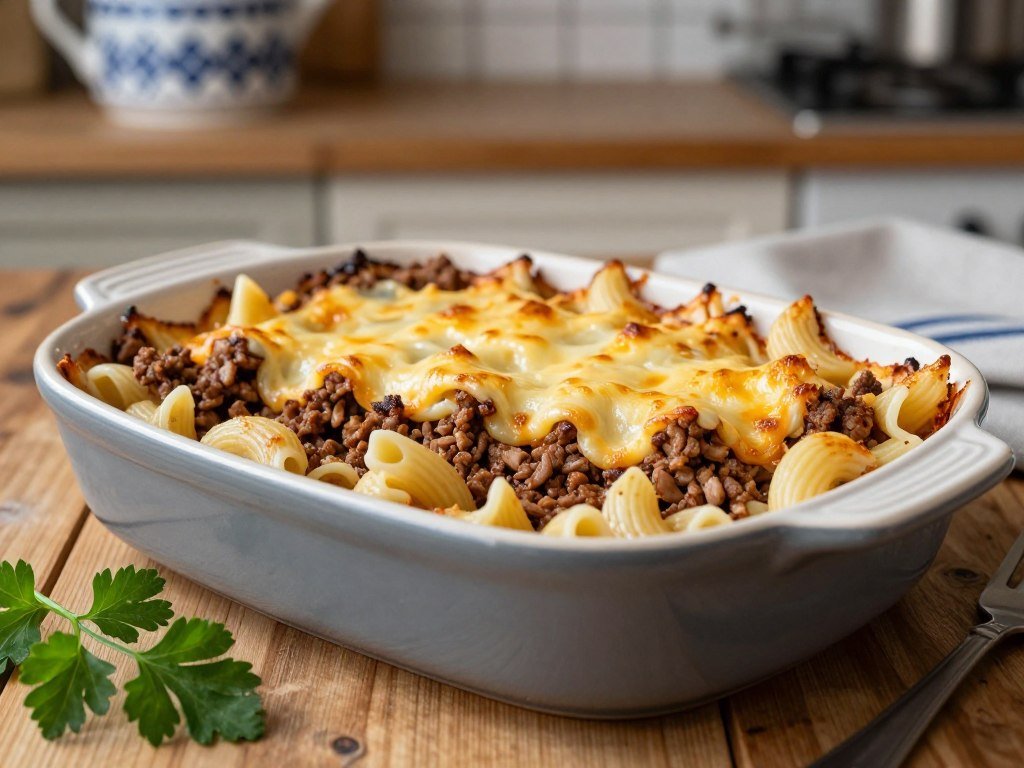
There is no need to make the recipe complicated. Cheese appears in some versions, but it is not needed for the classic egg-milk structure. Ketchup is a familiar choice at the table, adding a sharp, sweet note to the savory dish.
- Cook the macaroni until tender, then drain it.
- Combine the pasta with cooked ground meat and the egg-milk mixture.
- Bake the dish until the center is set.
Ground beef is a common option, though the core idea is the mix of pasta, meat, and eggs with milk. The eggs help the mixture hold together, and milk keeps the baked pasta moist. Spread the ingredients evenly so each serving gets some of everything.
Use a baking dish large enough to hold the mixture without crowding it. The top may brown as the center sets, giving the casserole a homey finish without extra steps. Ketchup can be served on the side, letting each person add as much as they like.
Because the dish comes from one pan, it suits a shared family meal or a planned leftover lunch. It is also a useful way to make pasta feel different from a bowl with sauce. Let the casserole rest briefly after baking so portions hold together when served.
What belongs in a simple Finnish cabbage casserole?
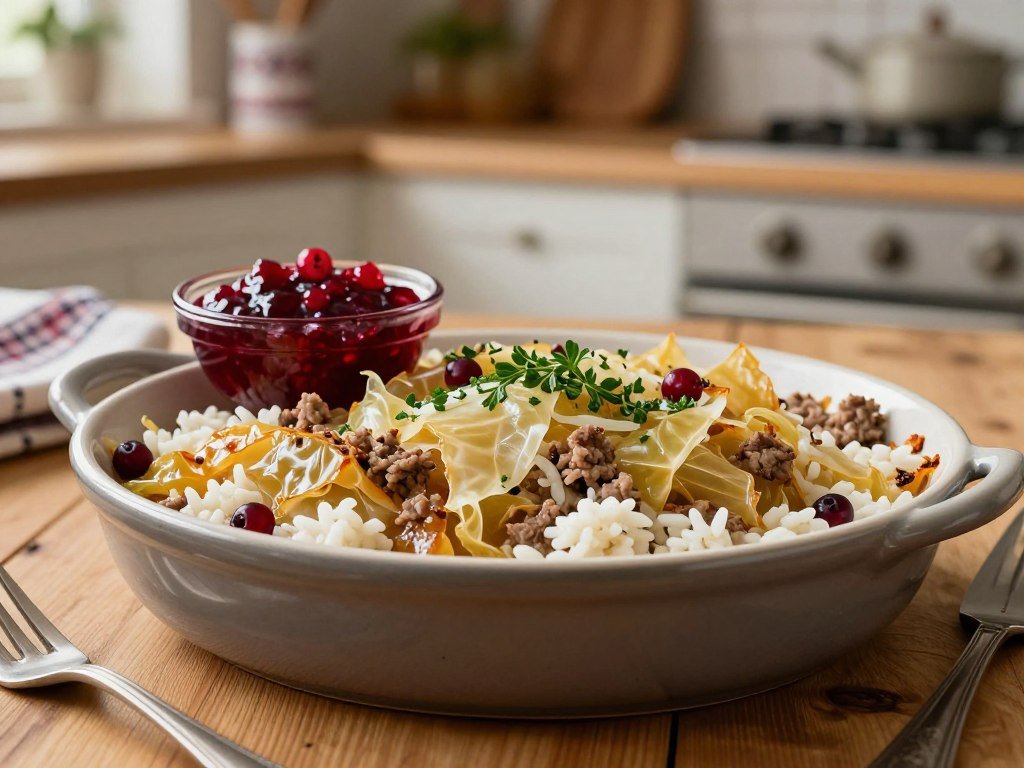
Cabbage casserole makes a hearty meal from a short list, and rice is only one possible addition. A simple Kaalilaatikko family version combines meat, cabbage, water, butter, and two spices for a plain, comforting base. Lingonberry jam is a traditional pairing that brings a tart, sweet contrast.
Rice is optional in the simple family version, not a required ingredient. Finnish versions differ, and some add rice or milk to the meat-and-cabbage base. The table shows how those choices affect the dish and its familiar serving.
| Version | Ingredients | Serving |
|---|---|---|
| Simple family version | Meat, cabbage, water, butter, 2 spices | Lingonberry jam |
| Rice variation | Meat, cabbage, rice | Lingonberry jam |
| Milk-enriched variation | Meat, cabbage, milk | Lingonberry jam |
The simple version keeps the ingredient list short, which makes it a practical choice when you have cabbage and meat to use. Water helps the cabbage soften, and butter adds richness as the dish cooks. The two spices season the mixture without pushing it toward a hot or sharp flavor.
Rice makes the casserole more substantial, but it changes the texture and is not needed to make Kaalilaatikko. Milk offers another way to enrich the mixture. Choose the version based on the ingredients you have, rather than treating one variation as the only traditional form.
Lingonberry jam is a useful side because its tart taste cuts through the soft, savory casserole. If it is not in your kitchen, the casserole can still stand on its own as a filling meal. Keep the cabbage pieces tender before baking so the finished casserole is easy to portion.
How is Finnish spinach soup served for a simple lunch?
A boiled egg turns a bowl of green spinach soup into a more substantial lunch. Pinaattikeitto can be smooth or left with more texture, depending on how much you blend it. Fresh or frozen spinach both work, so the recipe can fit the season or your freezer.
Boiled eggs are a familiar accompaniment, not an ingredient you must blend into the soup. Add them as a topping or serve them alongside the bowl. Keeping the egg separate gives you a richer lunch without changing the soup itself.
Milk is often part of a simple spinach soup, giving it a soft, creamy feel. The dish can stay smooth, or you can leave some spinach visible for a more rustic texture. Either way, the green flavor remains the focus rather than a long list of extra ingredients.
- Use fresh spinach when it is available and looks crisp.
- Use frozen spinach when you want a convenient pantry option.
- Blend more or less to get the texture you prefer.
Frozen spinach makes it easy to cook this dish without planning around fresh produce. Fresh leaves give you a different texture and can make the soup feel lighter. Taste as you cook, then adjust the thickness with milk to suit your bowl.
Boiled eggs are a simple way to add protein and make lunch more filling. Slice one into the bowl or place it beside the soup for dipping. Keep the egg separate until serving so its texture stays distinct from the soup.
When is pyttipannu the best use for potatoes and leftovers?
A container of cold, boiled potatoes is the useful starting point for pyttipannu. This Finnish potato hash is a flexible skillet dish made with day-old potatoes and leftover sausage, ham, or other meat. It suits a day when you want to turn yesterday’s food into a hot meal.
Day-old potatoes are easier to handle without breaking, though freshly cooked potatoes can work. Cut the potatoes and leftover meat into pieces, then brown them in a skillet. The hot pan gives the cut surfaces a crisp finish while warming the centers.
You do not need one set meat for this dish. Sausage, ham, or another cooked meat can all fit, so use what is already in the fridge. If you have leftover pre-cooked knockwurst, you can gently reheat it with the potatoes.
The idea is practical, not fussy: brown the pieces until they are hot and have some color. A wide skillet gives the potatoes room to touch the pan instead of steaming in a deep pile. Stir only as needed, since too much movement can break softer pieces apart.
Freshly cooked potatoes may be softer, so let them cool before cutting if you can. Day-old potatoes have had time to firm up, making them easier to turn in the pan. Cut the potatoes into even pieces so they brown at a similar pace.
What makes Finnish blueberry pie work with American berries?
You can make mustikkapiirakka with cultivated blueberries from an American grocery store if wild bilberries are unavailable. Finnish mustikka refers to bilberry, while the English word blueberry often means a larger cultivated berry. The buttery Finnish blueberry pie still works well with the berries most US cooks can find.
Cultivated blueberries are a practical substitute for bilberries in mustikkapiirakka. Bilberries have a different name and are distinct from the larger berries commonly sold in the United States. You do not need to search for wild berries to make a pie with a Finnish feel.
Choose bilberries or cultivated blueberries
The berries give the pie its sweet-tart center, while butter adds richness to the crust. Mustikkapiirakka is a familiar home dessert, and cultivated blueberries bring a good balance of sweetness and gentle tang. Use fresh berries when they are in season, or frozen ones when that is easier.
The names can be confusing because Finnish mustikka points to bilberry, not exactly to the common American blueberry. Both berries can work in this pie, though their size and color differ. The key is choosing berries that suit the taste and texture you want.
Pair the pie with a simple topping
Serve a slice with vanilla sauce or vanilla ice cream for a cool, creamy contrast. The topping softens the tart edge of the berries without hiding their flavor. A plain slice also works when you want the buttery crust and fruit to stand on their own.
Frozen berries are useful when fresh fruit is out of season, but thaw and drain them first. That step helps keep excess liquid from soaking into the crust. Use berries that are dry after rinsing so extra water does not soften the pie.
What should you know before baking Finnish pulla?
Cardamom gives pulla its distinctive aroma, while the dough itself uses familiar baking staples. This Finnish sweet bun can be braided into a loaf or shaped into smaller pieces, making it adaptable for a home baker. The dough is rich with milk, butter, egg, and sugar.
Pulla dough needs time to rise, so mixing is only part of the baking schedule. A basic batch uses 5 dl milk, 50 g yeast, 1 egg, 1.5 dl sugar, 1 tsp salt, 1 tbsp cardamom, about 1 kg flour, and 100-150 g butter. Mix and knead the dough, then cover it while it rises.
The dough can become a braided bread or a tray of smaller buns. Small buns bake at 225°C for 8-10 minutes. Watch for a golden top, since smaller pieces cook quickly and can dry out if left too long.
- Shape the dough into a braided loaf for a centerpiece.
- Roll it into cinnamon buns for a sweet, spiced treat.
- Make butter-eye buns with a small hollow for butter.
These shapes use the same dough but give you different ways to serve it. A braided loaf suits a shared table, while small buns are easy to portion. Cinnamon buns bring an added spice, and butter-eye buns keep the focus on the soft cardamom bread.
Yeast dough needs time to rise before you shape and bake it, so plan for more than the hands-on mixing. The exact schedule depends on how quickly the dough rises in your kitchen. Keep the dough covered during its rise so the surface does not dry out.
How do Finnish meatballs become a full meal?
Finnish meatballs can anchor dinner with potatoes and gravy, while lingonberry jam adds a tart contrast. Lihapullat make a classic main dish, and a basic batch serves 4-5. You can fry them in small or larger shapes, but their size changes the cooking time.
Small meatballs fry for 3-5 minutes, while larger ones need 5-8 minutes. A basic recipe uses 500 g minced beef, 1 dl cream, and 1 egg. The cream and egg help bring the mixture together before you shape it.
Potatoes and gravy turn the meatballs into a full dinner, with lingonberry jam adding a sweet-tart side. The jam gives a sharp contrast to the rich meat and gravy. If you want a simple plate, keep those sides close and let the meatballs lead.
Shape the meatballs evenly when you want them to cook at a similar pace. Small ones are quick to fry, while larger ones need the longer range. Cook them in a pan until browned, turning them so more than one side meets the heat.
The basic mixture keeps the ingredient list short, which makes the dish easy to plan for a family meal. Cream gives the meat a tender texture, and the egg helps bind the mixture. Check a larger meatball at the center before serving to make sure it is cooked through.
Which Finnish ingredients give these dishes their familiar flavor?
Finnish home cooking often lets seasonal ingredients and mild seasoning carry the flavor. Dairy, herbs, root vegetables, and berries bring gentle richness, freshness, and sweetness to many traditional dishes. Finnish food is generally mild rather than hot-spicy, so the ingredients themselves remain easy to taste.
Fresh or frozen berries, jam, and sauces can bring berry flavor to the table throughout the year. This range makes Finnish dishes practical in a US kitchen, where fresh produce changes with the season. The table gives you a quick map of common ingredient groups and useful local choices.
| Ingredient group | Role in Finnish cooking | Practical US-kitchen option |
|---|---|---|
| Dairy | Richness in everyday dishes | Milk or cream |
| Herbs | Fresh flavor | Dill |
| Root vegetables | Earthy sweetness | Commonly available roots |
| Berries | Tart or sweet accents | Fresh or frozen fruit or preserves |
Other Finnish dishes use the same familiar foods in different ways. Summer soup is vegetable-only, while carrot casserole is a holiday dish. Grated carrot can also go into bread rolls, adding a mild sweetness to everyday baking.
Finnish home cooking is generally mild, so let the ingredients carry the flavor rather than adding hot spice.
Karelian pasties are another well-known part of Finnish food heritage. They received EU Traditional Speciality Guaranteed status in 2003. That recognition marks a traditional specialty, while the everyday meals here show how varied home cooking can be.
When you shop in the United States, familiar ingredients can cover much of the same ground. Milk, potatoes, root vegetables, herbs, and frozen berries are easy starting points for many Finnish recipes. Fresh dill is a useful choice when available, while dried dill is a workable substitute.
Conclusion
A good first Finnish meal is the one that fits your kitchen and the kind of cooking you want to do today. You might choose a soup for a one-pot meal, a casserole for the oven, or a baked treat for a slower afternoon. Familiar ingredients make each choice approachable, even if the dish is new to you.
Start with what is already on hand, then set out every ingredient before you begin. That small step makes cooking feel calmer and helps you spot anything missing before the pan is hot. Pick one recipe, gather what you need, and enjoy bringing a little Finnish food into your home.
FAQ
What is a traditional Finnish meal to try first?
Lohikeitto is a welcoming first Finnish meal, with salmon, potatoes, and dill in a creamy soup. Its main ingredients are familiar in many US grocery stores, and the mild broth is easy to enjoy. You can use ready salmon fillets to skip the fish-bone broth step. Serve it as a complete lunch or dinner in a bowl.
Can I use frozen blueberries in Finnish blueberry pie?
Yes, frozen blueberries work in Finnish blueberry pie; thaw and drain them first to limit excess moisture. Draining helps keep the fruit from making the crust too wet as it bakes. Cultivated blueberries are a practical stand-in for bilberries, so frozen berries can help you make the pie outside fresh berry season.
What is the difference between bilberries and blueberries?
Bilberries are small wild berries, while cultivated blueberries are larger and commonly sold in the United States. Finnish mustikka refers to bilberry, so the English word blueberry does not match it exactly. Cultivated blueberries still work as a substitute in mustikkapiirakka, giving home cooks an easy option from a regular grocery store.
Is Finnish food spicy?
Finnish home cooking is generally mild, with ingredient flavor rather than hot spice as the focus. Herbs, dairy, root vegetables, fish, and berries bring much of the taste. You can season a dish to your liking, but the familiar style does not depend on chili heat. Dill is one fresh herb often used with fish.
What is Finland’s national dish?
There is no need to name one official national dish; Karelian pasties are a well-known traditional specialty. They received EU Traditional Speciality Guaranteed status in 2003. Finnish cooking includes many regional and home dishes, so a single meal cannot stand for every table. Karelian pasties are a strong example of food heritage.
Can I make Finnish recipes with ingredients from a regular US grocery store?
Yes, many Finnish recipes work with ingredients from a regular US grocery store. Cultivated blueberries can replace bilberries, while familiar milk, potatoes, pasta, and root vegetables suit many home dishes. Frozen berries and dried herbs can help when fresh options are out of season. Start with a recipe whose main ingredients you already know.



