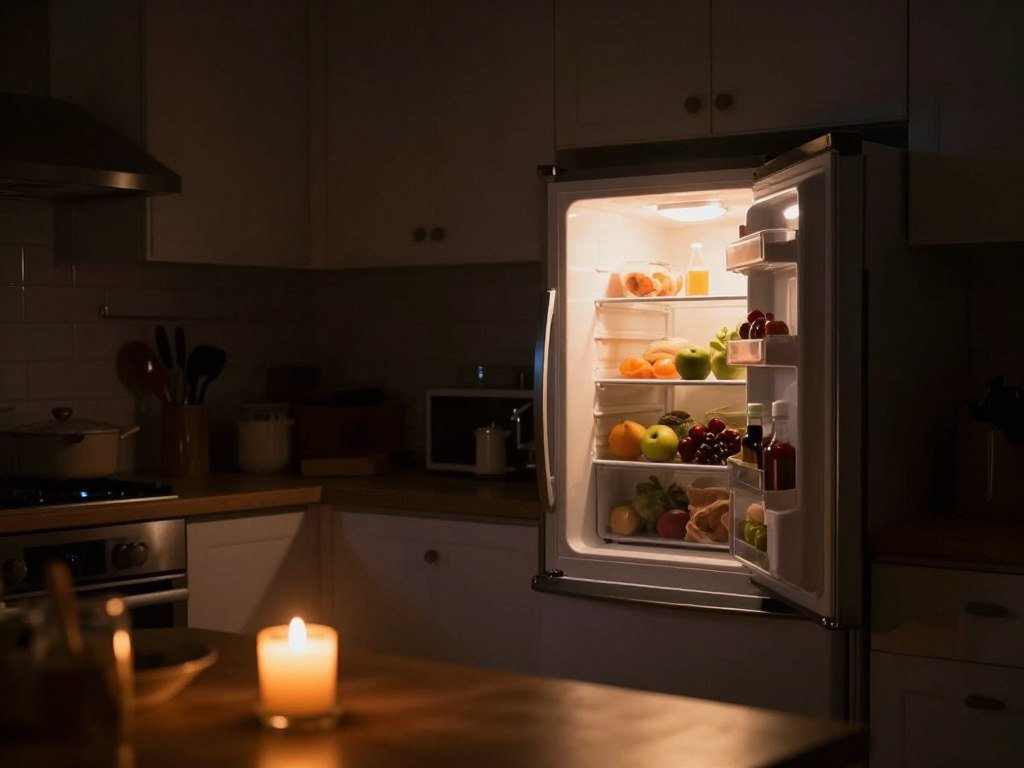
A sudden outage can turn ordinary needs like keeping food cold and running a sump pump into urgent decisions. The lights may go dark just as the refrigerator stops, the house loses heat or cooling, or water begins collecting below ground. U.S. electricity interruptions averaged 11 hours in 2024, nearly twice the average a decade earlier.
A transfer switch is a device that routes generator power to selected home circuits while preventing unsafe connection to the utility supply. This roundup compares portable generators, standby generators, and battery-based backup so you can choose equipment that fits your home and outage plan.
Key Takeaways
- The DuroMax XP11000iH is a strong all-around portable choice for essential home circuits.
- Choose standby equipment when you want automatic backup and permanent installation.
- A portable power station offers quiet, fuel-free power for selected devices.
- Size a generator for running loads and the largest startup surge.
- Match fuel, electrical connections, and safety needs to your home.
Decide which circuits matter most before comparing equipment.
Best Home Generators for Different Backup Needs
For a homeowner who wants substantial portable backup, the DuroMax XP11000iH is the strongest all-around starting point among these picks. It delivers strong output at 9,000 running watts and 11,000 starting watts, with gasoline or propane as fuel options.
The DuroMax fits the most common portable-backup case: powering several essential circuits without committing to a permanent system. The Champion 4,750-Watt model is a lower-output choice, while the Westinghouse WGen9500DF is a higher-output portable option.
| Model | Running/starting watts | Fuel | Weight |
|---|---|---|---|
| DuroMax XP11000iH | 9,000/11,000 watts | Gasoline or propane | 216 pounds |
| Champion 4,750-Watt | 3,800/4,750 watts | Gasoline or propane | 119 pounds |
| Westinghouse WGen9500DF | 9,500/12,500 watts | Gasoline or propane | 210 pounds |

Each home has a different mix of circuits, so use these picks as starting points rather than automatic fits. A portable generator also needs a safe connection plan and a place to operate outdoors.
- Best all-around portable option: DuroMax XP11000iH.
- Best tri-fuel flexibility: Generac GP9500E.
- Best automatic whole-home backup: Generac 22kW standby generator.
- Best for avoiding combustion: a battery power station.
Choose by the circuits you need to run, not by the largest wattage on a product label.
The Champion weighs 119 pounds, less than the two larger portable models, but its lower output limits the loads it can support. Choose by the circuits you need to run, not by the largest wattage on a product label.
Which Generator Type Fits Your Backup Plan?
The biggest choice is whether you want to set up fuel-powered equipment during an outage, have a permanently installed system start automatically, or rely on stored battery energy. Portable generators offer flexible setup, standby generators offer automatic backup, and battery power stations run without fuel combustion. Each suits a different outage plan.
A portable generator is brought out and connected when needed. It can serve selected circuits, but you must manage setup, fuel, and operation during the outage.
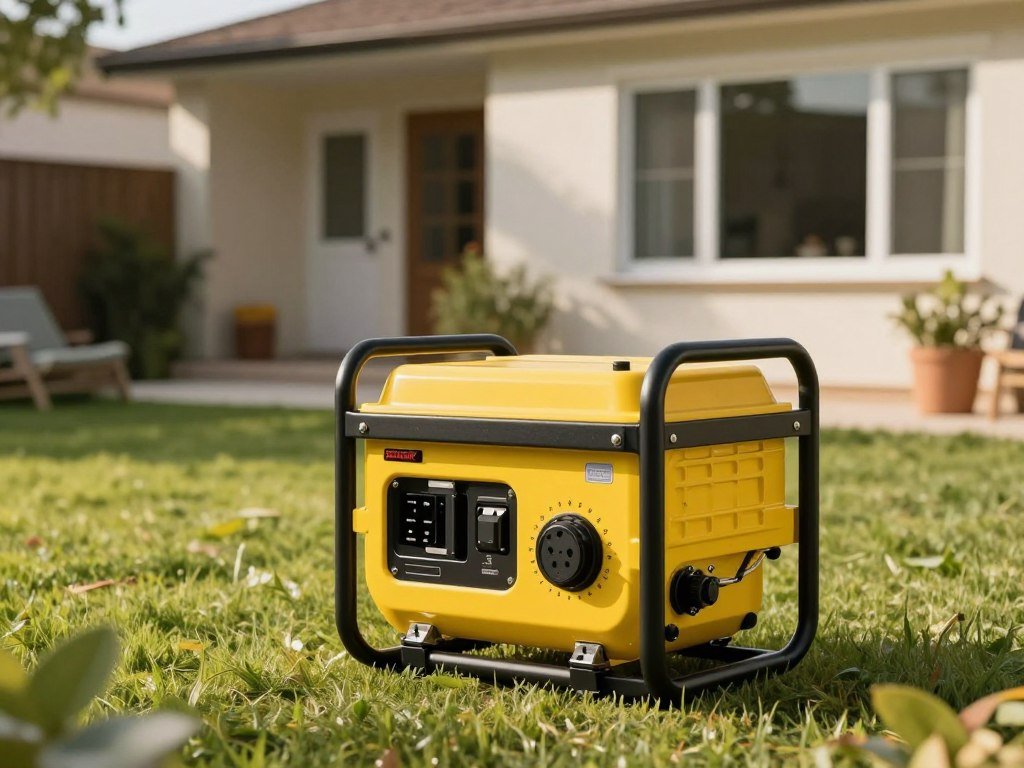
Portable generators for flexible backup
Portable generators work well when you want to choose which appliances receive power. Many run on gasoline or propane, and some models support more than one fuel. Their output and runtime depend on the model and the loads you connect.
The EcoFlow Dual-Fuel Smart Generator 4000 is a fuel-powered example. It is rated at 3,200 running watts and 4,000 starting watts, weighs 83 pounds, and has a 1.5-gallon gasoline tank.
Standby generators for automatic backup
A standby generator stays installed beside the home and can start automatically when utility power fails. It supplies backup through a transfer switch, so the system can feed selected circuits or a broader set of home loads.
This setup suits homeowners who want backup without moving equipment into place. It needs a permanent fuel and electrical connection, plus professional installation.
Battery power stations for quiet, combustion-free power
A battery power station stores electricity and sends it through an inverter to connected devices. It runs quietly and does not burn fuel at the unit, but its stored energy limits how long it can run appliances.
The EcoFlow Dual-Fuel Smart Generator 4000 can connect to select EcoFlow power stations for automatic recharging. That fuel generator is a charging source, not a stand-alone battery station.
A battery-first setup can still use a fuel generator as a recharging backup when an outage lasts beyond the stored capacity.
What Size Generator Does Your House Need?
Start by listing the appliances that must operate at the same time, then account for the largest startup surge among them. Size the generator by simultaneous loads and starting watts, not by the home’s square footage. Running watts describe steady power, while starting watts cover an appliance’s extra startup surge.
For a small home, a limited essentials-only load may need less capacity. A well pump or air conditioner can push the needed size higher, even in a compact house.
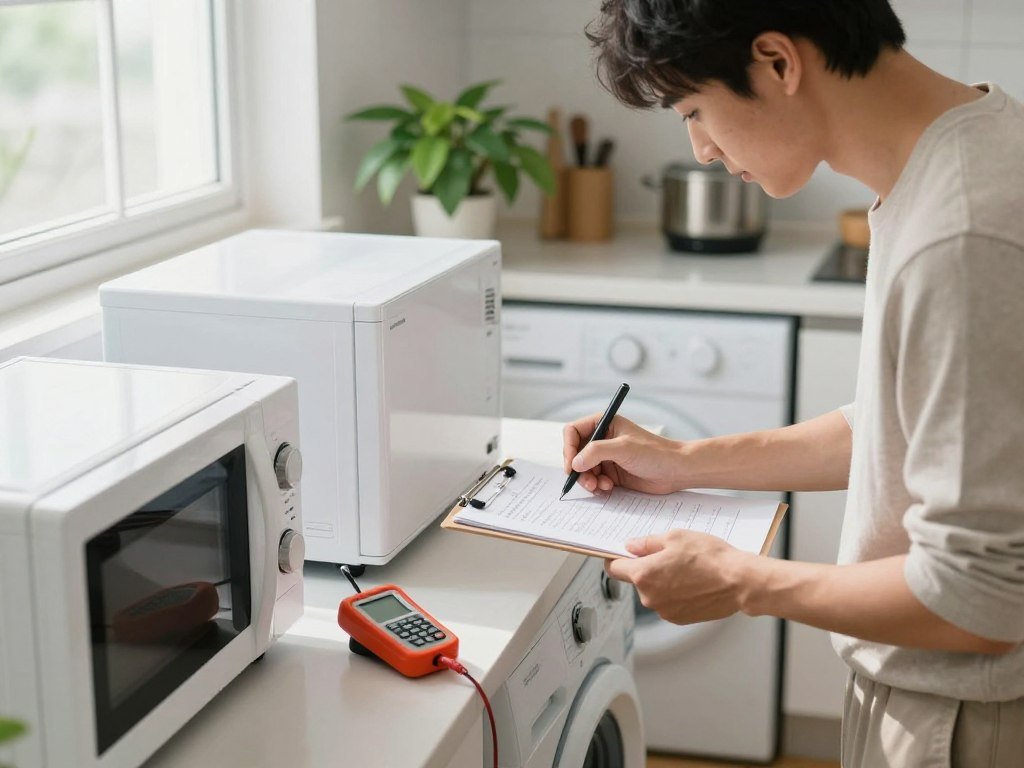
List the appliances and circuits that must stay on
Write down the loads you expect to use together, such as a refrigerator, lights, pump, and heating equipment. A thermostat that fits your HVAC system can help manage heating and cooling settings, though settings and household routines affect energy use.
Include appliances that may start while other equipment is already running. That timing matters because a motor can draw extra power when it starts.
Add running watts and the largest starting surge
Use the appliance label or manual to find its electrical demand. The basic formula is watts = volts × amps. Add the running watts of loads used together, then add the largest extra starting-watt need.
For example, 2,850 running watts plus a 2,000-watt additional starting requirement equals 4,850 starting watts. The starting total includes the running load and the extra surge, not two separate appliance totals.
Match the result to a rated output
That example calls for a generator rated for at least 5,000 maximum starting watts and 3,900 running watts. The higher running rating leaves room for the continuous demand after the largest motor starts.
Generators above 8,000 starting watts are grouped as large; those from 3,000 to 8,000 are medium; those from 1,000 to 3,000 are small. These groups offer a quick reference, but the appliance calculation should guide your pick.
Check both the running-watt rating and the starting-watt rating before deciding a unit can handle the calculated load.
Which Appliances Should You Power First?
Give first priority to food preservation, water management, temperature safety, and the few lights or communication devices the household needs. Keep the first set of loads focused on health, safety, and preventing damage, not everyday convenience. That short priority list helps you avoid overloading a limited supply.
Start with the appliances that protect food, people, or the home. Add comfort and convenience only after the main circuits are covered.
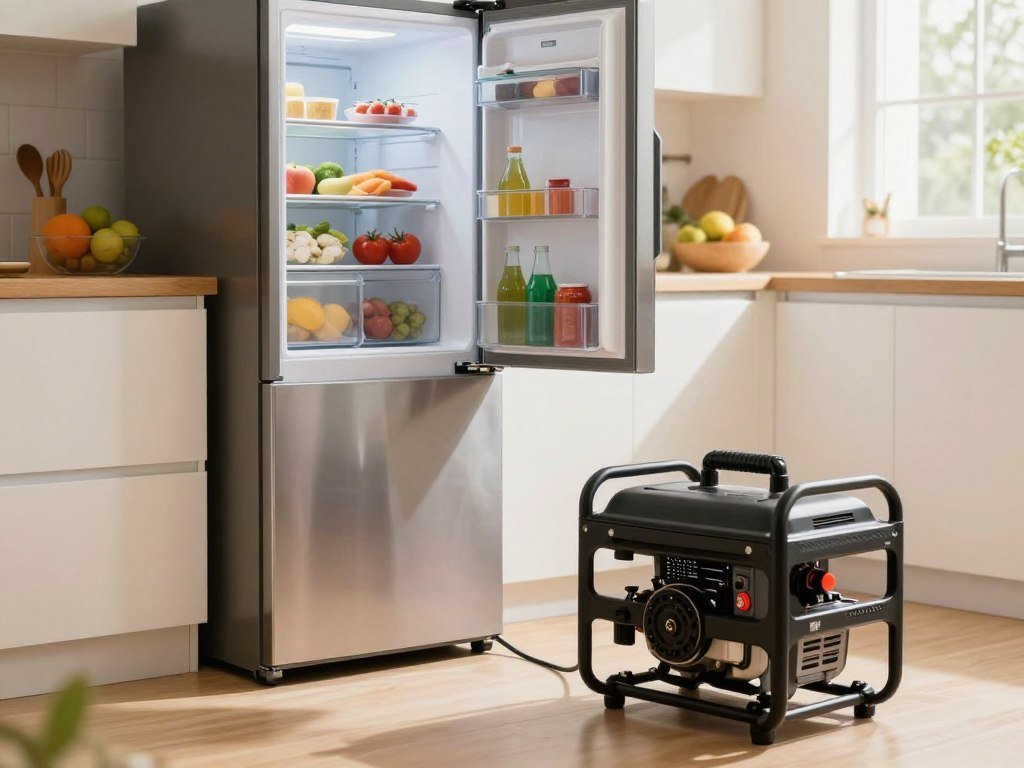
- Refrigerator or freezer.
- Heating or cooling equipment needed for safety.
- Sump or well pump.
- Essential lighting and communications.
A refrigerator or freezer deserves early attention because food can spoil during a long outage. Compare food-storage needs when choosing a refrigerator for your household, but do not assume its size alone tells you its electrical demand.
The Champion 4,750-Watt portable generator can run three or four critical 120-volt circuits. It has no 240-volt outlets, so it cannot serve a 240-volt appliance.
Check voltage as well as wattage before choosing circuits. For heating and cooling, a schedule can reduce use during sleep or time away; savings depend on your settings and routine.
Remove nonessential loads before starting another high-demand appliance.
How Much Fuel Will Backup Power Use?
A generator’s hourly fuel demand rises as the electrical load increases, so use load-specific figures rather than a single runtime promise. The Generac 22kW standby generator uses more fuel at full load than at half load, with different rates for natural gas and liquid propane.
At 50% load, its listed use is 228 cubic feet of natural gas or 2.53 gallons of liquid propane per hour. At 100% load, those rates rise to 327 cubic feet or 3.9 gallons per hour.
| Fuel | Load | Consumption per hour |
|---|---|---|
| Natural gas | 50% | 228 cubic feet |
| Natural gas | 100% | 327 cubic feet |
| Liquid propane | 50% | 2.53 gallons |
| Liquid propane | 100% | 3.9 gallons |
These figures show why the load matters when you plan fuel for an outage. A generator that runs lightly does not use fuel at its full-load rate.
Actual runtime for a portable unit also depends on its fuel tank and changing load. Its engine may use fuel at different rates as appliances cycle on and off.
Keep enough fuel or a dependable utility connection for the outage length you are preparing to handle.
What Does a Whole-House Generator Cost to Install?
A professionally installed home standby system typically costs $8,000-$16,000 in the United States, with the final quote shaped by equipment, materials, and installation. The typical range includes the generator, system equipment and materials, and installation. The actual home cost depends on the work needed at that property.
A Generac 22kW standby generator is described as designed for a home roughly 2,500 square feet. That does not make it an automatic fit for every house near that size.
A 2,000-square-foot home may need a different capacity. Its right size and total quote depend on actual loads, the electrical setup, and site work.
Square footage alone misses important details, such as which appliances run together and how the system connects to the panel. A smaller home with high-demand equipment may need more output than its floor area suggests.
The best generator for the money is the unit that meets the needed load without paying for capacity you will not use. A lower upfront quote can still be a poor fit if it leaves key circuits without backup.
Request an itemized installation quote based on a load calculation for the actual home.
Which Fuel Works Best for Your Home?
The most practical fuel is the one your chosen generator supports and you can reliably access during a long outage. Fuel choice affects storage, supply, and which generator models you can use. Check the exact fuel match before settling on a unit.
Gasoline is common for portable generators, while propane can be stored in suitable cylinders or a supply tank. Natural gas may suit a home with a compatible utility connection, but the generator must support that fuel.
| Fuel | Common generator format | Supply-planning consideration |
|---|---|---|
| Gasoline | Portable generators | Store and rotate fuel safely |
| Propane | Portable and compatible standby generators | Keep suitable cylinders or a supply tank available |
| Natural gas | Standby and compatible tri-fuel portable generators | Confirm the connection and service remain available |
Gasoline when portability matters
Gasoline suits many portable generators, which can make it easy to find the right equipment. You still need a safe plan for storage and supply during a lengthy outage.
Propane for stored fuel flexibility
Propane can be stored in suitable cylinders or a supply tank. A generator must be set up for propane, and the available supply must fit your outage plan.
Natural gas for a compatible utility connection
Natural gas can support a standby generator or a compatible tri-fuel portable model. A utility connection does not mean every generator can use it.
The Generac GP9500E accepts gasoline, propane, and natural gas. It has a 7.5-gallon gasoline tank, weighs 219 pounds, and is rated at 65 decibels at 25% load. Its ratings may differ by fuel, so do not treat the three options as equal-output choices.
Verify the exact fuel connection and output rating for the fuel you plan to use.
What Are the Tradeoffs of an Inverter Generator?
An inverter generator is worth considering when sensitive electronics and quieter operation matter, but its output ceiling and purchase cost can be tradeoffs. Some conventional open-frame models offer more maximum output for less money. The better fit depends on whether you value stable power or higher output most.
An inverter generator converts electrical current through an inverter stage to provide cleaner, more stable output. It can also adjust engine speed to match demand, rather than running at one speed all the time.
Inverter technology is not the same as a separate low-distortion rating. Generac lists True Power below 5% total harmonic distortion for its 22kW standby generator.
That specification belongs to that Generac model; it does not show what every inverter generator can do. The Honda EU7000iS includes a 120/240-volt, 30-amp connection, which illustrates why outlet type also matters.
Compare the rated output and available outlets with the appliances and circuits you plan to connect. A clean power description cannot replace checking whether the unit can handle their actual demand.
Match the generator’s rated output and outlet type to the appliances and circuits you actually intend to connect.
Do You Need a Transfer Switch or an Interlock?
A generator must never feed a home panel in a way that can energize utility lines. A transfer switch routes power to selected circuits, while an interlock device fits a compatible panel and blocks the generator breaker from operating with the utility breaker. An electrician must confirm panel compatibility and local code compliance.
An interlock kit typically costs $50-$150, plus $400-$800 for labor. The right installation prevents generator operation after utility service returns.
- Panel compatibility.
- Correct generator inlet and breaker.
- Interlock or transfer equipment installed to code.
- Utility supply isolated while generator power is connected.
Restoring utility service while a generator remains connected can endanger utility workers and damage equipment. The connection needs to isolate the home from utility power before the generator feeds the panel.
Do not choose an interlock by price alone. The panel must accept the device, and the installation must meet local rules.
Have a qualified electrician confirm which connection method is permitted for the home’s panel and local code.
How Can You Reduce Carbon Monoxide Risk?
Carbon monoxide is the most serious immediate danger from a fuel-powered generator, and it cannot be seen or smelled. About 90 people die each year in the United States from generator-related carbon monoxide poisoning. Run a portable generator outdoors at least 20 feet from the home, with exhaust pointed away.
Use working carbon monoxide detectors that are UL 2034 certified or ETL listed. Low-level CO detectors add protection for children, older adults, pregnant people, and people with preexisting conditions.
- Operate the generator outdoors.
- Keep the unit at least 20 feet from the home.
- Direct exhaust away from doors, windows, and vents.
- Maintain working certified CO detectors.
- Never treat an automatic shutoff sensor as permission to run the unit indoors or in an enclosed space.
Carbon monoxide can build up indoors even when a generator seems to be working normally. An automatic shutoff sensor can help, but it does not make indoor operation safe.
Test household CO detectors before storm season and follow the generator’s outdoor-placement instructions every time.
How Loud and Difficult Are Portable Generators to Move?
Noise and weight can make a high-output portable generator difficult to live with even when its wattage is suitable. Check sound measurements alongside their load and test distance, because different test conditions do not allow direct comparisons. A model’s real handling needs matter as much as its sound rating.
The DuroMax XP11000iH measured 61 decibels at a 20% load. The Westinghouse WGen9500DF is rated at 74 decibels, but the figures do not share stated test conditions.
The Honda EU7000iS measured 70 decibels at 15 feet and a 60% load, and it weighs 263.2 pounds. Those details provide context, not a direct ranking against tests taken under other conditions.
- Identify a stable outdoor operating surface.
- Plan a route that can support the unit’s weight.
- Keep the operating location away from noise-sensitive areas while following safety distance.
- Verify wheels and handles suit the terrain.
Wheels and handles help, but they cannot make every route easy. A heavy unit may be hard to move across stairs, gravel, or uneven ground.
Make sure the planned storage and operating locations are both reachable without carrying the generator over stairs or rough ground.
Is a Battery Power Station Enough for Home Backup?
A battery power station avoids combustion and carbon monoxide at the unit, but its stored energy and inverter rating set firm limits. Watt-hours describe how much energy the battery stores, while inverter watts limit simultaneous output. That difference is central when choosing battery backup for a home.
A battery-powered generator is a good fit for quiet, indoor-safe operation of essentials. It may not supply high loads or run as long as a fuel generator of comparable size.
Compare stored energy with inverter output
The Anker SOLIX F3000 has a 3,072-watt-hour battery and a 2,400-watt inverter. The Pecron E3600LFP stores the same energy but has a 3,600-watt inverter, while the Bluetti Elite 400 stores 3,840 watt-hours and provides 2,600 watts.
| Model | Battery capacity | Inverter output |
|---|---|---|
| Anker SOLIX F3000 | 3,072 watt-hours | 2,400 watts |
| Pecron E3600LFP | 3,072 watt-hours | 3,600 watts |
| Bluetti Elite 400 | 3,840 watt-hours | 2,600 watts |
The watt-hour figure relates to stored energy and expected runtime. The inverter rating sets the maximum power available to connected appliances at once.
Consider expansion and whole-home limits
Expansion can add stored energy, but it does not make every connection or circuit suitable. An Anker SOLIX F3000 can expand to 24,000 watt-hours.
A Pecron E3600LFP two-unit bundle provides 7,200 watts combined with 120-volt and 240-volt output. The EcoFlow Delta Pro Ultra X plus two batteries has 12.28 kWh capacity, expandable to 184.32 kWh, with 12 kW output expandable to 36 kW and up to 45 kW starting output.
Expandable systems still need correctly sized connections and circuits. A high capacity figure alone does not show whether a unit can start a large appliance or power every circuit.
Compare both watt-hours and output watts against the appliances’ expected runtime and peak demand.
What Should You Know About Standby Generator Installation?
A standby generator is a permanent electrical and fuel installation, not simply a portable unit left outside. The Generac 22kW Guardian runs on liquid propane or natural gas, with ratings of 22,000 watts on propane and 19,500 watts on natural gas.
The unit includes a 200-amp NEMA 3R whole-house transfer switch and a five-year limited warranty. It weighs 466 pounds and measures 48 inches long, 25 inches wide, and 29 inches high.
The Guardian requires a 12-volt battery. It accepts a minimum Group 26R battery rated at 540 cold-cranking amps or a Group 35 AGM battery rated at 650 cold-cranking amps.
A standby system needs a suitable location, fuel connection, electrical connection, and professional installation. The generator’s weight and size also affect where an installer can place and service it.
The included transfer equipment and battery requirements are model-specific details to confirm when planning the work. A different standby model may have different parts or fuel ratings.
Have the installer confirm the site, fuel connection, transfer equipment, battery, and local permit requirements before work begins.
Can You Get a Tax Credit for a Home Generator?
Do not count on a federal home-energy credit to offset the cost of a fuel-powered whole-house generator. A whole-house generator powered by natural gas, propane, or diesel does not qualify for the federal Residential Clean Energy Credit or Energy Efficient Home Improvement Credit.
The Residential Clean Energy Credit for battery storage systems was unavailable for systems placed in service after December 31, 2025. Tax rules can depend on the equipment and when it was placed in service, so get individual tax advice before budgeting around an incentive.
A tax credit and a tax deduction are different. A credit reduces tax owed under the rules that apply, while a deduction affects taxable income; neither guarantees a benefit for every household.
Do not assume that buying a Generac or another brand creates a write-off. The fuel type and system design matter for the named federal home-energy credits.
Confirm tax treatment for the installation date and equipment with a qualified tax professional before budgeting around an incentive.
What Should You Check Before Buying?
Before placing an order, confirm that the proposed system fits the home’s measured load and can be installed and serviced locally. Compare at least two written installation bids so you can see differences in equipment, work, and service. Kohler and Generac are both standby-generator brands homeowners may compare.
For a whole-house installation, choose the model that meets the home’s calculated load and has qualified local installation and service support. Compare the written scope, warranty terms, and total installation quote instead of assuming one brand is always better.
- Written load calculation.
- Confirmed fuel source and fuel-specific output.
- Compatible transfer equipment and panel.
- Installer licensing, permits, and local service access.
- Itemized equipment and labor quote.
A clear bid should show what equipment and labor it covers. Ask how the proposed system handles the loads you expect to use and what local service is available.
Keep the load calculation, itemized quote, warranty details, and installation requirements together before approving the work.
Keep the load calculation, itemized quote, warranty details, and installation requirements together before approving the work.
Conclusion
Reliable backup starts with a realistic list of the circuits you cannot afford to lose. The best choice matches those loads with a practical fuel or battery plan and a safe connection to the home.
A portable generator can suit selected circuits, while standby equipment offers automatic backup and a power station avoids fuel combustion. The right fit depends on what your household needs during an outage.
Write down those circuits and ask a qualified electrician or installer to confirm the load and connection plan.
FAQ
What’s the best size generator for a house?
Add the running watts of loads used at the same time, then add the largest extra starting surge. For example, 2,850 running watts plus a 2,000-watt startup need equals 4,850 starting watts. That example uses a generator rated for 5,000 starting watts and 3,900 running watts. Your own list may differ because pumps, air conditioners, and other motors have different startup needs.
What is a portable power station?
A portable power station is a rechargeable battery unit with an inverter that supplies power to connected devices. Battery capacity, measured in watt-hours, describes stored energy and helps estimate runtime. Inverter output, measured in watts, limits how much power the unit can supply at once. Check both figures against the appliances you plan to run and how long you need them.
What is the downside of an inverter generator?
An inverter generator can cost more and provide less maximum output than some conventional models. It may still suit your home if quieter operation and cleaner, stable power matter more than maximum capacity. Compare the unit’s rated output and outlet types with your intended loads. Do not assume all models have the same noise level or power quality.
How much is a Generac for a 2000 sq ft house?
Professionally installed home standby systems typically cost $8,000-$16,000, including equipment, materials, and installation. That range applies to standby systems generally, not to every Generac model or home size. A 2,000-square-foot house still needs load-based sizing, since equipment, electrical setup, and site work affect the right system and total quote.
Is a whole house generator a tax write-off?
A tax credit and a tax deduction are different, and a personal tax result depends on your situation. A natural-gas, propane, or diesel whole-house generator does not qualify for the named federal Residential Clean Energy Credit or Energy Efficient Home Improvement Credit. Do not assume the purchase can be written off. Ask a qualified tax professional about your specific installation and tax treatment.
Can you get a tax credit for buying a Generac generator?
A natural-gas, propane, or diesel whole-house generator does not qualify for the named federal home-energy credits. The Residential Clean Energy Credit for battery storage was unavailable for systems placed in service after December 31, 2025. A brand name alone does not establish eligibility. Ask a tax professional or the IRS about current rules before counting on a credit.