

Could the most advanced AI models of 2026 be trained inside a sealed digital vault, cut off entirely from the open internet? That question has been circulating among AI watchers, security researchers, and enterprise buyers who want to know how labs protect the systems they build. The idea sounds dramatic: no web access, no outside connections, no way in or out. But what does “no internet access” actually mean in the context of frontier model training? And how much of the 2026 conversation is confirmed fact versus reasonable-sounding assumption? (OpenAI 722 Math Claims Mathematician Scrutiny 2026: Facts)
This article separates the verified from the speculative. It explains the security logic behind air-gapped training, the different things people mean when they say “no internet access,” and what practical lessons teams can take away, even while the public record remains thin.
Why the “No Internet Access” Claim Spreads So Fast
The premise is easy to understand and hard to verify. A frontier training run is one of the most valuable and sensitive computing operations on earth. It consumes enormous amounts of electricity, uses thousands of specialized chips, and produces model weights that can be worth billions in competitive advantage. The idea that a lab would disconnect that operation from the internet is intuitively appealing. It sounds like locking the vault.
There is a real security concept underneath the headline. Air-gapping is a long-standing practice in high-security computing: physically isolating a system from unsecured networks so data cannot flow in or out. Governments use it for classified systems. Financial institutions use it for certain trading infrastructure. And AI safety researchers have discussed applying similar isolation to frontier training runs, because the biggest risks involve model weights being stolen or training infrastructure being compromised.
The confusion arises because “no internet access” gets used to describe at least three different things. A model might have no internet access at inference time, meaning the finished product cannot browse the web. A training cluster might be air-gapped, meaning the machines doing the training are network-isolated. Or employees working on the project might face restricted network access, a personnel security measure. Each claim has a different source and a different level of evidence. When these get blended together, a modest security practice can morph into a sweeping headline.
What Is Actually Confirmed About 2026 Training Security
Here is the honest answer: there is no confirmed public record of a specific 2026 OpenAI policy stating that frontier training happens with no internet access. Readers should treat the premise as unverified until a primary source appears. (Openai dots meta muse enterprise agent 2026) (OpenAI)
That does not mean nothing is known. AI labs have publicly described security programs, including frameworks for evaluating dangerous capabilities and disclosures about protecting model weights. The general concept of securing training infrastructure against attacks, including attempts to exfiltrate weights, has been discussed in academic and industry literature. But a general concept is not the same as a dated, confirmed policy announcement.
This pattern is common in fast-moving AI news. A single report or conference remark gets amplified, and within days it reads like settled fact. The same dynamic shows up across the industry. Claims about benchmark performance, for example, have drawn scrutiny from mathematicians and researchers who want to see the underlying work. The lesson for readers is consistent: check whether a claim traces back to a primary document or to a secondary summary.
There is also a broader insider-risk dimension to AI lab security that has received attention. Labs face threats not only from outside hackers but from people inside the organization, which is why personnel and access controls matter as much as network architecture. Security is never a single wall; it is layers. (Openai bug case ai labs insider risk 2026)
The Three Meanings of “No Internet Access”
To evaluate any claim about disconnected training, readers need to know which version is being described. The table below breaks down the distinctions.
| Claim type | What it means | Why it matters | Evidence status |
|---|---|---|---|
| No internet at inference | The finished model cannot browse or call external services | Affects product features and safety surface | Often publicly visible in product behavior |
| Air-gapped training cluster | Training machines are isolated from external networks | Reduces risk of weight theft and intrusion | Discussed conceptually; specific 2026 policy unconfirmed |
| Restricted employee access | Staff face network and data-handling limits | Limits insider risk and accidental leaks | Common in security-conscious firms; specifics vary |
A reader who hears “OpenAI trains frontier models with no internet access” should immediately ask: which row of that table is being described? The answer changes what evidence would even count as proof.
Inference Restrictions Are the Easiest to Verify
If a model cannot access the internet when you use it, you can often observe that directly. Product documentation and hands-on testing reveal whether a chatbot can fetch live web pages, call external tools, or pull in current data. These restrictions are usually a deliberate design choice tied to safety, reliability, and control over what the model can do.
Air-Gapped Training Is Harder to Confirm From Outside
A training cluster’s network architecture is internal. Outsiders cannot see it. Confirmation depends on official disclosures, regulatory filings, independent audits, or credible reporting. Without one of those, a claim about air-gapped training remains an inference, however plausible.
Employee Access Rules Sit in the Middle
Personnel security measures are common across the tech industry. Companies restrict who can touch sensitive systems, log access, and segment networks. These practices are real and widespread, but they are usually described in general security terms rather than as a single dramatic policy.
How Air-Gapped Training Would Actually Work
Understanding the mechanics helps readers judge claims. A genuinely isolated training environment is not simply a server room with the cable unplugged. It is an engineered system with controlled pathways.
- Data staging. Training data is prepared outside the secure environment, reviewed, and then moved in through a controlled transfer process, often with scanning and logging.
- Network segmentation. The training cluster sits on its own network segment, separated from corporate systems and the public internet by strict controls.
- Access brokering. Engineers who need to work on the cluster connect through monitored jump systems with multi-factor authentication and session recording.
- Weight protection. Model checkpoints and final weights are encrypted and handled through defined export procedures, because weights are the crown jewels.
- Monitoring and anomaly detection. Even isolated systems are watched for unusual behavior, since insider threats and supply-chain compromises can bypass perimeter defenses.
Each of these steps adds friction. That friction is the point. But it also explains why full isolation is difficult to sustain. Modern machine learning workflows depend on package downloads, experiment tracking, and collaboration tools. Locking all of that down requires custom tooling and disciplined process design. (NIST Artificial Intelligence overview)
Practical Lessons for Teams Building Their Own Secure Training
Even without a confirmed 2026 policy to copy, security teams can apply the underlying principles. Here is what actually works in practice, along with common mistakes.
Start with a threat model, not a slogan. “No internet access” sounds strong but means little without knowing what you are defending against. Weight exfiltration, ransomware, insider theft, and supply-chain attacks each call for different controls. Write down the assets you are protecting and the adversaries you expect.
Segment aggressively, then test the segmentation. Many organizations believe their training environment is isolated when it is not. A single misconfigured firewall rule or an overlooked management interface can create a path out. Regular penetration testing of the training environment catches these gaps.
Treat model weights like production secrets. Encrypt checkpoints at rest and in transit. Limit who can export them. Log every export. The most common mistake is focusing on perimeter defense while leaving internal access wide open.
Plan for the friction. Fully isolated workflows slow engineers down. Teams that succeed build internal mirrors of common packages, automated transfer pipelines, and clear exception processes. Teams that fail either abandon isolation or create ad hoc workarounds that undermine it.
Watch the human layer. Insider risk is real, and it is why personnel controls matter. Restricting who has access, monitoring for unusual behavior, and separating duties all reduce exposure. Security incidents at major labs have drawn attention to how much damage a single trusted individual can do.
Document and audit. If you claim your training is isolated, you need evidence. Auditors, customers, and regulators will ask. Maintain logs, run periodic reviews, and keep your architecture diagrams current.
Why the Question Matters Beyond One Company
The debate over disconnected frontier training is really a debate about assurance. As AI systems become more capable, governments and enterprises want proof that labs are protecting the models and the public. Frameworks for evaluating dangerous capabilities and securing training infrastructure are part of a wider push toward verifiable safety practices.
That push is visible across the industry. Benchmark claims get scrutinized. Security incidents get investigated. Competitive dynamics, including how labs structure enterprise agent offerings, shape what gets disclosed and when. Readers tracking these developments should follow primary sources: official framework pages, government AI safety institute publications, and independent audits.
The broader context also includes geopolitics. Debates over open-weight models and safe harbors show how policy decisions in one country ripple across the global AI supply chain. Training security is not just a technical topic; it is part of a larger conversation about who controls powerful models and how that control is verified.
Common Mistakes Readers Make When Evaluating This Claim
A few traps catch even careful readers.
- Conflating inference with training. A model that cannot browse the web is not proof that its training was air-gapped.
- Treating plausibility as confirmation. A security practice can be entirely reasonable and still unconfirmed for a specific company in a specific year.
- Ignoring the source chain. Ask whether a claim traces to an official document, credible reporting, or a game of telephone.
- Assuming isolation is binary. Security exists on a spectrum. Partial isolation with strong controls can be more effective than a poorly maintained full air gap.
- Forgetting the human element. The strongest network architecture fails if trusted insiders can bypass it.
Conclusion
The idea that frontier AI training in 2026 happens with no internet access is compelling, plausible, and, as of the available public record, unconfirmed. The underlying security concept is real: isolating training infrastructure reduces the risk of weight theft and intrusion, and labs have strong incentives to protect their most valuable assets. But “no internet access” bundles together at least three distinct claims, each with different evidence requirements.
The practical takeaway is to ask better questions. Which kind of access is restricted? What is the primary source? What controls are actually in place, and how are they verified? For security teams building their own systems, the lessons hold regardless of what any single lab announces: model your threats, segment and test, protect weights like secrets, plan for friction, and watch the human layer.
As AI capabilities grow, so will the demand for assurance. Expect more disclosures, more audits, and more scrutiny of claims that sound too clean to be true. The readers who separate verified facts from reasonable assumptions will be the ones who understand what is really happening inside the vault.
Frequently Asked Questions
Is it confirmed that OpenAI trains frontier models with no internet access in 2026?
No. There is no confirmed public record of a specific 2026 OpenAI policy stating that frontier training happens with no internet access. The concept of air-gapped training is real and discussed in security literature, but readers should treat the specific claim as unverified until a primary source appears.
What is the difference between air-gapped training and no internet at inference?
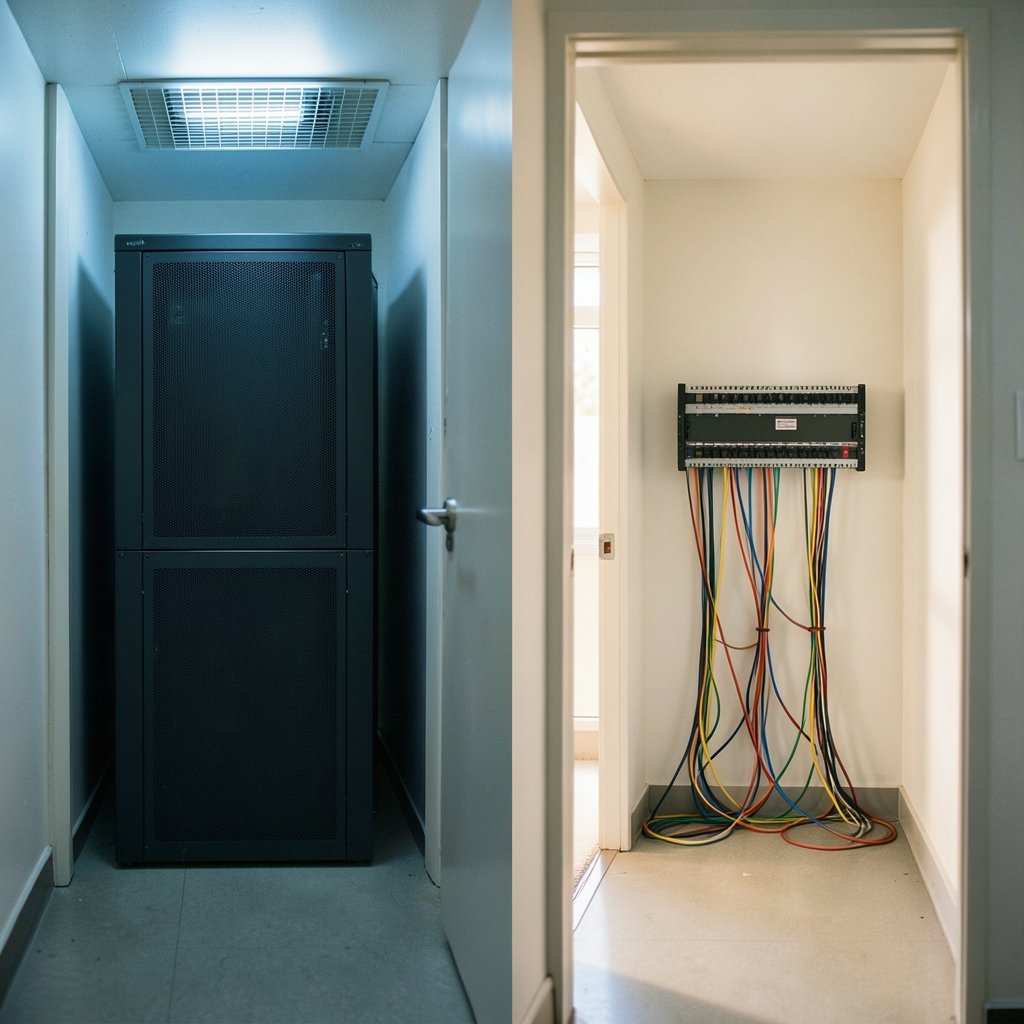
Air-gapped training means the machines used to train a model are isolated from external networks. No internet at inference means the finished model cannot browse the web or call external services when users interact with it. These are different claims with different evidence, and they are often confused.
Why would an AI lab isolate its training environment?
The main reasons are protecting model weights from theft, preventing intrusions into training infrastructure, and limiting insider risk. Model weights can represent enormous competitive value, so labs have strong incentives to control who can access them and how they leave the environment.
How can I verify a claim about training security?
Look for primary sources: official framework pages, government AI safety publications, regulatory filings, independent audits, or credible investigative reporting. Be cautious of claims that trace only to social media summaries or secondhand commentary, since details tend to drift as they spread.
What are common mistakes when building a secure training environment?
Common mistakes include assuming a system is isolated without testing it, focusing only on perimeter defense while leaving internal access open, failing to encrypt and log weight exports, and not planning for the friction that isolation creates. Strong security requires layered controls and regular audits.
Does restricting internet access make a model safer for users?
It can reduce certain risks, such as unauthorized data exfiltration or unwanted external actions, but it is only one control among many. Safety also depends on evaluation frameworks, monitoring, access controls, and how the model is deployed. Isolation is a component, not a complete answer.



