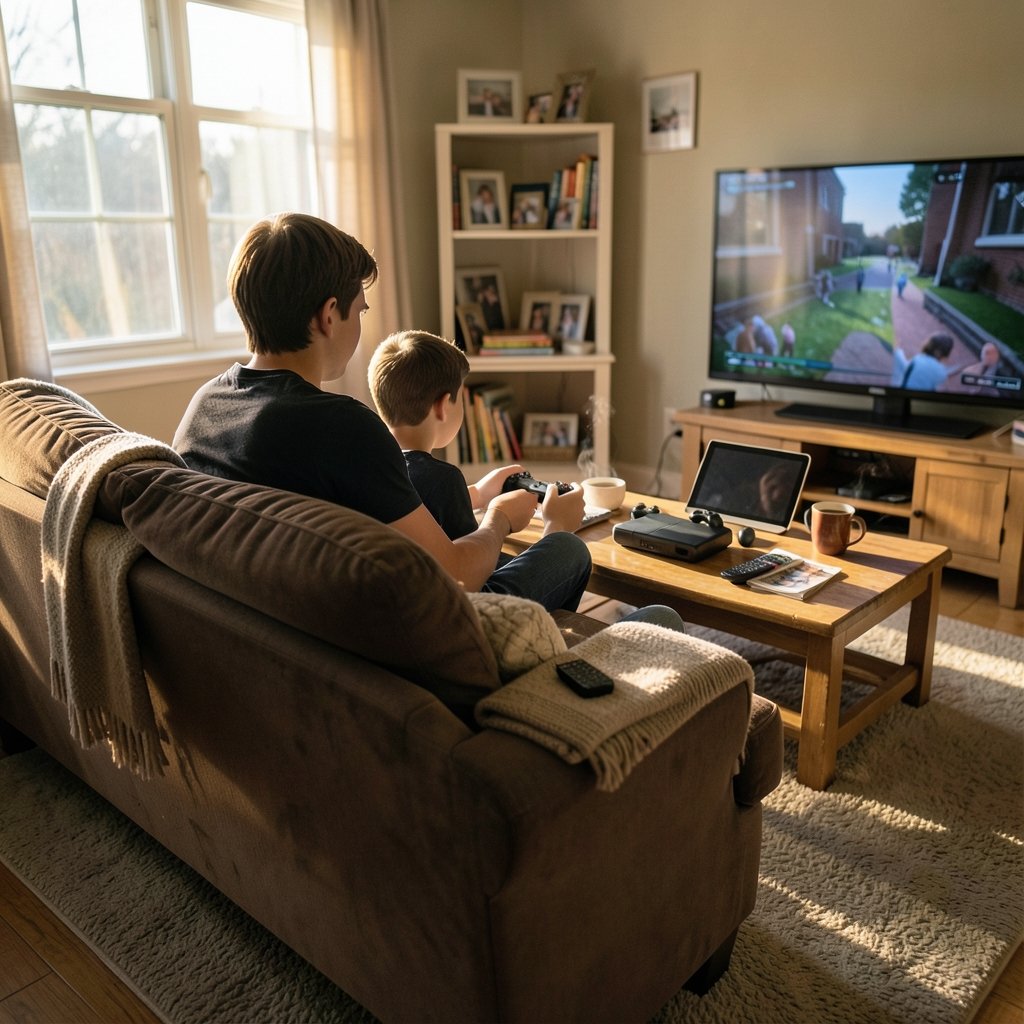
What happens when a platform used by tens of millions of children decides it can no longer take a player’s word for their age? That question sits at the heart of Roblox’s approach to age verification, and it is reshaping how the platform handles chat, privacy, and parental control. For parents, the stakes are obvious. For teen players, the changes can feel like a locked door where there used to be an open hallway. And for Roblox itself, the pressure comes from regulators, lawmakers, and a steady drumbeat of media scrutiny over child safety. (FTC: Children’s Privacy)
This article breaks down how age verification on Roblox works, why it became unavoidable, what the practical experience is like, and where the whole system still falls short. It avoids hype and sticks to what can reasonably be established, flagging uncertainty where it exists.
Why Roblox Cannot Avoid Age Verification Anymore
Roblox is not a small niche product. It is one of the most-visited gaming platforms on the planet, and a large share of its audience is under eighteen. That demographic reality collides with a wave of new laws.
The UK Online Safety Act gave the regulator Ofcom sweeping powers to require age assurance on services likely to be accessed by children. Australia has pushed ahead with strict minimum-age rules for social platforms. In the United States, state attorneys general and the Federal Trade Commission have taken an active interest in how child-focused platforms collect data and police contact between adults and minors.
The common thread: “we asked them to tick a box saying they were over 13” is no longer treated as a serious safeguard. Regulators want age assurance — a measurable process that estimates or confirms a user’s age with some confidence.
Roblox has responded by layering verification into its safety stack. The company has publicly described facial age estimation as a way to unlock age-appropriate chat settings for teens, and it has offered ID-based verification for years. Exact rollout dates and the precise 2026 state of these features are hard to pin down from secondary reporting alone, so anyone making decisions for a family should confirm current details against Roblox’s own help center and newsroom before acting.
How Age Verification on Roblox Actually Works
There are broadly two mechanisms in play, and they serve different purposes.
Facial Age Estimation
A user points their camera at their face, and software estimates an age range from facial features. The appeal is speed and accessibility: no documents, no waiting. The trade-off is that estimation produces a range, not a precise number, and accuracy varies across age groups, lighting conditions, and demographics.
In practice, this feature has been described as a gate for certain chat capabilities for teen accounts. A rough estimate is enough to place someone into a bracket, which then determines what they can see and say.
ID-Based Verification
Users upload a government ID or similar document, which is checked by a third-party vendor. This is heavier, slower, and raises obvious privacy questions — but it produces a stronger signal than a selfie.
| Method | Speed | Strength of signal | Main privacy concern |
|---|---|---|---|
| Self-declared birthday | Instant | Very weak | None |
| Facial age estimation | Seconds | Moderate | Biometric data processing |
| Government ID check | Minutes to days | Strong | Document storage and vendor handling |
The practical lesson for families: don’t assume a single verification event locks everything down forever. Settings can change, accounts can be re-verified, and new features arrive with new gates.
The Parental Control Picture in 2026
Verification by itself does not make a platform safe. What matters is what gets unlocked or blocked once age is established.
Roblox’s parental controls let an adult link an account and manage spending, screen time, and communication settings. The most consequential control is communication: who can message a child, and in what context. Age verification feeds directly into this, because a verified younger age can trigger stricter defaults.
A few practical points that hold up regardless of the specific 2026 feature set:
- Link the parent account early. Retrofitting controls after a problem appears is far harder than setting them up on day one.
- Check chat settings after any verification prompt. If a child completes age estimation, confirm what changed.
- Review the friends list, not just the settings. Most risk on social platforms comes through known contacts, not strangers.
- Revisit quarterly. Platform defaults shift, and a setting that was strict last year may not be.
A common mistake is treating verification as a one-time chore. It is better understood as an ongoing maintenance task, like updating a password.
What the Verification Push Reveals About Platform Safety
Age verification is often sold as a silver bullet. It is not. It is a filter, and filters leak.
There are three honest criticisms worth taking seriously.
First, verification can create a false sense of security. A parent who sees “age verified” may relax supervision, even though verification only speaks to age, not to behavior, content exposure, or contact risk.
Second, biometric processing raises real privacy questions. Facial age estimation means a camera is analyzing a child’s face. Even where data is discarded after processing, the practice deserves scrutiny. Regulators in several jurisdictions have grown more skeptical of biometric data collection from minors.
Third, determined bad actors route around gates. Verification raises the cost of impersonation, which is genuinely useful, but it does not eliminate it.
The broader industry context matters here. Platforms across gaming, social media, and app stores are all being pushed toward stronger identity signals at the same time. Apple’s long-running dispute over app store fees and payment rules, for instance, shows how platform-level policy fights can reshape what developers and users can do. You can follow that thread in this breakdown of the Apple scotus 27 percent app store fee 2026 case, which illustrates how structural platform decisions ripple down to everyday users.
Verification and the Wider Gaming Landscape
Roblox is not operating in a vacuum. Every major platform is making bets about hardware, software, and safety at the same time, and those bets shape what tools like age verification can even do.
Consider the engine layer. Roblox runs its own creation stack, while competitors push alternatives with different safety and moderation models. The comparison in this look at Roblox studio vs unity vs godot 2026 is useful because it shows how the underlying platform determines what moderation is even technically possible. (Roblox)
Hardware matters too. Device-level age signals, parental accounts tied to an operating system, and chip-level security features all influence how confidently a platform can estimate who is on the other end. Rumors about next-generation handheld silicon, such as the chatter around the Nintendo switch 2 lite samsung 8lpu plus chip rumor 2026, are worth watching precisely because device identity is becoming part of the trust chain.
And the corporate side is just as fluid. Studio ownership changes and layoffs reshape which safety teams exist and how fast features ship. The reporting on Xbox layoffs 3200 studios sold 2026 is a reminder that moderation and trust-and-safety work is expensive, and it is often the first thing squeezed when budgets tighten.
For families choosing devices, the phone itself is part of the safety equation. A platform’s parental controls only work as well as the device underneath them, which is why roundups like this guide to the best phones 2026 increasingly weigh family management features alongside camera and battery specs.
Common Mistakes People Make With Age Verification
Practical experience with these systems surfaces a handful of recurring errors.
- Assuming verification equals safety. It confirms age, not behavior. Supervision still matters.
- Verifying on the wrong account. A child who verifies an alternate account may unlock settings the parent never sees.
- Ignoring the privacy trade-off. Uploading an ID to any service deserves a moment of thought about who stores it and for how long.
- Skipping the re-check. Defaults change. Settings that were correct six months ago may not be.
- Treating a failed verification as a dead end. Most systems offer an appeal or alternate path; parents should use it rather than abandoning controls.
What actually works is unglamorous: link accounts, review settings on a schedule, talk to kids about what they see, and keep an eye on official announcements rather than rumor threads.
What to Watch Through 2026
Three developments are worth tracking.
Regulatory enforcement. Ofcom’s actions under the Online Safety Act and the FTC’s posture toward child-directed platforms will determine how aggressive age assurance must become. Primary sources — regulator websites and official orders — are the only reliable guide here.
Technical accuracy. Facial age estimation is improving, but error rates across skin tones and age brackets remain a live research question. Better accuracy means fewer false rejections and fewer false acceptances.
Transparency. The most useful thing a platform can publish is a clear, plain-language explanation of what data verification collects, how long it is kept, and what happens if a user declines. Roblox’s own help documentation is the place to check, and it should be read directly rather than through secondhand summaries.
It is also worth remembering that age verification sits inside a much larger debate about who bears responsibility for minors online — platforms, parents, or governments. That debate is not close to resolution. For a sense of how quickly the surrounding landscape moves, the reporting on Ea may sell mass effect dragon age jade empire darrah 2026 shows how ownership churn can reset a company’s priorities overnight, safety programs included.
Conclusion
Roblox age verification in 2026 is best understood as a work in progress rather than a finished wall. The platform has moved decisively away from self-declared birthdays toward facial age estimation and ID checks, driven by regulators who no longer accept box-ticking as a safeguard. That shift is real and meaningful.
But verification is a gate, not a guardian. It tells a platform roughly how old someone is; it does not tell anyone whether a conversation is healthy, whether content is appropriate, or whether a child is being manipulated. Those questions still require engaged adults, sensible settings, and honest conversations.
For parents, the practical playbook is straightforward. Link the account, review the settings, understand what verification does and does not do, and check official sources when something changes. For players, expect more friction at sign-up and more prompts along the way. For Roblox, the test in 2026 is whether verification becomes a genuine safety improvement or a compliance box that creates false confidence. The answer will depend less on the technology than on how transparently the company explains it and how seriously families use the tools they are given.
Frequently Asked Questions
Does Roblox require age verification to play?
No. Verification is not a blanket requirement to access the platform. It functions as a gate for specific features, most notably certain communication and chat settings. Players who do not verify can still use the platform, but they may be limited to more restrictive defaults, particularly on teen accounts.
How does facial age estimation work on Roblox?

A user’s camera captures an image, and software estimates an age range from facial features. The system places the user into a bracket rather than assigning an exact age. That bracket then determines which chat and communication settings become available. Accuracy varies by lighting, age group, and other factors, so it is a moderate signal rather than a definitive one.
Is it safe to upload an ID to Roblox?
ID verification is typically handled by a third-party vendor rather than stored directly by the platform. The sensible approach is to read the current privacy documentation before uploading anything, understand how long data is retained, and consider whether facial estimation alone is sufficient for your family’s needs. Privacy practices change, so check the official help pages rather than relying on older summaries.
What happens if a child fails age verification?
Most systems offer an alternate path, such as trying again under better conditions or submitting a different form of verification. A failed attempt does not usually lock an account permanently, but it may leave the account on stricter default settings. Parents should treat a failure as a prompt to review the account’s communication settings directly.
Can parents control what verification unlocks?
Parents can link a parent account and manage communication, spending, and screen time settings. Verification interacts with those controls by influencing defaults, but the parent account remains the primary lever. The practical advice is to link accounts early and re-check settings after any verification event, since defaults can shift.
Is age verification enough to keep kids safe on Roblox?
No. Verification confirms an approximate age; it does not assess behavior, content exposure, or the quality of a child’s interactions. It raises the cost of impersonation, which is genuinely useful, but it is one layer among several. Supervision, regular settings reviews, and open conversation about what children encounter remain essential.