
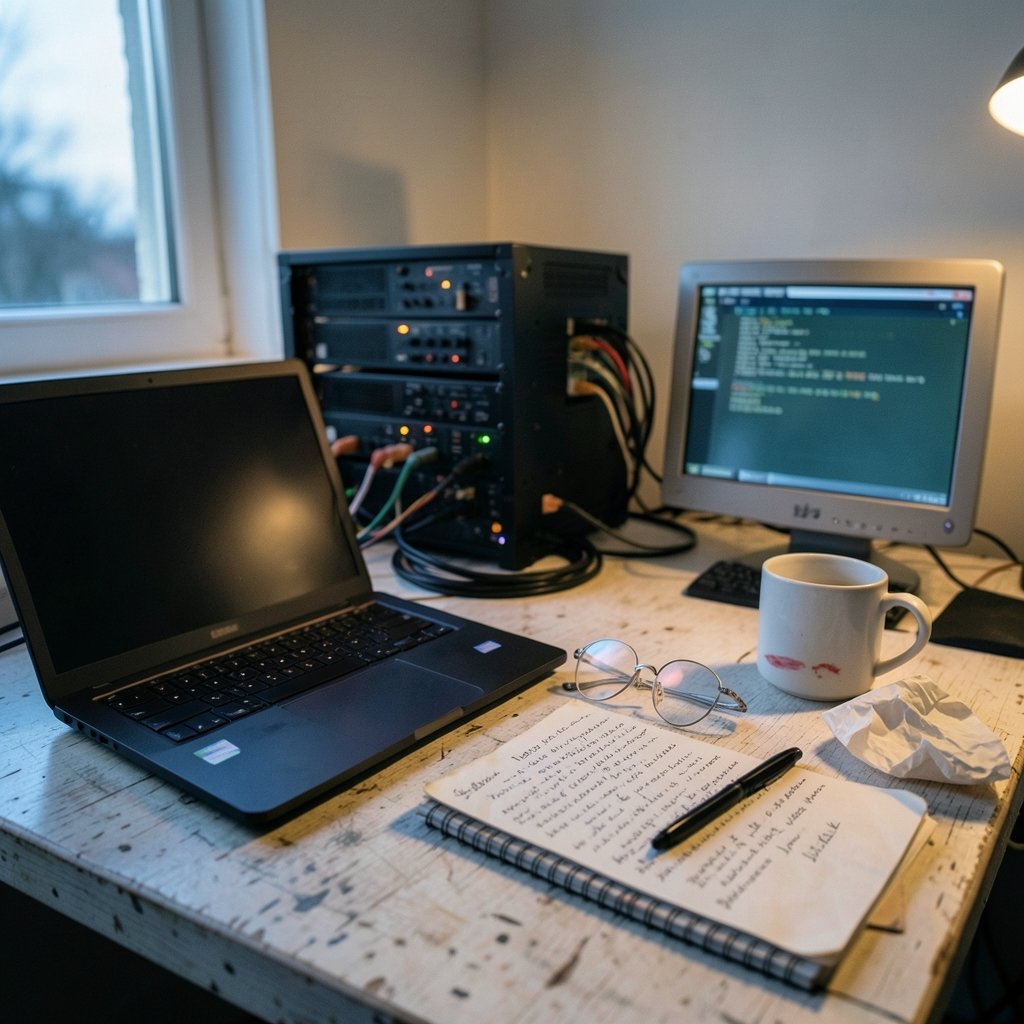
Have you ever run `apt install php` on a Debian or Ubuntu server, watched a wall of package names scroll past, and wondered who actually puts those packages together? Most people never ask. The answer, for well over a decade, has led back to one Czech developer: Ondřej Surý. His name shows up in the maintainer field of the PHP packages that power countless websites, control panels, and development machines. Yet outside Debian and Ubuntu circles, hardly anyone knows who he is. That gap between influence and recognition is exactly what makes him one of open source’s great unsung heroes. (Debian)
Who Is Ondřej Surý?
Ondřej Surý is a Czech software developer and a longtime Debian Developer. Debian is the volunteer-run Linux distribution that Ubuntu and dozens of other systems are built on. Being a Debian Developer means passing a rigorous review of technical skill and commitment to the project’s social contract. It is not a title handed out lightly. (Debian)
Surý’s work has stretched across more than one corner of the Linux world. He has been associated with DNS tooling through his work at CZ.NIC, the Czech domain registry, where development of Knot DNS and Knot Resolver took place. He has also been linked to various Debian project roles over the years. But the work that touches the most people, by far, is his long stewardship of PHP packaging.
The Invisible Job of a Package Maintainer
To understand why Surý matters, you have to understand what a package maintainer actually does. When you type `apt install php`, you are not downloading software from php.net. You are downloading a prepared package that someone has:
- Fetched from upstream and verified
- Patched to fit Debian’s policies and file layout
- Split into sensible pieces (the core binary, extensions, configuration)
- Wired into the system’s service manager and configuration conventions
- Tested against the distribution’s other packages
- Kept updated with security fixes for years
That is a lot of unglamorous work. It happens in bug trackers, mailing lists, and late-night uploads. When it goes well, nobody notices. When it goes badly, thousands of servers break at once. Maintainers live with that pressure so the rest of us do not have to.
What Surý Actually Maintains
The core of Surý’s contribution is the `php-defaults` metapackage and the versioned PHP source packages in Debian. The metapackage is the piece that lets a user type a generic `php` and get a sensible current version, while the versioned packages (think `php8.1`, `php8.2`, `php8.3` and their successors) let administrators pin to a specific release.
This structure matters because PHP versions move fast and web applications are picky. A WordPress site, a Laravel app, and a legacy internal tool may each demand a different PHP branch. Debian’s packaging has to make all of those coexist without stepping on each other. That is genuinely hard engineering, and it is the kind of work that gets noticed only when it is missing.
The Ubuntu PPA That Saved Countless Projects
Ubuntu users have an extra reason to know the name. The `ondrej/php` PPA on Launchpad became famous among developers as the fastest way to get a current PHP version on an Ubuntu release whose official archive lagged behind. Need PHP 8.3 on an older LTS? The PPA was the answer that showed up in every tutorial and forum thread.
The same idea extended to Debian through the `deb.sury.org` repository, which has served PHP and related packages for Debian users who want newer versions than the stable archive provides. These repositories became infrastructure in their own right. Countless CI pipelines, hosting setups, and tutorials quietly depend on them.
Why “Unsung” Fits So Well
Here is the strange thing about infrastructure work: the better it is, the less visible it becomes. Surý’s packages sit underneath a huge share of the web’s server fleet, but the people running those servers rarely think about who built the packages. They think about their own code, their customers, their deadlines.
Compare that to the attention given to consumer tech. A single product launch can dominate headlines for weeks. Meanwhile, a maintainer shipping security updates for a language runtime used by millions gets a line in a changelog. That imbalance is not anyone’s fault exactly. It is just how attention works. But it is worth pausing on. The same dynamic shows up across the tech world, whether the topic is phone releases or the economics of app stores, where the platform story gets the spotlight and the plumbing stays invisible.
A Practical Guide: Using These Packages Without Shooting Yourself in the Foot
If you administer Debian or Ubuntu servers, Surý’s work is probably already on your machines. Here is how to use it well, plus the mistakes people make most often.
Step 1: Know What Your Distro Already Ships
Before adding any third-party repository, check what your distribution provides. Run `apt policy php` and see which version the official archive offers. On a stable Debian release, it may be older than what your application needs. On a newer Ubuntu LTS, it may be perfectly fine. Adding repositories you do not need is the single most common mistake.
Step 2: Add a Repository Only When You Have a Reason
If you genuinely need a newer PHP branch, the `deb.sury.org` repository for Debian or the `ondrej/php` PPA for Ubuntu is the established route. Add it deliberately, import its signing key properly, and document why it is there. Future you, or the next admin, will thank you.
Step 3: Pin Versions on Production Machines
Third-party repositories move. A branch you rely on will eventually reach end of life and stop receiving updates. Use APT pinning or explicit version pins so an unattended upgrade cannot silently jump your production PHP from one minor branch to another. Test upgrades on a staging box first. This is boring advice, and it prevents the worst outages.
Step 4: Understand the Extension Split
Debian splits PHP into many small packages: the core, the CLI, the FPM service, and dozens of extensions like `php-mysql` or `php-curl`. New users often install the core and then wonder why their database connection fails. Install the extensions your application actually needs, and keep the list short. Fewer packages mean fewer surprises.
Step 5: Track End of Life Dates
Every PHP branch has a support window. When a branch goes end of life, packages stop getting security patches, even from a well-run repository. Put the dates in your calendar. Migrating on your own schedule beats migrating during an incident.
| Approach | Best For | Watch Out For |
|---|---|---|
| Distro archive only | Stability-focused servers | Older PHP versions |
| `deb.sury.org` (Debian) | Newer PHP on Debian | Needs deliberate key and source setup |
| `ondrej/php` PPA (Ubuntu) | Newer PHP on Ubuntu LTS | Must be removed when no longer needed |
| Mixed, pinned sources | Complex multi-app hosts | Requires pinning discipline |
The Wider Network Around This Work
Surý’s PHP packaging does not exist in a vacuum. It connects to a broader world of open source maintenance that includes game engines, operating systems, and developer tooling. If you have followed debates about which engine to build on, the trade-offs in Roblox Studio vs Unity vs Godot echo the same theme: the tooling you never think about shapes what you can build. Hardware stories follow the same pattern, from the chatter around a Nintendo Switch 2 Lite and Samsung 8LPU chip rumor to the fallout from Xbox layoffs and studio sales. Platforms rise and fall, but the maintainers underneath keep the lights on.
Even shopping-season content reflects the same infrastructure reality. A guide to Black Friday car deals is served by web servers running PHP somewhere. So is coverage of the Apple SCOTUS case and the 27 percent App Store fee. None of those pages care which maintainer packaged their runtime. They just need it to work.
What Happens If Maintainers Walk Away?
This is not a hypothetical worry. Open source has a well-documented bus factor problem: critical projects often rest on one or two people. When a key maintainer steps back, the gap can take months to fill, and sometimes it never does. The PHP packaging chain is a good example of a project that has depended heavily on one person’s sustained effort.
That is why the “unsung hero” framing is a risk assessment rather than flattery. Every organization running PHP on Debian or Ubuntu has a stake in the health of this packaging work, whether or not they know it. Supporting maintainers, through funding, sponsorship, or simply filing good bug reports, is self-interest dressed up as generosity. It is also just good sense.
How to Actually Help
- File clear bug reports. Include versions, logs, and steps to reproduce.
- Test pre-release packages if you can, and report what breaks.
- Fund the projects you depend on, directly or through foundations.
- Document your setup so the next admin understands which repositories you rely on and why.
- Say thank you. Maintainers hear complaints far more often than gratitude.
Reading the Package Tracker Like a Pro
One skill worth learning: how to check a package’s health yourself. Debian’s package tracking system shows maintainer names, open bugs, and version history for packages like `php-defaults` and the versioned PHP sources. The Debian Developer database lists developer profiles. Launchpad shows PPA activity and build status. Spending ten minutes there tells you more about your dependency chain than any blog post.
Practical tip: before adopting any third-party repository, look at its recent activity. Are builds passing? Are bugs being answered? A repository that was active two years ago and silent since is a liability, not a convenience. This check takes minutes and has saved plenty of teams from nasty surprises.
Conclusion
Ondřej Surý’s name does not appear on billboards, and it probably never will. But it appears in the metadata of packages running on an enormous number of servers, quietly doing the work that makes `apt install php` a one-line command instead of an afternoon project. The PHP packaging he has sustained across Debian and Ubuntu, along with the `ondrej/php` PPA and the `deb.sury.org` repository, is infrastructure in the truest sense: essential, unglamorous, and easy to overlook.
The lesson is to notice the pattern, not merely to praise one developer. Every stack you rely on has someone like this underneath it. The healthiest thing you can do is learn who they are, use their work carefully, and support it before you have to find out what happens when it is gone.
FAQ
What is the ondrej/php PPA?
It is a Launchpad repository maintained by Ondřej Surý that provides current PHP versions for Ubuntu releases whose official archives lag behind. Developers use it to install newer PHP branches without waiting for a distribution update.
Are the PHP packages from deb.sury.org safe to use?

They are widely used and have a long track record, but any third-party repository carries trade-offs. You are trusting the maintainer’s build process and update cadence. Add the repository deliberately, import its signing key, and pin versions on production systems.
Why does Debian split PHP into so many packages?
Debian’s policy favors small, single-purpose packages. Splitting PHP into a core package, a CLI package, a service package, and individual extensions lets administrators install only what they need and keeps dependencies clean. The trade-off is that newcomers sometimes forget to install an extension.
What does a Debian package maintainer actually do?
A maintainer fetches upstream source, patches it to fit distribution policies, splits it into packages, tests it against the rest of the archive, and keeps it updated with security fixes for years. It is ongoing, largely invisible work that keeps installs reliable.
Is Ondřej Surý the only person maintaining PHP in Debian?
No. Debian packaging is collaborative, and other contributors have worked on PHP over the years. Still, Surý has been the most visible and sustained figure in the effort, which is why his name appears so often in package metadata.
What is the biggest mistake when using these repositories?
Adding a third-party repository without a clear reason, then forgetting it exists. Over time this leads to version drift, unexpected upgrades, and packages that stop receiving updates after a branch reaches end of life. Document every repository you add and review it regularly.



