

What if the tool your team bought to keep the cloud safe is quietly becoming the reason nobody notices a real breach? That is the uncomfortable truth behind most cloud security posture management (CSPM) failures. The software works. The humans and processes around it often do not.
CSPM is the practice of continuously scanning cloud environments for misconfigurations, policy violations, and risky settings. Done well, it catches an open storage bucket or a wildcard permission before an attacker does. Done poorly, it buries a team in thousands of alerts, covers only half the estate, and creates a false sense of safety. This article walks through the mistakes that show up again and again, why they happen, and what actually fixes them.
Mistake 1: Treating CSPM as a Tool Purchase Instead of a Program
Buying a CSPM platform and switching it on feels like progress. It is not the same as building a program. Teams that install the agent, connect a cloud account, and then walk away usually end up with a dashboard nobody opens.
The fix is boring but effective: assign clear ownership, define what “good” looks like, and set a review rhythm. A named owner for cloud security findings, a weekly triage session, and a documented remediation SLA for critical issues do more than any feature upgrade. Practitioners consistently report that the tooling is the easy part. The culture of acting on findings is where programs live or die.
One common trap: security teams own the findings, but engineering teams own the fixes, and nobody has agreed on priorities. That gap is where misconfigurations age for months.
Mistake 2: Leaving the Default Baseline Untuned
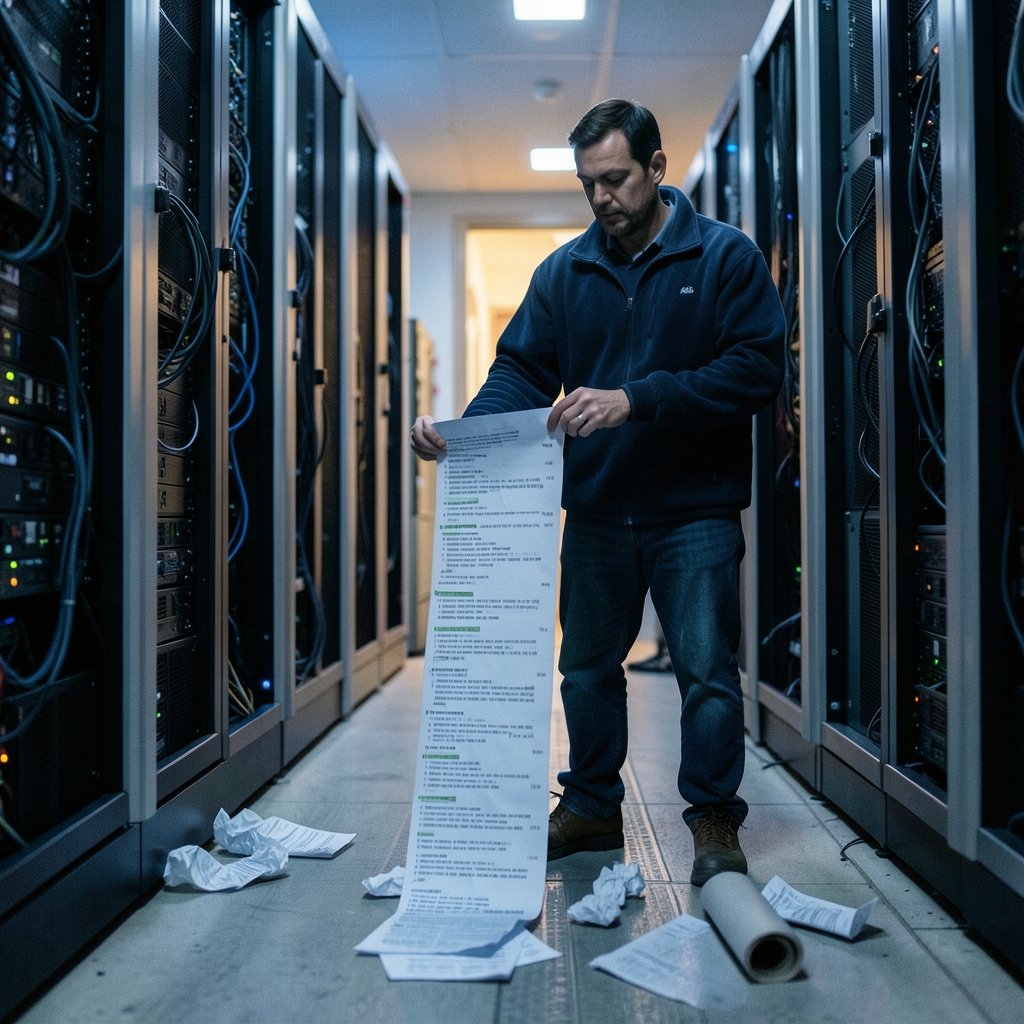
Out of the box, most CSPM tools ship with hundreds of rules. Connect an account and you may get thousands of findings within hours. The instinct is to forward everything to engineers. The result is alert fatigue, and alert fatigue is how a genuinely dangerous finding gets ignored.
What works in practice:
- Start with a focused baseline tied to a recognized control set, such as the CIS Benchmarks or NIST SP 800-53.
- Suppress rules that do not apply to your environment, and document why.
- Rank the rest by real risk, not by raw severity labels.
- Escalate only what a human must act on; automate the rest.
The teams that get this right treat tuning as an ongoing job, not a one-time setup task. Environments change, so the baseline has to change with them.
Mistake 3: Covering Only Part of the Cloud Estate
A CSPM deployment that watches one provider, or only virtual machines, leaves blind spots everywhere else. Serverless functions, container clusters, managed databases, and SaaS integrations all carry configuration risk. So do secondary accounts and sandbox environments that someone spun up for a test and never decommissioned.
Multi-cloud reality makes this worse. A team running workloads across several providers needs a posture view that spans them, and the same logic applies to how infrastructure choices differ between platforms, as covered in this comparison of AWS vs Azure vs Google Cloud 2026. Each provider has its own native tooling, its own benchmark, and its own quirks. A single-provider lens will always miss something.
Practical tip: inventory every account and subscription first. You cannot protect what you have not enumerated. Shadow accounts are one of the most common sources of nasty surprises.
Mistake 4: Misreading the Shared Responsibility Model
Cloud providers secure the infrastructure. Customers secure what they put on it. That sentence is repeated constantly, and it is still misapplied.
Two failure modes show up. The first is assuming the provider handles more than it does, so nobody checks whether a storage bucket is public or whether encryption is enabled on a database. The second is the opposite: teams spend effort “hardening” layers the provider already manages, while ignoring the identity and data controls that are genuinely theirs.
NIST’s cloud computing guidance, SP 800-144, lays out the division of responsibilities clearly. Reading it once with your architecture in hand is a worthwhile exercise. Map every control to an owner, then confirm CSPM is actually checking the customer-side ones.
Mistake 5: Ignoring Identity and Access Risk
Misconfigured storage gets the headlines, but over-permissive identity is often the bigger danger. Wildcard IAM policies, unused access keys, service accounts with more privilege than they need, and missing multi-factor authentication on privileged accounts all create paths an attacker can walk straight through.
CSPM tools can detect much of this, but only if identity rules are enabled and prioritized. A few habits that pay off:
- Hunt for wildcard actions and resources in policies, then tighten them.
- Flag access keys that have not been used in 90 days and retire them.
- Require MFA for any role that can change infrastructure.
- Review service account permissions quarterly, not annually.
Identity findings often need context from other systems, which is why posture data works best when it feeds into a broader workflow. Security and legal teams both benefit when findings, evidence, and remediation tasks live in one place; that is the same principle behind choosing the best case management software for law firms, where traceability matters as much as detection.
Mistake 6: Letting Configuration Drift Go Unremediated
Configuration drift happens when someone changes a setting in the console that bypasses the infrastructure-as-code pipeline. The CSPM tool flags it. Then nothing happens, because the finding sits in a queue and the engineer who made the change has moved on.
Detection without remediation is just record-keeping. What actually works is closing the loop:
- Route findings to the team that owns the resource, not to a general security queue.
- Give that team a clear SLA based on severity.
- Automate fixes where safe, such as re-enabling logging or blocking public access.
- Track mean time to remediate, and review it monthly.
Policy-as-code helps too. When guardrails are enforced in the pipeline, fewer bad configurations ever reach production, and CSPM shifts from catching problems to confirming good ones.
Mistake 7: Chasing Findings Instead of Measuring Risk
A dashboard showing 4,000 open findings tells a leadership team nothing useful. Volume is not risk. Teams that mature past the early phase stop counting findings and start measuring exposure: how many public storage buckets exist, how many privileged roles lack MFA, how long critical issues stay open.
This shift changes conversations. Instead of arguing about alert counts, teams can show a trend line moving in the right direction. It also helps justify budget. Executives respond to “we cut public exposure by 80% this quarter” far better than to a raw findings number.
Mistake 8: Forgetting the Human and Vendor Layers
Cloud posture is not only about cloud resources. Third-party SaaS tools, integrations with broad OAuth scopes, and non-human identities like API keys and service tokens all extend the attack surface. The emerging discipline of securing these machine identities is worth watching; this breakdown of Astrix vs Oasis vs Entro non-human identity security 2026 shows how the category is shaping up. (CISA Cybersecurity Best Practices)
The same oversight applies to endpoint and network hygiene around the cloud. A perfectly configured cloud account still falls if an administrator’s laptop is compromised or a home router is wide open. Basic controls like strong internet security software and a properly secured home network remain part of the picture; see this guide to the best internet security Australia options and these picks for home security systems for the physical side of the same problem. Defense in depth means the boring layers count. (Cloud computing security)
Mistake 9: Skipping the Review of What CSPM Cannot See
Every CSPM tool has limits. It sees configuration, not intent. It cannot tell you whether a business process depends on a setting that looks risky, or whether a “public” bucket is deliberately public for a marketing site.
That is why findings need human context before remediation. A quick check with the owning team prevents outages caused by overzealous cleanup. The best programs build a lightweight exception process: documented, time-limited, and reviewed. Exceptions that live forever are just unmanaged risk with paperwork.
A Quick Comparison: Immature vs Mature CSPM
| Practice | Immature Program | Mature Program |
|---|---|---|
| Baseline | Default rules, everything on | Tuned to a control framework |
| Coverage | One provider, VMs only | Multi-cloud, containers, serverless |
| Alerting | All findings to engineers | Risk-ranked, automated where possible |
| Remediation | Ad hoc, no SLA | Defined SLAs, tracked MTTR |
| Metrics | Finding counts | Exposure and trend lines |
| Exceptions | Informal, permanent | Documented, time-limited |
The gap between the columns is rarely about budget. It is about discipline.
Conclusion
The most common cloud security posture management mistakes are not technical failures. They are program failures: untuned tools, partial coverage, unclear ownership, and findings that pile up without anyone acting on them. The technology is capable. The work is in the habits around it.
Start small. Inventory the estate. Tune the baseline to a recognized framework. Assign owners and set remediation timelines. Measure exposure instead of volume. Then repeat, because cloud environments never stop changing, and neither should the posture program watching them.
Frequently Asked Questions
What is cloud security posture management?
Cloud security posture management is the practice of continuously monitoring cloud environments for misconfigurations, policy violations, and risky settings. It combines tooling with processes to detect issues like public storage, over-permissive access, and missing encryption, then route them to the right people for fixing.
What is the most common CSPM mistake?
Leaving the tool untuned. Default rule sets generate thousands of findings, which causes alert fatigue and buries the issues that actually matter. Tuning the baseline to a recognized control framework and ranking by real risk is the single highest-value fix.
Does CSPM replace native cloud provider tools?
No. Native tools from each provider are useful, but they usually cover only that provider. CSPM adds a consistent view across environments and maps findings to common frameworks. Most mature teams run both and let CSPM act as the cross-cloud layer.
How often should CSPM findings be reviewed?
Critical findings should be triaged within a day, with remediation timelines set by severity. A weekly review of open issues and a monthly look at trends keeps the program healthy. Anything reviewed less than monthly tends to drift into neglect.
Can CSPM prevent all cloud breaches?
No. CSPM addresses configuration risk, which is a major but not exclusive cause of incidents. It does not stop credential theft, application vulnerabilities, or social engineering. It works best as one layer in a broader security program that includes identity controls, patching, and monitoring.
How do you measure CSPM success?
Measure exposure, not alert volume. Track how many public resources exist, how many privileged accounts lack MFA, and how long critical findings stay open. Falling exposure and shrinking remediation times are far better signals than a rising count of closed tickets.
One more practical step closes the loop: tie posture findings to the change process itself. When a finding maps to a recent pull request or console session, the fix can go back through review rather than being patched silently. Teams that connect CSPM alerts to their ticketing, CI/CD, and asset inventories spend less time reconciling duplicates and more time fixing the root cause. That integration also makes audits easier, since every remediation carries a timestamp, an owner, and a linked change record. None of this requires a large platform team; it requires agreeing on a single source of truth for what exists and who owns it. Revisit that source of truth quarterly, prune stale entries, and confirm new accounts and services are enrolled automatically rather than discovered months later. Posture management rewards consistency far more than sophistication, and the programs that endure are the ones that treat it as routine operational hygiene rather than a one-off project.



