

Nuclear power has a reputation problem: giant plants, giant budgets, giant delays. So here’s a number that reframes the conversation. The IAEA defines a small modular reactor as anything producing up to about 300 MWe per unit, roughly a third of a traditional large reactor. That smaller footprint is why dozens of countries are now racing to build them. The tricky part? Most headlines mix up designs that are certified, designs that are under construction, and designs that are actually running. This article separates the three, walks through the projects that genuinely exist, and flags where the hype outruns the concrete. (Best ai automation tools for small businesses)
Quick Answer: What are real world examples of small modular reactors?
Real-world SMR examples fall into three groups: plants already operating, projects under construction, and designs that hold regulatory approval but have no operating unit yet. The best-known operating examples are Russia’s floating Akademik Lomonosov plant and China’s HTR-PM at Shidaowan, while China’s Linglong One, Argentina’s CAREM-25, and Canada’s BWRX-300 at Darlington sit at the construction stage.
Comparable-but-different technologies often get lumped in: advanced reactors like TerraPower’s Natrium and X-energy’s Xe-100 are modular but not always under the 300 MWe SMR line, and research reactors such as Japan’s HTTR are testbeds rather than commercial plants. (Small Modular Reactors)
Before trusting any SMR claim, check the reactor’s electrical output against the 300 MWe definition, its licensing status, whether construction has actually started, the difference between grid connection and commercial operation, and who is paying for it.
Why the SMR Label Gets Slippery
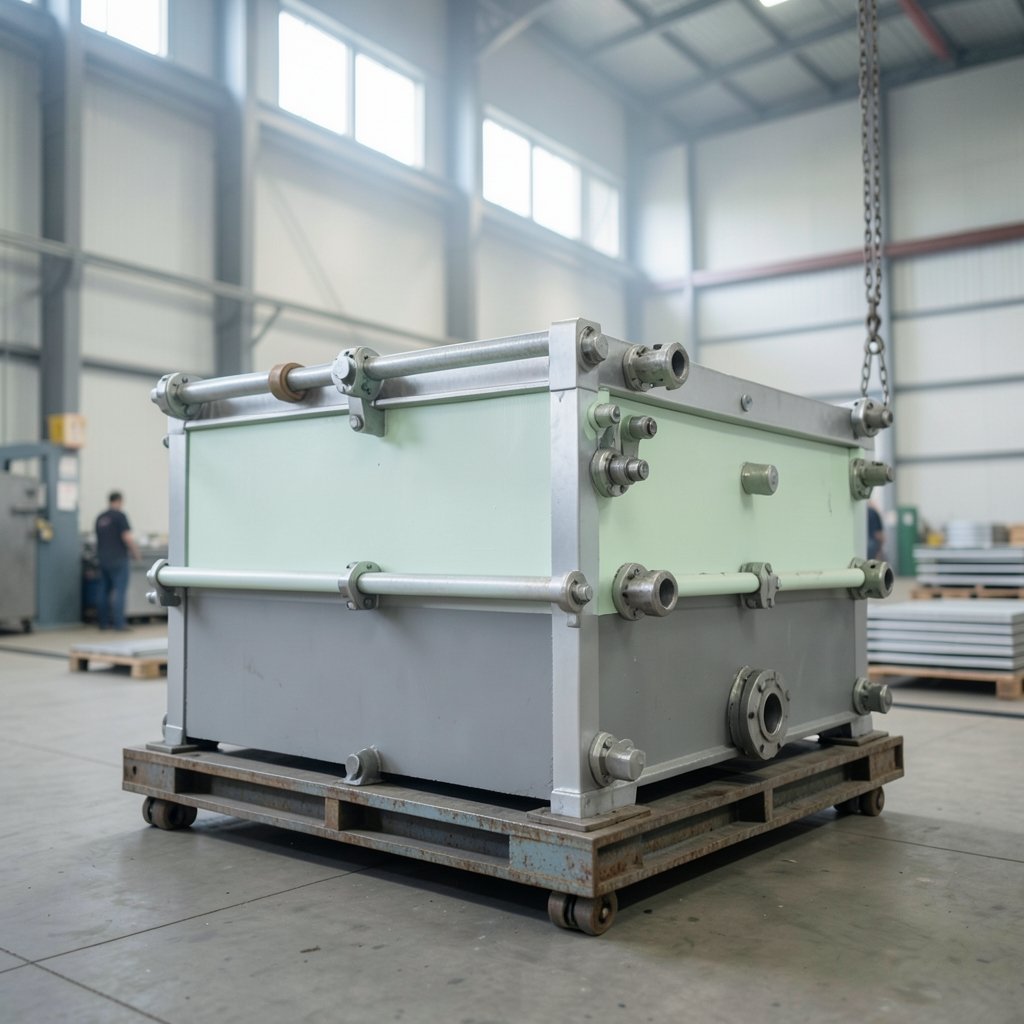
Ask five engineers what counts as an SMR and you’ll get five slightly different answers. The core idea is simple: small (under roughly 300 MWe) and modular (factory-built units that can be stacked). But the label has become a marketing badge, and that’s where readers get misled.
Three distinctions matter more than any brochure:
- Design certification is not deployment. A regulator approving a blueprint means the paperwork passed. It does not mean steel is in the ground.
- Grid connection is not commercial operation. A reactor can send its first electrons to the grid months or years before it runs as a business.
- “Modular” is not the same as “small.” Some advanced reactors are modular in construction but push past 300 MWe.
Keep those three in mind and the rest of this list makes far more sense.
Operating Examples: The Plants That Actually Run
Akademik Lomonosov, Russia
The world’s first floating nuclear power plant uses two KLT-40S reactors at roughly 35 MWe each. It connected to the grid in December 2019 and began commercial operation in May 2020, supplying the remote town of Pevek in Chukotka.
Here’s the nuance nobody mentions: the reactors descend from icebreaker propulsion designs, so some analysts argue it’s a small reactor rather than a true modern SMR. The plant is real; the classification is debatable. For remote Arctic communities, though, it solves a genuine problem, replacing aging fossil generation where fuel delivery is brutal.
HTR-PM, China
At Shidaowan in Shandong, the HTR-PM is a high-temperature gas-cooled pebble-bed modular reactor built from two 250 MWt units. It reached first criticality in September 2021, connected to the grid that December, and entered commercial operation in December 2023.
This is arguably the most important entry on the list, because it’s a Gen-IV modular design that genuinely operates. Pebble-bed fuel is designed to stay intact at extreme temperatures, which changes the safety calculus. If you want one example of modular nuclear working at commercial scale, this is it.
Construction-Stage Projects: Real Concrete, No Electricity Yet
Linglong One (ACP100), China
The ACP100 at Changjiang, Hainan, is a 125 MWe multi-purpose pressurized water reactor. Construction began in July 2021, and it’s widely described as the world’s first land-based commercial SMR project. As of recent reporting it is not yet operating, so treat it as a build in progress. Its appeal is versatility: electricity, district heat, and desalination from one small unit.
CAREM-25, Argentina
Argentina’s CAREM-25 is a 25 MWe integral pressurized water reactor at the Atucha site. Construction started in 2014 and has been hit by repeated delays. It’s a useful case study precisely because it’s unglamorous: a nationally developed SMR that shows how hard first-of-a-kind construction really is.
BWRX-300 at Darlington, Canada
Ontario Power Generation selected GE Hitachi’s BWRX-300 for Darlington in 2022. Site preparation and licensing advanced through 2023 and 2024, with construction targeted around 2025 and operation in the late 2020s. The same design was picked by the Tennessee Valley Authority for Clinch River in Tennessee. At 300 MWe it sits right on the SMR boundary, which is exactly the definitional gray zone worth watching.
RITM-200 Units, Russia
The RITM-200 reactors, about 50 MWe each, already power the Project 22220 icebreakers in service since 2020. A land-based version is planned for the Baimsky plant in Chukotka. It’s a rare case of a reactor family with proven marine operation moving to shore.
Certified but Cancelled: The NuScale Story
This is the example every SMR discussion needs, because it teaches the hardest lesson. NuScale’s US-460 design received design certification from the US NRC in January 2023, the first SMR design to earn that status. Then, in November 2023, the UAMPS Carbon Free Power Project in Utah was cancelled due to rising costs and too few subscribers.
Read that sequence again. Certification happened. Deployment didn’t. Anyone citing NuScale as proof that SMRs are “here” is skipping the second half of the sentence. The technology passed regulatory review; the business model failed to close. Both facts are true, and both matter.
Adjacent Technologies That Get Mislabeled
Two high-profile US projects are frequently called SMRs but don’t fit cleanly:
| Project | Developer | Approx. Output | Status |
|---|---|---|---|
| Natrium | TerraPower | 345 MWe | Construction began 2024 at Kemmerer, Wyoming |
| Xe-100 | X-energy | ~80 MWe per unit | Selected by Dow for Seadrift, Texas |
Natrium is modular in concept but exceeds the 300 MWe line. The Xe-100 fits the SMR definition and is a true high-temperature gas design. Japan’s HTTR, which hit a 950°C coolant outlet back in 2004, is a research reactor and a valuable testbed, not a commercial product. All three are worth following, none should be filed under “operating SMR.”
What Actually Works in Practice
Watching this space for a while teaches a few lessons that don’t show up in press releases.
Follow the money, not the announcement. Projects die quietly when subscribers walk away, exactly as UAMPS did. A signed customer agreement is worth more than a rendering.
Check the date type. “First criticality,” “grid connection,” and “commercial operation” are three different milestones, often years apart. Reporters conflate them constantly.
Respect first-of-a-kind pain. CAREM-25 shows that even a small, nationally backed reactor can slip for a decade. Modular construction promises to fix this, but the promise is still being tested.
Watch the supply chain. Factory-built reactors only help if the factories exist. That’s the same logic behind choosing the best AI automation tools for small businesses: the tool is only as good as the pipeline feeding it.
Distinguish heat from electricity. Many SMRs are designed for industrial heat, desalination, or district heating. Comparing them to grid-scale power plants misses the point.
Where SMRs Fit in the Wider Energy Picture
SMRs aren’t competing only with big reactors. They’re competing with small language models versus large language models-style tradeoffs in the computing world: smaller, cheaper, more deployable units that win on fit rather than raw scale. The same logic applies to commercial real estate listings for sale, where the right-sized property often beats the trophy asset.
The real advantage is siting. A 300 MWe unit can go where a 1,000 MWe plant never could: retired coal sites, remote communities, industrial parks, and places with weak grid connections. That flexibility, not headline output, is the actual product.
Regulators are adapting too, though slowly. Design certification streams exist in the US, Canada, and the UK, and each approval shortens the path for the next applicant. The bottleneck is shifting from paperwork to fabrication capacity and skilled labor.
Common Mistakes Readers Make
A short list of traps worth avoiding:
- Treating a design certification as proof a plant exists.
- Assuming every “modular reactor” is under 300 MWe.
- Confusing research reactors with commercial units.
- Ignoring cancellation risk when a project’s costs climb.
- Comparing SMR electricity costs to large plants without counting grid savings.
If you’re evaluating SMR claims for a story, a report, or an investment thesis, these five checks will filter most of the noise.
Conclusion
The honest scorecard looks like this: two operating examples worth citing (Akademik Lomonosov and HTR-PM), several serious construction projects (Linglong One, CAREM-25, BWRX-300, RITM-200), one landmark certification with a cancelled project behind it (NuScale), and a cluster of adjacent advanced reactors that don’t quite fit the label. That’s not a disappointment. It’s a young industry finding its footing in public.
The next five years will decide whether SMRs stay a promising category or become a genuine manufacturing business. Watch construction starts, customer contracts, and factory capacity. Those three signals will tell you more than any announcement ever will.
Frequently Asked Questions
Which small modular reactor was the first to operate?
Russia’s Akademik Lomonosov is usually credited as the first operating SMR-class plant, connecting to the grid in December 2019 and reaching commercial operation in May 2020. Some analysts dispute the label because its reactors derive from icebreaker designs. China’s HTR-PM followed as the first Gen-IV modular design in commercial operation. (Commercial Real Estate Listings for Sale: Property Types)
Is NuScale’s reactor actually built anywhere?
No operating NuScale plant exists. The US-460 design received NRC certification in January 2023, but the UAMPS project that would have deployed it was cancelled in November 2023 over costs and insufficient subscribers. Certification and construction are separate milestones.
How big is an SMR compared to a normal reactor?
The IAEA’s working definition caps SMRs at roughly 300 MWe per unit, about a third of a conventional large reactor. Some designs sit right at that line, like the BWRX-300, while others are far smaller, such as Argentina’s 25 MWe CAREM-25.
Are advanced reactors like Natrium the same as SMRs?
Not exactly. TerraPower’s Natrium is rated around 345 MWe, above the usual SMR threshold, and uses a different technology pathway. X-energy’s Xe-100 at roughly 80 MWe per unit fits the SMR definition more cleanly. The terms overlap but aren’t interchangeable.
Why do SMR projects get cancelled if the designs are approved?
Approval covers safety and engineering, not economics. Projects collapse when costs rise faster than utilities can sign customers, as happened with UAMPS. First-of-a-kind construction is expensive, and the business case depends on repeat orders that don’t exist yet.
What should I check before believing an SMR headline?
Verify the reactor’s electrical output against the 300 MWe definition, confirm whether the milestone is criticality, grid connection, or commercial operation, check if construction has physically started, and look for signed customers. Those four checks catch most overstated claims.
The list will grow. Several designs now under regulatory review in the US, Canada, and the UK could reach construction decisions before 2030, and each approval shortens the path for the next applicant. Watch for repeat orders rather than first units: a design built twice is a product, while a design built once is a prototype. The distinction matters more than any single announcement. For now, the honest answer to “what are real world examples of small modular reactors” is a short list of operating plants, a longer list of builds, and one cancelled project that taught the industry its most valuable lesson.



