

What happens when you leave a 3D-printed part on a sunny windowsill for a summer? If it is made of ABS, the answer is often a sad story of fading color, chalky surfaces, and hairline cracks. If it is made of ASA, the part usually looks close to the day it came off the bed. That single difference explains why the ASA vs ABS filament debate keeps coming up in maker forums, print farms, and engineering shops.
Both plastics belong to the same family of styrenic thermoplastics. They print at similar temperatures, smell similarly strong, and accept the same acetone smoothing tricks. Yet they behave very differently once weather enters the picture. This guide walks through the chemistry, the practical print settings, the real-world trade-offs, and the mistakes that trip up people switching from one to the other.
What Are ASA and ABS, Exactly?
ABS stands for acrylonitrile butadiene styrene. It has been a workhorse plastic since the mid-20th century and shows up in everything from LEGO bricks to car interiors and appliance housings. Its recipe blends three ingredients: acrylonitrile for chemical resistance and rigidity, butadiene rubber for toughness, and styrene for a smooth, glossy finish.
ASA stands for acrylonitrile styrene acrylate. It swaps the butadiene rubber for an acrylate rubber. That sounds like a small tweak, but it changes everything about how the material handles sunlight. The chemistry is well documented in polymer references such as the Wikipedia entry on acrylonitrile styrene acrylate, which notes that ASA was engineered specifically for outdoor durability.
The butadiene in ABS contains double bonds. Those bonds are the weak spot. Ultraviolet light attacks them, oxygen joins in, and the rubber phase slowly breaks down. The visible result is chalking, yellowing, and a surface that turns brittle. ASA’s acrylate rubber has no such double bonds, so it shrugs off UV exposure far better. (Acrylonitrile styrene acrylate)
The UV and Weather Resistance Gap
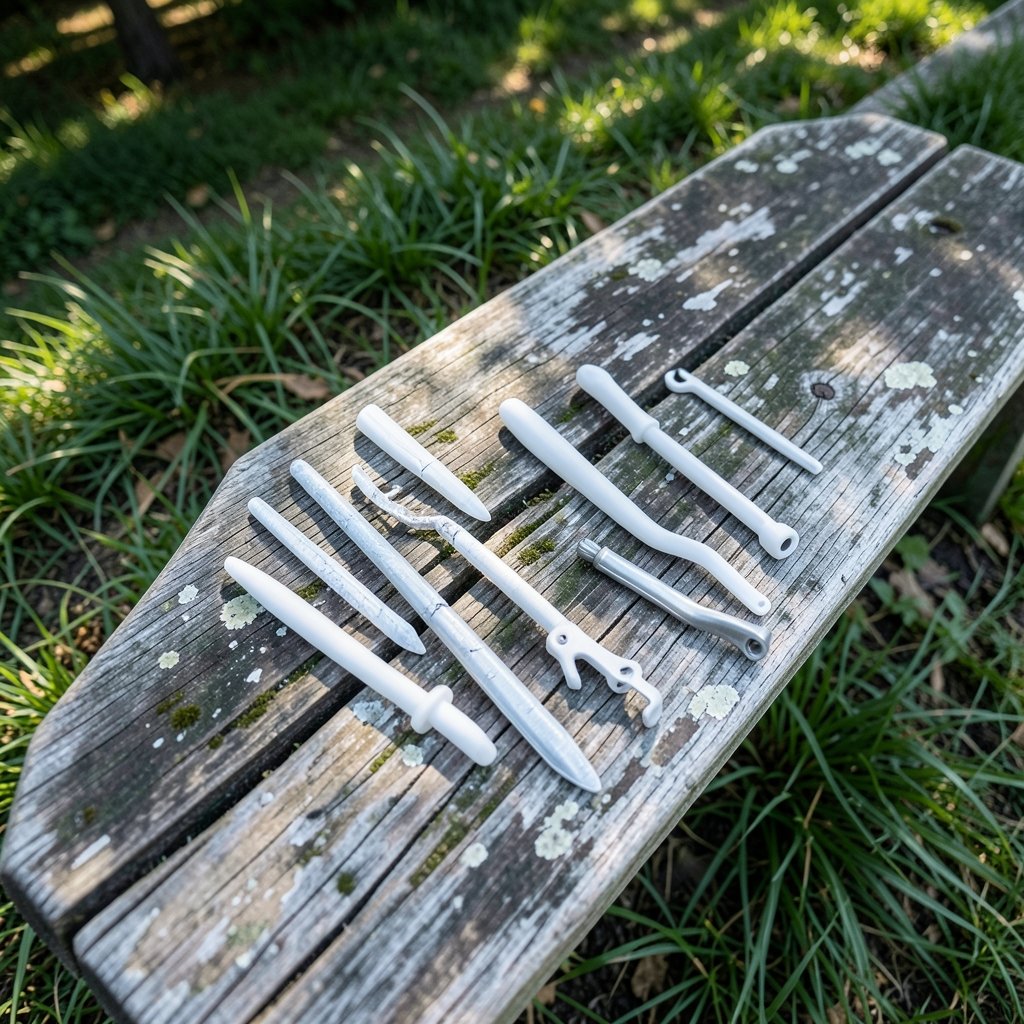
This is the headline difference, and it is not a small one. Outdoor-rated profiles, siding, and automotive trim are routinely made from ASA for exactly this reason. Parts printed in ABS and left outside tend to degrade within months in strong sun, while ASA parts can hold color and mechanical strength for years.
| Property | ABS | ASA |
|---|---|---|
| UV resistance | Poor to moderate | Excellent |
| Color stability outdoors | Fades and yellows | Holds color well |
| Surface after sun exposure | Chalking, microcracks | Largely unchanged |
| Typical outdoor lifespan | Months in direct sun | Years |
| Acetone smoothing | Works well | Works well |
| General filament cost | Lower | Higher |
| Availability | Very wide | Good but narrower |
For anyone printing garden markers, mailbox numbers, car exterior clips, drone parts, or anything that lives on a balcony, this table settles the argument quickly. Indoors, the gap barely matters. Outdoors, it is the whole ballgame.
Print Settings: Similar but Not Identical
Here is the good news: if a printer handles ABS, it can almost certainly handle ASA. Both need a hot nozzle, a hot bed, and an enclosed chamber. The differences are small but worth respecting.
Temperature Ranges
Most manufacturers list nozzle temperatures somewhere in the 230 to 260 °C band for both materials, with beds around 90 to 110 °C. Always check the spool or the vendor datasheet, because specific grades vary. A common practical starting point looks like this:
- Set the nozzle to 250 °C for ABS and 255 °C for ASA, then adjust in 5 °C steps based on layer adhesion.
- Heat the bed to 100 °C for both, with an adhesive helper if the first layer struggles.
- Close the enclosure and let chamber temperature climb to roughly 40 to 50 °C before starting.
- Print cooling fans low, often 0 to 20 percent, to protect layer bonding.
- Slow the outer perimeter to about half the default speed for a cleaner surface.
Warping Behavior
Both materials shrink as they cool, and both will lift off the bed if given a chance. Community experience generally rates ASA as slightly more forgiving, though this is anecdotal and grade-dependent. Neither is a beginner-friendly open-frame material. A draft-free enclosure is not optional for large parts.
Fumes and Ventilation
Both filaments release styrene and other volatile organic compounds while printing. ABS emissions have been studied more thoroughly, but there is no good basis for calling ASA a low-emission material. Treat both the same way: print in a ventilated space, use an enclosure with carbon filtration if possible, and keep printers out of bedrooms and kitchens. Anyone sensitive to smells will notice the difference between these materials and PLA immediately.
Mechanical Properties and Where Each Wins
ABS generally takes the edge on raw impact strength and elongation at break. It bends further before snapping, which is why it dominated tough housings for decades. ASA tends to be a touch stiffer and holds its properties better after weathering.
That distinction matters in practice. A part that is tough on day one but brittle after a summer outdoors is not really tough. ASA’s advantage is that its numbers stay closer to the datasheet after UV exposure, while ABS numbers drift downward.
For indoor functional parts, brackets, enclosures, and prototypes, ABS is often the smarter buy. It costs less, comes in more colors from more suppliers, and prints with well-understood behavior. For anything that sees sun, rain, or temperature cycling, ASA earns its premium.
Post-Processing: Acetone Works on Both
Acetone vapor smoothing dissolves the surface of both plastics, leaving a glossy, injection-molded look. The technique is identical in principle: suspend the part in a sealed container with a small amount of acetone, watch it closely, and pull it out before details soften. ASA often needs slightly different exposure time, so test on a scrap print first.
Other finishing options carry over too. Both sand well, accept filler primer, and take paint nicely. Neither is food safe, and neither should be used for anything that contacts hot food or prolonged skin contact without proper certification.
Cost, Availability, and Practical Buying Advice
ABS wins on price and shelf presence. Almost every filament brand stocks it in a wide color range, and it is often one of the cheapest engineering plastics on the shelf. ASA sits a step above, with fewer colors and fewer budget options, though the selection has grown considerably as outdoor printing has become popular.
A sensible approach for a workshop that uses both:
- Keep a spool of ABS for indoor jigs, prototypes, and cheap iteration.
- Keep a spool of ASA in a neutral color for anything that lives outside.
- Store both in sealed containers with desiccant, since both absorb moisture and print poorly when damp.
- Dry spools at around 70 to 80 °C for four to six hours before a critical print.
Common Mistakes That Ruin Prints
Even experienced printers stumble when switching between these two materials. A few traps come up again and again.
Printing ASA too cold. People carry over ABS profiles and wonder why layers delaminate. ASA often wants a little more heat, not less.
Skipping the enclosure. Both materials warp, and large flat parts will curl without still, warm air around them. A cardboard box over an open-frame printer is a hack, not a solution.
Ignoring the smell. Styrene fumes are a real consideration. Ventilation and filtration are part of the process, not an afterthought. Government workplace safety resources on chemical exposure, such as OSHA’s styrene guidance, are worth a read if printing is a daily activity.
Expecting ABS to survive outdoors. This is the most expensive mistake. A part that took eight hours to print can degrade in a single season of direct sun. If the part will live outside, choose ASA from the start.
Assuming ASA is unbreakable. It is weather-resistant, not indestructible. Thin walls and poor layer bonding will fail in ASA just as fast as in ABS.
How the Two Compare for Specific Projects
Different jobs pull the decision in different directions. A quick project-based view helps.
| Project type | Better choice | Why |
|---|---|---|
| Indoor brackets and jigs | ABS | Cheaper, widely available, plenty strong |
| Outdoor signage and house numbers | ASA | Holds color and strength in sun |
| Car exterior trim and clips | ASA | UV and heat resistance matter |
| Prototypes for fit checks | ABS | Low cost, fast iteration |
| Garden and marine fixtures | ASA | Moisture and UV exposure |
| Enclosures with snap fits | ABS | Higher elongation helps clips flex |
The pattern is clear. Indoor and cost-sensitive work leans ABS. Outdoor and longevity-focused work leans ASA.
Environmental and Health Considerations
Both materials are petroleum-based thermoplastics. Neither is biodegradable, and both should be recycled through proper channels where available. Printing releases ultrafine particles and VOCs, a topic covered in depth by research institutions and agencies such as the EPA’s indoor air quality resources, which explain why ventilation matters for any indoor printing setup.
There is no strong evidence that ASA is meaningfully safer to print than ABS. The acrylate rubber is more UV-stable, not necessarily less emissive. Anyone claiming otherwise should be asked for a source. The safe assumption is that both deserve respect: ventilate, filter, and keep distance from living spaces. (UL Solutions)
Which One Should Most People Buy?
For a hobbyist printing indoor parts, ABS is the practical default. It is cheap, familiar, and well supported by every slicer profile library. For anyone printing outdoor parts, garden items, automotive pieces, or anything that will sit in a window, ASA is worth the extra money. The cost difference per part is small compared to the cost of reprinting something that failed in the sun.
A balanced workshop eventually keeps both on the shelf. They share nozzles, enclosures, and post-processing supplies, so the overhead of stocking two materials is low. The real decision is simply matching the plastic to the environment the part will live in.
Conclusion
The ASA vs ABS filament question comes down to where the printed part will spend its life. Both are styrenic thermoplastics that print hot, warp readily, smell strongly, and smooth beautifully with acetone. ABS is cheaper, tougher in the short term, and available everywhere. ASA costs more but resists UV light, holds its color, and keeps its mechanical properties far longer outdoors.
Choose ABS for indoor prototypes, jigs, and cost-sensitive projects. Choose ASA for anything that faces the sun. Skip the enclosure and ventilation at your own risk with either material. Get those basics right, and both plastics will reward you with strong, good-looking parts that hold up to real use.
Frequently Asked Questions
Is ASA stronger than ABS?
Not in raw impact tests. ABS usually shows higher impact strength and elongation, meaning it bends further before breaking. ASA’s advantage is that it keeps more of its strength after UV and weather exposure, so over time it can outperform ABS outdoors.
Can I print ASA with ABS settings?
Often yes, as a starting point. Both print in roughly the 230 to 260 °C nozzle range with a heated bed near 90 to 110 °C and an enclosure. ASA sometimes needs slightly higher nozzle temperatures for good layer adhesion, so run a small test print before committing to a long job.
Does ASA warp less than ABS?
Many printers report that ASA warps slightly less, but this is anecdotal and depends heavily on the specific grade, part geometry, and chamber conditions. Neither material is warp-free. An enclosure, a hot bed, and good first-layer adhesion matter more than the choice between the two.
Is ASA filament safe to print indoors?
Neither ASA nor ABS should be printed in poorly ventilated living spaces. Both release styrene and other VOCs along with ultrafine particles. Use an enclosure with filtration where possible, open windows, and keep printers out of bedrooms and kitchens.
Why is ASA more expensive than ABS?
ASA uses a more specialized acrylate rubber phase and is produced in smaller volumes for a narrower market. ABS has decades of mass production behind it across countless applications, which keeps its price low and its color selection wide.
Can I use acetone smoothing on ASA?
Yes. Acetone vapor smoothing works on ASA much as it does on ABS, leaving a glossy surface. Exposure times may differ slightly, so test on a scrap piece first and watch the part closely to avoid softening fine details.



