
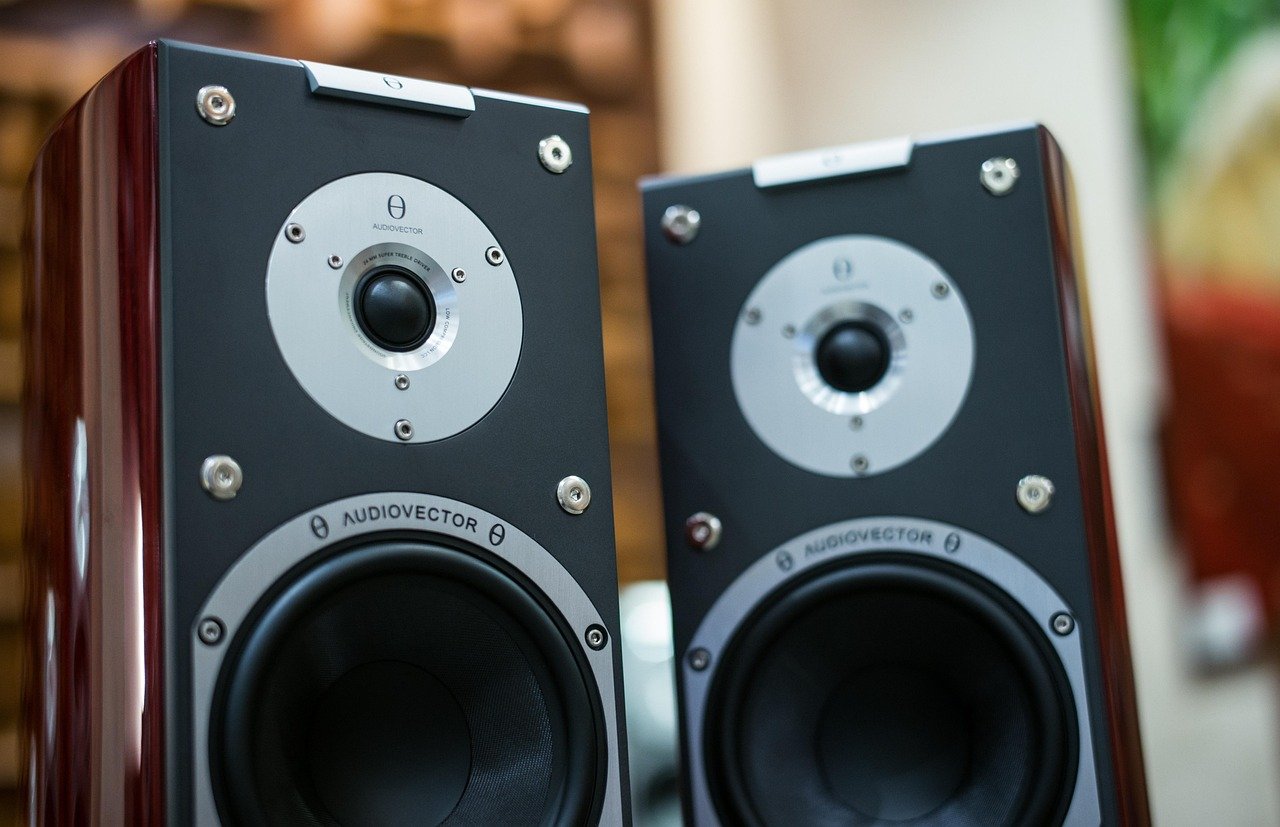
Ever sat dead center between two speakers and felt the singer hovering just above the left one, as if the whole band had drifted sideways? That strange, lopsided picture is often a toe-in problem, not a speaker problem. Angling the cabinets inward by just a few degrees can pull a voice back to the middle, sharpen the edges of instruments, and make a modest system sound suddenly expensive.
This guide covers what speaker toe-in actually does, how to set it by ear and by measurement, and the mistakes that quietly wreck the effect. No golden angle exists that works in every room, but a repeatable process does.
What Speaker Toe-In Actually Means
Toe-in is the inward rotation of a loudspeaker so its front baffle points partly toward the listening position rather than straight ahead. A speaker firing parallel to the side walls is “zero toe-in.” Swing it inward 15 degrees and it has 15 degrees of toe-in. Simple enough on paper.
What makes it interesting is what happens to the sound reaching the listener’s ears. Most speakers are designed so their flattest, most accurate response happens directly on the tweeter axis, called the on-axis response. Step a few degrees off that axis and the sound changes: the top octaves usually soften first, and the balance shifts slightly darker or warmer.
Toe-in is the tool that controls how much on-axis sound versus off-axis sound reaches the ears. It also changes the timing and level of sound arriving at each ear, which is exactly the information the brain uses to place instruments in space. That is why a small rotation can feel like a large change in imaging.
Why Toe-In Changes What You Hear
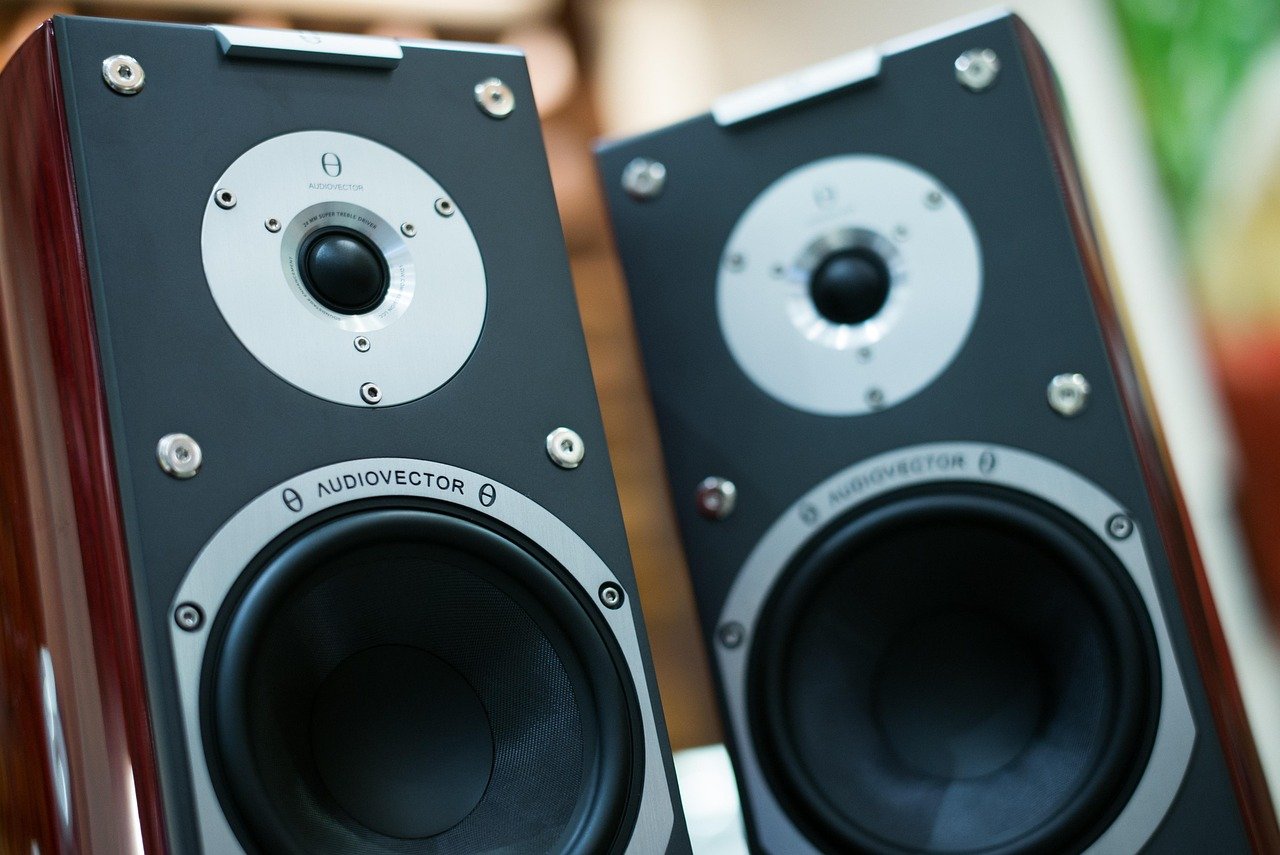
Three effects happen at once when speakers are angled inward.
First, treble balance. Aiming the tweeters more directly at the listener raises the perceived high-frequency energy. Speakers that sound dull and closed-in often snap into focus with a bit more toe-in. Speakers that already sound bright and forward can become harsh with too much. (Best smart speakers for home automation)
Second, center image stability. With zero toe-in, the phantom center between the speakers can feel vague or hollow, because each ear hears a lot of the opposite speaker’s off-axis output. Angling both cabinets inward strengthens the shared center signal and locks a vocalist in place.
Third, sweet spot size. The more the speakers point at one seat, the narrower the region where the image stays coherent. Toe them in hard and the center chair sounds fantastic while the adjacent seat sounds off. This is the core trade-off, and it explains why home-theater setups and single-listener music rooms often want different angles.
There is no single industry standard for toe-in angle. Recommendations vary with tweeter design, waveguide shape, listening distance, and room reflections. Treat any fixed number as a starting point, not a rule.
Start With the Basics Before You Rotate Anything
Toe-in only works if everything upstream is right. Fix these first, because rotating speakers in a bad setup just rearranges the problems.
- Set the distance to the front wall. Most speakers need breathing room behind them. Too close and bass turns boomy and the midrange gets thick.
- Build an equilateral triangle. The distance between the two speakers should roughly match the distance from each speaker to the listening position. This is the most common baseline for stereo.
- Keep the tweeters near ear height. A few degrees of vertical tilt matters less than people think, but a big height mismatch skews the treble.
- Clear the path. A coffee table, a monitor, or a sofa arm in front of the drivers scatters reflections and blurs imaging no amount of toe-in can fix.
- Check symmetry. If one speaker sits near a side wall and the other does not, the two will never image identically.
If the room doubles as a living space and the layout is tight, it is worth reviewing broader placement advice, such as this guide to the best place to live for room-friendly setups, before committing to a furniture rearrangement for the sake of a few degrees. (Loudspeaker)
A Practical Toe-In Method That Works by Ear
This process takes about twenty minutes and needs one well-recorded track with a strong, centered lead vocal. Acoustic music with a single singer works best because a misplaced center is instantly obvious.
Step 1: Start at zero
Point both speakers straight ahead, parallel to the walls. Sit in the main seat and listen. Note where the vocal sits and how wide the stage feels. Many listeners are surprised that zero toe-in sounds wide but fuzzy.
Step 2: Angle both speakers in small increments
Rotate each cabinet inward by roughly 10 degrees, keeping the angle identical on both sides. Use a tape measure from the rear corners to the wall, or a phone angle app, so both speakers match. Listen again. The center should tighten.
Step 3: Keep going until the center locks
Add another 5 to 10 degrees and listen. At some point the vocal snaps into a solid, well-defined point in the middle. That is usually close to the right amount.
Step 4: Find the point where it goes too far
Keep rotating inward until the soundstage collapses toward the middle and the treble turns glassy or aggressive. Now you know both edges of the usable range. Back the speakers off to a position between “locked” and “too far.”
Step 5: Fine-tune with a mono check
Play a mono recording, or sum a stereo track to mono if the source allows. In mono, the entire image should collapse to a single tight point in the center. If it smears or drifts, the speakers are not matched in angle or distance.
Step 6: Live with it for a few days
Ears adapt fast. A setting that sounds dramatic on day one can feel fatiguing by day three. Give it time before deciding.
Where Most People Get Toe-In Wrong
A few mistakes show up again and again, and each one costs more sound quality than the angle itself.
Matching by eye instead of by measurement. Rooms are rarely symmetrical, and a speaker’s visual angle is deceptive. Measure from a fixed reference point on each cabinet to the wall behind it. A difference of two or three degrees between left and right is enough to pull the center image off to one side.
Chasing a wide stage at the expense of a solid center. Wide, diffuse staging sounds impressive for about a minute. Most listeners eventually prefer a locked-in center with slightly less width.
Ignoring the first reflection points. The side walls, floor, and ceiling bounce sound back at the listener a few milliseconds after the direct sound. Heavy toe-in can reduce side-wall energy, but it cannot fix a bare, reflective room. A rug, curtains, and a bookshelf do more than another five degrees of rotation.
Over-toeing bright speakers. If a speaker already leans bright, extra toe-in pushes it further. Try less angle and a touch of absorption at the first reflection instead.
Forgetting the subwoofer or center channel. In a surround system, the front left and right toe-in should serve the center channel, not fight it. If dialogue sounds disconnected from the screen, reduce the toe-in slightly.
Assuming one setting fits every seat. If two people share the couch, split the difference. Aim the speakers so their axes cross slightly in front of the middle seat rather than directly at one listener.
Toe-In for Music Versus Movies
The right angle depends on what the system does most. Here is how the priorities differ.
| Use case | Typical starting toe-in | Main goal | Watch out for |
|---|---|---|---|
| Two-channel music, one listener | 15 to 30 degrees inward | Sharp center image and precise instrument placement | Narrow sweet spot |
| Two-channel music, multiple listeners | 5 to 15 degrees inward | Wide, even stage across a couch | Softer center focus |
| Home theater with a center channel | 10 to 20 degrees inward | Smooth blend with the center speaker | Dialogue that sounds detached |
| Nearfield desktop setup | 10 to 20 degrees inward | Stable imaging at short distance | Desk reflections smearing the treble |
| Large, lively room | Less toe-in, more treatment | Control reflections first | Brightness from side walls |
For desktop and nearfield listeners, the same principles apply but the distances shrink, so small angle changes matter more. Anyone building a compact setup around powered monitors may find that speaker choice and angle interact strongly; a look at the best bookshelf speakers for small rooms helps set realistic expectations before chasing degrees.
How to Measure Toe-In Without Special Gear
Precision helps, but a full measurement rig is optional. Three cheap approaches cover most needs. (Antennas and Digital Television)
- String method. Tie a string from each tweeter to the listening position and compare the angles. Equal angles mean matched toe-in.
- Laser pointer. Tape a laser to the top of each cabinet, pointed at the wall behind the listening seat. Mark both spots. Symmetrical marks mean symmetrical angles.
- Phone angle app. Place the phone flat against each front baffle and read the angle. Repeatable enough for fine-tuning.
For anyone who wants data, a measurement microphone and free room-analysis software will show the on-axis and off-axis response directly. Look for a smooth, gently sloping treble rather than a jagged one. Peaks around 2 to 5 kHz often explain why a speaker sounds harsh with heavy toe-in.
When Toe-In Is the Wrong Fix
Toe-in is a balance tool, not a cure-all. It will not fix boomy bass, a hollow midrange from a bad room mode, or a speaker placed in a corner. It also cannot compensate for a listening position jammed against the back wall, where reflections arrive almost simultaneously with the direct sound and smear everything.
If the sound improves with toe-in but still feels congested, the problem is likely the room or the speaker-listener geometry, not the angle. Move the seat, move the speakers, or add absorption before rotating further.
Conclusion
Speaker toe-in is one of the cheapest upgrades in audio: no new gear, no cables, just a careful rotation and a patient ear. Start at zero, angle inward in small matched steps, find the point where the center image locks, then back off slightly so the sound stays natural over long listening sessions. Measure both sides, check with a mono track, and give yourself a few days to judge the result.
The exact number matters far less than the process. A room-tuned 12 degrees will beat a copied 22 degrees every time. Get the basics right, treat the first reflections, and let the angle serve the music rather than a rule of thumb.
Frequently Asked Questions
How much toe-in should speakers have?
Most rooms land somewhere between 10 and 30 degrees of inward rotation, but there is no universal number. Start with the speakers parallel to the wall, rotate both inward in 5 to 10 degree steps, and stop where the center vocal locks into place without the treble turning harsh.
Does toe-in make speakers sound brighter?
Yes, usually. Angling the tweeters more directly at the listener increases the on-axis high-frequency energy reaching the ears. Speakers that sound dull often benefit, while already-bright speakers can become fatiguing with too much toe-in.
Should both speakers be toed in at the same angle?
They should, and measuring matters more than eyeballing. A mismatch of just a few degrees between left and right pulls the phantom center off to one side and muddies the stereo image. Use a string, a laser, or a phone angle app to confirm both cabinets match.
Is toe-in good for home theater?
It depends on the center channel. Moderate toe-in of roughly 10 to 20 degrees usually blends the front left and right speakers smoothly with the center. Too much toe-in can make dialogue sound disconnected from the screen, so adjust until the front stage feels continuous.
Does toe-in reduce the sweet spot?
Yes. The more the speakers aim at one seat, the narrower the area where the stereo image stays coherent. Listeners who share a couch should use less toe-in and accept a slightly softer center in exchange for a wider usable area.
Can toe-in fix boomy bass or a muddy midrange?
No. Toe-in mainly shapes treble balance and stereo imaging. Boomy bass usually comes from speaker placement near walls or room modes, and a muddy midrange often points to early reflections. Fix placement and room treatment first, then fine-tune the angle.



