When was the last time anyone in your household actually looked at the transmission fluid? For most drivers, the answer is either “never” or “the mechanic handles it.” Yet this one dipstick check can reveal a slipping gearbox, an overheating unit, or a slow leak long before those problems turn into a four-figure repair bill. The catch is that checking transmission fluid is not quite as simple as pulling a dipstick and glancing at it. The procedure changes with the vehicle, the engine state matters, and the color you see can mean several different things.
This guide walks through the whole process the way a careful owner would do it: safely, with the manual open, and with a realistic idea of what the results mean.
Why Transmission Fluid Deserves a Regular Look
Transmission fluid does three jobs at once. It lubricates moving parts, it carries heat away from the gearbox, and in automatic units it also acts as the hydraulic medium that makes shifts happen. When the level drops or the fluid breaks down, all three jobs suffer together.
A low level can cause delayed engagement, slipping between gears, or shuddering at highway speed. Fluid that has overheated loses its friction properties, which can make shifts harsh or mushy. Left alone, these symptoms tend to accelerate: heat degrades fluid, degraded fluid creates more heat and wear, and the cycle tightens until something expensive fails.
Checking the fluid is cheap and takes minutes. It will not catch every problem, but it catches the common ones early, which is exactly when they are still cheap to fix.
Read the Owner’s Manual First, Always
Here is the single most important rule, and it is the one people skip: the owner’s manual overrides every general instruction on the internet, including this article. Transmission designs vary enormously. Some are checked with the engine running and warm. Some are checked cold. Some have no dipstick at all. Some require a scan tool and a specific fluid temperature before the level can even be read.
The manual tells you four things you need:
- Whether your vehicle has a user-accessible dipstick.
- Whether the engine should be running or off during the check.
- Whether the gear selector should be in Park or Neutral.
- Which fluid specification the transmission requires.
That last point matters more than most drivers realize. Automatic transmission fluid is not a generic commodity. Manufacturers publish their own specifications, and the industry standards behind those fluids are maintained by bodies such as SAE International’s standards program, which publishes and coordinates many of the engineering specifications that vehicle fluids are built against. Pouring in the wrong specification can cause shifting faults or internal damage that no amount of topping up will fix. (Vehicle safety and maintenance resources (NHTSA))
Gather What You Need Before You Start
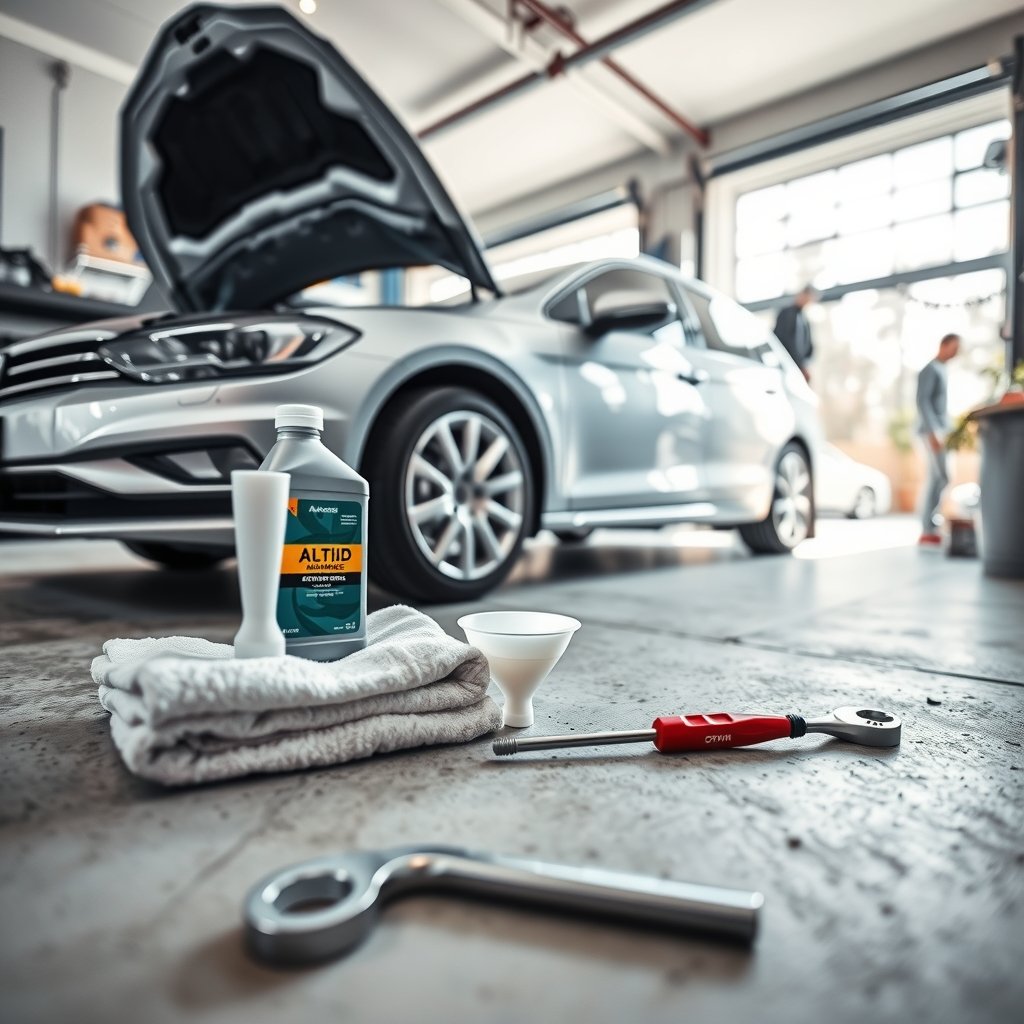
A transmission fluid check needs very little equipment, but missing one item usually means a second trip or a messy mistake.
| Item | Why it matters |
|---|---|
| Owner’s manual | Defines the procedure and fluid spec |
| Clean lint-free cloth or paper towels | Wipe the dipstick so the reading is clear |
| Funnel (for top-ups) | Prevents spills down the engine bay |
| Correct-spec fluid | Wrong fluid can cause shift faults |
| Flashlight | Helps read the level on a dirty dipstick |
| Gloves | Hot fluid and hot metal are both unpleasant |
Two practical notes from experience. First, keep a dedicated funnel for transmission fluid only; cross-contamination between fluid types is a real risk. Second, never top up with a bottle that has been sitting open in a garage for years. Fluid picks up moisture and contamination, and “almost the right stuff” is worse than waiting a day to buy the correct bottle.
Step-by-Step: Checking an Automatic Transmission With a Dipstick
Most vehicles with a traditional dipstick follow a similar sequence. Confirm each step against the manual before doing it.
- Park on level ground. A sloped driveway throws off the reading by a surprising margin. Even a slight incline can make a full transmission read low or vice versa.
- Warm the fluid to normal operating temperature. Drive for fifteen to twenty minutes, including some stop-and-go traffic. Checking cold gives only a rough indication, because fluid expands as it heats.
- Leave the engine running if the manual says so, which is the common instruction for automatics. The transmission pump needs to be circulating fluid for an accurate level.
- Shift through the gears slowly, pausing briefly in each position, then return to Park or Neutral as specified. This fills the hydraulic circuits so the reading reflects real operating conditions.
- Pull the dipstick, wipe it clean, reinsert it fully, and pull it again. The first pull only tells you the tube is wet. The second pull gives the true level.
- Read against the correct range. Most dipsticks have a cold range and a hot range. After a proper warm-up, use the hot range.
- Wipe the dipstick before reinserting it for good. Grit left on the stick ends up in the fluid.
A common mistake here is checking the level immediately after shutting the engine off. On many transmissions that reads high, because fluid drains back from the cooler and lines. Another is checking on a cold engine and then adding fluid to reach the hot mark, which leads directly to overfilling.
What the Fluid’s Color and Smell Are Telling You
Level is only half the story. Condition matters just as much, and the dipstick gives you a free sample every time.
Fresh automatic transmission fluid is typically reddish and translucent. As it ages, it darkens toward brown. Very dark brown or black fluid, a burnt smell, or visible particles or grit on the cloth all point to overheating or internal wear.
But color alone is not a reliable diagnosis, and this is where a lot of internet advice goes wrong. Some modern fluids, including certain continuously variable transmission (CVT) fluids and newer synthetics, are not red at all. They may be amber, green, or nearly clear when new. Judging them by the “should be red” rule produces false alarms. Judge condition against what the fluid looked like when new, and against the smell, which is a more consistent signal than hue.
If the fluid smells burnt, the transmission has likely been running hot. Topping up will not fix that. It needs a proper diagnosis, because burnt fluid is a symptom, not the disease.
Overfilling Is a Real Risk, Not a Myth
Drivers tend to think more fluid equals more protection. The opposite is closer to the truth. Excess fluid gets churned by the rotating parts, aerates into foam, and foam does not lubricate or transmit hydraulic pressure properly. The result can be erratic shifting, slipping, and in severe cases seal damage from increased pressure.
The fix is simple: add fluid in small increments, recheck after each one, and never fill above the hot range’s upper mark. If the dipstick reads above the top mark, the correct move is to have some fluid drained rather than to hope it sorts itself out.
Vehicles Without a Dipstick: Sealed and “Lifetime” Units
Many modern vehicles have no transmission dipstick at all. The unit is sealed, and the manufacturer may describe the fluid as “lifetime” or “filled for life.” This design trend became widespread from roughly the 2000s onward, and it creates genuine confusion.
The disagreement is real and worth stating plainly. Manufacturers often define “lifetime” loosely, sometimes as the expected life of the transmission under normal use, and rarely in miles. Independent mechanics frequently argue that no fluid lasts indefinitely and that a fluid service at a sensible interval extends transmission life. Neither position is settled, and the definitions vary by brand.
What this means in practice: if there is no dipstick, do not try to invent one. There is usually a check plug or a dealer-level procedure involving a scan tool and a specific fluid temperature. On those vehicles, the honest answer is that the check belongs with a professional or requires the exact procedure in the manual. Attempting a guesswork check on a sealed unit risks underfilling it, which is far worse than leaving it alone. (Coffee Grinder Burr Alignment: Why It Matters & How to Check)
Manual Transmissions Work Differently
Manual gearboxes usually skip the dipstick entirely. Many have a fill plug on the side of the gearbox, and the level is correct when fluid just reaches the bottom edge of the fill hole with the vehicle level. If nothing trickles out when the plug is removed, the level is low. If a steady stream pours out, it has been overfilled.
This check requires the car to be safely raised and supported, so it is a job for someone comfortable working under a vehicle. The fill plug should always be loosened before the drain plug on any gearbox service, because a fill plug that will not budge after the fluid is drained turns a routine job into a stuck car.
How Often Should You Check?
There is no universal interval, but a sensible routine works for most drivers:
- Check the level and condition at every oil change, or roughly every 5,000 to 7,500 miles.
- Check before any long road trip, especially if towing or carrying heavy loads.
- Check immediately if you notice slipping, delayed engagement, shuddering, or fluid spots under the car.
A fluid check is not the same as a fluid change. Replacement intervals are set by the manufacturer and vary widely, from around 30,000 miles on some vehicles to well over 100,000 on others. Checking tells you the current state; the manual tells you when to replace.
Common Mistakes That Undo a Good Check
Even careful owners trip over the same handful of errors:
- Checking on a slope. Level ground is not optional.
- Reading the dipstick only once. The first pull is always misleading.
- Using the cold range after a warm-up. Use the hot range once the fluid is at temperature.
- Adding fluid before confirming the level is actually low. Diagnose first, pour second.
- Mixing fluid specifications. “Universal” fluid is a marketing phrase, not a guarantee.
- Ignoring a burnt smell because the color looks fine. Smell often flags trouble earlier than color.
The broader principle applies to any maintenance task: verify before you act. It is the same discipline behind guides like checking whether an APK file is safe before installing it, or checking which apps have access to your Google account before trusting them with data. Confirm the facts, then make the change.
When to Stop and See a Professional
Some findings should end the DIY session immediately. Dark, burnt-smelling fluid, metal particles on the dipstick, a persistent low level with no visible leak, or any slipping under load all point to internal problems that a top-up cannot solve. A transmission that is low on fluid is often leaking somewhere, and finding that leak is a job for a lift and a trained eye.
Similarly, if the manual describes a procedure you cannot safely follow, such as checking fluid temperature with a scan tool, that is a signal rather than an obstacle. Paying for a proper check is cheaper than paying for a transmission.
Conclusion
Checking transmission fluid is one of the highest-value minutes in car ownership, but only when it is done properly. The manual sets the procedure, level ground and a warm engine make the reading trustworthy, and the fluid’s color and smell tell you as much as the level itself. Overfilling is a genuine hazard, sealed units demand respect rather than improvisation, and a burnt smell means stop, not top up.
Do it at every oil change, note what you see, and act on changes early. A transmission that gets regular attention rarely surprises its owner, and the drivers who check are the ones who avoid the roadside call.
Frequently Asked Questions
Do you check transmission fluid with the engine running?
On most automatic transmissions with a dipstick, yes. The engine should be running so the pump is circulating fluid, and the fluid should be warm. Some vehicles specify engine off, and some specify Neutral rather than Park. The owner’s manual settles it for your specific vehicle.
What color should transmission fluid be?
Fresh automatic transmission fluid is typically reddish and translucent, darkening toward brown as it ages. However, some CVT and newer synthetic fluids are amber, green, or nearly clear when new, so color alone is unreliable. A burnt smell or visible particles are stronger warning signs than hue.
Can you check transmission fluid when the engine is cold?
You can get a rough indication, but not an accurate one. Fluid expands as it warms, and most dipsticks have a separate cold range for exactly this reason. For a reading you can trust, drive for fifteen to twenty minutes first and read against the hot range.
What happens if you overfill transmission fluid?
Excess fluid gets churned into foam, which lubricates poorly and transmits hydraulic pressure inconsistently. The result can be slipping, harsh or erratic shifting, and in severe cases seal damage. Add fluid in small amounts and recheck after each one.
Why does my car not have a transmission dipstick?
Many modern vehicles use sealed transmissions with no user-accessible dipstick, often described as having “lifetime” fluid. Checking these usually requires a specific procedure involving a check plug or a scan tool and a target fluid temperature. Manufacturers define “lifetime” differently, and the debate over whether the fluid truly lasts is unresolved.
Is checking transmission fluid the same as changing it?
No. Checking the level and condition is routine maintenance that takes minutes. A fluid change is a separate service with an interval set by the manufacturer, and those intervals vary widely between models. Checking tells you the current state; the manual tells you when replacement is due.