
Quick Answer: When did michael jackson die?
Michael Jackson died on June 25, 2009, at a rented home in the Holmby Hills area of Los Angeles. He was 50 years old. He was pronounced dead that afternoon at Ronald Reagan UCLA Medical Center after paramedics brought him there from his residence.
The death was not treated as a simple natural event. The Los Angeles County Coroner later ruled the cause to be acute propofol intoxication, with sedatives called benzodiazepines listed as contributing factors, and classified the manner of death as a homicide. That finding shaped everything that followed, including a criminal case against Jackson’s personal physician.
The exact moment of death is not precisely known, and the widely quoted 2:26 p.m. figure refers to the time he was pronounced dead, not necessarily the time he died. Anyone researching the case should separate four things that are often blended together: the date of death, the time of pronouncement, the official cause, and the later legal outcome.
The Day Itself: June 25, 2009
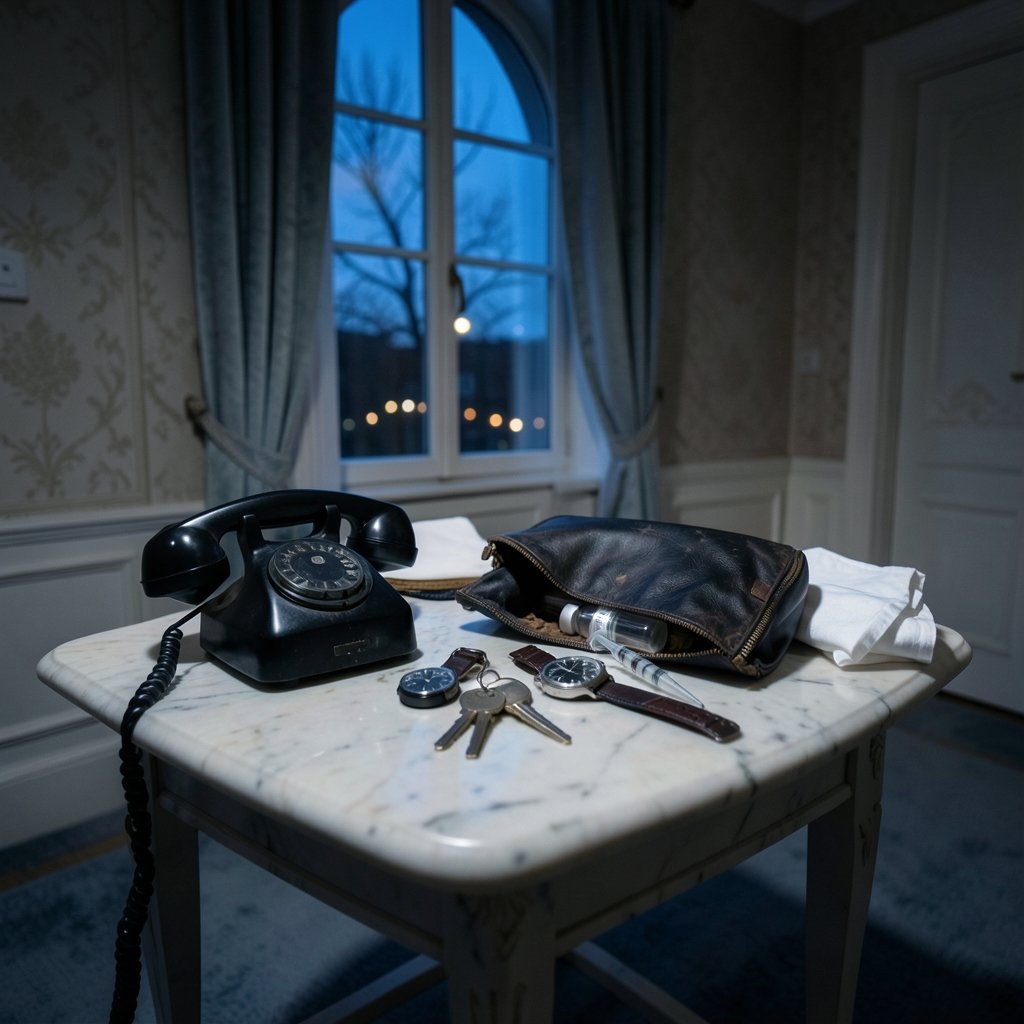
The question “when did Michael Jackson die” has a clean, single answer: June 25, 2009. But the day itself was messy and confusing in real time, and that confusion is why so many rumors started.
Jackson was in Los Angeles preparing for a comeback. He had been rehearsing for a series of concerts announced for London. On the morning of June 25, according to the timeline later assembled by investigators, he was at the Holmby Hills house and was given drugs by his physician, including propofol, a strong anesthetic normally used in operating rooms with full monitoring.
He was found unresponsive. A 911 call was placed at roughly 12:21 p.m. Paramedics arrived, worked on him at the house, and then transported him to UCLA Medical Center. He was pronounced dead at approximately 2:26 p.m. Pacific Daylight Time. (National Center for Health Statistics)
The news broke in a strange sequence. A celebrity website reported he had been taken to the hospital. Then major outlets confirmed he had died. Then, briefly, some reports wavered. For a few hours, fans and even some newsrooms were unsure what was true. By the evening of June 25, the fact was fixed: Michael Jackson was dead at 50.
One practical lesson from that day: when a major death happens, early reports are often wrong in detail even when the headline is right. The reliable markers to look for are confirmation from a hospital, a coroner, or a family representative, not a single unnamed source.
The Medical Cause and the Coroner’s Findings
The official cause of death was acute propofol intoxication. The coroner’s report, released publicly on August 28, 2009, listed benzodiazepines, including lorazepam, midazolam, and diazepam, as contributing factors. The manner of death was ruled a homicide.
Propofol is a fast-acting intravenous anesthetic. In a hospital, it is given by trained anesthesia professionals while the patient’s breathing and heart rhythm are monitored. It is not a sleep aid for home use. Giving it outside a properly equipped setting, without airway support and monitoring, is extremely dangerous. That is the core of why the coroner’s office treated the death as a homicide rather than an accident.
The distinction between “cause” and “manner” trips up a lot of readers. Cause is the medical reason the body stopped working. Manner is the classification of how that cause came about, such as natural, accidental, suicide, or homicide. In this case, the cause was drug intoxication and the manner was homicide.
It is worth being precise about what “homicide” means in a coroner’s report. It does not mean a jury has convicted anyone, and it does not automatically mean a crime was proven. It means the death resulted from the actions of another person. Whether those actions were criminal is a separate legal question decided later in court.
The Conrad Murray Case: From Death to Verdict
Jackson’s personal physician, Conrad Murray, was with him at the house on June 25, 2009. Murray became the central figure in the criminal investigation.
Murray was charged with involuntary manslaughter. The trial in Los Angeles drew enormous attention because it laid out, in detail, the drugs given and the monitoring that was not in place. On November 7, 2011, a jury convicted Murray of involuntary manslaughter. On November 29, 2011, he was sentenced to four years in county jail. He ended up serving roughly two years.
For readers who want to trace the case beyond the headlines, the broader legal concept at stake is involuntary manslaughter, which generally covers an unintentional killing caused by criminal negligence or reckless conduct rather than intent to kill. That legal distinction explains why the case was not charged as murder.
The trial also produced a public record of the timeline inside the house, the drugs involved, and the phone records that put Murray’s attention elsewhere during a critical window. If you are researching the case for a school project or an article, court testimony and the coroner’s report are far more reliable than retrospective documentaries, which often compress and dramatize the sequence of events.
The Public Memorial and Global Reaction
On July 7, 2009, a public memorial was held at the Staples Center in Los Angeles. It was broadcast around the world and drew massive online audiences. Performers and family members spoke and sang. The event became a cultural moment as much as a funeral.
The scale of the reaction is part of the answer to why this date is so widely searched. Jackson’s death hit at the start of the social media era, when news could spread globally in minutes but verification could not keep up. That combination produced an unusual mix of genuine mourning, rumor, and conspiracy theorizing that has never fully faded.
Fans still gather around the anniversary each June. Tributes, retrospectives, and renewed streaming numbers appear every year. The date has become a fixed reference point in pop culture, the way a handful of other deaths have.
Why the Exact Time of Death Is Still Fuzzy
People often ask for the exact minute as well as the date. Here is where honesty matters: nobody can state the precise time of death with certainty.
The commonly cited 2:26 p.m. is the time Jackson was pronounced dead at the hospital. That is a medical and legal declaration, not a stopwatch on when his heart stopped. The period between being found unresponsive at the house and arriving at the hospital involved resuscitation attempts, which means the biological moment of death could have occurred earlier.
This distinction matters for two reasons. First, it is a good habit when reading any news story about a death: pronouncement time and time of death are different things. Second, in the Murray case, the timeline of when drugs were administered versus when help was called was a central issue. Precision about time was legally important, not a trivial detail.
A practical tip for anyone writing about this: say “he was pronounced dead at about 2:26 p.m.” rather than “he died at 2:26 p.m.” That phrasing is accurate and avoids overstating what the record shows.
Common Mistakes People Make When Researching This
A few errors show up again and again in articles, school papers, and social posts about Jackson’s death.
The first is conflating the date of death with the date of the memorial or the date of the coroner’s report. June 25, 2009 is the death. July 7, 2009 is the memorial. August 28, 2009 is when the coroner’s findings were released. November 7, 2011 is the Murray conviction. Each date answers a different question.
The second is treating “homicide” as a synonym for “murder conviction.” It is not. The coroner’s classification and the jury’s verdict are separate steps in separate systems.
The third is assuming the death happened at Neverland Ranch or at a hospital. It happened at a rented house in Holmby Hills, and he was pronounced dead at UCLA Medical Center.
The fourth is citing documentaries as if they were primary records. They can be useful for context, but the underlying documents, the coroner’s report and the trial record, are what settle factual disputes.
The fifth, and the one that causes the most confusion, is mixing up the death with the estate battles and the later civil disputes. Those are related stories, but they are not the answer to “when did Michael Jackson die.”
How the Death Fit Into His Career and Legacy
Jackson was 50 when he died, and he was in the middle of a professional comeback. The London concert series was meant to relaunch him after years of legal and financial turbulence. Rehearsal footage later showed him engaged and working, which made the suddenness of the death harder for fans to process.
His influence on pop music, dance, and music video is hard to overstate, and his death prompted a broad reassessment of his catalog. Streaming and sales spiked. Younger listeners who had only known him as a tabloid figure discovered the records. That second life of the music is arguably the largest practical consequence of June 25, 2009.
There is also a cautionary side to the legacy. The death became a case study in the risks of prescription anesthesia drugs outside clinical settings, and it is sometimes cited in discussions of celebrity medicine, where access to strong treatments can outrun safety oversight. That angle is uncomfortable but it is part of why the story still gets taught and analyzed.
For audio fans who end up down a rabbit hole of remastered reissues and playback gear, there is a separate, much less morbid conversation about how to actually hear the records well, including comparisons like usb dac vs headphone jack sound quality power practical, which is a useful read if the music is what brought you here.
Conclusion
Michael Jackson died on June 25, 2009, at age 50, at a rented home in Holmby Hills, Los Angeles. He was pronounced dead at Ronald Reagan UCLA Medical Center at about 2:26 p.m. The coroner ruled the cause as acute propofol intoxication with benzodiazepines as contributing factors, and the manner of death as homicide. His physician, Conrad Murray, was convicted of involuntary manslaughter on November 7, 2011.
The clean date is easy to remember. The details around it are where people go wrong, especially the difference between the time of death and the time of pronouncement, and between a coroner’s homicide ruling and a criminal conviction. Get those distinctions right and you will understand the story better than most of what circulates online.
Frequently Asked Questions
What was Michael Jackson’s age when he died?
He was 50 years old. He was born on August 29, 1958, and died on June 25, 2009, a little over two months before what would have been his 51st birthday.
Where did Michael Jackson die?
He died at a rented house in the Holmby Hills neighborhood of Los Angeles. He was pronounced dead at Ronald Reagan UCLA Medical Center after being transported there by paramedics.
What did the coroner say caused his death?
The cause was acute propofol intoxication, with benzodiazepines listed as contributing factors. The manner of death was ruled a homicide. The findings were made public on August 28, 2009.
Was anyone convicted in connection with his death?
Yes. His personal physician, Conrad Murray, was convicted of involuntary manslaughter on November 7, 2011. He was sentenced on November 29, 2011, to four years and served roughly two.
When was the public memorial held?
The memorial took place on July 7, 2009, at the Staples Center in Los Angeles. It was broadcast globally and drew a huge online audience.
Is the exact time of death known?
Not precisely. The figure usually quoted, about 2:26 p.m., is the time he was pronounced dead at the hospital, not a confirmed moment when his heart stopped. Resuscitation attempts at the house and in the ambulance make the exact biological time uncertain.