
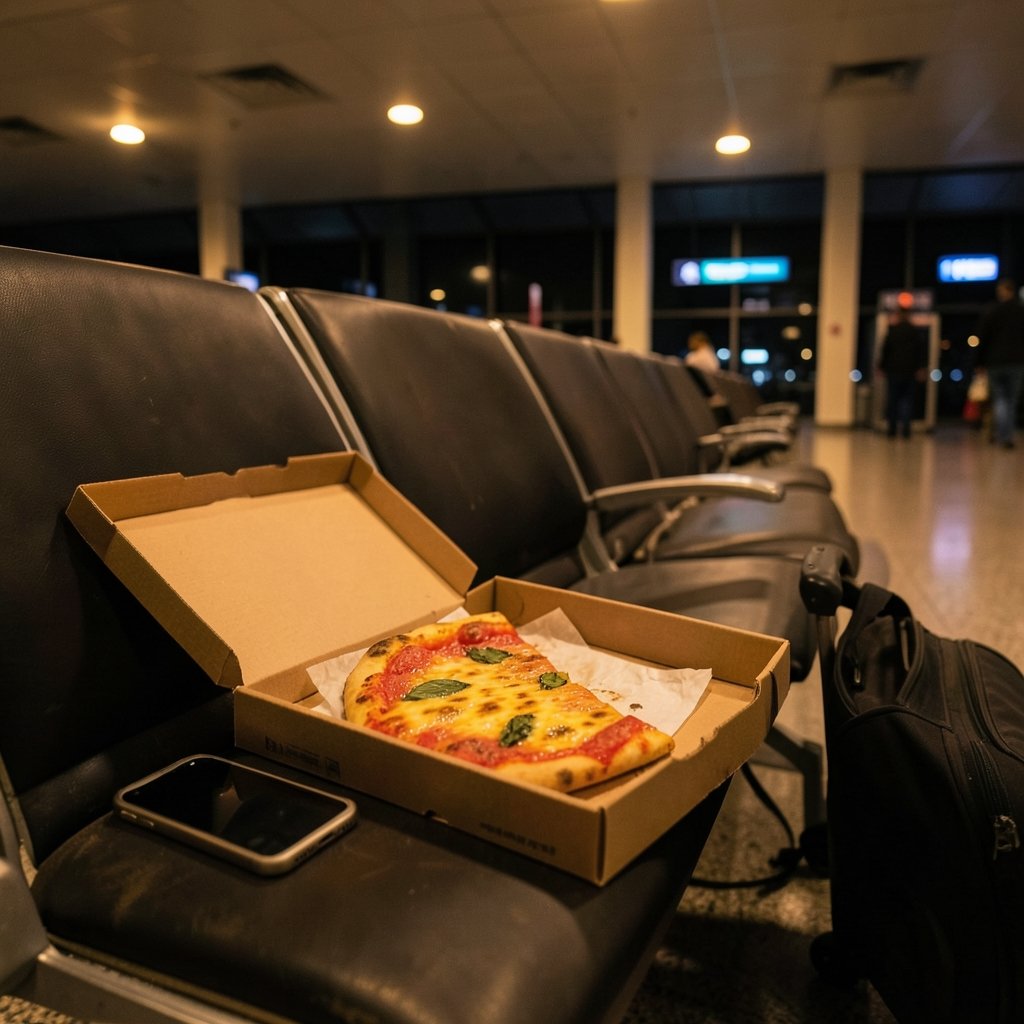
What does “best pizza near me” actually mean? It sounds like a simple question, but it hides a tangle of problems. Your phone thinks it knows where “near me” is. A review score of 4.6 stars might come from twelve people, three of whom are related to the owner. And “best” depends entirely on whether you want a blistered Neapolitan crust, a foldable New York slice, or a deep-dish brick that weighs as much as a laptop.
The good news is that finding genuinely good pizza close to home is a solvable problem. It just takes a better method than typing four words into a search box and tapping the first pin on the map. This guide walks through how local search actually works, which signals are worth trusting, and how to build a shortlist you can rely on.
Why “near me” results look different for everyone
Search engines do not keep a single master list of the best pizza places. They infer your location from device signals, your IP address, and your search history, then return results tailored to that guess. Two people standing on the same corner can get different lists if one has location services switched on and the other does not. (Pizza: History and Styles (Wikipedia))
This matters for a practical reason. If you search from your office at lunchtime, you will get pizza near your office. If you search from home that evening, the list changes completely. Some people conclude that the results are “wrong” when they are simply answering a slightly different question than the one the person thought they asked.
The fix is to be explicit. Add a neighborhood, a street, or a landmark to the query. “Best pizza near Riverside Park” beats “best pizza near me” every time, because it removes the guesswork from the machine’s side of the conversation.
It also helps to understand that local results are ranked on a few broad factors: how well a business matches what you typed, how far away it is, and how prominent it is across the web. Prominence is the fuzzy one. It blends review volume, mentions on other sites, and general reputation, which is why a mediocre but heavily reviewed pizzeria can outrank a superb one that nobody talks about online.
Reading reviews without getting fooled

Star averages are the first thing most people check and the last thing they should trust on their own. Online ratings suffer from selection bias: people who had an extreme experience, good or bad, are far more likely to write than people who had an ordinary Tuesday dinner. A place with a 4.9 from fifteen reviews is not necessarily better than a place with a 4.3 from eight hundred.
Here is a review-reading routine that works in practice:
- Sort by newest first, not by “most helpful.” Old reviews describe a kitchen that may no longer exist.
- Read the two-star and three-star reviews specifically. They tend to be the most detailed and the least emotional.
- Look for repeated specifics rather than repeated adjectives. “Soggy in the middle three times” is a pattern. “Disappointing” is a mood.
- Check whether reviews mention the same few dishes. Consistency on a signature pie is a better signal than scattered praise.
- Ignore the total count if the reviews are clustered into a single week. That pattern suggests a campaign, not a customer base.
One more habit worth building: read reviews for the style of pizza you actually want. A pizzeria can be excellent at thin-crust bar pies and terrible at deep dish. A single aggregate score flattens that distinction into a number that tells you almost nothing.
Match the pizza style to your craving
“Pizza” is a family of foods, not a single dish. Searching by style narrows results dramatically and surfaces places that specialize rather than places that dabble.
| Style | What to expect | Best for |
|---|---|---|
| Neapolitan | Soft, blistered, charred edges; soupy center; eaten with a knife and fork | Dine-in, eating immediately |
| New York | Large, thin, foldable slices with a crisp underside | Quick slices, takeout |
| Detroit | Rectangular, thick, cheese carried to the edges and caramelized | Sharing, feeding a group |
| Chicago deep dish | Tall, buttery crust, layered cheese and sauce on top | Sit-down meals, big appetites |
| Roman al taglio | Sheet-pan rectangles sold by weight | Sampling several toppings |
Neapolitan is the most codified of these. The style has a formal production standard covering dough hydration, fermentation, oven temperature, and permitted ingredients, which is why some pizzaioli talk about certification the way bartenders talk about ice programs. If a menu claims Neapolitan and the oven runs on gas at a modest temperature, that claim is doing a lot of marketing work.
In practice, the style filter eliminates most bad matches before you read a single review. Someone craving a crisp, foldable slice will be miserable at a Neapolitan spot, no matter how good the pizza is by its own standards.
Signals that beat a star rating
Reviews are noisy. Several other signals are quieter but more reliable.
Inspection records. Many cities and counties publish food-safety inspection results online, often with the specific violations listed. A recent clean inspection is a more objective quality signal than a hundred five-star reviews, because it is conducted by someone with a checklist and no incentive to be polite.
Menu depth. A short menu is usually a good sign. Kitchens that make twelve things tend to make them well. Kitchens that make ninety things are reheating a lot of it.
Turnover. High volume keeps ingredients fresh. A pizzeria selling through its dough and cheese every day is not storing either for long.
Opening hours. Genuinely popular neighborhood places often have odd hours, close early, or run out of dough. That is frustrating, but it is also a signal that the kitchen is not optimizing for maximum throughput.
Allergen information. In many jurisdictions, restaurants are legally required to provide allergen details in writing, and staff should be able to answer direct questions about wheat, dairy, and cross-contact. A kitchen that cannot answer those questions clearly is a kitchen with weak systems.
The walk-in test. If you are nearby anyway, look through the window at lunchtime. Count the tables. Look at the oven. A wood-fired dome and a stack of proofing boxes tell you more in ten seconds than a page of reviews.
Common mistakes people make when hunting for pizza
Most disappointing pizza nights trace back to one of a handful of avoidable errors.
Searching once and committing. Location-based results shift with the time of day and the device. A list generated at 11 a.m. from a desk is not the same list you would get at 7 p.m. from your couch.
Trusting a single platform. Different review sites attract different crowds, and each has its own biases. Cross-checking two or three sources catches the outliers.
Ignoring the pickup window. Pizza degrades fast. A twenty-minute drive turns a crisp crust into a steamed one. The best pizza near you is often the one that survives the trip home, which favors places five to ten minutes away over a legendary spot across town.
Ordering a crowd-pleaser at a specialist. Asking a Neapolitan shop for a thick, cheesy pie or a deep-dish place for a light lunch special usually ends in disappointment. Order what the kitchen is built to make.
Overweighting the photo. Staged food photography is a genre unto itself. A glossy overhead shot of a pizza tells you about the restaurant’s marketing budget, not its oven.
Building a shortlist you can trust
The most reliable approach is to stop searching fresh every time and start maintaining a small personal list. It takes about twenty minutes to build and saves hours of indecision later.
- Search with an explicit location, not “near me.”
- Note every candidate within a ten-minute radius, since distance is the variable you cannot fix later.
- Filter by style, so you are comparing like with like.
- Check inspection records for each candidate.
- Read the three-star reviews for all of them.
- Order from the top two on separate nights and compare.
- Write down what you thought, including the date. Memory is unreliable, and menus change.
That list becomes genuinely useful. It also makes the next search trivial, because you already know which places are worth a second visit and which are not.
The same logic applies to any local food hunt, whether you are tracking down a specific cuisine or branching out. If you are comparing neighborhood options more broadly, the same filter-and-verify approach works for finding the best Thai food near you, and it scales to other cravings too, like the best empanadas near you or the best salads near you. The method is portable even when the cuisine is not. (Leftovers and Food Safety (USDA FSIS))
What actually works in practice
After enough disappointing orders, a few habits separate people who consistently eat well from people who keep rolling the dice.
Order directly from the restaurant when you can. Third-party delivery adds time, and time is the enemy of crust. If you must use a delivery app, check whether the restaurant runs its own pickup option first.
Go early or go late. Peak hours compress the kitchen, and a rushed oven produces uneven pies. The first hour of service and the last half hour before close are usually calmer.
Ask a specific question when you call. “What do you recommend tonight?” gets a scripted answer. “Which of these two is better right now?” gets a real one, because it forces a choice.
Try the plain pie first. Toppings hide flaws. A margherita or a plain cheese tells you everything about the dough, the sauce, and the cheese in three bites.
Pay attention to the underside. A properly baked pizza has an even, spotted base. A pale, floppy underside with char only on the rim means the oven was too hot on top and too cool underneath. Once you notice this, you cannot unsee it, and it becomes the fastest quality check available.
Conclusion
Finding the best pizza near you is less about luck and more about asking a better question. “Near me” is a guess the search engine makes on your behalf, and it is often a guess worth correcting with a street name or a neighborhood. Reviews are a starting filter, not a verdict, and the signals that actually predict a good pie tend to be quieter: a short menu, a clean inspection record, a busy oven, and a kitchen that can answer a direct question about allergens without blinking.
Build a shortlist, filter by style, verify with something more objective than a star average, and eat the pizza within ten minutes of it leaving the oven. Do that a few times and you will stop searching altogether, because you will already know where to go.
FAQ
Why do my “near me” pizza results differ from my friend’s?
Search engines estimate your location from device signals, IP address, and past activity, then rank nearby businesses by relevance, distance, and prominence. Two people in different spots, or with different location settings, get different lists. Adding a neighborhood or landmark to the query makes the results more consistent.
Are high-rated pizza places always good?
No. Star averages are shaped by selection bias, since people with strong experiences review more often, and small sample sizes are easy to distort. A 4.9 from fifteen reviews is weaker evidence than a 4.3 from eight hundred. Read the three-star reviews and look for repeated specifics rather than general praise.
What is the fastest way to judge a pizzeria?
Look at the underside of the pizza. An even, spotted base signals a properly heated oven and well-fermented dough. Pale and floppy with char only on the rim suggests uneven heat. Before ordering, check whether the menu is short and focused, which usually indicates a kitchen that does fewer things well.
Does pizza style really change which place is “best”?
It changes everything. Neapolitan, New York, Detroit, and Chicago deep dish are different foods with different textures and different serving styles. A place that excels at one is often mediocre at another. Filtering by style before you compare reviews prevents most mismatched orders.
Is a food-safety inspection score more useful than reviews?
Often, yes. Inspection records are produced by someone working from a checklist with no incentive to flatter the restaurant, and many local authorities publish results with specific violations listed. A recent clean inspection is a more objective signal than an aggregate rating built from anonymous opinions.
How far should I be willing to travel for pizza?
Shorter is usually better. Pizza degrades quickly, and a crisp crust can turn soft within fifteen minutes in a closed box. A very good place five minutes away often beats an excellent place twenty-five minutes away, because the product you actually eat is the one that survived the trip.



