
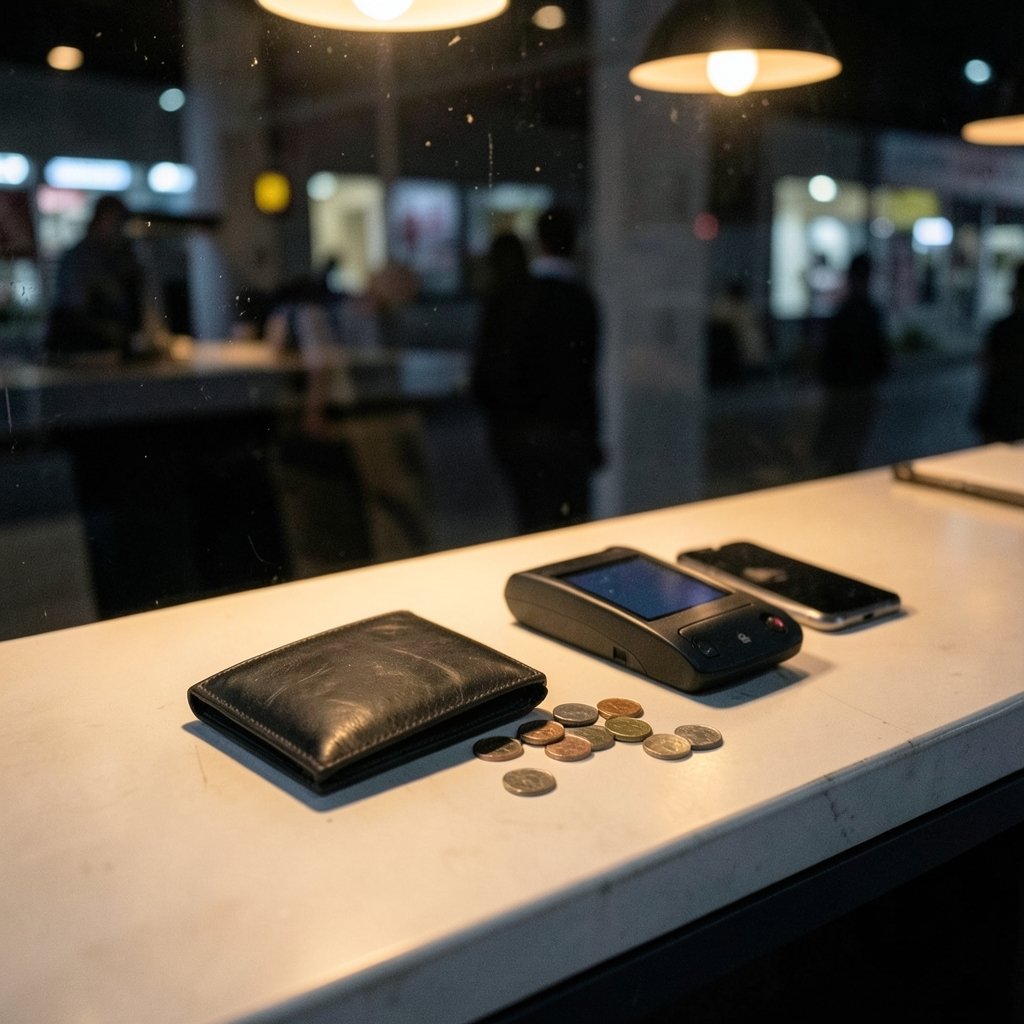
What does “no money” actually mean in 2026? The phrase sounds simple, but it hides at least four different ideas: an empty wallet, a cashless payment system, a purchase with nothing paid upfront, and even a society that runs without currency at all. Each one carries its own rules, risks, and everyday consequences. Getting the distinction right matters more than ever, because the way people hold and move value is changing fast. This article unpacks the phrase from every practical angle, so readers can recognize which version of “no money” they are actually dealing with.
The Everyday Sense: When a Wallet Is Empty
The most common use of “no money” is the most literal one: a person or household has run out of spendable cash. That situation is usually temporary, but it creates a specific set of problems. A card can be declined, a rent payment can bounce, and an unexpected bill can push a family into borrowing.
What actually helps in practice is separating cash flow from net worth. Someone can own a home and still have no money in their checking account on a Tuesday. Practical steps that work include:
- Building a small buffer of one to two weeks of essential spending before anything else.
- Timing bill payments to match income dates rather than spreading them randomly.
- Keeping a separate account for fixed costs so the spending account shows the truth.
- Tracking subscriptions, which quietly drain accounts and are the most common cause of “surprise” shortfalls.
A common mistake is treating a credit limit as available money. It is not. It is a loan with a clock attached. Another mistake is ignoring fees on small overdrafts, which compound quickly and turn a short gap into a long one.
The Cashless Sense: A Society That Runs on Cards and Phones

The second meaning is structural. When people say a country is going “no money,” they often mean cashless: payments move through cards, phones, and bank transfers instead of notes and coins.
The shift is real but uneven. Sweden and Norway are often named as the most cash-light economies, while Germany and Japan still show strong preferences for cash. In the United States, cash use has fallen sharply but has not disappeared, and several cities and states have passed laws requiring retailers to accept cash. That legislative pushback matters: it shows that a “no money” system is a policy choice, not a technological inevitability.
The infrastructure behind this shift is central bank money moving into digital form. Central banks around the world are researching and piloting digital currencies that would give the public direct electronic access to a central bank liability, a topic explored in more depth in this explainer on CBDC digital currency and central bank money going digital. The design questions are not trivial: privacy, offline payments, and what happens to commercial banks all sit in the balance.
For consumers, the practical trade-offs look like this:
| Feature | Cash | Digital payment |
|---|---|---|
| Works without power or network | Yes | Usually no |
| Traceable by third parties | No | Yes |
| Speed of settlement | Instant | Instant to days |
| Risk if account is frozen | None | Total loss of access |
| Budgeting friction | High (visible spending) | Low (invisible spending) |
That last row matters more than people expect. Research on consumer spending consistently finds that parting with physical cash feels more painful than tapping a card, which is why cashless households often spend more without noticing.
The Financing Sense: “No Money Down” Deals
The third meaning is commercial. “No money down” is a marketing phrase in lending, real estate, and car sales. It means the buyer finances the entire purchase price rather than paying a portion upfront.
This is where the phrase gets genuinely risky. A zero-down structure does not remove cost; it moves cost into the loan. The buyer starts with no equity, pays interest on a larger principal, and is more likely to owe more than the asset is worth if prices fall. Consumer protection rules in many jurisdictions require lenders to disclose the real annual cost of credit precisely because “no money down” sounds free when it is not.
Practical guidance that holds up:
- Ask for the total amount repayable, not the monthly figure.
- Check whether the rate is fixed or variable, and for how long.
- Confirm whether any deposit is genuinely refundable.
- Read the early repayment terms, since some no-deposit deals penalize paying off early.
The pattern also shows up far from finance. Wedding planning is a classic example: venues advertise low or no deposits, then recover the money through minimum spends and cancellation clauses. A practical guide to choosing a wedding venue without wasting money or adding stress covers exactly how those clauses work and what to negotiate before signing.
The Fraud Sense: When “No Money” Is the Scam’s Hook
Criminals use “no money” as bait in two directions. They promise victims something for nothing, or they convince victims they have no money left and must act urgently.
The gift card scam is the clearest example. A caller claims to be from a tax office, a utility, or a tech support desk and demands payment in gift cards. The victim is told to buy cards and read out the codes. Once the codes are shared, the balance is gone within minutes and recovery is rare. This is why the mechanics of the gift card scam and why victims rarely get their money back are worth understanding before a call ever arrives.
Fraud also has a cost structure that most people never see. Banks, retailers, and platforms spend heavily on detection, and those costs return to customers through fees and prices. The full picture of where the money goes in identity threat detection shows how much of the burden lands on institutions rather than on the fraudster. Similar economics apply to security operations, where threat intelligence spending in 2025 and where the money actually goes reveals how budgets are allocated across tools, staff, and data feeds.
The practical defense is simple and unglamorous: no legitimate organization demands payment in gift cards, and no genuine emergency requires a wire transfer within the hour. Any request that combines urgency with an unusual payment method is a fraud signal.
The Moneyless Sense: Economies Without Currency
The fourth meaning is anthropological and historical. Barter systems, gift economies, and local exchange trading systems all operate with little or no currency. They are not curiosities. They appear whenever money is scarce, from depression-era scrip to modern time banks where members trade hours of labor.
These systems have real strengths: they build local trust, keep skills circulating when cash is tight, and give people with more time than money a way to participate. They also have well-documented limits. Barter requires a “double coincidence of wants,” meaning both parties must want exactly what the other offers. That friction is why barter economies tend to stay small and why money emerged in the first place.
Digital tools are changing the calculus. Automated matching, reputation scores, and mobile ledgers reduce the friction that once capped barter networks. That is also why the line between “no money” and “new money” is blurring: a token, a credit, or an in-app balance may function as currency without ever touching a bank account.
How AI Is Reshaping the “No Money” Conversation
Artificial intelligence now sits at the center of several of these meanings. It powers fraud detection that catches stolen card codes before they are redeemed. It also powers the scams themselves, through convincing voice cloning and automated outreach at scale. (Poverty Overview)
On the earning side, AI has created a genuinely new category of low-capital work. People with no money to invest can still build income using free tools, though the realistic paths are narrower than the hype suggests. A grounded look at how to make money with AI separates the workable options from the fantasy ones, and a companion piece on how AI companies actually make money explains the business models behind the tools most people use for free. (Money)
For small businesses, the risk is spending on automation before understanding the return. The most common failure is buying a subscription stack that nobody configures. A practical guide to using AI business automation without wasting money focuses on sequencing: fix the process first, then automate the part that actually costs time.
Common Mistakes People Make With the Phrase
Because “no money” is ambiguous, it produces predictable misunderstandings. These are the ones that show up most often:
- Confusing cashless with moneyless. A cashless economy still runs on money; it just runs on ledgers instead of paper.
- Treating zero-down as zero-cost. The interest and fees are the price; the deposit was never the expensive part.
- Assuming cash will always be accepted. In some countries it legally must be; in others, a card-only policy is entirely lawful.
- Ignoring access risk. A frozen account can leave a fully cashless household with no way to buy food, which is why keeping a small cash reserve still makes sense.
- Believing recovery is likely after a gift card scam. It usually is not, which makes prevention the only real strategy.
What Actually Works in Practice
Across all four meanings, a few habits hold up. Keep a small physical cash reserve for outages and account freezes. Read the total cost of any financing offer rather than the monthly payment. Verify any payment request through a second channel before acting. And when a new payment technology arrives, ask who holds the liability if something goes wrong, because that answer determines whether “no money” is convenience or exposure.
Conclusion
“No money” is four different phrases wearing the same coat. It can describe an empty account, a cashless payment system, a zero-deposit loan, or an economy that runs without currency. Each version has its own rules and its own failure modes. The useful skill is not memorizing definitions but recognizing which version is in front of you, because the right response to a bounced rent payment is nothing like the right response to a caller demanding gift cards. Clarity about the phrase is, in the end, clarity about risk.
Frequently Asked Questions
What does “no money” mean in a legal sense?
Legally, the phrase has no fixed definition. Courts and regulators treat it as ordinary language and interpret it by context. What matters legally is the specific term used in a contract, such as “zero deposit,” “no cash accepted,” or “payment due on delivery.” Always read the defined term rather than the marketing phrase.
Is a cashless society the same as a moneyless society?
No. A cashless society still uses money; it simply records balances digitally instead of printing notes. A moneyless society would operate without currency at all, relying on barter, gift exchange, or allocation. The two are often confused because both are described informally as “no money.”
Can a business legally refuse cash?
It depends on jurisdiction. In some countries, legal tender rules require cash to be accepted for debts, while in others retailers may set their own payment terms as long as they disclose them in advance. Several US cities and states have passed cash-acceptance laws, which shows the rule varies by location rather than being universal.
What is the catch with “no money down” financing?
The catch is that the full price is financed, so the buyer pays interest on a larger balance and starts with no equity. Total repayment is higher than with a deposit, and the buyer is more exposed if the asset loses value. The monthly payment usually looks attractive precisely because the total cost is hidden.
Why do gift card scams work so well?
Because gift cards are irreversible. Once a code is shared, the balance can be spent instantly and the transaction is hard to trace or reverse. Scammers combine that with urgency and impersonation of a trusted institution. The combination of speed, anonymity, and near-zero recovery is what makes the method so effective.
Will physical cash disappear entirely?
Unlikely in the near term. Cash use has fallen in many countries, but it remains a backup when networks fail and a privacy option that many people value. Legislative efforts to protect cash access, plus continued demand in older and rural populations, suggest a long coexistence rather than a clean disappearance.



