
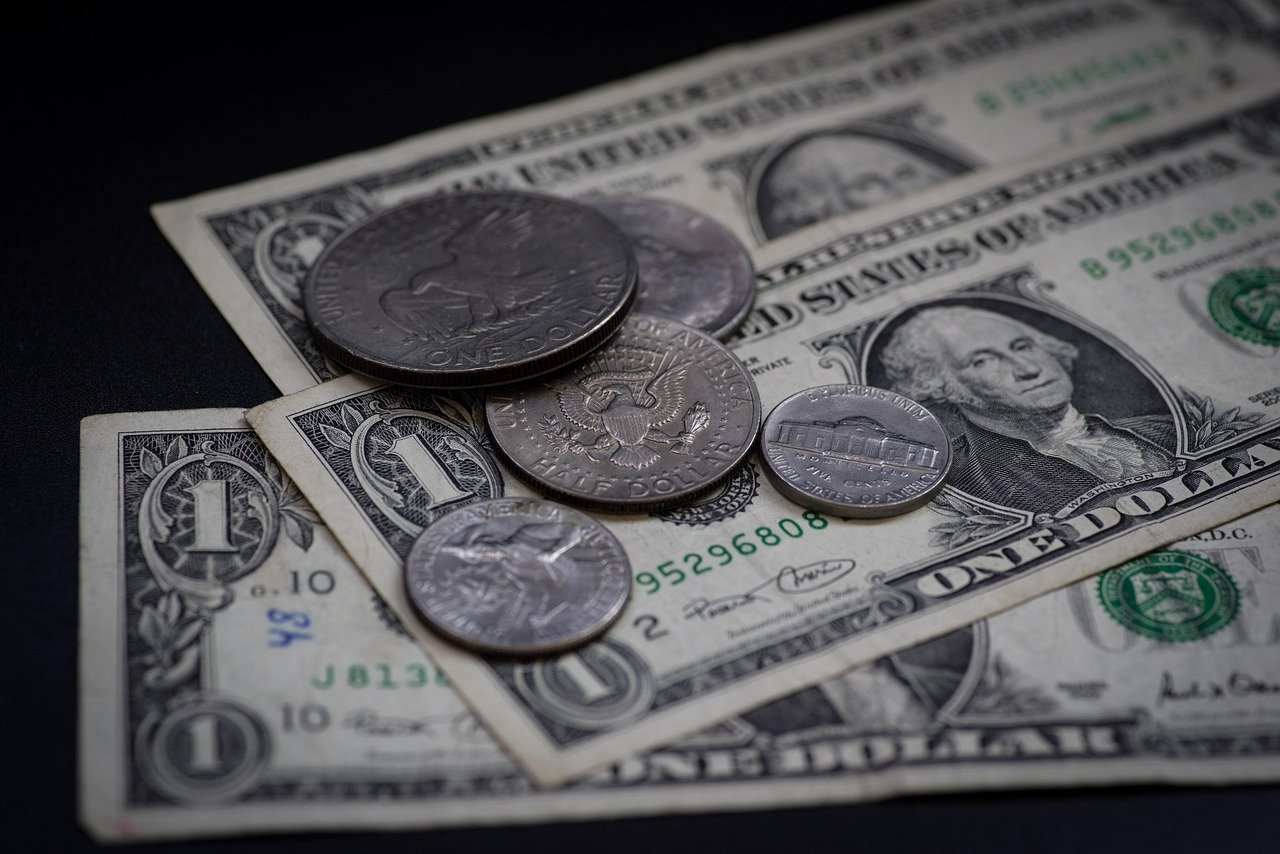
Have you ever stared at a dollar bill in a checkout line and wondered why George Washington gets the starring role? Or why a guy who was never president at all ended up on the most-counterfeited bill in the country? American money is a small museum you carry in your pocket, and the portraits on it were chosen through a mix of law, tradition, and some genuinely odd historical accidents. This guide walks through every president on circulating U.S. currency, explains the rules that decide who gets a portrait, and points out the surprises most people miss. (History of U.S. Paper Currency)
The Short Answer: Who Is on What
If you just want the cheat sheet, here it is. Every circulating U.S. bill and coin features a president except for two notable exceptions: the $100 bill and the dime.
| Denomination | Portrait | President? | First Appeared |
|---|---|---|---|
| $1 bill | George Washington | Yes | 1929 (current size) |
| $2 bill | Thomas Jefferson | Yes | 1928 series |
| $5 bill | Abraham Lincoln | Yes | 1928 (current size) |
| $10 bill | Alexander Hamilton | No | 1928 (current size) |
| $20 bill | Andrew Jackson | Yes | 1928 |
| $50 bill | Ulysses S. Grant | Yes | 1913, carried into 1928 |
| $100 bill | Benjamin Franklin | No | 1914, carried into 1928 |
| Penny (1¢) | Abraham Lincoln | Yes | 1909 |
| Nickel (5¢) | Thomas Jefferson | Yes | 1938 |
| Dime (10¢) | Franklin D. Roosevelt | Yes | 1946 |
| Quarter (25¢) | George Washington | Yes | 1932 |
| Half dollar (50¢) | John F. Kennedy | Yes | 1964 |
| Dollar coin | Varies by program | Sometimes | 1971 onward |
Notice the pattern? The people on money tend to be founders or wartime leaders, and the timing of each portrait often lines up with an anniversary or a national mood.
Why 1928 Matters More Than You Think
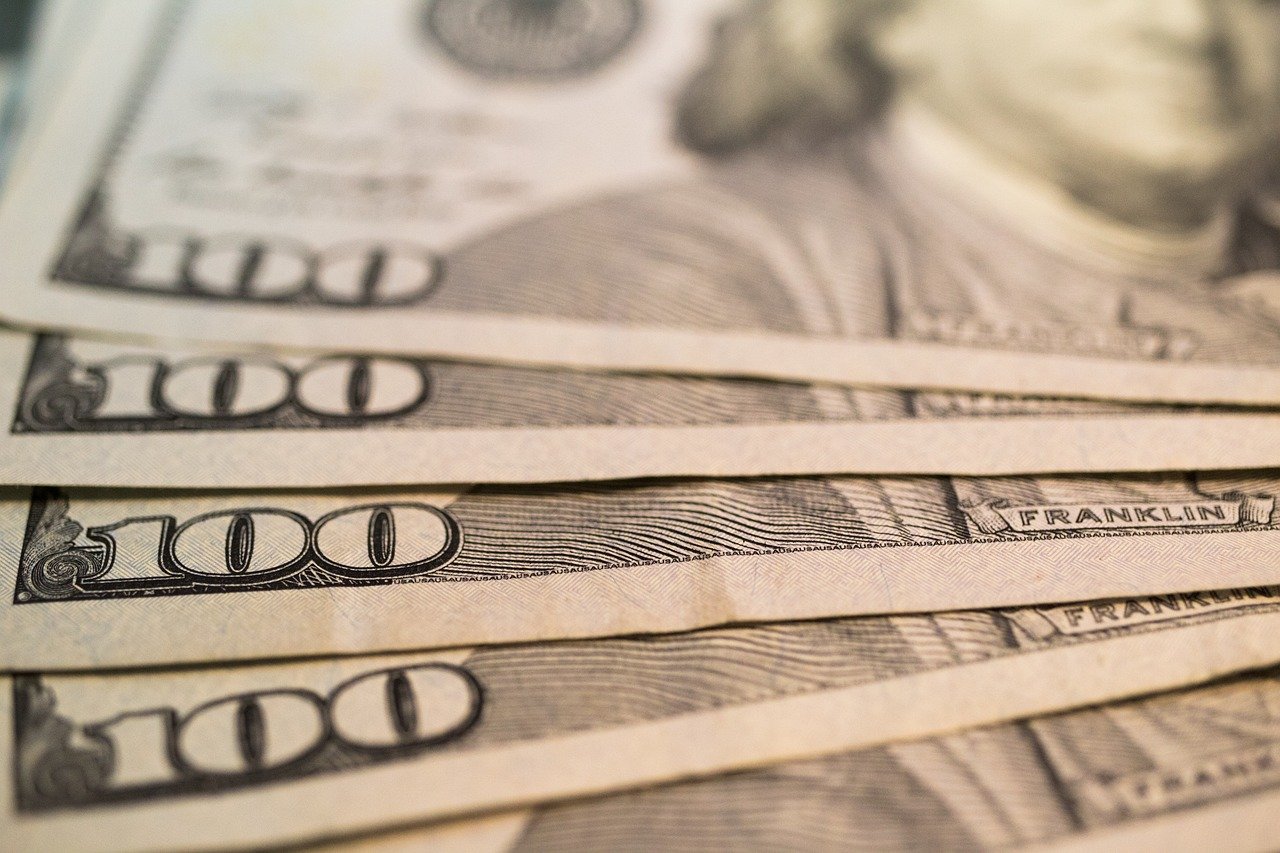
Most people assume the portraits have been there forever. They haven’t. The single most important date in this story is 1928, when the federal government shrank paper money to roughly the size we use today. Before that, bills were large-format “horse blankets” that didn’t fit neatly in a wallet.
When the small-size series launched, the Treasury standardized the portrait lineup, and that decision locked in most of what you see now. Washington took the $1, Lincoln the $5, Jackson the $20, and Grant the $50. The $2 bill, which had a tangled history of being printed, discontinued in 1966, and reintroduced in 1976, settled on Jefferson.
This is a common source of confusion. People read that Lincoln “has been on the $5 since 1928” and assume that was his debut. In reality, Lincoln appeared on earlier large-size notes too. The 1928 date marks the modern design, not the first appearance. If you’re ever fact-checking a trivia card, that distinction will save you.
The Coin Side Has Its Own Rules
Coins follow a different playbook than paper money, and the differences are worth knowing.
The Lincoln cent debuted in 1909 to mark the 100th anniversary of his birth, making it the first U.S. circulating coin to feature a real person rather than an allegorical figure like Liberty. The Washington quarter arrived in 1932 for the 200th anniversary of his birth. The Jefferson nickel came in 1938, and the Roosevelt dime in 1946, shortly after Roosevelt’s death, when the public pushed to honor him.
Then there’s the dollar coin, which has cycled through presidents and historical figures with mixed success. The Eisenhower dollar launched in 1971, the Susan B. Anthony dollar in 1979, and the Sacagawea dollar in 2000. Sacagawea was not a president, which is a good reminder that Congress can put almost anyone on a coin if it passes a law. (United States one-dollar bill)
The Presidential $1 Coin Program ran from 2007 to 2016 and issued four presidents per year in the order they served. It was authorized by the Presidential $1 Coin Act of 2005, which came with two firm rules: no living president could appear, and a president had to have been dead for at least two years before being eligible. That rule exists for a reason. Placing a sitting politician on money invites the kind of personality cult that the founders actively disliked.
Who Actually Decides?
Here’s the part that surprises people: the Secretary of the Treasury has broad legal authority over coin designs, subject to whatever Congress mandates. The relevant statute is 31 U.S.C. § 5112, which lays out denominations, compositions, and design approval. Congress can and does override this with specific laws, which is exactly how the Presidential $1 Coin Program and the various commemorative quarters came to exist.
Paper money works differently. The design of Federal Reserve notes is set by the Treasury in consultation with the Federal Reserve, which is why the $10 bill still carries Alexander Hamilton even though he was never president. Hamilton was the first Treasury Secretary, and moving him off the bill would take a deliberate policy decision, not an automatic one.
This matters for anyone trying to predict future changes. Replacing a portrait isn’t like swapping a logo. It requires statutory authority, design review, public comment periods, and years of production lead time.
The Non-Presidents Who Sneaked In
Two of the most recognizable faces on American money never held the office.
Alexander Hamilton on the $10 is the obvious one. He was a Founding Father, the first Treasury Secretary, and the architect of the American financial system, which is a pretty strong resume for a spot on a bill. Benjamin Franklin on the $100 is the other. Franklin was a printer, inventor, diplomat, and all-around polymath, and his face guards the highest-value note in general circulation.
Then there’s the discontinued high-denomination series. The $500 note featured William McKinley, the $1,000 featured Grover Cleveland, and the $5,000 featured James Madison. Salmon P. Chase, who was never president, appeared on the $10,000 note. These were last printed in 1945 and formally discontinued in 1969, which is why you’ll never see one at an ATM.
The Franklin and Hamilton exceptions are useful for a practical reason. If someone hands you a suspicious bill and claims it’s fake because “there’s no president on it,” you can explain that the $10 and $100 have always been the odd ones out. That’s a real scenario for cash handlers and small-business owners.
Common Mistakes People Make
A few myths refuse to die, and it’s worth clearing them up.
Mistake one: assuming the portraits rotate regularly. They don’t. The lineup is remarkably stable, and changes tend to be generational events rather than routine updates.
Mistake two: thinking a bill’s portrait determines its value. Collectors care about series year, condition, printing errors, and serial numbers; the face on the front alone does not set value. A worn 1928 $20 isn’t automatically valuable.
Mistake three: confusing the large-size and small-size dates. As noted above, 1928 is the redesign, not the debut. This trips up casual researchers constantly.
Mistake four: ignoring the security angle. Counterfeiters target the $20 more than any other note, which is why Jackson’s portrait has been redesigned with color-shifting ink and a security thread. If you handle a lot of cash, understanding the physical features matters as much as knowing the faces. The same principle applies to digital fraud, where knowing how a gift card scam works and why victims rarely get their money back can save you from a costly mistake.
What About the Future?
Talk of redesigning the $20 bill to feature Harriet Tubman has circulated for years, and it illustrates how slowly these changes move. A portrait swap requires an act of Congress or a Treasury directive, plus years of engraving, testing, and production. Even when the political will exists, the machinery grinds slowly.
Meanwhile, the broader question of what money even is keeps shifting. Digital payment systems, stablecoins, and proposals for central bank digital currencies are changing the physical landscape. If you want to understand how a CBDC would turn central bank money into a digital format, it’s worth reading up, because the day may come when the portrait on a bill is a historical curiosity rather than a daily sight.
For collectors and curious observers alike, the practical takeaway is simple: watch the anniversaries. Portrait changes tend to cluster around milestone birthdays and deaths, which is how Lincoln got his penny in 1909 and Washington his quarter in 1932.
How to Spot a Portrait Quickly
If you’re teaching a kid, running a cash register, or just want a party trick, here’s a fast method.
- Look at the collar and hairline. Washington has a tight queue and a formal ruffle; Lincoln has the beard and high cheekbones.
- Check the denomination number in all four corners. The portrait and the number should always match.
- Tilt the bill. Modern notes have color-shifting ink on the denomination numeral.
- Feel the paper. Genuine currency has a distinct cotton-linen texture that photocopies can’t replicate.
- When in doubt, compare against a known-good bill from the same series.
That last step is the one people skip, and it’s the one that catches most fakes.
Why This Topic Keeps Drawing Attention
Money is one of the few objects nearly everyone handles, which makes its portraits a shared cultural reference. A child learns Lincoln from a penny before learning about the Civil War. A tourist recognizes Franklin from a $100 before knowing he was an inventor. The faces do quiet educational work.
There’s also a financial literacy angle. Understanding who appears on currency, why they were chosen, and how designs change is a gateway to understanding monetary policy, counterfeiting, and the institutions that manage both. If you’re curious about the broader economics of security and fraud, a look at where the money really goes in identity threat detection shows how the same trust dynamics play out in the digital world.
And for the entrepreneurial reader, the portrait question connects to a bigger one: how value gets created and recognized in the first place. That’s the same question behind how AI companies actually make money, where trust and branding matter as much as the underlying technology.
Conclusion
The presidents on American money weren’t chosen by a single committee in a single afternoon. They accumulated over decades through legislation, anniversary timing, and the practical demands of a growing economy. Washington, Lincoln, Jefferson, Jackson, Grant, and the rest ended up in your wallet because of a mix of reverence, politics, and the 1928 redesign that standardized the modern look.
The next time you hand over a $20 or fish a penny out of your pocket, you’re holding a small piece of that history. The faces are familiar, but the story behind them is stranger and more deliberate than most people realize.
Frequently Asked Questions
Which presidents are on U.S. paper money?
George Washington is on the $1, Thomas Jefferson on the $2, Abraham Lincoln on the $5, Andrew Jackson on the $20, and Ulysses S. Grant on the $50. The $10 and $100 feature Alexander Hamilton and Benjamin Franklin, neither of whom was president.
Why is Alexander Hamilton on the $10 bill if he was never president?
Hamilton was the first Secretary of the Treasury and the chief architect of the American financial system. His role in establishing the nation’s credit and banking structure made him a natural choice when the modern note designs were standardized in 1928.
Was Abraham Lincoln the first real person on a U.S. coin?
Yes. The Lincoln cent debuted in 1909 for the 100th anniversary of his birth and was the first circulating U.S. coin to feature an actual person rather than an allegorical figure like Liberty.
Can a living president appear on American money?
Not under current law for the Presidential $1 Coin Program, which required that a president be deceased for at least two years before appearing. The long-standing practice for paper money has also avoided living figures.
Who decides whose face goes on a coin or bill?
The Secretary of the Treasury has broad authority over coin designs under federal statute, but Congress frequently passes laws mandating specific designs and programs. Paper money designs are set by the Treasury in consultation with the Federal Reserve.
What happened to the $500 and $1,000 bills?
They featured presidents like William McKinley and Grover Cleveland, along with others such as James Madison and Salmon P. Chase. The high-denomination notes were last printed in 1945 and officially discontinued in 1969, so they no longer circulate.



