
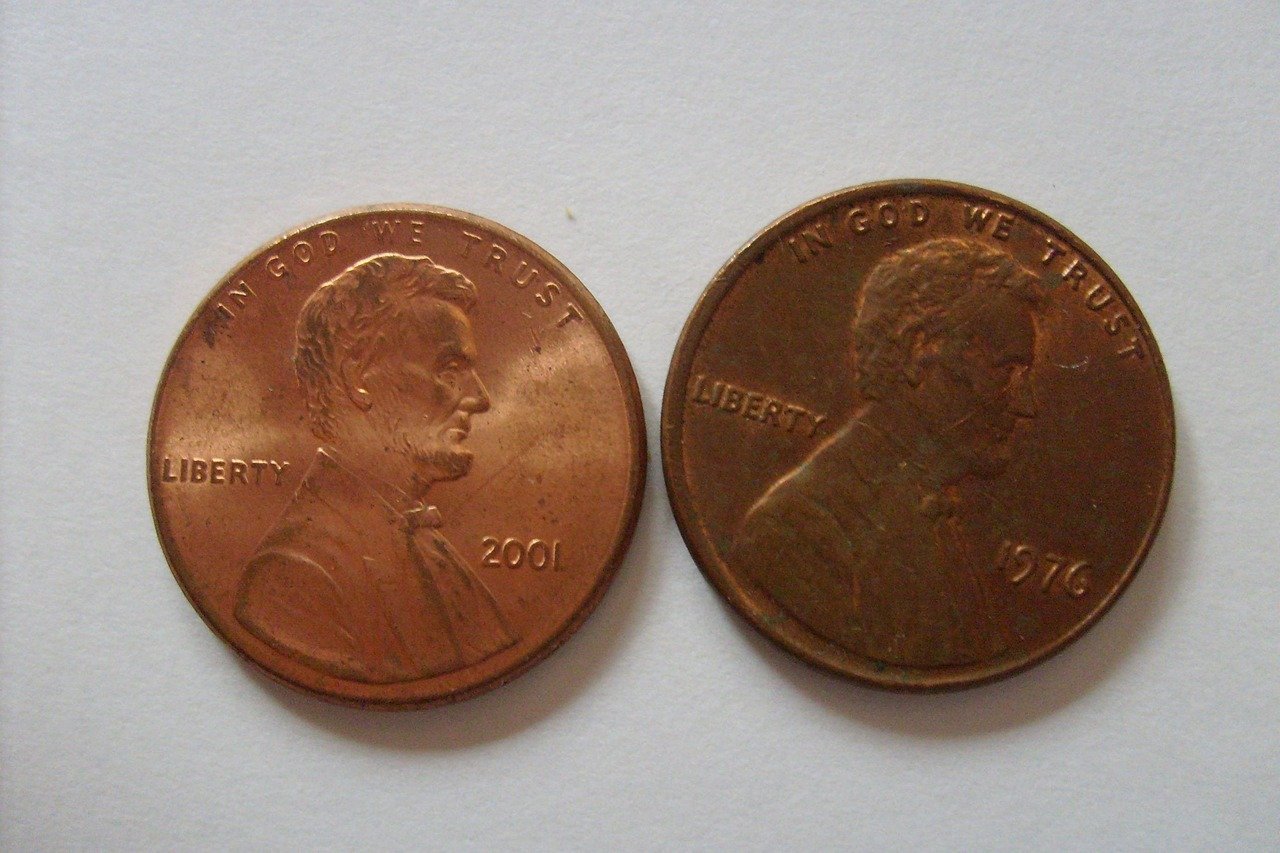
Quick Answer: What pennies are worth money?
Certain pennies are worth far more than one cent, and the ones that matter fall into a few clear groups: key dates like the 1909-S VDB and 1914-D, famous varieties such as the 1955 doubled die, error coins, and pre-1982 copper cents in exceptional condition. A collector or dealer can confirm value by checking the date, mint mark, composition, and grade.
Most wheat cents from 1909 to 1958 are worth only a few cents each, so age alone means little. What separates a valuable penny from pocket change is low mintage, high survival demand, and condition on the 1–70 grading scale. (Penny)
Before acting, check the date and mint mark, the composition (copper versus zinc), the grade, any known variety or error, and current sold prices from a dated auction record.
A jar of old pennies on a shelf looks like a pile of near-worthless metal. Then someone pulls out a worn 1909 coin with three tiny letters on the back, and suddenly the conversation changes. So which pennies are actually worth money, and how can a regular person tell the difference without a magnifying glass and a decade of training?
Why Most Pennies Are Still Just a Cent
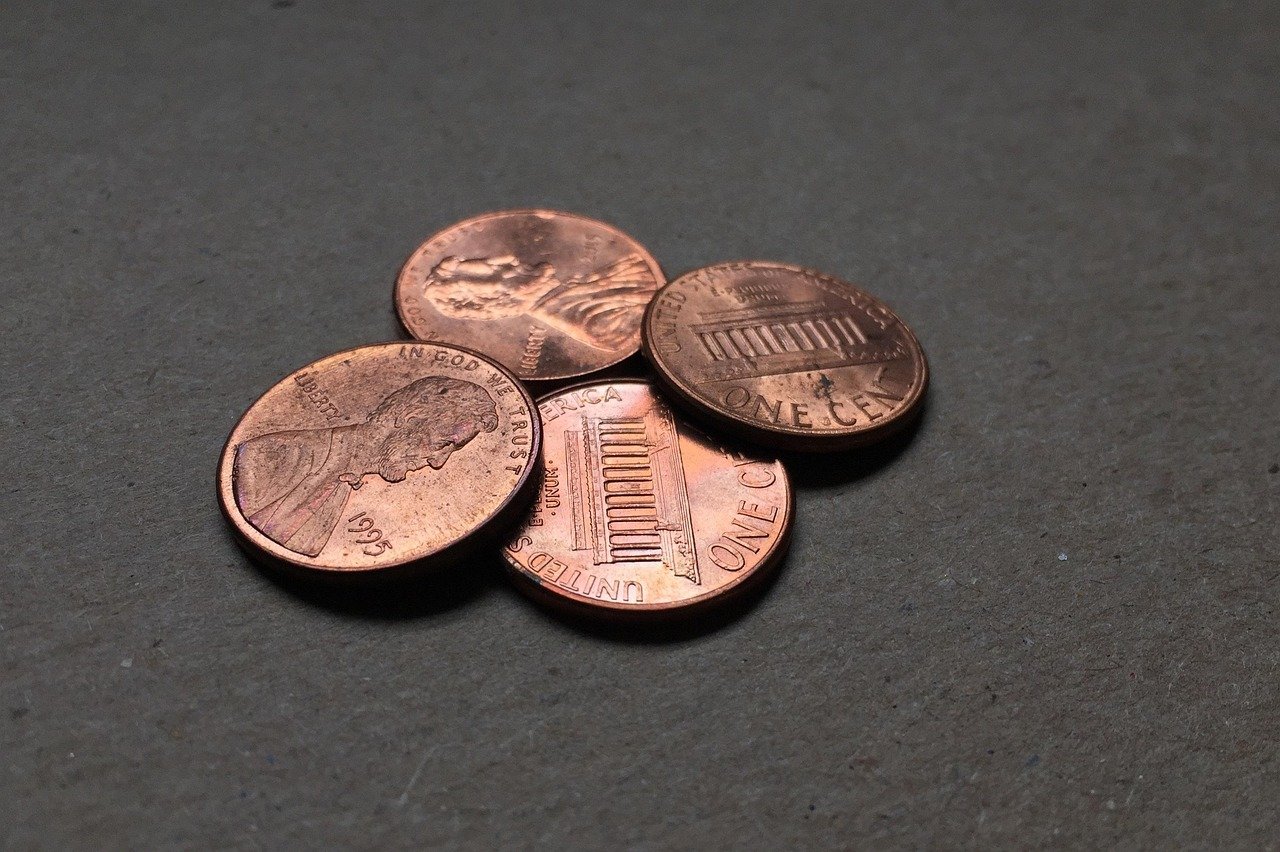
The first thing to understand is that rarity, not age, drives value. Millions of wheat cents were struck between 1909 and 1958, and huge numbers survived in jars, drawers, and coffee cans. A common 1940s or 1950s cent in average circulated condition might sell for three to ten cents in bulk. That is not a fortune, and it never will be.
Composition matters too. The U.S. Mint stopped making circulating pennies from solid copper after 1982, switching to copper-plated zinc. That makes 1982 a transitional year with both types in circulation. Pre-1982 copper cents have historically had a melt value above one cent, but melting U.S. coins for their metal is restricted by federal law, so the melt story is mostly trivia rather than a money-making plan.
Then there is condition. The same date can be worth a dollar in heavily worn shape and hundreds of dollars in mint state. Collectors grade coins on a 1–70 scale, and the difference between a 60 and a 65 can multiply a price several times over. Anyone serious about value needs to understand how grading works before assuming a coin is special.
The Key Dates That Actually Command Money
Key dates are the low-mintage coins that every Lincoln cent collector needs to complete a set. Because demand is steady and supply is fixed, these hold value even in circulated grades.
| Penny | Why It Matters | Rough Value Range (Circulated to Mint State) |
|---|---|---|
| 1909-S VDB | Only 484,000 struck before the designer’s initials were removed | Several hundred dollars to well over a thousand |
| 1909-S | Low mintage San Francisco issue | Around $50 to several hundred |
| 1914-D | Classic low-mintage key date | Around $150 to over a thousand |
| 1922 Plain (no D) | Denver mint error with a weak or missing mint mark | Around $500 to several thousand |
| 1931-S | Low mintage during the Depression | Around $30 to a few hundred |
| 1943 Steel | Common in steel, but copper versions are famous rarities | Cents in steel; copper errors bring huge sums |
The 1909-S VDB is the poster child. Only 484,000 were struck before designer Victor D. Brenner’s initials were removed from the reverse, making it one of the most sought-after Lincoln cents. The 1914-D is the other must-have. Neither is likely to turn up in a random jar, but both are the coins people dream about finding.
Semi-key dates sit one tier down: the 1909 VDB (Philadelphia), 1910-S, 1911-S, 1912-S, 1913-S, 1914-S, and 1924-D. These are worth real money in better grades but modest amounts in worn condition. They are the coins most likely to be overlooked in an inherited collection.
Error Coins: Where the Real Surprises Hide
Error coins are a separate value category from date rarities, and they are where beginners get both excited and confused. The U.S. Mint publishes explanations of how these mistakes happen, which helps collectors separate genuine errors from damage.
The famous 1943 story is the best example. Because copper was needed for World War II, 1943 cents were struck in zinc-coated steel. A small number of 1943 copper cents exist, and they are legendary rarities. The mirror image is the 1944 steel cent, struck in steel when copper production had resumed. Both are widely reported as extremely rare, and both are heavily counterfeited.
Other error types worth knowing:
- Doubled dies, like the 1955 doubled die cent, where the date and lettering appear doubled because the die was misaligned during hubbing. This is one of the most publicized U.S. error coins.
- Off-center strikes, where the coin was struck outside the collar.
- Broadstrikes, struck without a collar and spread wider than normal.
- Clipped planchets, where a piece of metal was missing before striking.
The catch is that damage and error look similar to an untrained eye. A coin that was squeezed in a vise or acid-treated can mimic a mint mistake. That is why authentication by a reputable grading service matters before anyone pays real money.
How to Check a Penny Without Wasting Money
Here is a practical routine that works for beginners. It takes about a minute per coin and saves a lot of heartbreak.
- Sort by decade first. Pull out anything from 1909 to 1958 (wheat cents) and anything from 1909 with a VDB on the back. Those get set aside.
- Flip the coin and find the mint mark. On Lincoln cents, the mint mark sits below the date (older coins) or on the front (modern ones). No letter means Philadelphia. S, D, and P mean San Francisco, Denver, and Philadelphia.
- Check the composition line. For 1982, weigh or compare the edge. Copper cents look solid; zinc cents show a silvery core on the rim.
- Look for obvious errors. Is the strike off-center? Is the date doubled? Is there a strange blob or missing element?
- Do not clean anything. Cleaning strips the surface and can cut a coin’s value by half or more. This is the single most common mistake people make.
- Compare against sold prices, not asking prices. A listing price means nothing. Completed sales are the only real signal.
If a coin seems promising, get a second opinion from a local coin shop or a collector club before spending money on grading. Grading fees can exceed the value of a common coin, so it only makes sense for coins that are clearly worth more than the fee. The same logic applies to other hobby and tech purchases people agonize over, like weighing a subscription against actual use in a guide to whether the Xbox Game Pass cost in 2025 is worth it.
Face Value, Metal Value, and the Law
There is a persistent myth that pre-1982 copper cents are a secret goldmine because their metal content exceeds one cent. The math has occasionally looked tempting, but the law closes the door. Federal statute restricts melting U.S. coins, and the Treasury has rules about exporting and treating coinage. In plain terms: you cannot legally melt pennies for profit, and nobody should plan a side hustle around it.
The practical takeaway is that a copper penny’s value comes from collectibility, not from the metal inside it. That reframing matters. A worn 1970-S cent is worth one cent. A mint-state 1970-S in a high grade might fetch a few dollars. The difference is condition and demand, not copper content.
Common Mistakes That Cost Collectors Money
The biggest mistake is assuming old equals valuable. A 1919 cent in average circulated condition is worth well under a dollar. Age without scarcity is just age.
The second mistake is cleaning. A shiny coin is not a valuable coin. Collectors pay for original surfaces, and harsh cleaning leaves hairline scratches that graders spot instantly.
The third mistake is buying without a return policy. Anyone selling a “rare error penny” online should offer a money-back guarantee, and buyers should insist on it. Scams in this space are common, and the pattern mirrors other frauds where victims rarely recover funds, as explained in this look at how the gift card scam works and why victims rarely get their money back. (Money as You Grow)
The fourth mistake is ignoring storage. Coins kept loose in a drawer get scratched. A few dollars spent on cardboard holders or inert plastic flips protects value far better than any cleaning product.
What Happened to Penny Production
Pennies have been in the news for reasons beyond collecting. Reports in 2025 indicated the Mint would stop producing pennies for circulation, a policy shift that surprised many people. Anyone relying on that detail should confirm it against an official Mint announcement, since the situation is recent and details matter.
For collectors, the practical effect is mostly psychological. A coin that stops being made tends to attract more attention, and that can lift demand for nice examples of common dates. It does not turn a jar of 1970s cents into a retirement fund. It does make now a reasonable moment to sort carefully rather than dump loose change into a machine.
The broader lesson from other consumer decisions applies here too: knowing what something actually costs and what it actually delivers prevents bad choices. That is the same reasoning behind comparisons like YNAB vs Monarch Money: zero-based budgeting vs net worth tracking, where the right answer depends on what the user is trying to accomplish.
Where to Get Coins Graded and Valued
Reputable options exist. Local coin shops often give free verbal opinions. Collector clubs and coin shows offer access to experienced eyes. For higher-value pieces, professional grading services encapsulate and grade coins for a fee, and their slabs carry weight in the market.
The American Numismatic Association is a nonprofit educational body that publishes grading standards and collecting guides, and it is a sensible starting point for anyone who wants to learn the vocabulary. Scholarly resources from numismatic societies help with attribution of varieties and errors. The U.S. Mint’s own collecting pages explain how errors and varieties are categorized, which is useful background before spending money on authentication.
A simple rule: never pay for grading a coin unless the expected value clearly exceeds the fee plus shipping. For a common wheat cent, that math never works. For a suspected 1909-S VDB or a dramatic error, it usually does.
A Realistic Expectation for a Random Jar
Most inherited penny jars contain zero key dates. That is the honest answer. The odds of finding a 1909-S VDB in loose change are tiny, and the odds of finding one in decent condition are tinier still.
What a jar usually does contain is a handful of semi-key dates, some nice early wheat cents, and possibly one or two interesting errors. That can add up to a modest but real amount, often between ten and a hundred dollars depending on condition and the buyer. The value is in the sorting, not in the fantasy.
The smart approach is to enjoy the hunt, learn the grading basics, avoid cleaning, and treat any surprising find as a reason to get a professional opinion rather than a reason to list it online that afternoon. The same patient, verify-before-you-buy mindset shows up in tech decisions, like weighing whether a tablet is worth buying for beginners and everyday use, where the answer depends on actual needs rather than hype.
Conclusion
Pennies worth money are a small, specific group: key dates like the 1909-S VDB and 1914-D, famous varieties like the 1955 doubled die, dramatic errors, and high-grade examples of almost any date. Everything else is pocket change, and that is fine. The realistic path is to sort by decade and mint mark, check composition around 1982, never clean a coin, and verify values against completed sales rather than asking prices. Most jars hold modest finds, a few hold surprises, and the people who do best are the ones who slow down, learn the grading scale, and ask an expert before they spend or sell.
FAQ
Are all wheat pennies worth more than one cent?
No. Common wheat cents from the 1940s and 1950s in average circulated condition often sell for a few cents each in bulk. Value comes from low mintage, high demand, and condition, not from the fact that a coin is old.
What is the single most valuable Lincoln penny?
The 1943 copper cent is generally cited as the most famous and among the most valuable, with only a handful known. The 1909-S VDB and 1914-D are the most valuable regular-issue key dates that collectors realistically hope to find. Any specific price should be checked against a current auction record.
How can I tell if a penny is copper or zinc?
Pre-1982 cents are solid copper. From 1982 onward, cents are copper-plated zinc, and 1982 itself produced both types. Look at the edge: a zinc cent shows a faint silvery line where the copper plating meets the core. A scale can confirm it, since zinc cents weigh less than copper ones.
Does cleaning a penny increase its value?
It almost always decreases value. Cleaning removes original surface metal and leaves tiny scratches that graders detect easily. Collectors pay premiums for original surfaces, so leave coins as they are and store them in holders instead.
Is it legal to melt pennies for their copper?
Federal law restricts melting U.S. coins, and Treasury regulations govern treatment and export of coinage. Even when a copper cent’s metal content appears to exceed one cent, melting it for profit is not a legal option.
Should I pay to have a penny professionally graded?
Only when the coin’s likely value clearly exceeds the grading fee plus shipping. For common dates, grading costs more than the coin is worth. For a suspected key date or a dramatic error, professional authentication protects both buyer and seller.



