
Quick Answer: What is canadian money called?
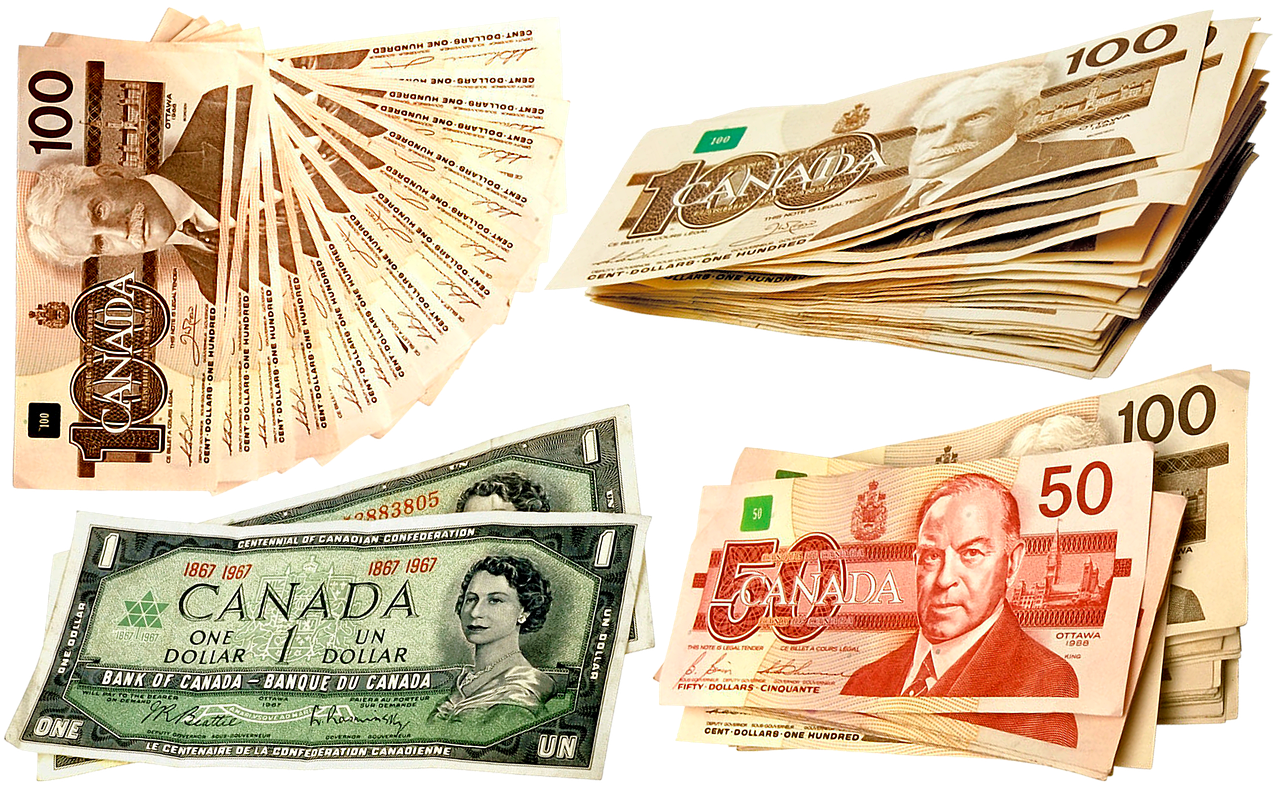
Canadian money is called the Canadian dollar, written with the symbol $ and the international code CAD. In everyday speech, Canadians call their currency the dollar, and they call single units “bucks,” just as Americans do.
The coins have their own nicknames. The one-dollar coin is the loonie, and the two-dollar coin is the toonie. Paper money is officially called bank notes, issued by the Bank of Canada in five denominations from $5 to $100.
Before you handle Canadian cash or price anything in it, check the denomination set, the coin nicknames, the rounding rules for cash purchases, the difference between the official name and slang, and whether the note is from the current polymer series.
Why Canadian Money Has So Many Names
Ask five people what Canadian money is called and you may get five answers. A tourist says “Canadian dollars.” A Toronto barista says “bucks.” A coin collector says “loonies and toonies.” A bank teller says “bank notes.” All of them are right, which is exactly why the question trips people up.
The confusion comes from layers. There is the formal currency name used by banks and currency markets. There is the shorthand people use at the cash register. And there are the affectionate nicknames Canadians have given their coins, which are unlike anything else in the world. Once you separate those layers, the whole system makes sense.
The Official Name and Currency Code
The formal name of Canada’s currency is the Canadian dollar. In international finance, it carries the currency code CAD, set by the ISO 4217 standard that assigns three-letter codes to every national currency. When you see CAD on a receipt, an exchange board or a bank statement, that is the Canadian dollar.
The dollar symbol is $, the same one the United States uses. To avoid confusion in international contexts, writers often use C$ or CA$, as in C$20 or CA$1,000. The dollar divides into 100 cents, written with the ¢ symbol. So a coffee priced at $3.75 is three dollars and seventy-five cents.
One small quirk of official language: the Bank of Canada calls paper money bank notes, two words, not “banknotes.” It sounds fussy, but it is the term you will see on the central bank’s own pages and in legal documents.
The Coins and Their Nicknames
Canadian coins are where the personality lives. The Royal Canadian Mint strikes them, and several have nicknames that have become part of the national vocabulary.
| Coin | Value | Common name | What is on the reverse |
|---|---|---|---|
| Nickel | 5¢ | Nickel | Beaver |
| Dime | 10¢ | Dime | Bluenose schooner |
| Quarter | 25¢ | Quarter | Caribou |
| Half-dollar | 50¢ | Half-dollar | Coat of arms (rarely seen) |
| One dollar | $1 | Loonie | Common loon |
| Two dollars | $2 | Toonie | Polar bear |
The loonie arrived in 1987 and takes its name from the common loon on its face. The toonie followed in 1996, a playful mashup of “two” and “loonie.” Those two nicknames are distinctly Canadian; nobody in another country uses them, and they show up in everything from hockey chants to charity drives.
The 50-cent piece technically exists but almost never circulates. You will not get one in change at a grocery store, and most Canadians go years without seeing one.
The Penny Is Gone
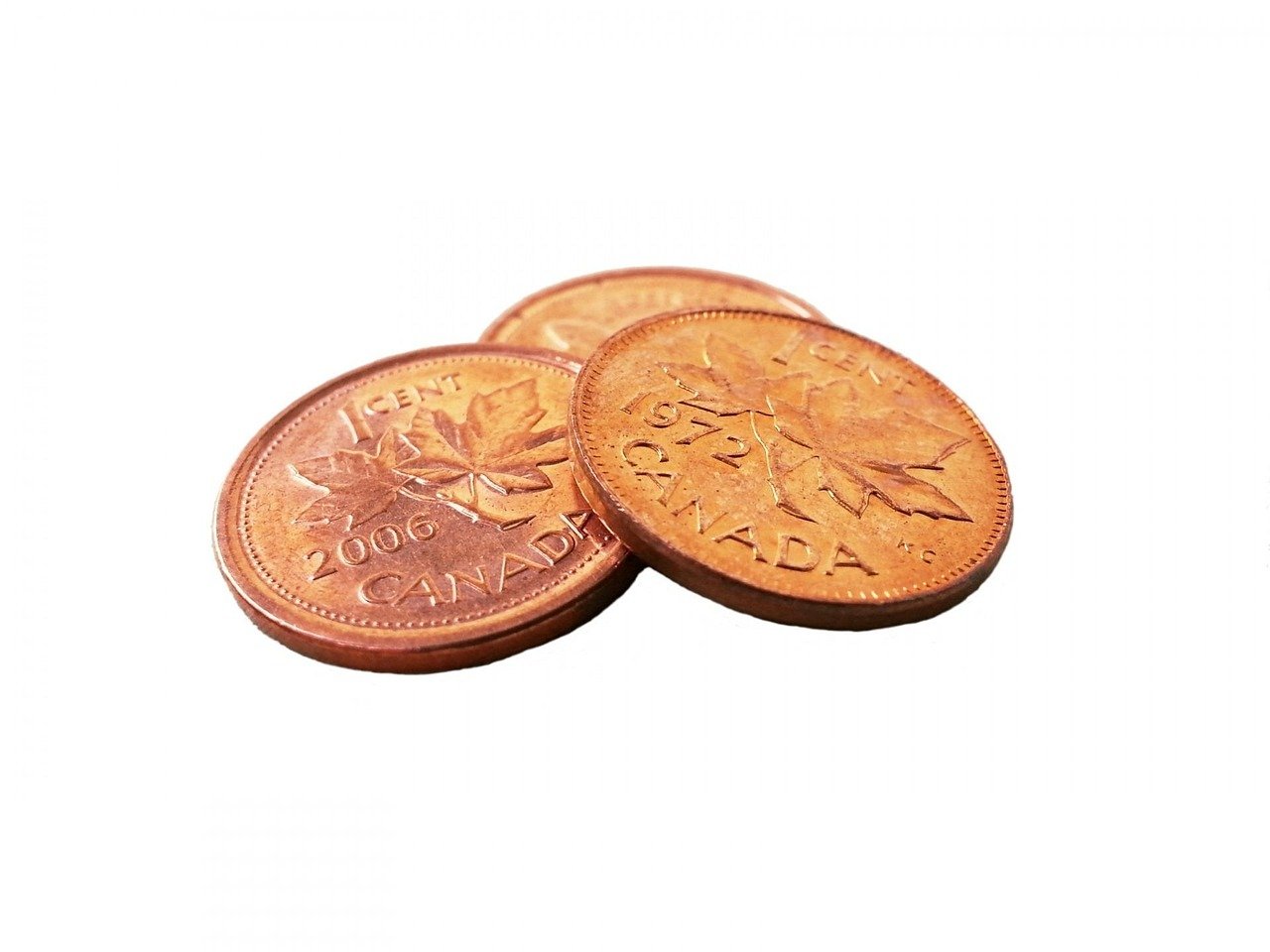
For decades the one-cent coin, the penny, was part of daily life. That ended in stages. The last penny was struck in May 2012, and the Royal Canadian Mint stopped distributing pennies to financial institutions in February 2013.
The phase-out changed how cash works. When you pay in cash, the total is rounded to the nearest five cents. If your bill comes to $12.32, you pay $12.30. If it comes to $12.33, you pay $12.35. Electronic payments like cards and transfers are not rounded at all, so the exact cent amount stands.
This trips up visitors constantly. A traveler who hands over exact change for a $4.02 purchase may get a puzzled look, because the register simply cannot give back two cents. If you are budgeting a trip and want to avoid small-money friction, it helps to know how payment systems handle rounding and fees, much like the practical thinking behind choosing a wedding venue that saves money and stress when every dollar needs to stretch.
Bank Notes and the Polymer Series
The Bank of Canada issues bank notes in five denominations: $5, $10, $20, $50 and $100. The current polymer series began in November 2011 with the $100 note, and the remaining denominations followed over the next couple of years.
Polymer notes feel different from paper. They are smooth, slightly slippery, and springy rather than floppy. They also carry transparent windows and raised details designed to make counterfeiting harder. If you are handed a Canadian note and it feels like ordinary paper, that is a reason to look closer.
Each denomination has a color scheme that makes quick identification easy. The $5 is blue, the $10 is purple, the $20 is green, the $50 is red and the $100 is brown. Cashiers in Canada often sort notes by color without looking, and visitors pick up the habit fast.
Counterfeit awareness matters everywhere, and the same instincts that protect you against fake notes apply to other payment frauds. Scams that rely on urgency and confusion, such as the gift card scam where victims rarely get their money back, work because people act before they check. Slow down, compare the note to a known genuine one, and you avoid most trouble.
Dollars, Bucks and Slang
In casual conversation, Canadians call a dollar a buck. “That sandwich cost me eight bucks” is perfectly normal. The word is shared with the United States, so it is not a Canadianism, but it is everywhere.
The distinctive slang is in the coins. “Do you have a loonie for the shopping cart?” is a sentence you will hear in any Canadian parking lot, because many carts need a dollar coin to release. “That’ll be two toonies” is standard at a farmers market.
There is also regional and generational variation. Older Canadians may still say “two-dollar coin” out of habit. Younger ones say “toonie” without thinking. Nobody says “one-dollar bill,” because Canada replaced its dollar note with the coin in 1987 and never looked back.
How Canadian Money Compares to Other Currencies
The Canadian dollar is not the only currency called a dollar, which is why the CAD code and the C$ symbol exist. Australia, New Zealand, Singapore and Hong Kong all use dollars, and each has its own code. Confusing them in a contract or an online checkout can cost real money.
| Currency | Code | Symbol shorthand |
|---|---|---|
| Canadian dollar | CAD | C$ or CA$ |
| US dollar | USD | US$ |
| Australian dollar | AUD | A$ |
| Euro | EUR | € |
The Canadian dollar floats against other currencies, so its value shifts daily. That matters for anyone sending money across the border, shopping from a foreign website or pricing exports. A weak loonie makes Canadian goods cheaper for foreign buyers and imported goods more expensive at home.
Currency itself is also changing. Central banks around the world, Canada’s included, have studied digital versions of their currencies, a topic explored in coverage of how CBDC digital currency is moving central bank money into digital form. For now, though, Canadian money remains physical bank notes and coins backed by the Bank of Canada.
Practical Tips for Handling Canadian Cash
Knowing the names is one thing. Using the money well is another. A few habits make the difference between fumbling at the register and looking like a local.
First, keep a small stash of coins. A loonie or twoonie in your pocket solves shopping carts, some lockers and small tips. Second, learn the colors of the notes so you can pay quickly and check change without squinting. Third, remember the rounding rule and do not fight it; cash totals ending in 1, 2, 6 or 7 cents round down, and 3, 4, 8 or 9 round up.
A common mistake visitors make is assuming Canadian notes work in US vending machines or that US coins are accepted in Canada. Neither is true, though some border-town businesses may accept US cash at a poor exchange rate. Another mistake is carrying only large bills; a $100 note can be hard to break at a small café early in the morning.
If you are managing money more broadly, the same discipline that keeps a travel budget intact applies to bigger financial decisions. Understanding where costs actually go, whether in identity threat detection and where the money really goes or in everyday cash handling, comes down to knowing the details before you spend.
What Visitors Get Wrong About Canadian Money
The single biggest misconception is that Canadian money is interchangeable with American money. It is not. The exchange rate moves, businesses set their own policies, and banks charge fees to convert. A $20 bill from the US is not $20 in Canada.
The second misconception is that the penny still exists. It does not, and cashiers cannot make change in single cents. If a visitor insists on exact change down to the cent, the transaction stalls.
The third is pronunciation and naming. Calling a toonie a “two-dollar coin” is not wrong, just unusual. Calling a loonie a “dollar coin” is fine too. What confuses people is assuming the nicknames are jokes; they are the standard words Canadians use, printed in tourist guides and used by the Mint itself.
Finally, visitors sometimes assume all Canadian notes look alike. They do not, and the color coding is deliberate. Learning five colors takes about a minute and saves a lot of awkward moments at the till.
Conclusion
Canadian money is called the Canadian dollar, coded CAD and written with a $ or C$ symbol. It splits into 100 cents, comes in polymer bank notes from $5 to $100, and circulates as coins nicknamed the loonie and the toonie. The penny is gone, cash rounds to the nearest five cents, and “bucks” is as common in Toronto as it is in Texas.
The names matter less than what they represent: a stable, well-run currency with a few charming quirks. Learn the nicknames, respect the rounding, check the colors, and Canadian cash stops being a puzzle and starts being just money.
FAQ
Is Canadian money called a dollar or a pound?
It is called a dollar. Canada has never used the pound as its currency in modern times. The formal name is the Canadian dollar, coded CAD, and it divides into 100 cents.
Why is the one-dollar coin called a loonie?
The one-dollar coin is called a loonie because of the common loon pictured on its reverse side. The coin entered circulation in 1987, and the nickname stuck almost immediately. It is now the standard word Canadians use for the coin.
Do Canadians still use pennies?
No. The penny was discontinued, with the last one struck in May 2012 and distribution to banks ending in February 2013. Cash purchases are now rounded to the nearest five cents, while card and electronic payments are charged to the exact cent.
What is the two-dollar coin called?
It is called the toonie, a blend of “two” and “loonie.” The coin was introduced in 1996 and features a polar bear on its reverse. Like the loonie, the nickname is standard usage rather than slang.
Are Canadian dollars the same as US dollars?
No. They are separate currencies with separate values, and the exchange rate between them changes daily. Canadian notes and coins are not accepted as legal tender in the United States, though some border businesses may take them at their own rate.
What is the highest-value Canadian bank note?
The highest denomination in general circulation is the $100 note, which is brown in the polymer series. The Bank of Canada issues notes in $5, $10, $20, $50 and $100 denominations. Larger values exist only as collector or historical items, not as spending money.



