
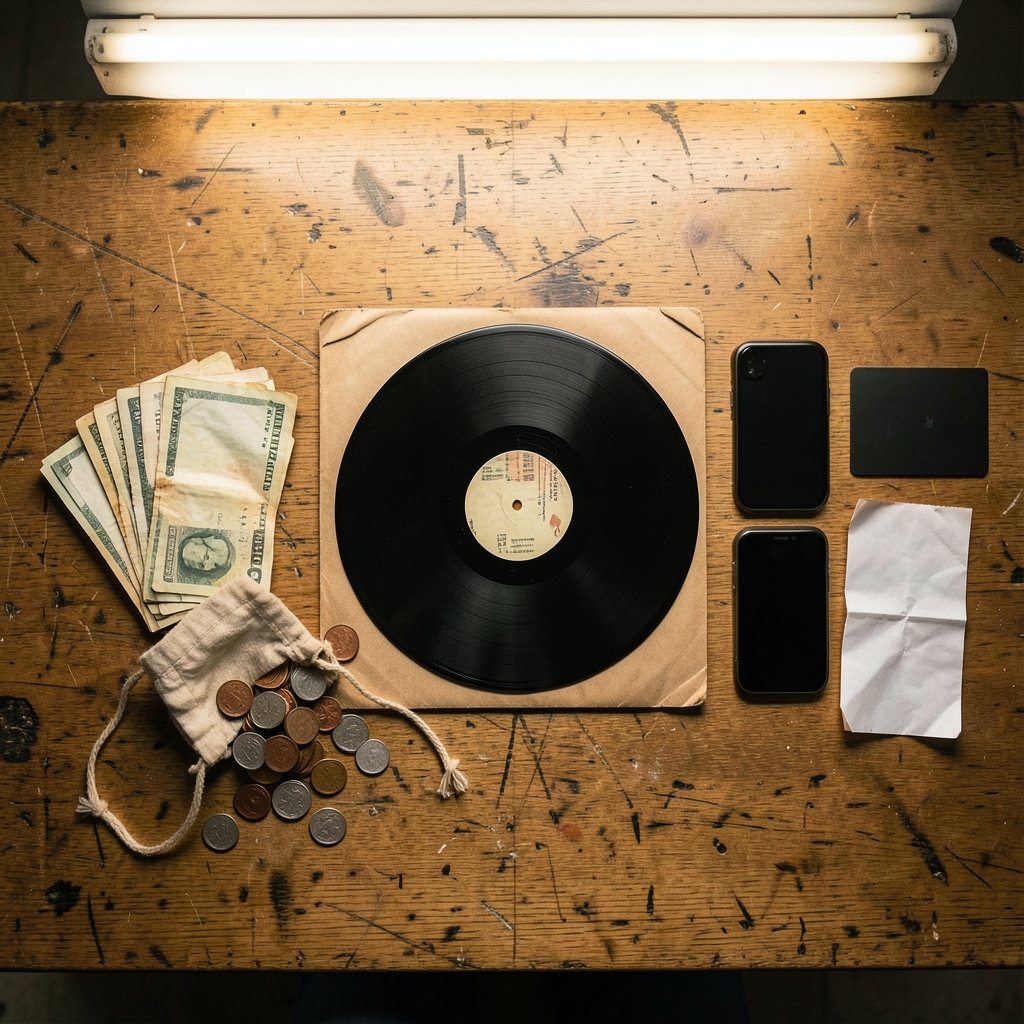
Quick Answer: What year did cash money take over?
There is no single year, because “cash money” describes at least three different things. Physical cash became the everyday standard in most countries somewhere across the 19th and 20th centuries, as central banks and legal-tender laws spread. Cash Money Records was founded in 1991 in New Orleans, and its commercial peak came in the late 1990s and early 2000s. Digital payments, meanwhile, are still overtaking cash country by country, with no shared finish line.
The distinction matters because each version has its own evidence trail, its own dates, and its own arguments among people who study it. Anyone quoting one clean year for “the takeover” is almost certainly talking about just one of these stories.
Before trusting any specific year, check which question is being asked, which country is meant, whether the metric is transaction count or total value, and whether “cash” means physical notes or money in general.
A Question With Three Different Answers

Here is a question that sounds simple and turns out to be a trap: what year did cash money take over? Ask a numismatist, a hip-hop fan, and a payments economist, and you will get three completely different answers, delivered with three completely different levels of confidence.
That is not a flaw in the question. It is a clue about how language works. “Cash money” is a phrase that drifted across centuries and industries, picking up new meanings along the way. Physical currency, a New Orleans record label, and the abstract idea of liquid funds all answer to the same two words.
So instead of hunting for one magic year, this article separates the three stories and gives each one a fair hearing. Along the way, it flags where the dates get fuzzy, because honest history usually does.
When Physical Cash Became the Default
Money is far older than cash. People traded goods, weighed metal, and kept accounts long before anyone stamped a face onto a disc. Standardized coinage is usually dated to Lydia in Asia Minor around the seventh or sixth century BCE, while paper money appeared in China during the Song dynasty, roughly the eleventh century CE. The history of money stretches across millennia, and physical cash is a relatively late layer on top. (Common canva alternatives mistakes that cost you time money)
The version of cash most people picture, meaning government-issued banknotes and coins accepted as legal tender, spread gradually. As central banks took shape and legal-tender laws locked in what counted as valid payment, notes and coins became the default in most countries during the 19th and 20th centuries. There was no global switch-flip. Each nation arrived on its own schedule, shaped by war, banking crises, and the simple logistics of printing trustworthy paper.
Cross-country payment statistics from the Bank for International Settlements show how unevenly this unfolded, and how differently countries still handle the transition away from notes and coins. The lesson is that “cash took over” is really a story about institutions learning to guarantee value, not a single moment in a single year. (Best external ssd 2026 pick real speed over marketing)
Why Historians Resist a Single Date
Three problems keep the debate alive. First, definitions shift: does a promissory note count as cash? Does a bank deposit? Second, geography matters, since a farmer in one country and a factory worker in another might have adopted wage payment in cash decades apart. Third, records are patchy. Early payment habits were rarely measured the way modern central banks measure them today.
The Record Label Story: 1991 and the Slow Build
Now pivot to the other meaning. Cash Money Records was founded in 1991 by brothers Bryan “Birdman” and Ronald “Slim” Williams in New Orleans. If the question is about the label, 1991 is the founding year, not a takeover. A label does not seize a market on day one; it grinds upward.
The commercial peak is generally placed in the late 1990s and early 2000s, after a 1998 distribution deal with Universal and the rise of the Hot Boys and Juvenile. That stretch is when the label’s sound and business model started shaping the wider rap industry rather than just a regional scene.
Worth noting: “takeover” is not a measurable event in music. Chart positions, sales certifications, and radio play all tell slightly different stories. Anyone claiming a precise takeover year for the label is making a judgment call, not reporting a statistic. The label’s own history is well documented for readers who want the timeline.
When Digital Payments Started Beating Cash
The third answer is the one most people actually want when they search this question today. They are asking: when did cards, phones, and transfers start beating physical cash?
The honest answer is that it depends entirely on where you stand. Sweden is often cited as the most cashless economy, and its central bank has published extensive analysis of declining cash use along with warnings about what gets left behind when notes disappear. Other countries remain deeply cash-based, especially where informal work and rural banking access depend on paper money. (Identity threat detection really costs where money goes)
The COVID-19 pandemic in 2020 accelerated contactless and digital payments in many countries. But reports of cash’s death were premature. Demand for physical cash actually rose in some economies during the crisis, as people hoarded notes against uncertainty. The Bank for International Settlements has documented these pandemic-era payment shifts in detail, and the pattern is messier than the headlines suggested.
A Rough Timeline of the Shift
| Period | What Changed | Cash’s Status |
|---|---|---|
| 1950s to 1970s | Charge cards and early credit cards spread | Cash dominant, cards a convenience |
| 1980s to 1990s | Debit cards and ATMs go mainstream | Cash still leads in most countries |
| 2000s | Online banking and e-commerce grow | Cash strong for daily purchases |
| 2010s | Contactless cards and mobile wallets | Cash use falls sharply in some countries |
| 2020 onward | Pandemic pushes digital adoption | Mixed: decline in some places, resilience in others |
If you want to apply this to your own finances, the practical takeaway is to audit your own payment mix rather than wait for a national milestone. Track how often you actually use notes in a month, and notice where digital options cost you fees or expose your data. That habit is more useful than any single date.
Why the Numbers Keep Disagreeing
Two people can look at the same country and disagree about whether cash has been overtaken, and both can be right. The disagreement usually comes down to the metric.
Transaction count versus transaction value is the biggest split. Cards and digital wallets may handle most individual purchases while cash still moves a large share of total value, or the reverse. Small everyday buys and large informal payments behave very differently.
Then there is the definition problem again. Does a mobile wallet balance count as cash? Does a prepaid card? Researchers draw these lines in different places, and the lines move the results.
There is also a reporting lag. Payment statistics arrive months or years after behavior changes, so the “official” crossover year for any country tends to be revised later. Treat any dramatic single-year claim with polite skepticism.
Practical Tips for Reading Payment Headlines
Anyone who follows money news will keep running into confident claims about cash disappearing or making a comeback. A few habits keep those claims in perspective.
First, check the country. A statistic about Sweden or South Korea says almost nothing about Brazil or Nigeria. Second, check the metric, as covered above. Third, check who published it: a central bank, a payments network, or a consultancy each has its own reasons for framing the numbers a certain way.
Fourth, watch for the difference between behavior and policy. A government can legislate that businesses must accept cash, or that they may refuse it, without consumer habits changing overnight. Legal tender rules are frequently misunderstood, and the gap between what the law says and what shops actually do is often wide.
Finally, remember that cash serves people who are not served well by digital systems: older adults, people without stable banking, and anyone in a region with unreliable connectivity. A “takeover” that leaves those groups behind is not a clean victory. That is precisely why some central banks have raised alarms even as cash use falls.
What Actually Happens Next
The likeliest future is not a single global moment when cash vanishes. It is a long, uneven fade in some places and stubborn persistence in others, with governments stepping in to protect access at the margins.
Digital public money is part of that picture. Central banks around the world are researching and piloting digital currencies, which would change what “cash” even means. The shift toward central bank digital currency is worth understanding because it reframes the whole debate: if money becomes a government-issued digital token, the line between cash and digital blurs entirely.
For ordinary readers, the useful move is to stay flexible. Keep a small cash reserve, know your digital payment options, and read payment news with the country and the metric in mind. That is a sturdier strategy than betting on any predicted takeover year.
Conclusion
So what year did cash money take over? The truthful answer is that the question contains three questions. Physical cash became standard across the 19th and 20th centuries, country by country, with no shared date. Cash Money Records started in 1991 and peaked in the late 1990s and early 2000s. Digital payments are still in the middle of their own slow, uneven rise, and the finish line keeps moving.
The pattern across all three stories is the same: real change is gradual, locally specific, and rarely as tidy as a headline. The next time someone offers you a single year for a sweeping shift in money, ask which country, which metric, and which kind of cash they mean. You will usually find the conversation gets more interesting, and more accurate, right at that point.
FAQ
Did cash money take over in 1991?
Only if the question is about the record label. Cash Money Records was founded in 1991 in New Orleans by Bryan “Birdman” and Ronald “Slim” Williams. That year marks a beginning, not a takeover. The label’s commercial dominance came later, after a 1998 distribution deal and the rise of its signature artists.
When did paper money first appear?
Paper money is generally dated to China’s Song dynasty, around the eleventh century CE. Standardized coinage came much earlier, usually placed in Lydia around the seventh or sixth century BCE. Both were gradual developments rather than single inventions announced on a particular day.
Has any country fully eliminated cash?
No country has fully eliminated physical cash, though some have moved much further than others. Sweden is frequently cited as the most cashless economy, with declining cash use documented by its central bank. Even there, cash remains legal tender and access questions remain active policy debates.
Which is growing faster, cards or mobile payments?
Mobile and contactless payments have grown quickly in recent years, especially after the 2020 pandemic pushed many consumers toward tap-and-go options. Card payments still handle enormous volume in most economies. The two often overlap, since a mobile wallet usually sits on top of a card or bank account.
Why do experts disagree about when cash was overtaken?
They disagree because the metric changes the answer. Transaction count and transaction value can point in opposite directions, definitions of cash vary between studies, and payment statistics arrive with reporting lags that get revised later. Country-level differences add another layer of confusion.
Is cash likely to disappear in my lifetime?
For most people, probably not entirely. The more likely outcome is continued decline in everyday cash use alongside legal protections for people who depend on it. Some governments have moved to guarantee cash acceptance precisely because a fully digital system could exclude older adults and people without reliable banking access.



