

Have you ever emptied a coin jar and wondered whether one of those gold-colored dollar coins is secretly worth hundreds of dollars? It is a fair question, and the honest answer is more interesting than most “rare coin” videos suggest. Some dollar coins are genuinely valuable. Most are worth exactly one dollar. A few are worth a lot but are so rare you will never find one in pocket change. The trick is learning to tell the difference before you spend a coin that a collector would happily pay a premium for. (Dollar coin (United States)))
This guide walks through the dollar coins that carry real value, the ones that only look special, and the everyday habits that separate informed collectors from people who get talked into bad deals.
The Big Picture: What Makes a Dollar Coin Valuable
Before getting to specific coins, it helps to understand why any coin is worth more than its face value. Three things drive value in almost every case:
Mintage and survival. A coin struck in small numbers is scarcer than one struck in the millions. But survival matters just as much. Coins that people saved tend to be common in high grades, while coins that circulated hard are often worn and rare in mint condition.
Condition. Collectors grade coins on a 70-point scale, and the difference between one grade point near the top can multiply a price. A worn coin and a flawless one of the same date are not the same object to a buyer.
Metal content. Silver and gold issues carry bullion value on top of any collector premium. A silver dollar contains real metal, so even a common date has a floor under its price.
The confusion in most online “worth money” lists comes from mixing these three ideas. A listing that says a coin is “worth $500” might be quoting a perfect-grade auction result for a coin you could never afford to own in that condition. Your worn pocket piece is a different coin at a different price. (Federal Reserve FAQ: Currency and Coin)
Early Silver Dollars: The Genuine Rarities
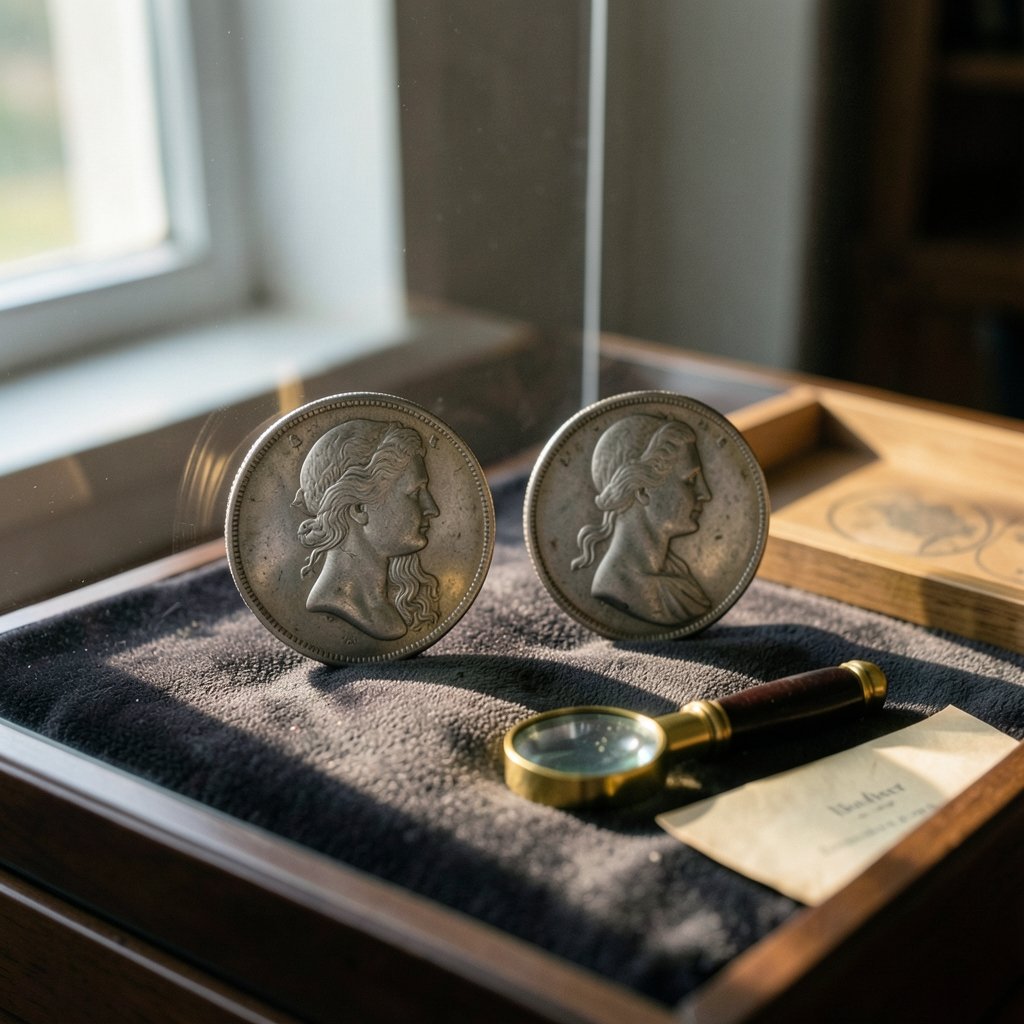
The dollar coins that make headlines are almost always early silver pieces from the late 1700s and early 1800s.
The 1794 Flowing Hair dollar is widely described as the first U.S. silver dollar. Auction results for the best-known example have been reported in the millions of dollars, making it one of the most valuable coins in American numismatics. You will not find one in circulation, and any “1794 dollar” offered at a flea market is almost certainly a replica.
The 1804 Draped Bust dollar is a fascinating case. Despite the date, most examples were actually struck decades later, around the 1830s and beyond, for collectors and diplomatic presentation sets. Numismatists call these restrikes. Knowing this matters because it shows how a date on a coin does not always match the year it was made.
For historical context on these pieces, the Smithsonian’s numismatic collections and the American Numismatic Society maintain detailed records of early American coinage that are worth reading if you want to go deeper than a price list.
The 1933 Double Eagle: A Special Case
The 1933 Saint-Gaudens double eagle is a $20 gold piece rather than a dollar coin, but it belongs in any conversation about valuable American coins. Almost the entire mintage was melted down, and only one example is legally owned privately. It sold in 2002 for a reported $7.59 million.
The lesson here is legal as much as financial. Some coins are illegal to own privately, and buying one without clear provenance can mean losing both the coin and your money. If a deal seems impossibly good on a famous rarity, the problem is usually the coin’s legal status, not its price.
Modern Dollar Coins That Carry a Premium
Here is where most readers will actually find value. Modern dollar coins are common, but a few dates and varieties are worth more than face value.
The Eisenhower Dollar (1971–1978)
The Eisenhower dollar was the first U.S. dollar coin issued after the Peace dollar series ended in 1935. Most circulation pieces are copper-nickel clad and worth little above face value. However, 40% silver versions were made for collectors, and those carry bullion value plus a modest premium. The 1971 and 1972 silver issues are the ones to check.
The Susan B. Anthony Dollar (1979–1981, 1999)
The Susan B. Anthony dollar is the classic cautionary tale. It failed in circulation largely because it was close in size to a quarter and easy to confuse. Most are worth face value. The exception is the 1981 issue, which had a low mintage for circulation and commands a premium in uncirculated condition. Proof versions from any year are also worth more than a dollar to collectors.
The Sacagawea and Native American Dollar (2000–present)
These golden-colored coins use a manganese-brass clad composition. Most circulate at face value. The valuable exceptions are error coins, particularly the “Cheerios” Sacagawea dollar, a 2000-P variety found in cereal boxes with a distinctive detail on the tail feathers. Genuine examples have sold for thousands of dollars. Be careful: this is one of the most counterfeited “rare” coins in the hobby.
The Presidential and American Innovation Dollars
The Presidential $1 Coin Program ran from 2007 to 2016, honoring presidents in order. The American Innovation $1 Coin Program began in 2018 and issues coins by state and territory. Both are common in circulation and generally worth face value. Uncirculated rolls and proof sets appeal to completists, but the individual coins are not rare.
| Coin | Years | Typical Value | What to Look For |
|---|---|---|---|
| Eisenhower dollar | 1971–1978 | Face value (clad) | 40% silver versions |
| Susan B. Anthony dollar | 1979–1981, 1999 | Face value | 1981 circulation strike, proofs |
| Sacagawea dollar | 2000–present | Face value | 2000-P “Cheerios” variety |
| Presidential dollar | 2007–2016 | Face value | Uncirculated rolls, errors |
| American Innovation dollar | 2018–present | Face value | Proof sets, errors |
Common Mistakes That Cost People Money
A few habits separate people who find real value from people who get burned.
Mistake one: trusting cleaning. Never clean a coin. Scrubbing removes the original surface, and collectors pay far less for a cleaned coin even if it looks shinier. A bright, polished coin is usually a damaged coin.
Mistake two: believing every listicle. Many “coins worth money” articles quote prices for grades you will never encounter. A coin listed at $200 in mint state might be worth $2 in the condition sitting in your drawer.
Mistake three: skipping the mint mark. The small letter under the date changes everything. A 1981 Susan B. Anthony dollar with no mint mark is common; the same date from a different mint is not. Always check the mint mark before assuming a coin is ordinary.
Mistake four: buying without authentication. Error coins and key dates attract fakes. If you are spending real money, buy graded coins from established dealers, or have a raw coin authenticated before you pay.
Mistake five: ignoring storage. Coins stored loose in a drawer get scratched. Hold coins by the edges, keep them in acid-free holders, and store them somewhere dry. Condition is money, and handling is how condition disappears.
How to Check Your Coins Without Wasting Time
A simple routine works better than a deep dive into every coin.
- Sort by denomination and set aside all dollar coins.
- Check the date and mint mark on each one against a recognized price guide.
- Separate silver and gold issues from clad issues, since metal content sets a floor on value.
- Look closely at any coin with an obvious flaw, doubled lettering, or an off-center strike. Errors are where modern coins get interesting.
- Set aside anything that looks uncirculated, and do not clean it.
- For anything that seems valuable, get a second opinion before selling.
The grading scale itself is worth learning. The 70-point system used by major grading services is explained in detail by the American Numismatic Association, and understanding it will keep you from overpaying for a coin described as “almost uncirculated” when it is really just worn.
Face Value, Bullion Value, and Collector Premium
The single most useful concept for anyone sorting coins is the difference between three kinds of value.
Face value is what the coin buys at a store. For a modern dollar coin, that is one dollar, no matter how shiny it is.
Bullion value is the melt value of the metal. It only matters for silver and gold issues. A 40% silver Eisenhower dollar has a metal value that moves with the silver market, so its floor rises and falls over time.
Collector premium is what a buyer pays above metal and face value for rarity and condition. This is the part that is subjective, and it is the part that most online lists overstate.
When you see a price quoted for a coin, ask which of these three it represents. A common silver dollar might be worth $25 in metal but $40 to a collector. A modern dollar coin might be worth $1 in face value and $1.25 to a collector in perfect condition. Knowing the difference keeps you from confusing a good story with a good price.
Where Dollar Coin Values Come From
Prices are not fixed. They come from auction records, dealer inventories, and published price guides, and they move as the market changes. That is why a specific dollar figure should always be tied to a dated sale or a recognized guide rather than repeated as a permanent fact.
The same principle applies to the broader question of whether a coin is worth holding at all. Some collectors treat modern dollar coins as a low-cost entry point, similar to how people weigh whether a subscription or a gadget earns its keep. If you enjoy the hunt, the cost of a few coin holders is trivial. If you are hoping to fund a retirement, the math rarely works. A realistic mindset, like the one behind a careful ynab vs monarch money zero based budgeting vs net worth comparison, treats collecting as a hobby with a budget, not an investment strategy. (Best games nintendo switch 2 whats worth your time money)
That framing also helps with the temptation to chase “rare” coins online. The same skepticism you would apply to a gift card scam works victims rarely get their money back warning applies to coin deals that pressure you to buy fast. Legitimate numismatics rewards patience.
What Actually Sells
If you decide to sell, a few practical points matter more than anything else.
Graded coins sell for more than raw coins because buyers trust the grade. A coin in a reputable holder removes the guesswork, and that convenience has a price.
Complete sets sell better than singles. A full run of Presidential dollars or a date set of Eisenhower dollars appeals to collectors who want to finish a collection, and they will pay for the convenience.
Provenance matters for rarities. Paperwork, old auction catalogs, and original packaging all add credibility.
And timing matters. Silver and gold prices move, and bullion-linked coins follow them. If you are selling a silver dollar for its metal, check the spot price the same day.
Conclusion
Dollar coins worth money fall into two clear groups. The first is the genuine rarities, the early silver dollars and famous gold pieces that trade for millions and essentially never appear in ordinary hands. The second is the small set of modern coins with low mintages, silver content, or notable errors, like the 1981 Susan B. Anthony dollar or the 2000-P “Cheerios” Sacagawea. Everything else is worth a dollar, and there is no shame in that.
The practical takeaway is simple. Check dates and mint marks, never clean a coin, learn the grading scale, and treat any spectacular claim with suspicion until a reputable source confirms it. Do that, and you will spot the real finds, avoid the fakes, and enjoy the hunt without losing money on it.
Frequently Asked Questions
Are dollar coins worth more than face value?
Most modern dollar coins are worth exactly one dollar. The exceptions are silver issues, low-mintage dates like the 1981 Susan B. Anthony dollar, and error varieties. Early silver dollars are worth far more but are extremely rare.
What is the most valuable dollar coin?
The 1794 Flowing Hair dollar is widely regarded as the most valuable U.S. silver dollar, with top examples reported in the millions at auction. The 1804 Draped Bust dollar is also extremely valuable, though most examples were restruck decades after the date on the coin.
Is the 2000 Sacagawea dollar worth anything?
Most 2000 Sacagawea dollars are worth face value. The exception is the “Cheerios” variety, a 2000-P coin with a distinctive tail feather detail that has sold for thousands. Because fakes are common, have any candidate authenticated before selling.
Should I clean my old coins before selling?
No. Cleaning removes the original surface and sharply reduces value. Collectors pay less for cleaned coins even when they look brighter. Store coins in acid-free holders and handle them by the edges instead.
How do I know if a dollar coin is silver?
Check the date and composition. Eisenhower dollars from 1971 to 1974 in 40% silver were made for collectors, and earlier silver dollars are nearly all silver. Modern golden dollars are clad, not silver. A magnet and a reference guide will settle most questions quickly.
Where can I check what a coin is worth?
Use a recognized price guide, compare recent auction results, and consult a reputable dealer or grading service. Avoid listicles that quote prices without stating the grade and date of the sale, since condition changes value dramatically.



