
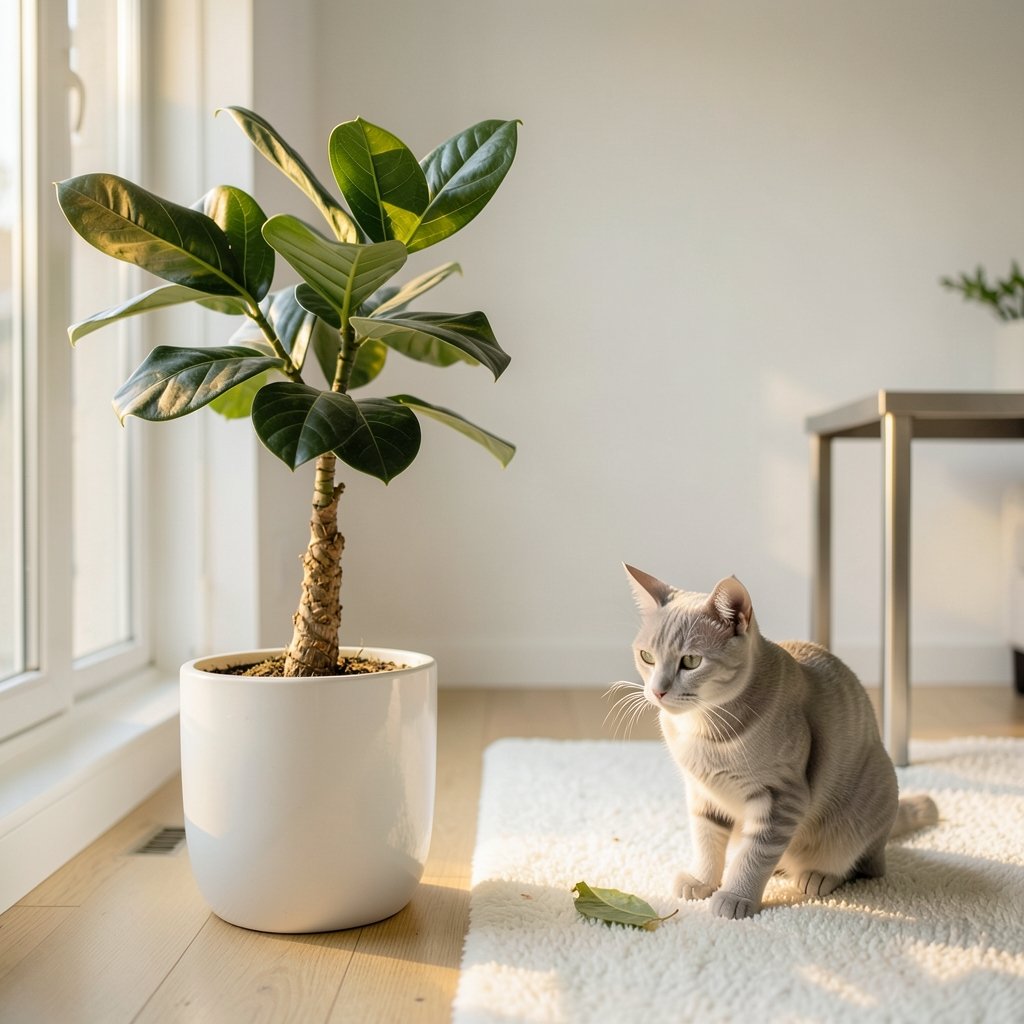
Quick Answer: Are money trees toxic to cats?
No. The plant most people call a money tree (Pachira aquatica) is not listed as toxic to cats or dogs, and veterinary poison services do not flag it as a serious exposure risk. That means most cats that nibble a leaf will be fine, though plant material can still upset a sensitive stomach.
It depends on which plant is actually sitting in the pot. Some plants sold under “money” nicknames, like the ZZ plant, are genuinely toxic and cause mouth pain, drooling, and vomiting. A few other lookalikes cause similar trouble.
Before relaxing, check the plant’s true identity, whether your cat has a habit of chewing plants, what fertilizer or soil additives are in the pot, and whether your cat has any existing digestive issues.
Why the Name “Money Tree” Causes So Much Confusion
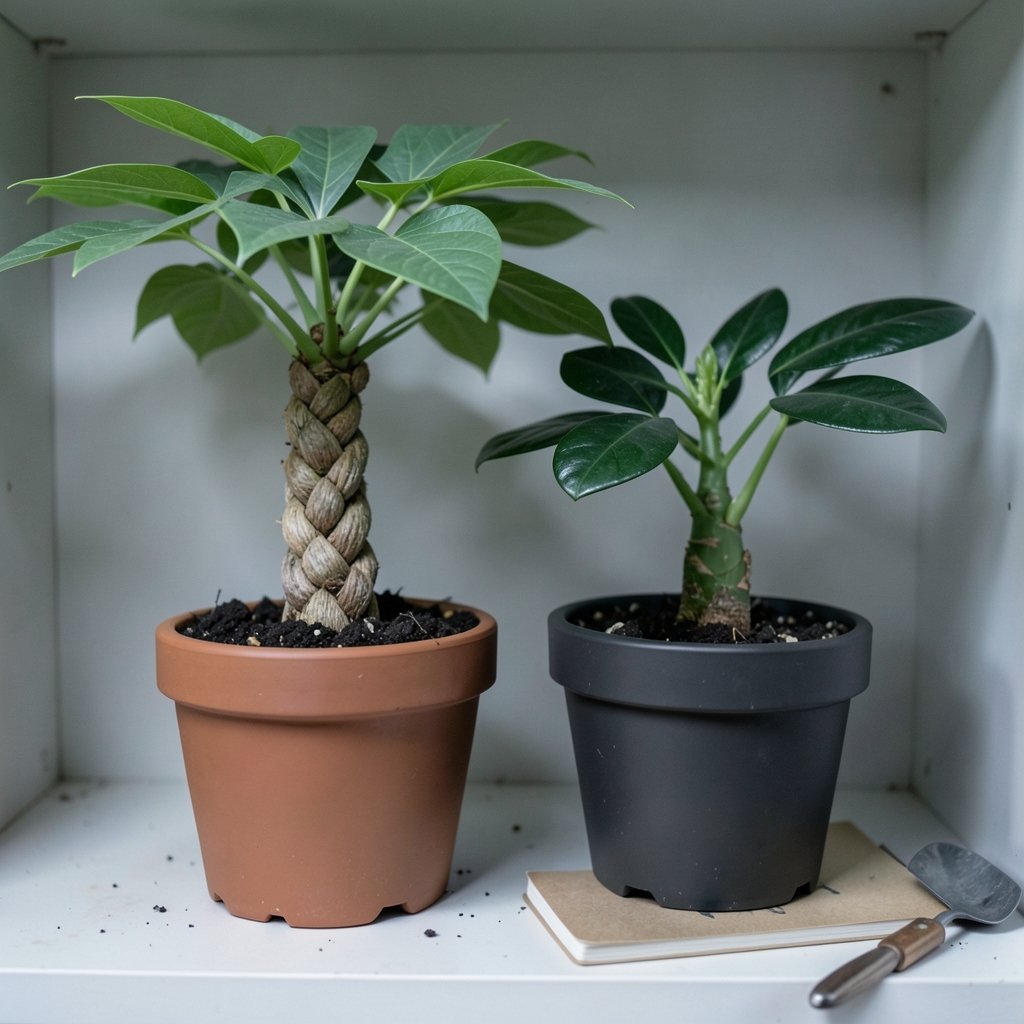
Here is the frustrating part about this question: the answer depends entirely on which plant is in the pot, and the nickname does not help. “Money tree” is a marketing name, not a botanical one. It gets slapped on at least two very different houseplants, and only one of them is the classic braided-trunk tree people picture.
The real money tree is Pachira aquatica, a tropical species in the mallow family that grows along riverbanks in Central and South America. Growers braid its young trunks together and sell it as a good-luck plant. You can confirm the accepted botanical name through Plants of the World Online from the Royal Botanic Gardens, Kew, which is the standard reference for checking what a plant actually is. (Cbdc digital currency central bank money going digital)
Then there is the ZZ plant (Zamioculcas zamiifolia), a tough, glossy-leaved survivor that some sellers call a “money plant” or “eternity plant.” It is a completely different species with a completely different safety profile. If a shopper grabs a ZZ plant thinking all “money” plants are safe, they have made a risky assumption.
Is Pachira aquatica Safe Around Cats?
The honest answer is “not listed as toxic,” which is slightly different from “proven safe.” The ASPCA’s searchable database of toxic and non-toxic plants does not include Pachira aquatica among plants harmful to cats, dogs, or horses. Veterinary toxicology services do not flag it either. In practice, that absence of reports is the best evidence available, and it is reassuring.
What it is not is a controlled safety study. Nobody ran feeding trials on money trees. The classification rests on decades of exposure reports that never turned up serious poisonings. So the accurate claim is: money trees are generally considered non-toxic, and there is no known toxin in the plant.
That said, “non-toxic” does not mean “edible.” Cats are obligate carnivores with digestive systems built for meat. A mouthful of any fibrous leaf can cause mild vomiting or drooling purely as a mechanical irritation. The plant does not have to be poisonous to make a cat feel queasy.
The Real Risks Are Bites, Soil, and Fertilizer
When a cat gets sick after chewing a money tree, the plant itself is often not the culprit. Three other things deserve blame first.
Plant material in bulk. A cat that shreds several leaves can swallow enough fiber to trigger a bout of vomiting. This is ordinary stomach upset, not poisoning.
The soil. Potting mix can contain fertilizer pellets, moisture-retention crystals, or slow-release beads. Cats dig, and some eat. Fertilizer ingestion is a far more common cause of GI upset than the leaves themselves.
Pesticides and leaf shine. A newly purchased plant may carry residue from the grower. Wiping leaves with a damp cloth and repotting in fresh soil removes most of that risk.
The pot and support stake. A cat launching at a tall money tree can pull the whole thing over. The mess is annoying, but a falling pot can also injure a pet. Heavy ceramic pots and stable placement solve this.
A practical tip that works better than punishment: give the cat something better to chew. A pot of cat grass placed nearby redirects most plant-nibbling behavior within a week or two. Cats chew for texture and boredom, not out of spite.
Which “Money” Plants Are Actually Toxic to Cats?
This is where the stakes go up. The ASPCA’s toxic and non-toxic plant database lists the ZZ plant as toxic to cats and dogs. Its mechanism is calcium oxalate crystals, tiny needle-shaped structures packed into the plant tissue. When a cat bites into a leaf, those needles fire into the mouth and throat.
The result is immediate: yowling, pawing at the mouth, drooling, swelling, and sometimes vomiting. It looks dramatic and it hurts, but it is rarely life-threatening. The Merck Veterinary Manual’s section on plant toxicoses explains that insoluble calcium oxalate plants cause oral irritation rather than systemic poisoning, which is why most cats recover with supportive care.
Here is a quick comparison to keep the two plants straight:
| Feature | Money tree (Pachira aquatica) | ZZ plant (Zamioculcas zamiifolia) |
|---|---|---|
| Toxicity to cats | Not listed as toxic | Listed as toxic |
| Mechanism | No known toxin | Calcium oxalate crystals |
| Typical signs after chewing | Mild vomiting, drooling from fiber | Mouth pain, swelling, heavy drooling |
| Leaves | Palmate, bright green, tree-like | Waxy, oval, dark green on thick stems |
| Growth habit | Woody trunk, often braided | Fleshy rhizomes under soil |
| Risk level | Low | Moderate |
Other plants that borrow the “money” nickname, like the Chinese money plant (Pilea peperomioides), are also generally considered non-toxic. The pattern holds: the nickname tells you almost nothing. The species name tells you everything.
How to Tell Which Plant You Actually Own
Most people inherit a houseplant without a label. A few quick checks settle the question.
- Look at the trunk. A money tree has a woody, often braided stem. A ZZ plant has thick, smooth stalks rising straight from the soil with no bark.
- Count the leaflets. Money tree leaves are palm-shaped with five to seven leaflets fanning from one point. ZZ plant leaves grow in pairs along a single stem.
- Check the roots. ZZ plants store water in fat underground rhizomes that look like small potatoes. Money trees have ordinary fibrous roots.
- Search the exact name on a plant database rather than a shopping site. Retailer pages describe plants to sell them, not to warn you.
If identification is still unclear, treat the plant as risky until proven otherwise. Move it out of reach, and the question becomes moot.
What to Do If Your Cat Chews a Money Tree
Stay calm and watch. Most cats that nibble a Pachira leaf show no symptoms at all. If the cat vomits once or drools briefly and then returns to normal behavior, that is consistent with mild irritation and needs no treatment beyond fresh water and a little quiet.
Call a veterinarian promptly if any of these appear: repeated vomiting, lethargy lasting more than a few hours, refusal to eat, swelling around the mouth, or difficulty breathing. The ASPCA Animal Poison Control Center runs a 24-hour hotline for suspected poisonings, and a consultation fee may apply. Having the plant’s name and a photo ready speeds things up considerably.
One mistake people make: waiting to see if symptoms “get worse” before calling. With plant exposures, early advice is cheap and late advice is expensive. A five-minute phone call resolves most of these cases.
The same instinct applies to other household hazards. Scams and poisons share a pattern: the damage compounds the longer you wait to act. That is true of how a gift card scam works and why victims rarely get their money back too, where speed is the only real defense.
Keeping Cats and Houseplants in Peaceful Coexistence
Prevention beats reaction, and it does not require giving up houseplants. A few habits make a real difference.
Place tall plants where a cat cannot launch onto them, such as a sturdy stand in a corner rather than a wobbly side table. Skip gravel toppers that invite digging, or use large, smooth stones a cat cannot paw aside. Offer cat grass and a catnip toy as legal outlets for chewing. And check every new plant against a toxicity database before it enters the house, not after.
For readers managing a whole household budget of pet and plant expenses, the same logic of checking before buying applies elsewhere. Understanding where the money really goes in identity threat detection is a reminder that hidden costs lurk in most purchases, and a ten-dollar plant that needs a vet visit is a good example.
Are Money Trees Safe for Kittens and Senior Cats?
Age changes the calculus a little. Kittens explore with their mouths and have smaller bodies, so any stomach upset hits them harder. Senior cats may have dental disease or kidney issues that make vomiting more concerning. Neither group faces a special toxin in Pachira aquatica, but both deserve a lower threshold for calling the vet.
Cats with a history of inflammatory bowel disease or food sensitivities also react more strongly to dietary surprises, including plant fiber. For these animals, keeping the money tree on a high shelf is simply good management.
Conclusion
So, are money trees toxic to cats? For the plant most people actually own, Pachira aquatica, the answer is no. It is not on the toxic list, veterinary poison services do not flag it, and the worst most cats face is a mild stomach ache from eating too much leaf. The catch is identification. A ZZ plant sold under a “money” nickname is a different story, with calcium oxalate crystals that cause real mouth pain.
The practical takeaway is simple. Confirm the species, keep the pot out of reach, watch for vomiting or drooling after any chew session, and call a vet or poison hotline the moment something looks wrong. A little homework turns a worrying question into a manageable one, and the cat keeps its curiosity intact.
Frequently Asked Questions
Can a cat die from eating a money tree leaf?
No documented deaths are linked to Pachira aquatica. The plant contains no known toxin, and reported reactions are limited to mild digestive upset. The bigger danger is a cat knocking over a heavy pot, not the leaf itself.
Is the braided trunk of a money tree more dangerous than the leaves?
No. The trunk is ordinary woody tissue with no toxin. Cats rarely chew it anyway, since the leaves are softer and more appealing. If a cat does gnaw the bark, expect the same mild stomach upset as with leaves.
What does ZZ plant poisoning look like in cats?
Expect sudden drooling, pawing at the mouth, yowling, and possible swelling of the lips and tongue within minutes of chewing. Vomiting may follow. Signs usually ease within hours, but a vet should confirm the diagnosis and manage pain.
Should I get rid of my money tree if I have a cat?
Not necessarily. Most cat owners keep money trees without incident. Move the plant to a spot the cat cannot reach, offer cat grass as an alternative, and monitor for a few days after any new plant arrives.
Are money tree leaves dangerous if a cat just licks them?
Licking alone rarely causes problems. The risk comes from biting and swallowing plant material. A cat that licks a leaf and walks away needs no treatment, though rinsing store-bought leaves removes any pesticide residue.
Do pet insurance policies cover plant poisoning treatment?
Many accident-and-illness policies cover poisoning treatment, but terms vary widely. Check the policy’s exclusions, waiting periods, and whether toxicity cases count as accidents before assuming coverage.



