
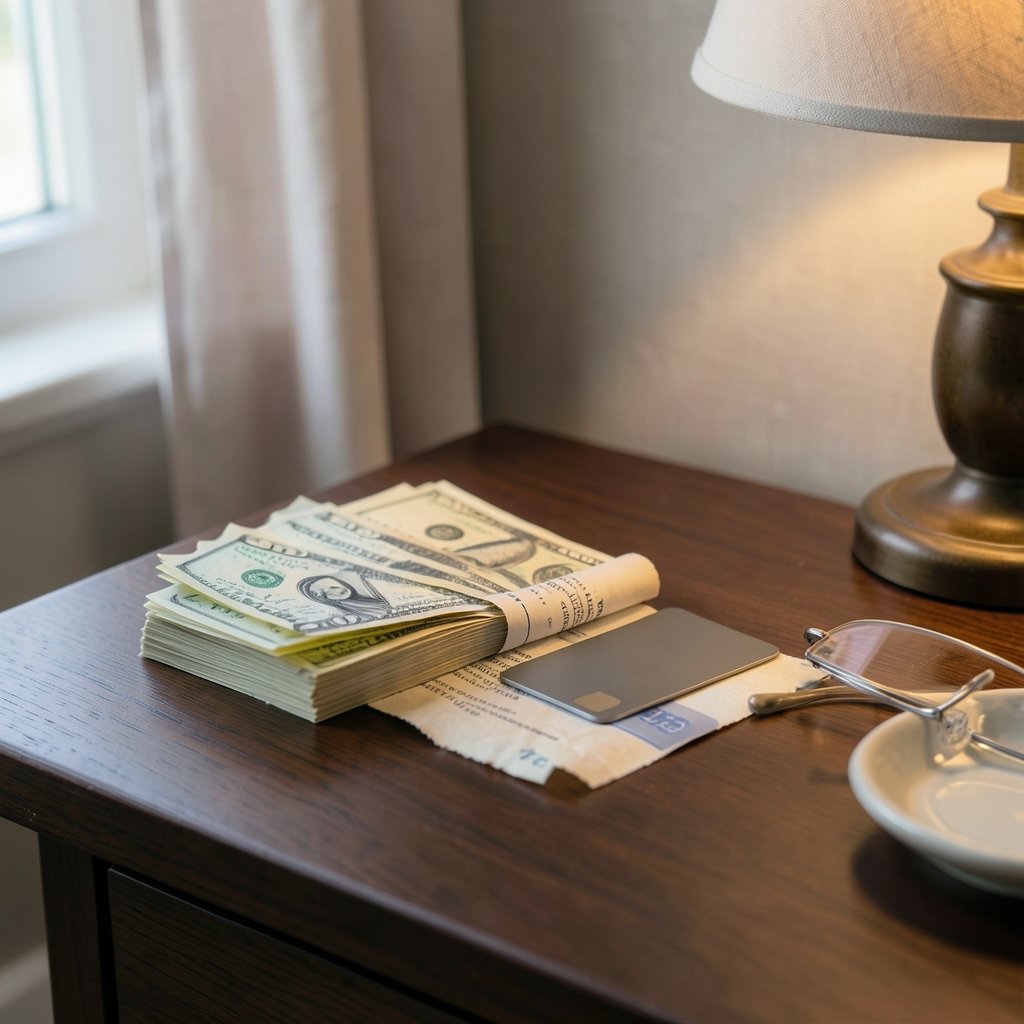
Quick Answer: How much money can i withdraw from an atm?
There is no single legal cap on ATM withdrawals in the United States. The amount you can take out is set by your bank or card issuer, and most institutions land somewhere between roughly $300 and $1,000 per transaction or per day, depending on the account and card type.
Those limits are contractual, not statutory. A premium checking account or a business card often carries a higher ceiling than a basic student account, and you can usually request a temporary increase before a trip or a big cash purchase.
Foreign ATMs add another layer, since the local network may cap each transaction well below your home limit, and the lower of the two numbers wins. Before you rely on a withdrawal, check your per-transaction limit, your daily limit, out-of-network fees, foreign transaction fees, and how much cash the machine actually holds.
Why There’s No Single Answer

Here’s the thing that surprises most people: nobody in Washington sits around setting ATM withdrawal caps. The federal government regulates how ATM transactions are disclosed, receipted, and disputed, but it stays out of the dollar amounts. That means the number you see on the screen is a business decision made by your bank, and it can change whenever the bank wants.
The practical range is wide. A no-frills account at a small credit union might cap you at $300 a day. A relationship checking account at a large national bank might allow $1,000 or more. Some online banks let you raise the limit in the app in about thirty seconds. Others make you call.
What the law does cover is transparency. The Consumer Financial Protection Bureau‘s Regulation E, which implements the Electronic Fund Transfer Act, spells out what ATM operators must tell you and when. If you want the full regulatory picture, the CFPB’s Regulation E page explains the federal rules governing electronic fund transfers, including ATM receipts and fee notices. Notice what’s missing from that list: withdrawal caps.
How Banks Actually Set Your Limit
Banks weigh a handful of factors when they decide your ceiling. Understanding them helps you predict where you’ll land, and it also tells you which levers to pull if you need more cash.
Account type and tenure
Premium accounts, private client tiers, and business accounts typically get higher limits than entry-level consumer accounts. So does longevity. A customer who has banked at the same institution for a decade with no overdrafts is a better risk than a brand-new account holder, and banks price that risk into their limits.
Card type
Debit cards tied to a checking account usually have the most generous daily limits. ATM-only cards, prepaid cards, and cards on newer accounts often carry tighter caps, sometimes as low as $200 to $300 a day. If you opened the account last week, expect the lower end of the range.
Transaction versus daily limits
These are two different numbers, and people conflate them constantly. A bank might allow $500 per transaction but $1,000 per day, which means two withdrawals. Or it might allow $400 per transaction with a $400 daily cap, which means one and done. Always check both figures.
Historical behavior
Some banks quietly adjust limits based on your pattern of use. If you’ve never withdrawn more than $100 at a time, a sudden request for $800 may trigger a fraud hold. That’s not a limit change so much as a risk check, but the effect on your afternoon is the same.
| Factor | Typical effect on your limit |
|---|---|
| Basic or student account | Lower, often $300–$500 per day |
| Premium or relationship account | Higher, often $1,000 or more |
| New account (under 90 days) | Reduced until history builds |
| Business or corporate card | Usually higher, set by the company |
| Prepaid or ATM-only card | Often $200–$300 per day |
The Federal Rules That Do Apply
Even though Washington doesn’t cap your withdrawal, it does govern the experience around it, and knowing these rules is genuinely useful when something goes wrong.
Fee disclosure before you commit
An ATM operator that charges a fee must post notice of it on or at the machine and show it on screen before you’re committed to the transaction. The exact regulatory text is in 12 CFR §1005.16 on ATM fee disclosure, which is worth a skim if a machine ever surprises you with a charge you didn’t see. In practice, this is why the screen asks you to confirm the fee before dispensing cash. If a machine skips that step, that’s a compliance problem, not a you problem. (Automated teller machine)
Receipts are mandatory
Under 12 CFR §1005.9, an ATM must give you a terminal receipt showing the amount and type of transfer. If the printer is out of paper, the transaction still happened, but you’re entitled to that record. Keep the receipt or check your app immediately, especially at unfamiliar machines.
Error resolution and liability
If someone drains your account with a cloned card, Regulation E sets timelines for reporting and limits your liability, provided you report promptly. The difference between reporting in two business days and reporting in sixty can be the difference between a small loss and a large one. This is also why identity theft detection matters so much, since the real cost of a compromised card goes well beyond the stolen cash, as this breakdown of where identity threat detection money actually goes shows. (How much money can i make on social security)
What Actually Limits You at the Machine
Your bank’s number is only half the story. The machine itself has opinions.
Cash on hand. An ATM might hold $20,000 or $2,000 depending on location and time of day. A machine in a busy airport on a Friday night may be running low. Even within your limit, it can only dispense what’s loaded, and it may not have the denomination mix to hit your exact request.
Denomination logic. Most machines dispense in multiples of $20. Ask for $250 and you may get $240 or a refusal, depending on the model. Requesting round numbers in $20 increments avoids the awkward partial dispense.
Network rules. Visa and Mastercard set operational rules for ATM terminals, but they don’t dictate how much an individual cardholder can pull. That’s the issuer’s call. The networks govern things like interchange and terminal behavior, not your personal ceiling.
Foreign ATMs. This is where people get burned. Many countries cap withdrawals per transaction at the local equivalent of a few hundred dollars, and your issuer’s daily limit still applies on top. The binding constraint is whichever is lower. A traveler expecting $800 in one pull may find the machine offers the equivalent of $200, requiring four separate transactions and four separate fees.
Practical Ways to Get More Cash
If the limit is too low for what you need, you have options. None are guaranteed, but several work often enough to be worth trying.
- Call or use the app before you need it. Many banks raise limits temporarily for travel or large purchases. Ask specifically for a temporary increase with a start and end date. It’s discretionary, so be polite and have a reason ready.
- Split across transactions or days. If your per-transaction limit is $400 and your daily limit is $800, two withdrawals solve the problem. Just watch the fee stack.
- Use your own bank’s network. Out-of-network machines often carry lower operator limits plus a surcharge. Your own bank’s ATM usually gives you the full allowance and no fee.
- Visit a branch for large amounts. If you need $5,000 in cash, an ATM is the wrong tool. A teller can handle it, sometimes with a quick identity check.
- Consider a cashier’s check or wire for big payments. Cash isn’t always the right instrument. For a used car or a contractor, a cashier’s check is safer and has no withdrawal ceiling.
One caution worth repeating: scams that demand cash, especially gift cards, are almost impossible to reverse. If someone is pressuring you to withdraw money urgently, stop. This explanation of how the gift card scam works and why victims rarely get their money back is a useful reality check before any high-pressure cash request. (Identity threat detection really costs where money goes)
Common Mistakes People Make
The mistakes here are predictable, which makes them avoidable.
Assuming the daily limit resets at midnight. Some banks reset on a rolling 24-hour basis, not at midnight. If you withdrew $800 at 11 p.m., you may still be capped at noon the next day.
Forgetting that the limit is shared. Some banks pool ATM and point-of-sale debit transactions into one daily cap. Spend $600 on groceries with your debit card and your ATM allowance shrinks accordingly.
Ignoring foreign fees. A $3 operator fee plus a 3% foreign transaction fee plus a poor exchange rate can turn a $200 withdrawal into a $215 withdrawal. On a two-week trip, that adds up fast. Planning your cash needs in advance, much like planning how much internet speed you actually need rather than overbuying, saves real money.
Not checking the machine for skimmers. Wiggle the card slot. Look at the keypad. If anything feels loose or looks added-on, walk away. A compromised terminal can cost you far more than the withdrawal limit ever will.
Requesting odd amounts. Machines dispense in $20s. Ask for $180 and you’re fine. Ask for $175 and you may get nothing.
How Limits Compare Around the World
Withdrawal caps vary enormously by country, and there’s no central database for them. A few patterns hold. In much of Europe, per-transaction caps at local machines often sit in the low hundreds of dollars equivalent, and some networks limit how many withdrawals you can make per day on a foreign card. In Japan, convenience store ATMs are famously reliable but often cap single withdrawals at a modest amount. In parts of Latin America and Southeast Asia, machine cash levels and per-transaction caps can be lower still.
The rule of thumb for travelers: assume the machine’s cap, not your bank’s, is the binding one, and budget for more transactions and more fees than you’d expect at home. If you’re managing money across borders, it also helps to understand how central bank digital currencies might change cross-border cash access, since the infrastructure for moving money internationally is actively being rebuilt.
Conclusion
The honest answer to how much you can withdraw from an ATM is that it depends entirely on the bank that issued your card, the machine you’re standing at, and the country you’re standing in. There’s no federal ceiling, no universal number, and no shortcut around checking your own account terms. What you can control is preparation: know both your per-transaction and daily limits, keep your bank’s app handy for temporary increases, use in-network machines when you can, and treat unfamiliar ATMs abroad with extra caution. Cash still matters, and a little planning means the machine won’t be the thing that decides your day.
FAQ
What is the maximum daily ATM withdrawal limit at major banks?
Most large banks set daily limits somewhere between $500 and $1,000 for standard checking accounts, with premium tiers going higher and basic accounts going lower. The exact figure is bank policy, not law, and it can change without much notice. Check your account disclosure or app rather than relying on a number you read somewhere.
Can I withdraw more than my daily limit in one day?
Sometimes, but only with the bank’s cooperation. Many issuers will grant a temporary limit increase if you call ahead with a reason, such as travel or a large cash purchase. It’s discretionary, so there’s no guarantee, and the increase usually has an expiry date. Splitting the withdrawal across two calendar days is the more reliable fallback.
Why did the ATM give me less money than I requested?
Two common reasons. First, the machine may not have enough cash or the right denomination mix, since most dispense in $20 increments. Second, your request may have exceeded your per-transaction limit even if it fell under your daily limit. The screen usually tells you which one it is before you confirm.
Do ATM fees count toward my withdrawal limit?
Generally no. The operator surcharge and any out-of-network fee are charged separately to your account and don’t reduce the cash amount you can pull. Your daily limit applies to the cash dispensed, not the fees attached to it.
Is it safe to withdraw a large amount of cash at once?
It carries more risk than smaller withdrawals, mainly from theft and from skimmers attached to unfamiliar machines. If you need a large sum, use a machine inside a bank branch during business hours, check the card slot and keypad for tampering, and avoid counting the cash in public. For very large amounts, a teller or a cashier’s check is safer.
What happens if a foreign ATM caps me below my bank’s limit?
The lower limit wins. If the local machine allows the equivalent of $200 per transaction and your bank allows $800 a day, you’ll need four separate withdrawals to reach your daily maximum, and each one may carry its own fee. Budget for extra transactions and check whether your card charges a foreign transaction fee on top.



