
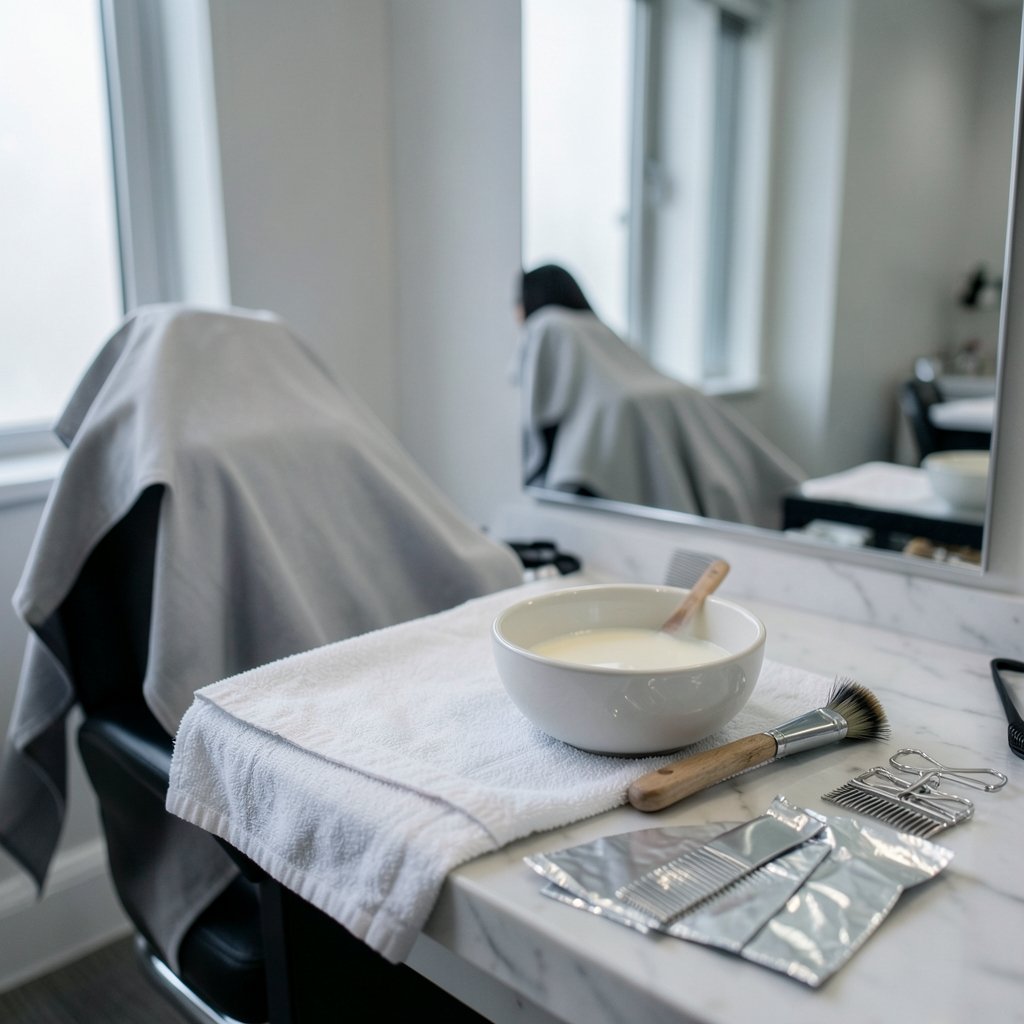
What if the most flattering change you could make to your hair took only a few foils and about an hour in the chair? That is the basic promise of the money piece, a face-framing highlight that has moved from salon trend to mainstream staple. It brightens the front of the face, softens harsh lines around the jaw, and looks intentional without demanding a full head of bleach. It is also one of the most misunderstood requests stylists hear, because almost nobody agrees on exactly what a money piece should look like.
This guide breaks down what the technique actually is, how it differs from neighboring looks, what it costs in time and upkeep, and the mistakes that turn a good idea into a patchy stripe.
What Is a Money Piece Highlight?
A money piece is a concentrated section of lighter hair at the front hairline, usually one on each side of the face, that frames the features the way a piece of jewelry frames a neckline. The lightened strands sit at the very front of the hairline rather than being scattered through the top and back of the head.
The name is styling vocabulary, not a technical term from cosmetology school. The common explanation is that the placement delivers a high-impact, expensive-looking result for relatively little processing time, which is where the “money” comes from. That etymology is folklore rather than documented fact, so treat it as a story stylists tell rather than a history lesson.
It helps to understand where the look sits within the broader category of hair highlighting, which covers the techniques, tools, and terminology used to lighten sections of hair. A money piece is a placement decision within that family, not a separate chemical process. The lightener does the same job it always does; what changes is where you put it. (Hair coloring)
Where the Trend Came From and Why It Stuck
The money piece became a mainstream look in the early 2020s, spreading through social platforms and celebrity styling. Pinpointing a peak year is not really possible, because trend coverage disagrees on whether 2020, 2021, or later was the high point. Describing it as an early-2020s phenomenon is the honest version.
Why did it stick when so many trends fade? A few practical reasons:
- It is visible in photos. Front-facing light catches the eye immediately, which suits a camera-first culture.
- It grows out gracefully. With a softer root, regrowth reads as a shadow rather than a stripe.
- It works on almost any base color. The contrast level changes, but the placement logic does not.
- It is a lower-commitment entry point. Clients curious about blonding can test the water at the front before committing to the whole head.
There is also a financial angle worth naming. Beauty spending is a budget line like any other, and people increasingly weigh visible results against cost. A look that reads as high-impact for a smaller ticket fits that mood, the same way people hunt for value in other spending categories, whether they are weighing how identity threat detection really costs and where the money goes or figuring out how to make money with ai as a side project. Value-per-dollar thinking shapes salon requests too.
Money Piece vs. Other Face-Framing Techniques
Terminology in the salon world is loose, and clients often use three or four names for the same idea. Here is a practical comparison.
| Technique | Placement | Typical result | Upkeep |
|---|---|---|---|
| Money piece | Front hairline, one section each side | Bright, bold face frame | Moderate; front shows regrowth first |
| Face-framing highlights | Curved sections around the face | Soft, blended brightness | Moderate to high |
| Babylights | Very fine, densely woven sections | Subtle, sun-kissed dimension | High; many small foils |
| Balayage | Freehand painted, usually mid-lengths to ends | Grown-out, lived-in gradient | Low to moderate |
| Peekaboo | Hidden under a top layer | Flash of color when hair moves | Low visibility, high contrast |
The key distinction is concentration. A money piece is deliberately front-loaded. Face-framing highlights blend backward into the rest of the hair. Babylights aim for subtlety through tiny sections. Balayage is a painting method that can be used to create a money piece, but the two terms describe different things: one is a placement, the other is an application technique.
Because there is no industry standard for width or placement, two stylists can produce two very different looks and both call them money pieces. That inconsistency is real and worth planning around.
How the Service Actually Works
Most money pieces follow a similar sequence, though products and timing vary by salon.
- Consultation. The stylist reviews your natural color, history of chemical services, and how you part your hair. Parting matters enormously, because the money piece must sit where your hair actually falls.
- Sectioning. The front sections are isolated, usually a wedge on each side of the face. Width is the biggest variable, ranging from a few centimeters to a bold slab.
- Lightening. Foils or freehand painting apply the lightener. Some stylists use a root shadow or root melt so the transition at the scalp stays soft.
- Processing. Timing depends on how many levels of lift are needed. Dark bases take longer and carry more risk.
- Toning and finishing. A toner adjusts the final shade, whether that is icy, buttery, or warm. Then comes the cut, dry, and style.
Lightening products are oxidative, meaning they rely on peroxide-based chemistry. In the United States, hair dyes and lighteners are regulated as cosmetics, and the FDA’s hair dye safety information explains how these products are classified and what safety considerations apply. Salon professionals are expected to follow manufacturer instructions, including patch-test and sensitivity guidance.
One more safety note that clients rarely hear: scalp sensitivity, broken skin, and a history of reactions all change the plan. A good stylist will ask. A great one will refuse the service if the scalp is compromised.
Choosing Your Shade and Placement
The most common regret is going too light, too wide, or both. Here is how to think it through before you sit down.
Match contrast to your base. If your natural color is a medium brown, lifting four or five levels at the front creates a dramatic, high-contrast look. Lifting two levels gives a softer, more wearable brightness. Neither is wrong, but the first demands more maintenance and more root work.
Match warmth to your skin tone. Cool, ashy tones suit some complexions; golden and honey tones suit others. The right answer comes from looking at your skin in daylight, not from a trend photo.
Match width to your part and hair density. Fine hair shows a wide money piece as a solid block. Thick hair can carry a bolder section. If you wear a middle part, you need two balanced sections; a deep side part shifts the whole design.
Consider the grow-out. Because the lightened section sits at the front, it is the first place regrowth appears. A root shadow buys you weeks. A high-contrast blonde with no shadow buys you days.
There is a parallel in other aesthetic decisions where small technical choices drive satisfaction. Anyone who has agonized over smart bulb color temperature in bedrooms and how to pick the right kelvin knows that the difference between a warm and cool result is subtle on paper and obvious in person. Hair color works the same way.
Common Mistakes and What Actually Works
These are the errors that show up again and again, along with the fix.
- Bringing a filtered photo. Screens distort color, and ring lights exaggerate brightness. Bring two or three photos in different lighting and say what you like about each.
- Skipping the consultation. Rushing straight to the chair without discussing placement, width, and upkeep is how mismatches happen.
- Ignoring hair history. Box dye, henna, and previous bleach change how lightener behaves. Disclose everything, even the embarrassing parts.
- Going too wide on the first try. Start narrower. Widening later is easy; narrowing means coloring over lightened hair.
- Forgetting the at-home routine. Lightened front sections need bond-building treatments, sulfate-conscious washing, and heat protection. Front hair takes the brunt of styling tools.
- Booking the cheapest option. Lightening near the face is not the place to experiment with unverified skills. Ask to see a stylist’s portfolio of similar work.
What actually works is boring and effective: a clear consultation, a realistic contrast level, a root shadow if you want low upkeep, and a stylist who explains the grow-out timeline before starting.
Cost, Timing, and Maintenance
Prices vary widely by region and salon tier, so treat any single number with suspicion. What is more useful is understanding the structure of the cost.
A money piece usually costs less than full highlights because fewer sections are processed. It typically takes less chair time too, often an hour or two depending on lift and toning. Touch-ups are needed less often than with a full head of foils, but the front section is the most visible part of your hair, so you may notice regrowth sooner than you would elsewhere.
A realistic maintenance rhythm looks like this:
| Task | Frequency |
|---|---|
| Salon touch-up or gloss | Every 6 to 10 weeks |
| Toner refresh | Every 4 to 6 weeks |
| Bond-building treatment | Weekly at home, occasionally in salon |
| Trim to remove split front ends | Every 8 to 12 weeks |
Purple or blue shampoo helps neutralize unwanted warmth between appointments, but it is not a substitute for a toner. Overuse can leave front sections ashy or dull, especially on porous hair.
Who Should Skip It
A money piece is not universal, and honesty about that saves disappointment.
People with very short hair may not have enough front length to show a distinct section. Anyone with an active scalp condition should wait until it clears. People who want zero visible upkeep will find the front regrowth annoying no matter how good the root shadow is. And anyone hoping to go from black to platinum at the front in one session should expect a multi-appointment plan, because the risk of damage near the face is not worth rushing.
It is also worth being clear-eyed about the difference between a trend and a technique. Trends move on. The underlying skill of placing light where it flatters the face does not. If you like the look now, you will probably still like a softened version of it in three years.
Conclusion
The money piece earns its name by doing a lot with a little: a narrow band of light at the front hairline that changes how a whole head of hair reads. It is not a standardized technique, which is exactly why the consultation matters more than the photo. Get the width, contrast, and root softness right, and the result looks expensive without looking effortful. Get them wrong, and you are stuck with two bright stripes and a grow-out calendar.
The practical path is simple. Bring honest photos, disclose your hair history, start narrower and softer than you think you want, and budget for the front section’s upkeep rather than pretending it will not need any. Do that, and the money piece becomes what it was always meant to be: a small, deliberate upgrade with an outsized payoff.
Frequently Asked Questions
How long does a money piece last?
Most people need a salon refresh every six to ten weeks. The lightened front section shows regrowth faster than the rest of the head because it sits at the hairline, so a root shadow or a softer contrast level extends the window considerably. A toner refresh in between appointments keeps the shade from drifting warm.
Can you do a money piece on dark hair?
Yes, but expect a process. Lifting dark hair several levels at the front takes more time, more product, and more care to protect the hair’s integrity. A stylist may recommend two sessions to reach a bright result safely, and warm undertones often need toning to land on the desired shade.
Is a money piece the same as face-framing highlights?
Not exactly. Face-framing highlights curve around the face and blend backward into the rest of the hair. A money piece is more concentrated at the very front hairline, usually as a distinct section on each side. Many stylists combine the two, using a money piece as the brightest point within a broader face-framing design.
How much does a money piece cost?
It varies by region, salon tier, and how much lift is required, so no single figure is reliable. Because fewer sections are processed than with full highlights, it generally costs less and takes less time. Ask for a consultation with a quote before booking, and confirm whether toning is included in the price.
Can I do a money piece at home?
It is possible and it is risky. The front hairline is the most visible part of your hair, and mistakes there are hard to hide. Uneven sections, overlapping lightener, and missed toning are common outcomes. If you want to try it, start with a subtle gloss or a semi-permanent color rather than full lightening.
Does a money piece work on curly or coily hair?
Yes, with adjustments. Curl pattern changes how light reflects, so the lightened sections may read differently than on straight hair. Placement should follow where your curls naturally fall, and the stylist should account for shrinkage so the bright section still lands near the face after drying.



