
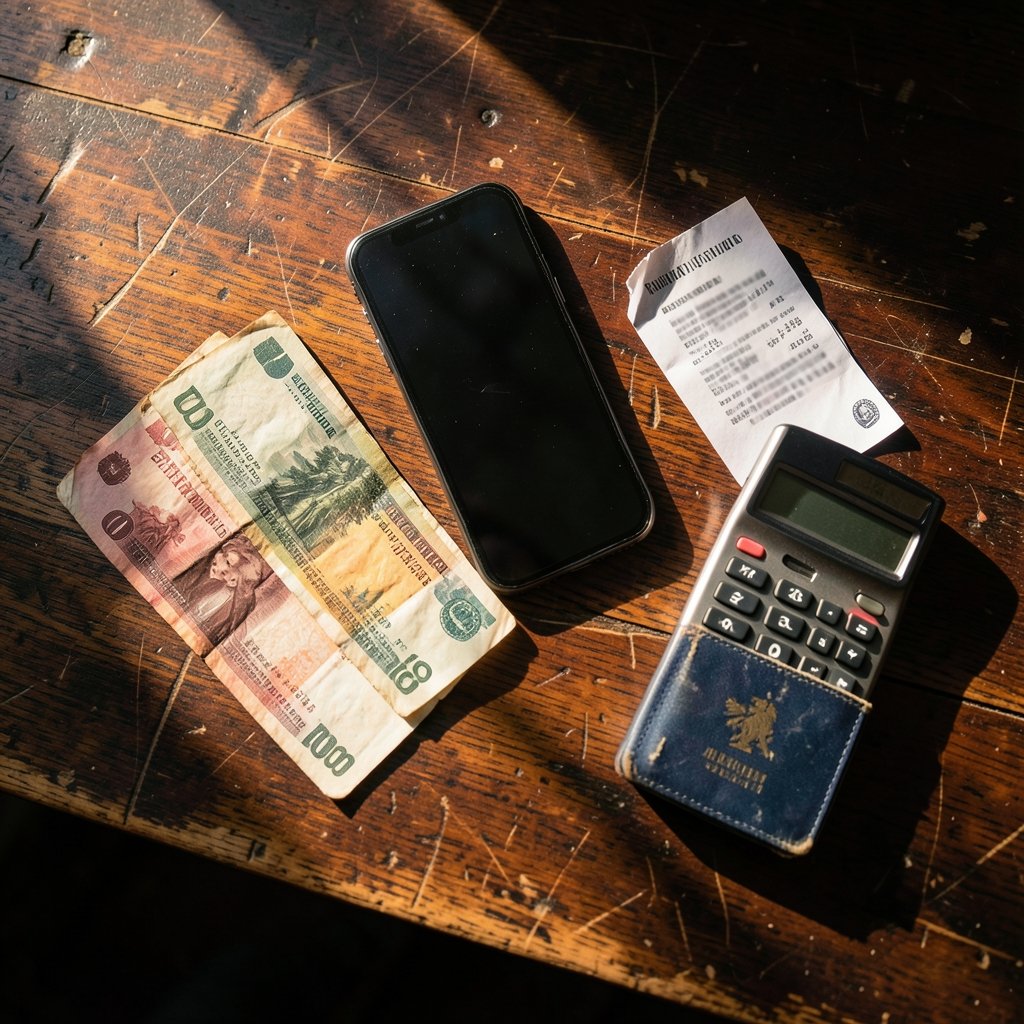
What really happens to your money between the moment you tap “send” and the moment your family receives it on the other side of the world? Most people assume it travels like an email: instant, free, and invisible. In reality, sending money across borders is one of the most heavily regulated, fee-laden, and quietly expensive things you can do with a smartphone. And yet hundreds of millions of people do it every month, often paying far more than they realize.
This guide walks through how international money transfers actually work, what they cost, which rules protect you, and the practical mistakes that drain money from transfers before they ever arrive.
Why sending money matters more than most people think
A remittance is money a migrant worker sends home to family in their country of origin. It sounds like a small personal act. Multiply it by the global diaspora and it becomes one of the largest financial flows on earth.
Officially recorded remittances to low- and middle-income countries reached roughly $656 billion in 2023, according to World Bank migration and remittances data. That is more than those countries received in foreign direct investment or official development aid. For families in places like the Philippines, Guatemala, or Nepal, remittances are not pocket money. They pay school fees, medical bills, and rent. In some economies, they make up a double-digit share of GDP.
That scale explains why governments, regulators, and international bodies care so much about how cheaply and safely money can move. It also explains why the fees attached to sending money are treated as a policy problem rather than merely a consumer annoyance.
The real cost of sending money

The headline fee is rarely the whole story. The true cost of a transfer has three parts:
- The upfront fee. A flat charge, a percentage, or both.
- The exchange rate margin. The gap between the mid-market rate you see on Google and the rate the provider actually gives you.
- Hidden charges. Correspondent bank fees, receiving bank fees, or charges deducted from the amount that arrives.
The World Bank’s Remittance Prices Worldwide database tracks the global average cost of sending $200. That average has fallen from around 9.3% in 2009 to roughly 6.2% in recent years, which is real progress but still double the international target. United Nations Sustainable Development Goal 10, target 10.c, calls for reducing remittance transaction costs to less than 3% and eliminating corridors that cost more than 5%, all by 2030.
Here is the uncomfortable part: the corridors where people can least afford fees often carry the highest ones. Sending money from a major financial hub to a small Pacific island nation can cost several times what it costs to send between London and Warsaw.
| Cost component | What it looks like | Who usually notices |
|---|---|---|
| Upfront fee | $0 to $25 flat, or 1–5% | Everyone |
| Exchange rate margin | 0.5% to 4% above mid-market | Almost nobody |
| Receiving bank fee | $5 to $20 deducted on arrival | The recipient |
| Correspondent fees | Variable, often opaque | Rarely anyone |
The exchange rate margin is where most of the money quietly disappears. A provider advertising “zero fees” can still be more expensive than one charging $5 upfront, simply because of the rate it applies.
How a cross-border transfer actually moves
Most retail transfers do not travel directly from your bank to your recipient’s bank. They hop through a chain.
Correspondent banking
For traditional bank wires, money typically passes through correspondent banking networks, where banks hold accounts with one another and settle through messaging systems. This is robust and widely accepted, but each hop can add cost and delay. A wire sent on Friday afternoon may not land until midweek.
Money transfer operators
Money transfer operators specialize in person-to-person transfers. They often pre-fund accounts in destination countries, so the recipient gets money locally while the back-end settlement happens later. This is why a transfer can arrive in minutes even though the underlying banking is slow.
Mobile money and wallets
Mobile-phone-based transfer systems have changed the game in many markets. Kenya’s M-Pesa, launched in 2007, is the classic example: it let people send value by text message long before smartphone banking was common. Similar systems now operate across Africa and South Asia.
Crypto rails
Some providers now use stablecoins and blockchain settlement to move value across borders. It can be fast and cheap, but it introduces new risks and new rules. The EU’s transfer of funds regulation, Regulation (EU) 2023/1113, extends the so-called travel rule to crypto-asset transfers, requiring sender and recipient information to travel with the money. Anyone exploring digital-asset transfers should understand how central bank digital currencies and the shift to digital money fit into the wider regulatory picture. (Money transfer)
What the rules require of providers
Cross-border transfers sit at the intersection of consumer protection and anti-money-laundering law. Two frameworks matter most for ordinary senders.
In the United States
The Electronic Fund Transfer Act and its implementing rule, Regulation E (12 CFR Part 1005, Subpart B), govern remittance transfers. Since the rules took effect in October 2013, providers must disclose the fee, the exchange rate, and the exact amount the recipient will receive before you pay. You also get error-resolution rights and a limited right to cancel. The Consumer Financial Protection Bureau publishes the full text of Regulation E for anyone who wants the details.
These disclosures are powerful. If the amount that arrives differs from the disclosed amount, you have grounds to complain.
Internationally
The Financial Action Task Force (FATF) sets the global anti-money-laundering and counter-terrorist-financing standards that remittance providers must follow, including the travel rule for wire transfers. FATF’s recommendations are the reason you get asked for ID, source-of-funds documentation, and sometimes awkward questions about a cousin’s address.
Annoying? Yes. But the alternative is a system that criminals use freely, and that gets corridors shut down entirely when abuse is found. Compliance friction is the price of keeping legal channels open.
Practical mistakes that cost senders money
Most losses in money transfers are avoidable. These are the errors that show up again and again.
- Comparing only the upfront fee. Always compare the total received by the recipient, not the sticker price.
- Using a bank by default. Bank wires are often the most expensive option for small transfers. For $200, a specialist provider usually wins.
- Sending at the wrong moment. Exchange rates move. A 2% swing can wipe out any fee savings, especially on larger amounts.
- Ignoring the receiving side. Some banks charge to receive international transfers. Check before you send.
- Getting the recipient details wrong. A misspelled name or wrong account number can trigger a return, and return fees are rarely refunded.
- Skipping the ID step. Incomplete verification is the most common reason transfers get frozen for days.
- Falling for a scam. Never send money to someone you have not met who demands payment by transfer, gift card, or crypto. Recovery is rare, and gift card scams in particular leave victims with almost no path to getting their money back.
What actually works in practice
- Send a small test transfer first when using a new provider or a new corridor.
- Screenshot the quoted rate and the disclosed recipient amount before confirming.
- Use a provider with a local presence in the destination country where possible.
- Set up recurring transfers if you send regularly; many providers discount repeat sends.
- Keep records. If a transfer goes wrong, the paper trail is what gets it fixed.
Choosing between providers
There is no single best provider. The right choice depends on the corridor, the amount, and how fast the money needs to arrive.
| Situation | Usually best option | Why |
|---|---|---|
| Small regular transfers | Specialist transfer apps | Low fees, good rates, fast delivery |
| Large one-off amounts | Banks or brokers | Better rates at scale, stronger recourse |
| Urgent same-day need | Providers with local payout networks | Instant or near-instant delivery |
| Remote destinations | Providers with wide corridor coverage | Fewer intermediaries, fewer surprises |
| Business payments | Bank wires or commercial platforms | Documentation and audit trails |
A useful habit: check the live rate and the total cost across three providers before every transfer above a few hundred dollars. It takes five minutes and routinely saves 1–3%.
The cost of getting this wrong compounds. Senders who use the wrong provider for years can lose thousands of dollars without ever noticing, which is the same quiet math that makes identity threat detection a bigger line item than most budgets admit. Money lost to friction and fraud rarely announces itself.
Sending money safely: a short checklist
Before you hit send, run through this:
- Confirm the recipient’s full legal name and account details, character by character.
- Check the total cost, including the exchange rate margin.
- Read the disclosure showing the exact amount that will arrive.
- Verify the provider is licensed in your country and in the destination country.
- Avoid sending to strangers, and never send under pressure.
- Save the confirmation and receipt.
If a provider cannot tell you clearly what the recipient will receive, that is your answer. Walk away.
How fraud fits into the picture
Fraud is the dark side of easy money movement. The same rails that let a worker support a family in minutes also let a scammer drain an account in minutes. Common patterns include romance scams, fake job offers, overpayment scams, and impersonation of relatives in distress.
Two rules cut most of the risk. First, verify identity through a channel you initiated, not one the sender gave you. Second, treat urgency as a warning sign. Legitimate transfers do not require you to act in the next ten minutes.
For people building businesses around digital payments and automation, the same discipline applies. Understanding how AI companies actually make money helps separate legitimate tools from schemes that use the language of technology to part people from their cash.
Conclusion
Sending money across borders is ordinary, necessary, and still surprisingly expensive. The global average cost of sending $200 sits well above the 3% target the world set for itself, and the gap is mostly hidden in exchange rate margins rather than headline fees. The fix is not complicated: compare the total received, read the disclosure, verify the recipient, and treat urgency as a red flag.
The system is getting cheaper and faster. Mobile money, specialist providers, and tighter disclosure rules have all helped. But the responsibility for getting a good deal still lands mostly on the sender. Five minutes of comparison before each transfer is the cheapest insurance in personal finance.
Frequently asked questions
What is the cheapest way to send money internationally?
For small amounts, specialist money transfer apps usually beat banks because their exchange rate margins are thinner and fees are lower. For large amounts, a bank or currency broker may offer better rates at scale. The only reliable test is comparing the total amount the recipient will receive across at least three providers for your specific corridor.
How long does an international money transfer take?
It depends on the method. Mobile wallets and specialist providers can deliver in minutes, especially where they have local payout networks. Traditional bank wires often take one to five business days, and delays are common around weekends and public holidays. Compliance checks can add time if documentation is incomplete.
Why is the exchange rate different from what I see online?
The rate you see on search engines is usually the mid-market rate, the midpoint between buy and sell prices on currency markets. Providers add a margin to that rate to cover costs and earn revenue. That margin is a real cost even when the advertised fee is zero, which is why the disclosed recipient amount matters more than the fee.
What protections do I have if a transfer goes wrong?
In the United States, remittance transfers are covered by Regulation E, which requires providers to disclose fees, the exchange rate, and the amount the recipient will get before you pay. It also gives you error-resolution rights and a limited cancellation window. Other countries have their own rules, so check what applies where you live.
Can I cancel a money transfer after sending it?
Often yes, but the window is short. Under US rules, you generally have a limited period, commonly 30 minutes, to cancel before the money is sent, and longer if the transfer is scheduled for a later date. Once funds are collected by the recipient, cancellation is usually impossible. Act immediately if you spot a mistake.
How do I avoid money transfer scams?
Verify the recipient’s identity through a contact channel you found yourself, never one provided by the person asking for money. Treat urgency, secrecy, and unusual payment methods such as gift cards or crypto as warning signs. Never send money to someone you have not met in person, and remember that legitimate employers and agencies do not demand payment by transfer before you start a job.
Is it safe to send money through an app?
Reputable apps that are licensed and regulated in your country are generally safe for the movement of funds. The bigger risk is sending to the wrong person, or being tricked into sending to a fraudster. Use two-factor authentication, confirm recipient details carefully, and keep records of every transfer.



