
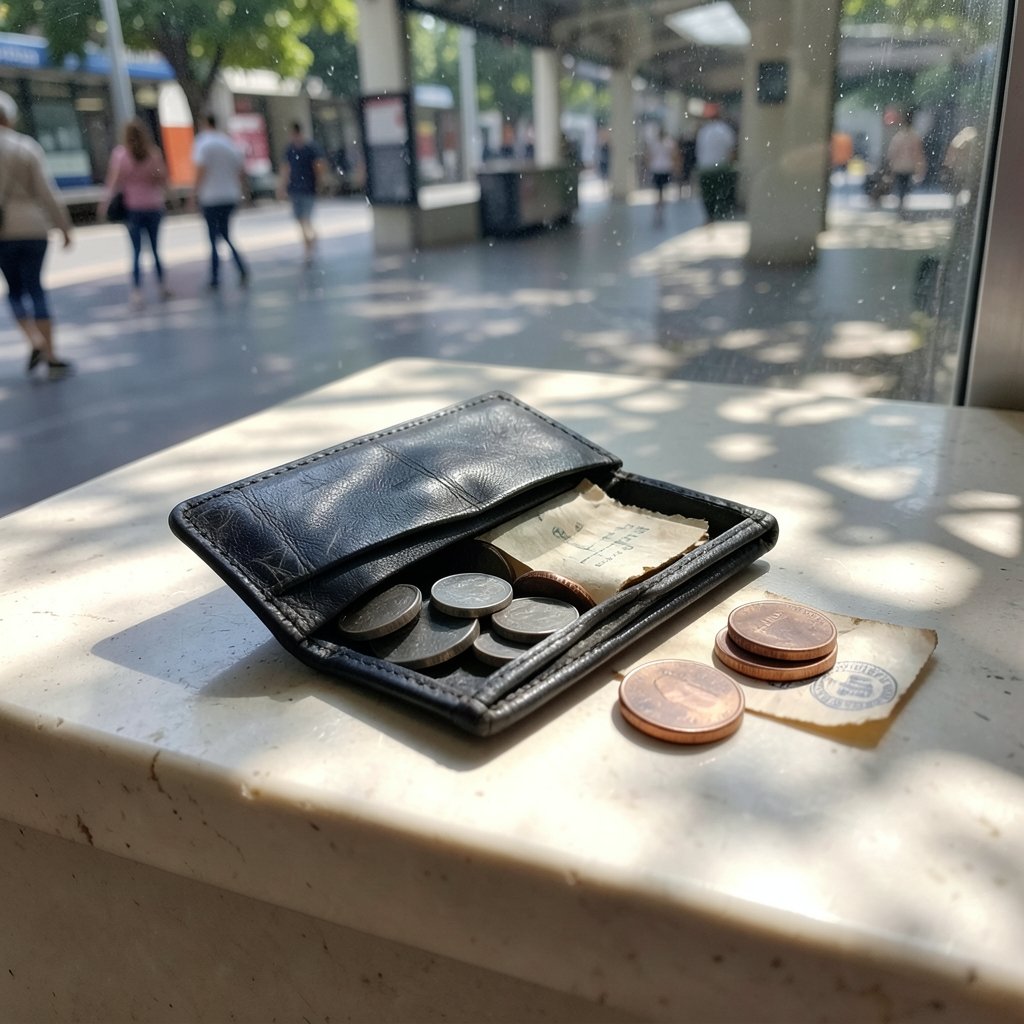
What word would you use if you needed to ask a stranger in Mexico City where to change money? If dinero popped into your head, you are already right. But if you said plata in Madrid or pasta in Buenos Aires, you might get a blank stare. That gap between textbook Spanish and real street Spanish is where most learners stumble.
This guide covers the vocabulary you actually need, the slang that changes by country, how to write prices correctly, and the small mistakes that make even confident speakers sound off. It is written for travelers, expats, students, and anyone handling money in Spanish-speaking countries.
The Basic Word: Dinero and Its Close Relatives
Dinero is the standard word for money across the Spanish-speaking world. Everyone understands it, from bank clerks to taxi drivers, and it is the safe choice when you are unsure.
The word traces back to the Latin denarius, a Roman silver coin. That history explains why it feels older and more formal than most slang alternatives.
Around dinero sits a cluster of everyday terms worth memorizing:
| Spanish | English | Notes |
|---|---|---|
| dinero | money | universal, neutral |
| efectivo | cash | literally “effective,” meaning cash in hand |
| moneda | coin; currency | moneda extranjera means foreign currency |
| billete | banknote | billetes is what you get from an ATM |
| sueldo / salario | salary / wage | sueldo is more common in daily speech |
| ahorros | savings | always plural in this sense |
| cambio | change; exchange | context decides which |
A practical tip from people who live in Spanish-speaking countries: learn efectivo early. Signs reading solo efectivo (cash only) appear in small shops, market stalls, and taxis everywhere. Cards are common in cities but not universal.
Slang for Money That Changes by Country

Here is where things get fun and slightly dangerous. Slang for money is deeply regional, and using the wrong one is like wearing a cowboy hat in downtown London. People will understand you, but they will also know you are not from there.
Rough guide to the most common informal terms:
- Plata is widely used across Latin America, especially Argentina, Chile, Colombia, and Uruguay. It literally means “silver.”
- Lana is Mexican slang for money, literally “wool.”
- Pasta is the go-to informal word in Spain.
- Guita is Argentine, informal and very common among younger speakers.
- Varo is used in Colombia and parts of Central America.
- Feria shows up in Mexico for loose change or small money.
A word of caution: this list is approximate. Slang shifts with generation and region, and a term that sounds natural in one city can sound dated in another. If you want to check whether a word is current, look it up in the dictionary maintained by the Real Academia Española, the Diccionario de la lengua española, which marks regional and colloquial usage.
Common money idioms are worth knowing too. No tener un duro means to be broke in Spain, since the duro was an old Spanish coin. Estar forrado means to be loaded with cash. Costar un ojo de la cara, literally “to cost an eye from your face,” is the Spanish version of costing an arm and a leg.
Currency Names and What They Actually Mean
Many Latin American currencies carry names with literal meanings, which makes them easier to remember:
| Currency | Country | Literal meaning |
|---|---|---|
| peso | Mexico, Argentina, Chile, Colombia, others | “weight” |
| real | Brazil | “royal” |
| sol | Peru | “sun” |
| bolívar | Venezuela | named after Simón Bolívar |
| quetzal | Guatemala | named after the national bird |
| euro | Spain | from “Europe” |
The peso detail surprises many learners. It comes from peso de oro, a “weight of gold,” referring to the actual weight of precious metal in a coin. Several former Spanish colonies kept the name after independence.
Spain uses the euro, adopted for accounting on 1 January 1999, with coins and notes entering circulation on 1 January 2002. The plural is simply euros. Note that the euro is also the official currency of 20 EU member states, so the same word serves you across most of Western Europe.
Writing Prices Correctly in Spanish
This is the mistake almost every English speaker makes, and it can cause real confusion at a cash register or in a contract.
Spanish-speaking countries generally reverse the English number format. A comma marks the decimal, and a period or a space marks the thousands. So one thousand two hundred thirty-four euros and fifty-six cents is written 1.234,56 €, not 1,234.56 €.
Currency symbols usually follow the amount in Spanish, often with a space: 25 €, 150 $. The dollar sign is used for pesos in many Latin American countries, which creates genuine ambiguity with the US dollar. Careful writers specify pesos or USD rather than relying on the symbol alone. (Spanish dollar (piece of eight))
If you write prices for a living, or you are drafting an invoice in Spanish, check the style guidance from FundéuRAE, the language foundation backed by the Royal Spanish Academy and the EFE news agency. It publishes short, practical rulings on number formatting, currency symbols, and abbreviations.
One more practical note: in speech, Spanish speakers often say un euro con cincuenta rather than “one fifty.” Learning to read numbers aloud in this pattern takes a little practice but pays off fast at markets and ticket counters.
Banking Vocabulary You Will Actually Use
Walking into a bank in a Spanish-speaking country is stressful enough without a language barrier. These are the terms that come up most:
- cuenta corriente or cuenta de cheques: current or checking account
- tarjeta de crédito / tarjeta de débito: credit card / debit card
- cajero automático: ATM
- préstamo: loan
- interés: interest
- tipo de cambio: exchange rate
- comisión: fee or commission
- transferencia: transfer
Two phrases are worth memorizing verbatim. ¿Dónde hay un cajero automático? means “Where is there an ATM?” And ¿Cuál es el tipo de cambio hoy? means “What is the exchange rate today?”
A common mistake: assuming banco only means a financial institution. It also means “bench,” and in some regions it refers to a sandbank. Context almost always makes it clear, but beginners occasionally get confused in coastal towns.
Also watch for comisión. Many ATMs and exchange houses charge a fee that is not displayed prominently. Asking ¿Hay comisión? before a transaction saves money and awkwardness.
Money in the Digital Age: Cards, Apps, and Crypto
Cash still matters in much of Latin America, but digital payments have grown quickly. Bank transfer apps are widely used in Argentina, Brazil, and Mexico, and many small vendors now accept QR-code payments.
That shift brings its own vocabulary. Billetera digital means digital wallet. Pago móvil means mobile payment. Criptomoneda means cryptocurrency.
The growth of digital money has also raised questions about what central banks might issue next. If you want background on that shift, this explainer on CBDC digital currency and central bank money going digital covers the basics in plain terms.
Digital payments also bring new risks. Fraud and identity theft are growing concerns for consumers and businesses alike, and understanding where the costs land helps you budget for protection. A detailed breakdown of identity threat detection and where the money really goes is useful reading if you handle accounts across borders.
Practical Tips From People Who Have Done It
A few habits separate travelers who glide through money situations from those who struggle:
- Learn efectivo and solo efectivo before you land. They appear on signs constantly.
- Carry small bills. Many vendors cannot break a large note, and asking for change repeatedly gets tiring.
- Ask about comisión before any ATM withdrawal or exchange.
- Use dinero when in doubt. Slang is for friends, not for bank tellers.
- Write numbers in the local format when filling out forms. Writing 1,50 when you mean 150 is a costly error.
- Learn the local slang for money after you arrive, not before. Listen first, then copy.
One more tip that rarely appears in phrasebooks: in many Spanish-speaking countries, asking a stranger directly about their salary or the cost of their possessions is considered rude. Money talk has social rules, and indirect questions work better. (Gift card scam works victims rarely get their money back)
Common Mistakes to Avoid
The single biggest error is transferring English number formatting into Spanish writing. It causes real problems on checks, invoices, and rental agreements.
The second is overusing slang. Learners who pick up plata from a podcast sometimes deploy it in a formal setting and sound odd. Slang signals closeness; use it with peers, not officials.
The third is assuming one word covers all of Latin America. Vocabulary for money, like vocabulary for food and clothing, varies sharply by country. A phrasebook that lists only dinero is technically correct but practically thin.
Finally, do not ignore the subjunctive and polite forms in money conversations. ¿Podría cambiarme este billete? (“Could you change this bill for me?”) lands far better than a blunt command.
Conclusion
Money in Spanish is more than a single word. It is a small system: dinero as the universal anchor, regional slang that signals belonging, currency names with literal meanings, and formatting rules that reverse English conventions. Get the basics right and you can handle a market, a bank, and a rental contract. Learn a little slang and you sound less like a tourist. Respect the local format for numbers and you avoid the mistake that actually costs people money. Start with dinero and efectivo, add the local term once you hear it in the wild, and the rest follows quickly.
Frequently Asked Questions
What is the most common word for money in Spanish?
Dinero is the standard word and is understood everywhere Spanish is spoken. It is the safest choice in formal settings, with strangers, and in writing. Regional slang terms exist, but dinero never sounds wrong.
Is plata the same as dinero?
Roughly, yes, but plata is informal and regional. It is very common in Argentina, Chile, Colombia, and Uruguay, where it functions as everyday slang for money. In Spain, plata mainly means the metal silver. Use dinero if you want to be understood everywhere without sounding regional.
How do you write prices in Spanish?
Spanish-speaking countries generally use a comma for decimals and a period or space for thousands. So 1.234,56 € means one thousand two hundred thirty-four euros and fifty-six cents. The currency symbol typically follows the amount, often with a space, as in 25 €.
What does peso mean literally?
Peso means “weight.” It comes from the old phrase peso de oro, referring to a weight of gold, and several former Spanish colonies kept the name after independence. Similar literal names include sol (sun) in Peru and real (royal) in Brazil.
What currency does Spain use?
Spain uses the euro, written euro in Spanish with the plural euros. The euro was adopted for accounting on 1 January 1999, and coins and notes entered circulation on 1 January 2002. It is also the official currency of 20 EU member states.
How do you say “cash only” in Spanish?
The standard phrase is solo efectivo, sometimes written sólo efectivo or efectivo solamente. You will see it on signs in small shops, market stalls, and taxis across Latin America and Spain. It is worth recognizing before you sit down to eat or board a bus.



