
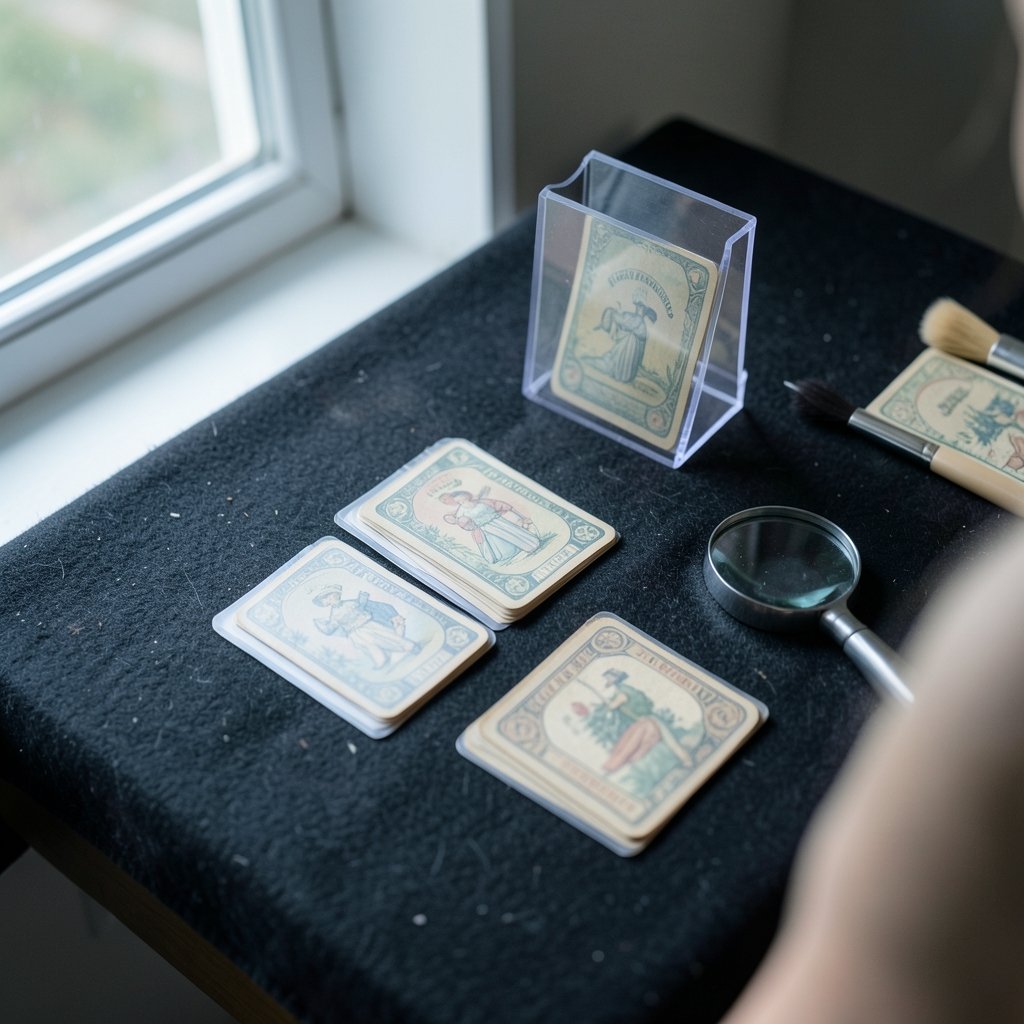
Quick Answer: What baseball cards are worth money?
The cards worth real money are almost always vintage stars in top condition, rare rookie cards, and modern cards with short print runs or autographs. A card’s value comes from four things: who is on it, how rare it is, what condition it is in, and what buyers recently paid for it.
Vintage icons like the T206 Honus Wagner and the 1952 Topps Mickey Mantle sit at the top, while most cards printed during the mass-production years of the late 1980s and early 1990s are worth very little. Modern value lives in serial-numbered parallels, short prints, and on-card autographs of young stars.
Before assuming a card is valuable, check the player and year, the exact variation, the condition grade, the population of graded examples, and recent sold prices rather than asking prices.
Why Some Cards Are Worth Thousands and Others Are Worth Nothing

Baseball cards are not valuable because they are old. They are valuable because they are scarce, desirable, and in good shape. Those three forces explain nearly every price in the hobby, and once a collector understands them, the market stops looking random.
The first force is scarcity. A card printed millions of times will never be rare, no matter how famous the player. A card printed in a limited run, or one that survived in small numbers, can be worth a fortune even if the player is obscure.
The second force is demand. Stars, Hall of Famers, and culturally important players draw buyers. Demand is also emotional and regional, which is why a popular Yankee or Dodger can outperform a statistically similar player from a smaller market.
The third force is condition. A single crease, a soft corner, or a tiny stain can cut a card’s value by half or more. For vintage cards, condition is not a detail. It is the whole game.
The Cards That Actually Command Big Money
The T206 Honus Wagner
The most famous card in the hobby is the T206 Honus Wagner, produced from 1909 to 1911. Only a few dozen examples are known, and the card’s legend grew because Wagner reportedly objected to his likeness being used in a tobacco product. One example sold privately for a reported $7.25 million in 2021, though reports of other sales vary by example, so treat any single number as specific to that card. For historical context on early card production, the Library of Congress collection of early baseball cards shows how these sets were made and distributed. (Baseball card)
The 1952 Topps Mickey Mantle
The 1952 Topps Mantle, card No. 311, is the benchmark for post-war cards. A PSA 9 example sold for $12.6 million in August 2022, a record at the time. Even low-grade copies sell for five figures, which tells you something important: with truly iconic cards, condition changes the price but not the demand.
Rookie Cards
A player’s rookie card is usually their most valuable card. The 1989 Upper Deck Ken Griffey Jr. No. 1 is a modern example, and vintage rookie cards of legends routinely outsell later-year cards of the same player. Note that “rookie card” has a specific hobby definition tied to a player’s first mainstream set appearance, not simply their first season. Collectors who chase prospect cards early are betting on future performance, which is why prices for young players can swing wildly after a single good season.
Condition and Grading: Where Most Value Is Won or Lost
Grading is the practice of sending a card to a third-party company that assigns it a number from 1 to 10. PSA, one of the major graders, publishes the 10-point condition scale that the hobby uses to compare cards. A card graded 9 or 10 can be worth many times more than the same card graded 6, because high-grade examples of vintage cards are genuinely rare.
This is where beginners make their biggest mistake. They see an asking price for a mint copy of a card they own in worn condition and assume their copy is worth the same. It is not. A well-worn 1952 Mantle and a near-mint 1952 Mantle are effectively different assets that happen to share a picture.
Grading also costs money and takes time, and it does not always pay off. A common card from the 1990s is not worth the grading fee. A good rule: only grade cards where the difference between a raw sale and a graded sale clearly exceeds the cost and risk of grading. (Best games nintendo switch 2 whats worth your time money)
Population Reports and Why They Matter
Graders publish population reports showing how many examples of a card have been graded at each level. If only a handful of copies exist at grade 9 or 10, those copies command a premium. If hundreds exist, the premium shrinks.
Smart buyers check population data before paying a big number for a “rare” high-grade card. A card can be rare in general but common in high grade, and that distinction separates a good buy from an expensive lesson. Population counts also grow over time as more cards get submitted, which can quietly soften prices for cards that were once scarce at the top end.
The Junk Wax Trap: Why Most 1980s and 1990s Cards Are Worth Little
From roughly the mid-1980s through the mid-1990s, card companies printed enormous quantities. The result is the era collectors call junk wax. Millions of cards from those years survive in near-mint condition because so many were pulled from packs and immediately stored in sleeves and boxes.
That means most cards from that period are common and low-value, even for star players. There are exceptions: rare parallels, error cards, and high-grade examples of key rookie cards can still sell well. But a shoebox of 1990 Topps is not a retirement fund, and anyone who tells a new collector otherwise is either misinformed or hoping to buy cheap.
The practical lesson is simple. Before assuming a card is valuable, check the print run and the population of graded examples. If thousands exist in top condition, the card is common.
Modern Cards: Where Value Lives Now
Modern cards work differently. Value comes from scarcity built into the product: serial-numbered cards, short prints, and autograph or relic cards from sets like Topps Chrome and Bowman. A card numbered to 25 copies is rare by design, and a young star’s low-numbered autograph can climb quickly if he performs.
This market is volatile. Prices for prospect cards can double after a hot month and collapse after an injury. Collectors who treat modern cards like investments need to accept that they are speculating on player performance, not buying a stable asset.
For readers comparing hobby spending across categories, the same logic of “what do I actually get for the money” applies to subscriptions and gear. A practical breakdown of whether the Xbox Game Pass cost in 2025 is worth it shows how the same value question plays out elsewhere.
How to Check What a Card Is Really Worth
Asking prices are fiction. Sold prices are facts. Here is a practical process that works for almost any card.
- Identify the card exactly: player, year, set, card number, and any variation or parallel.
- Look up recent sold listings, not active listings, on auction archives and marketplace sold filters.
- Check the condition honestly, comparing corners, edges, surface, and centering against graded examples.
- Look up the population report for that card at that grade level.
- Compare at least five recent sales to get a range, then assume your card sits at the low end if it is ungraded.
- Factor in fees, shipping, and taxes if you plan to sell.
A common mistake is trusting a single sale, especially an outlier. One record price does not reset the market for every copy. Another mistake is ignoring the cost of selling: auction fees and shipping can eat a meaningful share of a mid-priced card’s value.
Authentication, Counterfeits, and Altered Cards
High-value vintage cards attract forgers. Trimming, recoloring, and outright fakes are known problems, especially with the T206 Wagner and other expensive vintage issues. Buying graded examples from reputable auction houses reduces risk but does not eliminate it.
Modern cards carry their own risks. Reprints, fake autographs, and resealed packs exist, and online marketplaces are full of them. Buyers should favor sellers with strong feedback, ask for clear photos of corners and surfaces, and be skeptical of deals that are far below market.
There is also a broader personal-finance angle here. Collectors who buy and sell cards online should be alert to payment scams, since gift card fraud is a common tactic and victims rarely get their money back. The same caution applies to any hobby transaction where a stranger asks for an unusual payment method.
Taxes on Card Sales
In the United States, collectibles are treated as a distinct category for tax purposes. Cards held for more than a year may be taxed at a higher capital-gains rate than ordinary investments. The IRS explains capital gains and losses in Topic No. 409, and Publication 550 covers how collectibles fit into investment income. Sellers who move serious money in cards should keep records of purchase price, sale price, and fees, because that paper trail matters at tax time.
This is not a reason to avoid the hobby, but it is a reason to treat large sales like financial events rather than casual transactions.
Building a Collection Without Overpaying
The collectors who do well tend to follow a few habits. They buy the card, not the story. They focus on a player or set they genuinely enjoy, which makes holding through soft markets easier. They buy the best condition they can afford of cards they actually want, rather than many low-grade copies of cards they feel lukewarm about.
They also compare hobby spending against other discretionary purchases. Just as a shopper weighs whether a graphics card is worth buying for everyday use, a collector should ask whether a given card purchase delivers enough enjoyment or upside to justify the price. Budgeting tools help here too; a comparison of YNAB versus Monarch Money on zero-based budgeting versus net worth tracking shows how dedicated hobby funds keep spending intentional.
And they stay patient. Markets move in cycles. Prices across many segments peaked around 2021 and 2022 and softened afterward, which means buyers who wait for motivated sellers often do better than buyers who chase headlines.
Conclusion
Baseball cards worth money share a pattern: a desirable player, genuine scarcity, strong condition, and a documented record of recent sales. The T206 Wagner and the 1952 Topps Mantle sit at the top because they combine all four. Rookie cards and low-numbered modern parallels carry premiums for the same reasons at a smaller scale.
Most cards, especially from the junk wax era, are common and worth little. That is not a disappointment. It is useful information. Check sold prices, check population reports, grade only when the math works, and treat big sales as taxable events. Do that, and the hobby stays fun instead of becoming an expensive guessing game.
FAQ
Are old baseball cards always worth money?
No. Age alone does not create value. A card from 1990 can be worth pennies while a card from 1952 can be worth millions. Scarcity, player demand, and condition matter far more than the year printed on the card.
What is the most valuable baseball card in the world?
The T206 Honus Wagner is generally considered the most valuable, with private sales reported in the millions. The 1952 Topps Mickey Mantle is the most valuable post-war card, and a PSA 9 example sold for $12.6 million in August 2022. Values vary by example and condition.
Does grading a card always increase its value?
No. Grading helps when a card is scarce in high grade and the price difference between raw and graded copies exceeds the grading cost. For common cards, grading fees can exceed any value added, so the math has to work before submitting.
How do I find out what my card is worth?
Identify the exact card, then check recent sold prices on auction archives and marketplace sold listings. Compare at least five sales, check the population report for graded examples, and assess condition honestly. Asking prices are not reliable evidence of value.
Are modern baseball cards a good investment?
They can be, but they are volatile. Value depends on print runs, player performance, and collector demand, and prices for young players can swing sharply. Treat modern cards as speculative rather than stable, and never spend money you cannot afford to lose.
Why are 1980s and 1990s cards so cheap?
Mass overproduction during that period means enormous numbers of cards survived in near-mint condition. When supply is huge and demand is ordinary, prices stay low. Only rare parallels, error cards, and top-grade key rookies from that era stand out.
