

What do you do when you need to send money to someone you have never met, and a personal check feels too flimsy but a wire transfer feels like overkill? For more than 150 years, millions of people have answered that question with the same tool: a postal money order. It is one of the oldest consumer payment products still in daily use, and it remains surprisingly relevant in an age of instant digital transfers. (CFPB: Money transfers and remittances)
But postal money orders are also misunderstood. People confuse them with bank drafts, with wire transfers, and with the postal orders used in other countries. Scammers exploit that confusion constantly. This guide explains what a postal money order actually is, how the rules differ from country to country, what it costs, and how to avoid the traps that catch even careful people.
What Is a Postal Money Order, Exactly?
A postal money order is a prepaid payment instrument sold by a national postal operator. You pay the full face value plus a fee up front, and the postal service issues a document payable to a named payee. Because the money is already collected, the recipient does not have to worry about the sender’s account balance or creditworthiness.
That is the core appeal. A postal money order functions like a bank draft, but it comes from the post office rather than a bank. For people without a checking account, or for anyone who wants a paper trail attached to a payment, that distinction matters.
The instrument has deep roots. The United States Post Office Department began issuing money orders in 1864, specifically to serve people who had no access to banks and wanted a safer way to send cash through the mail. Sending folded bills in an envelope was, and still is, a terrible idea. The money order replaced that risk with a tracked, accountable document.
The UK Post Office introduced its own version in 1881, though British terminology evolved differently, which is a source of endless confusion for anyone comparing systems across countries.
How a Postal Money Order Works in Practice
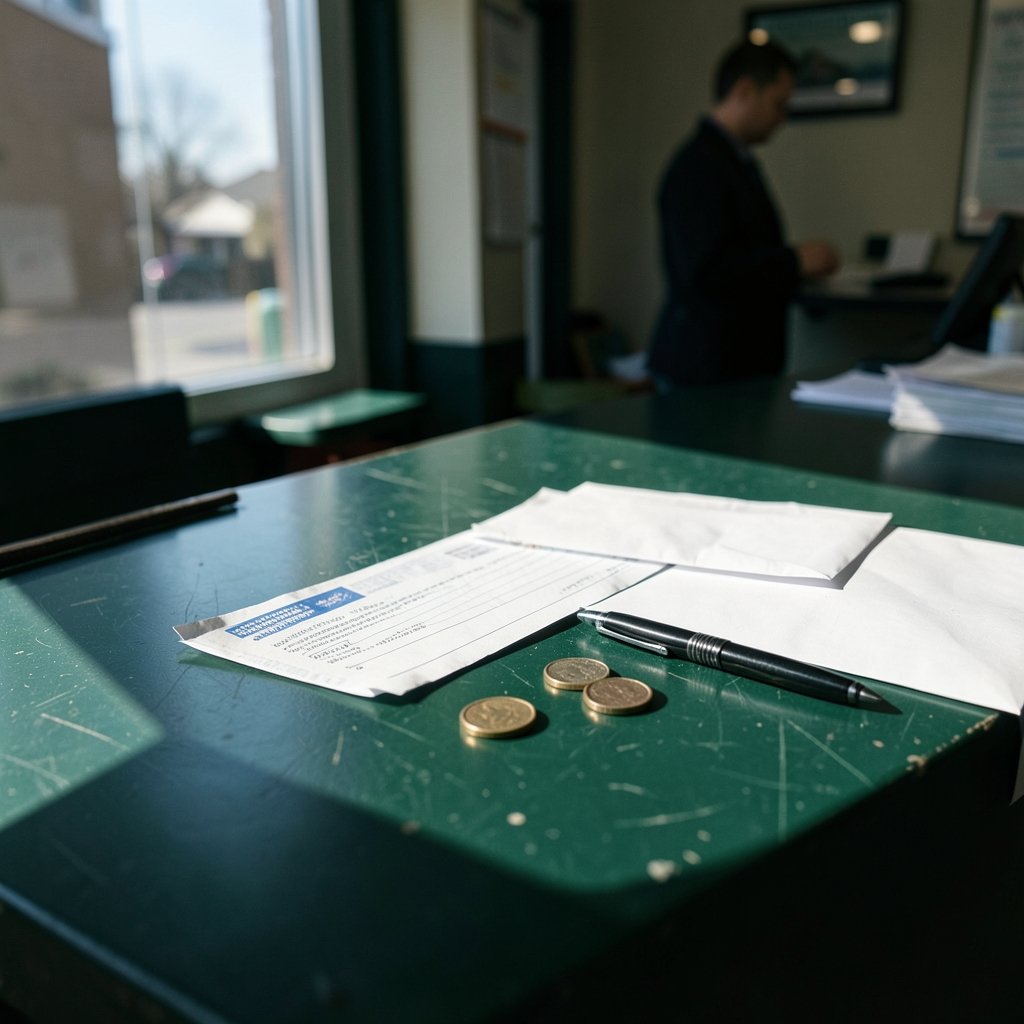
The mechanics are simple, but small errors cause big headaches. Here is the typical flow in the United States:
- Go to a post office and request a money order for a specific amount, up to the per-order limit.
- Pay the face value plus a service fee.
- Fill in the payee’s name and your own information carefully.
- Keep the receipt and the stub, which carry the tracking numbers you will need if anything goes wrong.
- Mail the money order to the payee, or hand it over directly.
- The payee endorses it and cashes it at a post office or deposits it at a bank.
A few practical details trip people up more than anything else. First, never leave the payee line blank. A blank money order is essentially cash, and anyone who finds it can fill in their own name. Second, write the payee’s name exactly as it appears on their identification. A nickname or a business name that does not match the bank’s records can cause a deposit to be rejected. Third, if you make a mistake while filling it out, do not try to correct it with a pen. Ask for a replacement, because altered money orders are frequently refused.
Endorsement is the step people underestimate. The payee generally must sign the back, and many cashing locations ask for photo identification, especially for larger amounts. Some banks place holds on money order deposits even when the funds are guaranteed, simply because their internal fraud systems treat all paper instruments cautiously. That is a bank policy issue, not a sign the money order is fake.
Domestic Limits, Fees, and the Fine Print
In the United States, postal money orders are issued by the U.S. Postal Service. Domestic money orders have historically been capped at $1,000 per order, and fees are modest compared with wire transfers or cashier’s checks. Those figures change periodically, so always confirm the current limit and fee schedule before you buy.
The $1,000 cap shapes behavior in predictable ways. If you need to send $2,500, you buy three money orders. That means three fees, three tracking numbers, and three separate documents that can each be lost or stolen. At some point, the arithmetic starts favoring a different payment method. A useful rule of thumb: money orders make sense for amounts under a few hundred dollars, where the flat fee is a small percentage of the total. For larger sums, compare the total cost against a bank transfer or a digital payment service.
There is also an international postal money order variant. These can be cashed in certain countries under bilateral agreements, but availability varies widely by country and changes over time. Do not assume that because a country accepts them today, it will next year. Check before you buy, not after you have already mailed the envelope.
The International Framework Behind Cross-Border Postal Orders
Cross-border postal money orders do not happen by accident. They rest on a treaty framework coordinated by the Universal Postal Union (UPU), the United Nations specialized agency for postal coordination, founded in 1874. The UPU’s postal payment services provisions set out how member countries exchange and settle postal financial instruments, including money orders.
This matters to ordinary senders in two ways. First, it explains why international postal money orders are reliable where they exist: the settlement runs through established inter-government channels rather than a private intermediary. Second, it explains the limits. Not every country participates in every service, and the specific rules for cashing an incoming international money order are set by the receiving country’s postal operator, not the sender’s. (Z wave inclusion vs exclusion order matters every device)
If you are sending money across a border, the practical advice is blunt: confirm with the recipient’s local post office that they can actually cash the instrument, and ask what identification they will need. A money order that cannot be cashed is worse than no money order at all, because you have already paid the fee and the funds are tied up in dispute resolution.
Terminology Trouble: Postal Orders, Money Orders, and Bank Drafts
One reason postal money orders confuse people is that different countries use different names for roughly similar things. The UK’s modern equivalent is the Postal Order, sold by the Post Office in fixed denominations with a handling fee. It is a distinct product from what Americans call a money order, and the fixed-denomination structure changes how you use it.
Canada is another case worth knowing. Canada Post historically issued postal money orders but discontinued its domestic and international money order service, with domestic service ending in the mid-2010s. Anyone relying on older advice about Canadian postal money orders should verify the current status before planning a payment around it.
Here is a rough comparison of how the main paper payment instruments differ:
| Instrument | Issuer | Funds Guaranteed? | Typical Use |
|---|---|---|---|
| Postal money order | National postal operator | Yes, if genuine | Small payments, unbanked senders |
| Bank cashier’s check | Bank | Yes, if genuine | Larger payments, home purchases |
| Personal check | Account holder | No | Everyday payments to known parties |
| Wire transfer | Bank or transfer service | Yes | Large or urgent payments |
| Postal order (UK) | Post Office | Yes, if genuine | Small fixed-denomination payments |
The pattern is clear: postal money orders sit at the low-value, high-accessibility end of the spectrum. They are designed for people who need certainty without a bank account.
Fraud: Where Postal Money Orders Go Wrong
If there is one thing to remember about postal money orders, it is this: a genuine-looking money order is not proof of anything until it clears. Counterfeit money orders are among the most common tools in the scammer’s kit, and the overpayment scam is the classic play.
The pattern works like this. A buyer, landlord, or “employer” sends a money order for more than the agreed amount, then asks the victim to deposit it and wire back the difference. Days later, the bank discovers the instrument was fake and reverses the credit. The victim is out the full amount they sent back, plus fees. The Federal Trade Commission publishes consumer guidance on fake check scams that covers this exact mechanic, and the pattern applies to money orders just as much as checks.
Several warning signs are worth memorizing:
- The sender insists on a specific method for returning the overpayment, especially wire transfer, gift cards, or cryptocurrency.
- The amount is wrong in the sender’s favor, and they want you to fix it.
- There is urgency. Real businesses rarely need a stranger to move money within the hour.
- The money order arrives from someone you have never met in person, often for a transaction that started online.
The gift card version of this scam deserves its own warning, because it is nearly impossible to reverse once the card codes are shared. Understanding how the gift card scam works and why victims rarely get their money back is a useful complement to money order fraud awareness, since scammers frequently chain the two together.
If you suspect you have received a counterfeit postal money order, do not deposit it and do not confront the sender. Report it to the postal inspection service in your country and to your bank.
Practical Tips That Actually Work
Beyond the basics, a few habits separate people who use postal money orders smoothly from those who end up filing claims.
Buy from the source. Money orders purchased from a legitimate post office counter carry verification features and a receipt trail. Money orders bought from a third party at a discount are a gamble you do not need to take.
Record everything immediately. Photograph the money order and receipt before mailing. Write down the serial number, the date, the payee, and the amount in a place you will find again. If the document is lost, the replacement process usually requires a waiting period and a fee, and the tracking information is what makes it possible.
Separate the money order from the envelope. Never mail a money order in an envelope that also contains a letter explaining what it is for. If the envelope is intercepted, you have handed the thief a roadmap.
Do not use money orders for online marketplace sales. This is the single most common context for counterfeit money order fraud. Cash in person or use a platform with buyer protection.
Check the expiry rules. Some countries impose validity periods on postal money orders, after which the funds must be reclaimed through a formal process. An uncashed money order is not free money sitting in limbo forever.
For anyone thinking about broader payment security, the same discipline applies across instruments. Understanding where identity threat detection really costs money, for instance, shows how fraud losses compound well beyond the face value of a single bad transaction.
Conclusion
The postal money order has survived for over a century and a half because it solves a real problem: how to send a guaranteed payment to someone without trusting them with your bank details. It is cheap, accessible, and backed by a national postal operator rather than a private app. But it is also a paper instrument in a digital world, which means it carries paper risks. Limits, fees, and international availability vary by country and change over time. Counterfeits circulate freely enough that no one should treat a money order as settled until it clears.
The practical takeaway is straightforward. Buy from the post office, fill it out carefully, keep the receipt, and never refund an overpayment to a stranger. Used that way, a postal money order remains what it was designed to be: a simple, dependable way to move a modest amount of money between people who do not know each other well. Used carelessly, it becomes one of the oldest fraud tools still in circulation.
Frequently Asked Questions
How much does a postal money order cost?
In the United States, the fee is a small flat amount per order, plus the face value you are sending. Fees change periodically, so check the current schedule at your post office before buying. If you need to send more than the per-order limit, you will pay the fee multiple times, which is worth factoring into your choice of payment method.
Can I cash a postal money order at a bank?
Many banks will accept postal money orders for deposit, but policies vary. Some place holds on paper instruments even when the funds are guaranteed, and some require the payee to have an account. Cashing at a post office is usually the most direct route, and you should bring photo identification.
What happens if a postal money order is lost or stolen?
You can usually request a replacement or refund, but expect a waiting period and a fee. The process depends on having the receipt and the tracking numbers from the stub, which is why recording them before mailing matters so much. Without that information, recovery becomes far harder.
Are postal money orders safe from scams?
The instrument itself is safe when genuine, but it is a favorite tool for counterfeiters. The most common scheme involves an overpayment that the victim is asked to refund before the fake instrument is discovered. Never send money back to someone who overpaid you with a money order, and never accept one from an online stranger as payment for goods.
What is the difference between a postal money order and a postal order?
The terminology is country-specific. In the United States, a postal money order is issued by the Postal Service for a variable amount up to a cap. In the United Kingdom, the Postal Order is a separate product sold in fixed denominations with a handling fee. They serve similar purposes but follow different rules and structures.
Can I send a postal money order to another country?
Sometimes, but not always. International postal money orders exist and are cashable in certain countries under bilateral agreements coordinated through the Universal Postal Union, but availability varies and changes over time. Always confirm with the recipient’s local post office that they can cash it before you buy and mail it.



