
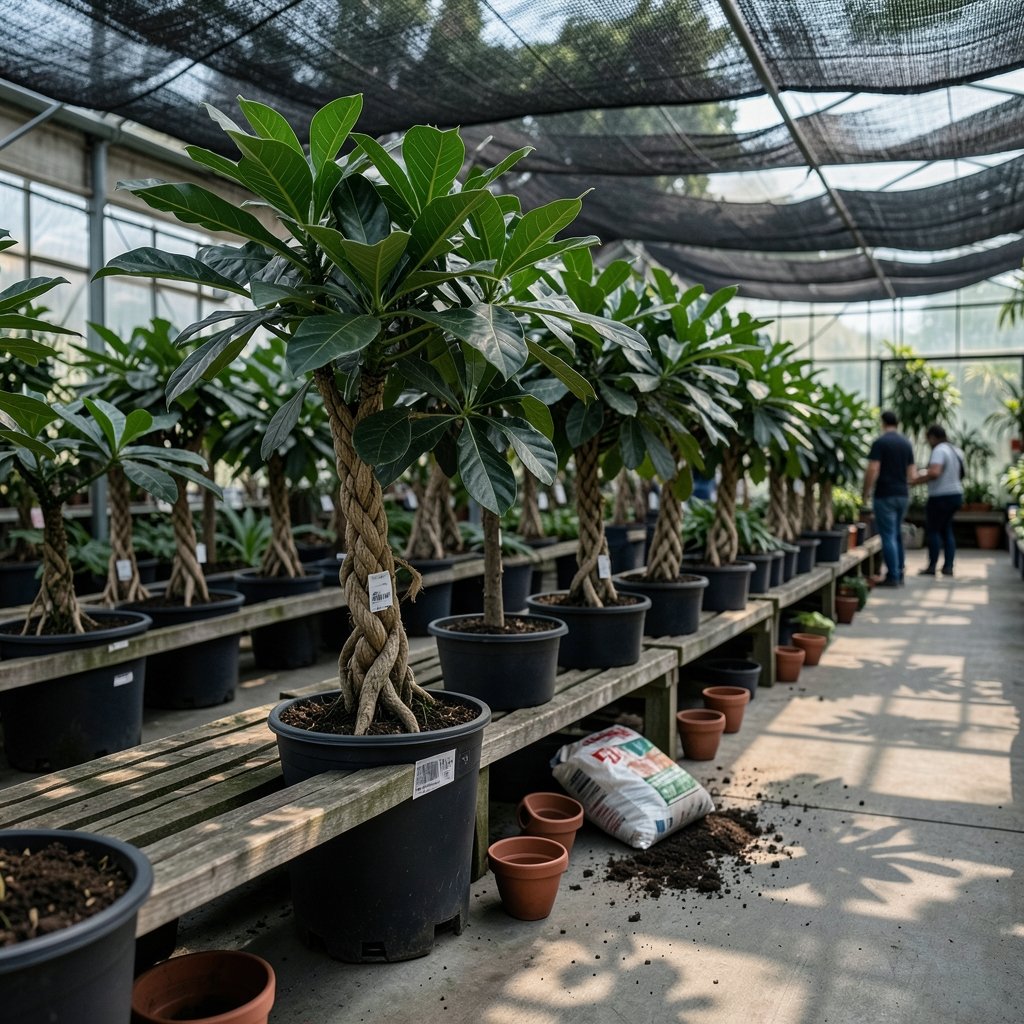
What comes to mind when you type “money tree near me” into a search bar? Most people picture a braided-trunk houseplant sitting on a shelf at a garden centre. But that phrase hides a surprising amount of confusion. The plant sold as a money tree is not one species. It is several, and they have different needs, different safety profiles, and different price tags. Knowing which one you want before you drive to the nursery can save you money, protect your pets, and spare you from bringing home a plant that dies within a month.
Which Plant Is Actually Called a Money Tree?
The name money tree most often refers to Pachira aquatica, a tropical wetland tree from Central and South America. In the wild it grows along riverbanks and in swamps, which explains why it likes consistent moisture and hates sitting in bone-dry air. The familiar braided trunk is not natural. Growers braid several young seedlings together while the stems are still flexible, then let them fuse as they thicken. The braid is a nursery technique, not a botanical feature.
The trouble is that the same nickname gets attached to at least three other plants. Crassula ovata, the jade plant, is frequently sold as a money tree because of its coin-shaped leaves. Zamioculcas zamiifolia, the ZZ plant, picks up the label too. And Epipremnum aureum, commonly called pothos or devil’s ivy, is known in some regions as the money plant. If a listing near you says “money tree” without a scientific name, you genuinely do not know what you are buying. Always check the label or ask staff for the Latin name.
This matters for a practical reason. Jade plants and pothos have very different watering needs from Pachira aquatica. A shopper who buys a jade plant expecting the care routine of a pothos will likely overwater it and rot the roots.
Why “Near Me” Results Change Every Time You Search
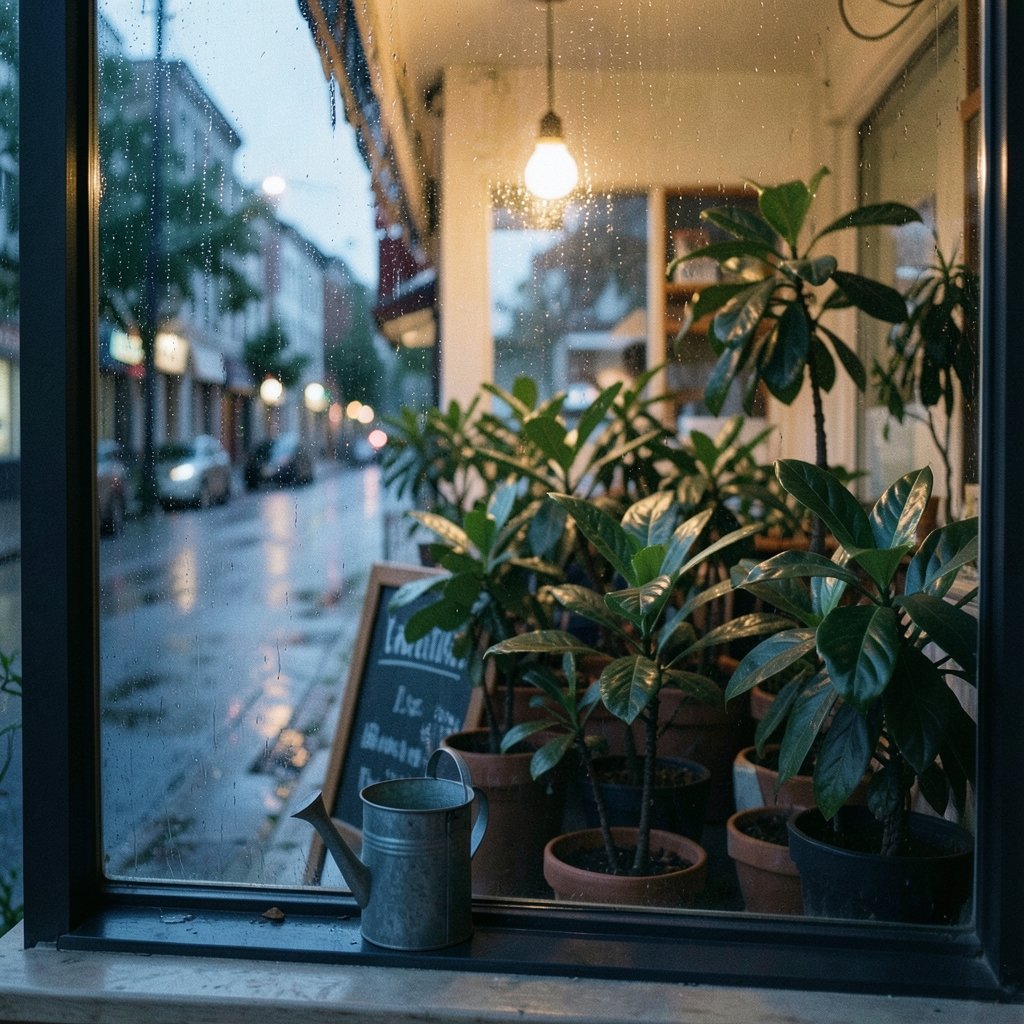
Local search results are built on proximity, business listings, and whatever the map app thinks you want that day. Two people on the same street can get different results. The same person can get different results a week later. That is why any article that hands you a fixed list of shops is close to useless. The list goes stale, and it probably was not accurate for your postcode in the first place.
A better approach is to search with intent. Instead of typing the bare phrase, add a qualifier that filters out the noise:
- “money tree plant nursery near me” to skip florists that only stock cut flowers
- “Pachira aquatica near me” to find sellers who list scientific names
- “braided money tree in stock near me” to avoid a wasted trip
- “houseplant shop near me” if you want advice rather than a supermarket shelf
Then phone ahead. Independent nurseries rarely keep their online stock counts current, and a plant that was there on Tuesday may be gone by Saturday. One quick call beats a forty-minute drive.
Big-Box Stores vs Garden Centres vs Florists
Where you buy shapes what you get. Each type of seller has real strengths and real weaknesses, and it helps to know them before you spend money.
| Seller type | Typical price | Plant quality | Staff knowledge | Best for |
|---|---|---|---|---|
| Supermarket or big-box store | Lowest | Variable, often stressed | Minimal | A cheap first plant |
| Independent garden centre | Mid to high | Usually strong | Good to excellent | Healthy stock and advice |
| Florist | High | Good but limited range | Moderate | Gift-ready presentation |
| Online specialist nursery | Mid, plus shipping | Good, but transit risk | Good via email | Rare or named cultivars |
Supermarkets sell money trees cheaply because they buy in volume and move stock fast. The plants are often kept under harsh lighting and irregular watering, so check the leaves for yellowing and the soil for a sour smell before buying. Garden centres cost more, but the staff can tell you when the plant was last watered and whether it has been repotted. Florists are best when the plant is a gift and presentation matters more than long-term vigour.
One common mistake is buying the biggest, most dramatic braided specimen on the shelf. Large plants cost more and shock harder when moved. A modest, healthy plant with firm green leaves and a clean trunk will usually settle into a home faster than a towering one that has spent weeks in a dim aisle.
What to Check Before You Pay
A few minutes of inspection at the shop prevents most of the problems people bring home. Work through this list in order:
- Look at the leaves. They should be glossy and evenly green. Yellow lower leaves can mean overwatering. Brown crispy edges usually mean dry air or inconsistent watering.
- Check the trunk. Firm, not soft or wrinkled. Soft patches near the soil line suggest rot.
- Smell the soil. Fresh earth is fine. A sour or sewage smell means the roots are already struggling.
- Look under the leaves. Small webs, sticky residue, or tiny moving specks point to pests such as spider mites or mealybugs.
- Lift the pot. It should feel heavier than it looks. A very light pot means the plant has been dry for a while.
- Check the drainage holes. Roots poking out is not automatically bad, but a pot with no drainage holes at all is a warning sign.
If a seller will not let you inspect the plant, walk away. Reputable nurseries expect it.
Care That Actually Works in a Normal Home
Money trees have a reputation for being easy, and mostly that reputation holds, with two exceptions: water and light. Most failures come from kindness, not neglect. People water too often because they want to do something.
Water when the top two to three inches of soil feel dry to the touch, not on a fixed weekly schedule. In winter that might mean every two weeks. In summer, with air conditioning running, it might be every week. Always let excess water drain away; a plant sitting in a full saucer is a plant developing root rot.
Light is the second lever. Bright, indirect light keeps growth compact and leaves deep green. Direct midday sun scorches the leaves. A spot a metre back from a bright window is usually close to ideal. Rotate the pot a quarter turn every few weeks so the plant does not lean permanently toward the light.
For anyone comparing running costs across household purchases, it helps to think in the same terms as other recurring expenses. A houseplant is cheap to run compared with most home tech, and the same logic of hidden costs applies to bigger purchases, as this breakdown of where identity threat detection money really goes shows. The parallel is useful: the sticker price is rarely the whole story.
Pet Safety and the Species Trap
This is where the money tree name causes real harm. Pachira aquatica is generally regarded as non-toxic to cats and dogs. Crassula ovata, the jade plant sold under the same nickname, is listed as toxic to pets. A pet owner who searches “money tree near me,” buys a jade plant by mistake, and lets a cat chew the leaves has a problem that a two-second label check would have prevented.
The ASPCA maintains a searchable database of toxic and non-toxic plants that lists both species separately, and it is worth checking the exact entry before you buy. If you have a chewer at home, confirm the scientific name with the seller and write it on the pot.
Warm-Climate Buyers: Check Before You Plant Outdoors
In frost-free regions, Pachira aquatica can grow outdoors, and that changes the calculation. A plant that is a harmless houseplant in a cold climate may be a problem in a warm one. Pothos, one of the plants sold as a money plant, is listed as invasive in parts of Florida and Hawaii, so buyers in warm climates should check local guidance before putting anything in the ground.
The USDA PLANTS database records distribution and noxious-weed listings by state, and it is the sensible first stop. State extension services publish local guidance too. This is a five-minute check that prevents a permanent landscaping headache.
Common Mistakes That Waste Money
A few patterns show up again and again among people shopping for a money tree.
- Buying without a scientific name. The single biggest source of confusion, and the easiest to avoid.
- Repotting immediately. New plants need a few weeks to adjust. Repotting on day one adds stress.
- Using a pot with no drainage. Decorative pots are fine as outer covers, not as the growing container.
- Watering on a schedule. Check the soil instead.
- Placing it in a dark corner. Money trees tolerate low light but do not thrive in it.
- Ignoring pests for weeks. Spider mites spread fast. Deal with them early.
There is a broader lesson here about how scams and bad deals work, and it applies to plant shopping as much as anything else: pressure and urgency are red flags. A seller who insists you buy today, or who cannot tell you the plant’s name, is not offering a good deal. The same pattern shows up in the gift card scam, where victims rarely get their money back because the pressure worked. Slow down, ask questions, and the odds improve.
If You Cannot Find One Locally
Sometimes the plant you want simply is not within driving distance. In that case, ordering online is reasonable, with caveats. Choose a specialist nursery rather than a general marketplace, ask how the plant is packed, and avoid ordering in extreme heat or cold. Check the arrival window and inspect the plant the day it lands. Photograph it before unpacking if the box looks damaged.
For readers who like to plan purchases around a day out, pairing a nursery visit with a meal is a pleasant habit, and local food searches work the same way as plant searches: they reward specificity. If you are mapping a route, the same approach that finds the best Thai food near me works for finding a nursery with real stock. Both depend on checking current listings rather than trusting a static directory.
Conclusion
Searching for a money tree near you is straightforward once you know what you are looking for. The plant most people mean is Pachira aquatica, the braided tropical tree, but the nickname also covers jade plants, ZZ plants, and pothos, each with different care needs and, in the jade plant’s case, a different safety profile around pets. Confirm the scientific name before you pay. Inspect the leaves, trunk, soil, and drainage holes. Phone the nursery before you drive. Then give the plant bright indirect light, water it when the soil dries, and leave it alone. Do those things and a modest plant from a local garden centre will outlast a stressed showpiece from a supermarket shelf by years.
Frequently Asked Questions
What is the scientific name of the money tree plant?
The plant most commonly sold as a money tree is Pachira aquatica, sometimes called the Guiana chestnut. It is a tropical wetland tree native to Central and South America. The braided trunk is created by growers, not by nature. Other plants sold under the same nickname include Crassula ovata (jade plant), Zamioculcas zamiifolia (ZZ plant), and Epipremnum aureum (pothos).
Is a money tree safe for cats and dogs?
Pachira aquatica is generally regarded as non-toxic to cats and dogs. However, the jade plant sold under the same nickname is listed as toxic to pets, so the species matters. Check the exact entry for the plant you are buying before bringing it home, especially if your pet chews leaves.
How often should I water a money tree?
Water when the top two to three inches of soil feel dry, rather than on a fixed schedule. That may mean weekly in summer and every two weeks in winter. Always let excess water drain away. Overwatering is the most common cause of decline, and a plant left sitting in a full saucer will usually develop root rot.
Why does my money tree have yellow leaves?
Yellow lower leaves usually point to overwatering or poor drainage. Brown, crispy edges more often mean dry air or inconsistent watering. Check the soil moisture first, then inspect the pot for drainage. If the soil smells sour, the roots may already be damaged and the plant needs repotting into fresh, well-draining mix.
Can I grow a money tree outdoors?
In frost-free climates, Pachira aquatica can grow outdoors in the ground. Elsewhere it is grown as a houseplant. Before planting any plant sold as a money tree outdoors in a warm region, check local invasive-species guidance, because at least one of the plants sold under the name is listed as invasive in parts of Florida and Hawaii.
Why do “money tree near me” search results keep changing?
Local results are ranked by proximity, business listings, and the map app’s own signals, so they shift by postcode and over time. Online stock counts are often out of date. The reliable method is to search with a specific qualifier, such as the scientific name, and then phone the nursery to confirm the plant is actually in stock before travelling.



