

What do a telegraph company from 1851 and the cash pickup counter at your local grocery store have in common? More than you’d think. Western Union spent its first century moving dots and dashes across wires, then pivoted to moving something far more valuable: people’s money. Today, when someone says they’ll “wire” you cash, they usually mean a Western Union money transfer, even though no wire is involved.
That legacy matters because it explains both the service’s reach and its quirks. Western Union can put cash in a relative’s hands in a country where you’ve never set foot, often within minutes. It can also cost far more than a bank transfer, and it has been the delivery channel for some of the world’s most painful scams. Knowing which situation you’re in is the whole game. This guide covers how the service actually works, what it really costs, where the risks hide, and when a different route makes more sense.
From Telegrams to Cash Pickup: A Short Backstory
Western Union started in 1851 as the New York and Mississippi Valley Printing Telegraph Company, adopted the Western Union name in 1856, and built the dominant telegraph network in the United States. In 1871 it launched a consumer money-transfer service that rode along those same telegraph lines. For more than a century, “sending a wire” meant exactly that.
The telegraph era ended when Western Union stopped U.S. telegram service in January 2006 and shut down telegraph operations entirely the following month. By then the company had already reinvented itself. It spun off from First Data in 2006 and became a standalone, publicly traded company on the New York Stock Exchange under the ticker WU. The wires are gone; the network of agents that replaced them is everywhere.
How a Western Union Money Transfer Actually Works
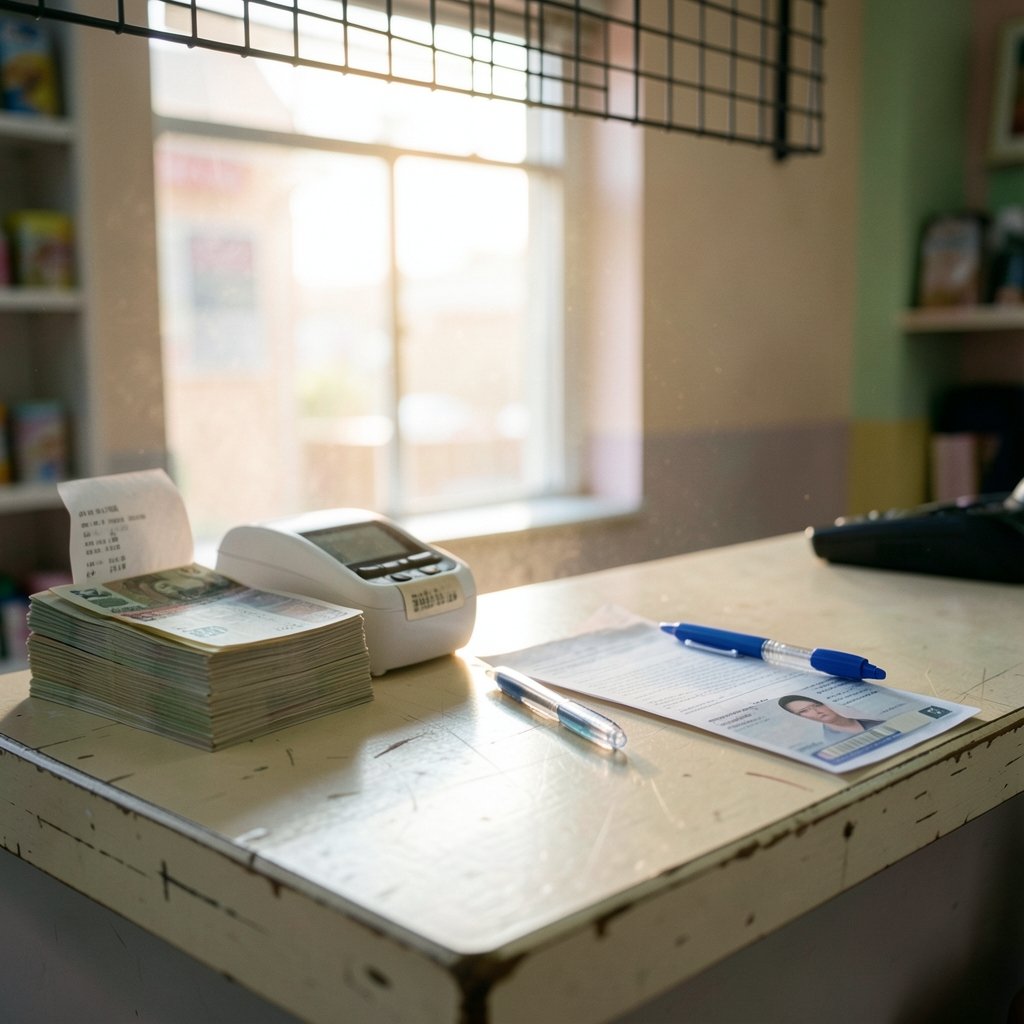
The core mechanic is simple, and that simplicity is the product. Western Union doesn’t move your money through the banking system the way a wire transfer does. It runs a global network of agents, including banks, post offices, and retail shops, who act as both sending and receiving points. You hand cash (or pay by card or bank account) to one agent; another agent, often thousands of miles away, hands cash to your recipient.
Here’s the practical sequence most people follow:
- Choose the send method: cash at an agent location, debit or credit card online, or a bank account transfer through the app or website.
- Enter the recipient’s full legal name exactly as it appears on their ID, plus their country and, where required, city.
- Pay the transfer fee and choose how the recipient gets the money: cash pickup, bank deposit, or mobile wallet.
- Share the Money Transfer Control Number (MTCN), a 10-digit code the recipient needs to collect the funds.
- The recipient presents the MTCN and a government-issued photo ID at a pickup location, or receives the funds directly into an account.
Two details trip people up constantly. First, the name must match the ID perfectly. A middle name left off, or a nickname used instead of a legal name, can stall a pickup for hours. Second, the MTCN is as good as cash to anyone who has it. Treat it like a password, not like a receipt number you’d post in a group chat.
Cash Pickup vs. Direct-to-Account
| Feature | Cash pickup | Direct to bank or mobile wallet |
|---|---|---|
| Speed | Often minutes | Minutes to a few business days |
| Recipient needs | Photo ID and MTCN | A bank account or wallet |
| Best for | Unbanked recipients, remote areas, emergencies | Repeat transfers, larger amounts, record-keeping |
| Typical cost | Higher fees on cash and card funding | Lower fees, sometimes promotional pricing |
| Main risk | Fraudsters collecting under a false name | Account details entered incorrectly |
Cash pickup is the classic use case and still the reason many families rely on Western Union. Direct-to-account is usually cheaper and leaves a paper trail, so if your recipient has a bank account, it’s worth comparing both before you commit.
What It Really Costs, and Why the Sticker Price Misleads
Western Union charges a transfer fee that varies by send method, destination country, amount, and how the recipient collects. Fees on cash-funded transfers are typically the highest; online transfers funded from a bank account are often the cheapest. Promotions that waive the fee for first-time app users are common, and they’re worth using once, but they don’t change the long-run math.
The fee is only half the story. The other half is the exchange rate. When you send money across currencies, the rate you get includes a margin built in by the provider. That margin can quietly cost more than the visible fee, especially on larger transfers. A transfer advertised as “zero fee” is not free if the rate is a few percent worse than the mid-market rate.
The standard way to compare is the cost of sending a fixed amount, usually $200, across a specific corridor. The World Bank’s Remittance Prices Worldwide database tracks exactly that, corridor by corridor, and it’s the reference researchers and regulators use. Checking your corridor there before you send takes two minutes and often reveals a cheaper provider for your specific route.
For readers in the United States, the Remittance Transfer Rule (Regulation E, Subpart B), which took effect in October 2013, requires providers to disclose the fee, the exchange rate, and the exact amount the recipient will receive before you pay. You can read the CFPB’s text of the remittance transfer rules to see what a provider must tell you. If a quote seems vague, ask for those three numbers in writing. A legitimate provider can produce them instantly.
The Fraud Problem Nobody Should Skip
Western Union’s scale made it a magnet for fraud, and the enforcement record is part of the service’s story. In January 2017, the company agreed to pay $586 million to resolve U.S. Department of Justice and Federal Trade Commission allegations that it had failed to prevent fraud-related transfers, and it entered a deferred prosecution agreement. The following year, it settled with New York’s Department of Financial Services over anti-money-laundering and fraud controls.
Those cases weren’t about Western Union inventing scams. They were about scammers exploiting a system built for speed and cash. The pattern is depressingly consistent: someone impersonating a grandchild, a romantic partner, a utility, or a law enforcement officer asks for money urgently, and the transfer must be cash pickup, untraceable, and fast. The FTC’s consumer guidance on money transfer scams lays out the scripts these callers use, and reading it once is genuinely useful.
A few habits that actually work in practice:
- Never send money to someone who contacted you first and insists on urgency. Legitimate businesses, courts, and government agencies do not demand cash pickup within the hour.
- Verify through a number you found yourself, not one the caller gave you. Call the family member directly, or the organization’s published line.
- Know that gift cards and cash transfers are the two payment methods scammers push hardest, because both are hard to reverse. Our breakdown of how the gift card scam works and why victims rarely get their money back explains the reversal problem in detail.
- Slow down at the counter. Agents are trained to ask questions about unusual transfers. If an agent seems concerned, that’s a signal, not an obstacle.
Western Union vs. the Alternatives
Western Union is rarely the cheapest option, but it is often the only one that reaches a specific village, a specific post office, or a recipient with no bank account. That’s the honest trade-off.
| Method | Speed | Typical cost | Reach | Best for |
|---|---|---|---|---|
| Western Union cash pickup | Minutes | Higher fees, rate margin | Very broad, including rural areas | Unbanked recipients, emergencies |
| Bank wire transfer | Same to next day | Flat fee, often $15–$50 outgoing | Banked recipients only | Large amounts, business payments |
| Online remittance services | Hours to 2 days | Lower fees, tighter rates | Broad but account-based | Regular transfers to banked recipients |
| Digital wallets | Minutes | Low to moderate | Limited to supported countries | Small, frequent transfers |
If your recipient is banked, comparing a bank-to-bank route is worthwhile. Our guide to how to transfer money between banks with faster, safer routes and lower fees walks through the mechanics, including cut-off times that decide whether a transfer lands today or Monday. And if you’re sending money abroad regularly, keep an eye on how central bank digital currencies are changing the plumbing of cross-border payments — the cost of remittances is a stated policy target for several central banks.
Practical Tips That Save Money and Headaches
Send from the app or website when you can. Bank-funded online transfers almost always beat cash-at-the-counter pricing, and the fee is shown upfront before you confirm.
Compare the total received, not the fee. Ask a simple question: how much will my recipient actually get? Then compare that number across providers. It’s the only apples-to-apples figure.
Batch smaller transfers. Fees are often flat per transfer, so sending $400 once usually costs less than sending $200 twice.
Keep the receipt and the MTCN separate. If a transfer needs to be corrected or refunded, the reference number speeds everything up. Errors in the recipient’s name are the most common cause of delay, and fixing them requires the sender to act, not the recipient.
Set up repeat transfers properly. If you send to the same person monthly, save them as a recipient. Re-entering details each time is how typos creep in.
Watch the clock. Cut-off times, weekends, and destination-country holidays all affect when cash is available. A transfer initiated Friday evening in New York may not be collectable until Monday in parts of Asia.
Check the payout currency. In some corridors you can choose to send in the recipient’s currency or your own. One option usually gives a better effective rate, and it isn’t always the obvious one.
When Western Union Is the Right Call
Western Union money transfer is a tool with a sharp edge. For a family sending cash to a relative in a country with a thin banking system, or for a traveler whose wallet was stolen and whose bank card is useless abroad, the agent network is genuinely hard to replace. The company’s own financial disclosures, filed with the SEC EDGAR database of Western Union filings, show how much of its business still runs through that physical network rather than digital channels. (FinCEN)
But the same features that make it useful — speed, cash, irreversibility — make it a favorite of people who want your money and don’t deserve it. The rule of thumb is simple: Western Union is for people you already know and trust, sending to people they already know and trust. The moment a stranger introduces urgency into the conversation, the tool stops being a convenience and becomes a liability.
Conclusion
Western Union has been moving value across distances since 1871, and it has survived by adapting: from telegraph lines to agent counters to mobile apps. The service’s real strength is reach, not price. It will get cash to places banks won’t, often within minutes, and for a lot of families that reliability is worth a premium. The catch is that the premium is real, the exchange-rate margin is easy to miss, and the system’s speed has been exploited by fraudsters at a scale that drew $586 million in penalties.
The practical path is unglamorous but effective. Compare the total amount your recipient will receive, rather than the fee alone. Fund transfers from a bank account when you can. Keep the MTCN private. Treat any request for an urgent cash transfer from someone you have not independently verified as a red flag until proven otherwise. Used that way, Western Union does exactly what it promises: it moves money fast, to almost anywhere, for people who need it there.
Frequently Asked Questions
How long does a Western Union money transfer take?
Cash pickups are often available within minutes of the sender completing payment, though timing depends on the destination country, the send method, and local business hours. Card-funded transfers can take longer to clear than cash, and direct-to-bank transfers may take one to three business days. Weekend and holiday cut-offs in the receiving country are the most common cause of unexpected delays.
What is an MTCN and why does it matter?
The Money Transfer Control Number is a 10-digit code that identifies a specific transfer and lets the recipient collect the funds. Anyone who has the MTCN and a matching ID can usually pick up the money, which is why it should be shared only with the intended recipient. Treat it like a password, not like a tracking number you’d post publicly.
Is Western Union cheaper than a bank transfer?
Not usually, especially for large amounts. Western Union’s fees plus its exchange-rate margin often exceed the flat fee a bank charges for a wire, though bank wires require both parties to have accounts and can be slower. For small, urgent transfers to unbanked recipients, Western Union can still be the more practical option despite the higher cost.
Can I cancel a Western Union transfer and get a refund?
Yes, if the money hasn’t been collected yet. The sender typically needs the MTCN and the original receipt, and refunds generally go back to the original payment method. Once the recipient has picked up the cash, cancellation is no longer possible, which is exactly why scammers prefer cash pickup over reversible payment methods.
What identification does the recipient need to collect money?
Recipients generally need a government-issued photo ID and the MTCN, and the name on the ID must match the recipient name on the transfer exactly. Requirements vary by country and by amount, and some destinations require additional documentation. Senders should confirm the exact rules for the destination before completing the transfer.
Why do scammers ask for money to be sent through Western Union?
Because cash pickups are fast, hard to trace, and effectively irreversible once collected. Scammers exploit that by creating urgency and insisting on cash transfer or gift cards, both of which are difficult to claw back. Legitimate organizations rarely demand payment this way, so an urgent request for a cash transfer is one of the clearest warning signs of fraud.



