
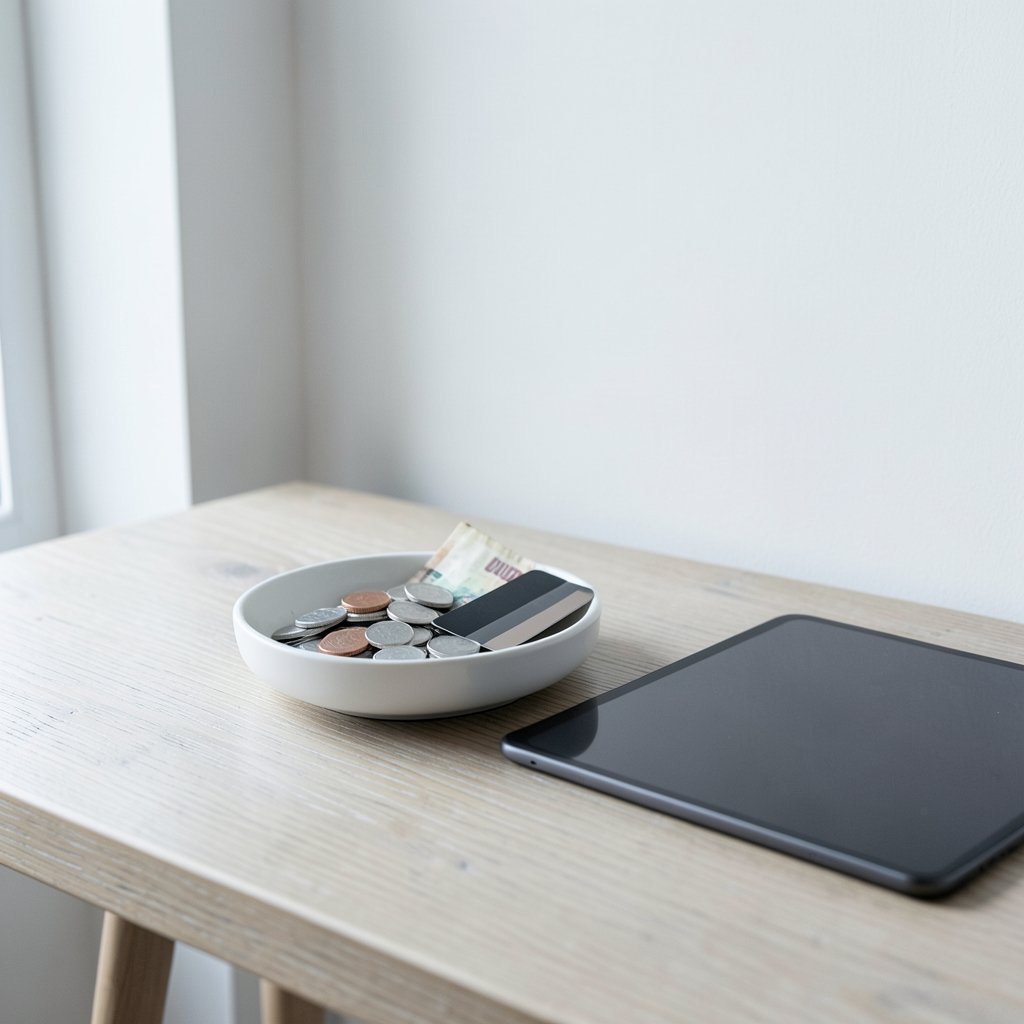
What happens to a country’s money when almost nobody carries cash anymore? Sweden sits at the front of that experiment. The krona still anchors prices, wages, and savings, yet many Swedes can go weeks without touching a banknote. That gap between the currency on paper and the payment habits on the street makes Swedish money one of the more interesting financial stories in Europe right now.
What Is the Swedish Krona?
The krona (plural: kronor) is Sweden’s official currency, written as SEK in currency codes. It splits into 100 öre, though öre coins left circulation after June 30, 2010. Prices are still legally quoted to two decimals, but when someone pays in cash, the total rounds to the nearest krona.
The krona is not a newcomer. Sweden introduced it in 1873, when Sweden and Denmark formed the Scandinavian Monetary Union; Norway joined two years later. The union eventually dissolved in the early 20th century, but the krona name and the currency itself stayed put.
For travelers and businesses, the practical upshot is simple: Sweden uses kronor, not euros, and the exchange rate moves. The krona has weakened noticeably against both the euro and the dollar since the mid-2010s, and it traded roughly in the range of 10 to 11 kronor per euro through much of the 2020s, with plenty of swings along the way. (Interest rates and exchange rates)
Why Sweden Doesn’t Use the Euro
This trips people up constantly. Sweden joined the European Union in 1995, and under its accession treaty it is legally committed to eventually adopting the euro. There is no formal opt-out like the one the UK and Denmark negotiated.
So why is the krona still around? Two reasons. First, Swedes rejected the euro in a 2003 referendum, with about 56 percent voting No. Second, Sweden has never joined ERM II, the exchange-rate mechanism that countries must enter before adopting the euro. Without that step, Sweden does not meet the convergence criteria, so the currency swap stays on hold indefinitely. The European Commission’s explainer on which countries can join the euro lays out those criteria in detail.
In practice, the referendum result has functioned as a political lock. No major Swedish party campaigns seriously on euro adoption, and public opinion has stayed cool for two decades.
The Riksbank: The World’s Oldest Central Bank
Swedish money is managed by Sveriges Riksbank, founded in 1668 and generally described as the world’s oldest central bank. It is not a private bank. It is a public authority under the Riksdag, Sweden’s parliament, and it sets the policy rate that ripples through mortgages, savings accounts, and the krona’s value.
The Riksbank’s history page traces how the bank evolved from a 17th-century note-issuing institution into a modern inflation-targeting central bank. That matters for anyone holding kronor: the bank’s interest-rate decisions are the single biggest driver of what the currency is worth against other money.
Banknotes and Coins: Who’s on Swedish Money?
Sweden rolled out a new note series between 2015 and 2016, and the portraits read like a cultural hall of fame.
| Denomination | Portrait | Claim to Fame |
|---|---|---|
| 20 kronor | Astrid Lindgren | Author of Pippi Longstocking |
| 100 kronor | Dag Hammarskjöld | Former UN Secretary-General |
| 200 kronor | Ingmar Bergman | Film director |
| 500 kronor | Selma Lagerlöf | Nobel laureate in literature |
| 1,000 kronor | Gustav Vasa | 16th-century king |
Coins come in 1, 2, 5, and 10 kronor, with the 10-krona coin being the workhorse. The older 2- and 20-krona coins are gone. Because the Riksbank periodically reviews the series, it is worth checking the official banknotes and coins pages before relying on any note being accepted.
One practical tip: many Swedish shops and cafes no longer keep a cash drawer at all. Even where cash is legal tender, a small business may simply not be set up to handle it.
The Cashless Experiment
Sweden is among the most cashless economies on earth. Card payments, Swish (the popular mobile transfer app), and direct bank transfers have pushed physical cash to a tiny share of transactions. By the early 2020s, cash accounted for only low single-digit percentages of payments by most measures, down sharply from a decade earlier.
That shift has real consequences. Digital payments are convenient and traceable, but they also create friction for people who rely on cash: older residents, recent arrivals, and anyone who values financial privacy. Fraud and digital identity theft have grown alongside the shift, and the cost of defending against identity threat detection is now a line item every Swedish bank budgets for.
Digital fraud is not abstract. The gift card scam is a textbook example of how criminals exploit fast digital payments, and victims rarely get their money back once funds move.
The Cash Service Act: A Legal Floor for Cash
Sweden addressed full cashlessness in 2023 with the Cash Service Act (lag om kontanttjänster). The law requires certain sellers of basic goods and services, including pharmacies and grocery stores, to accept cash. It also obliges banks to provide cash services, so people can still deposit and withdraw notes.
The logic is straightforward: a society can go mostly digital without leaving anyone stranded. The law does not force every cafe to take a 500-krona note, but it does protect a baseline of access. The Riksbank’s payments and cash pages track how well that is working, including surveys of how people actually pay.
For visitors, the practical rule is to carry a card and a small amount of cash. For residents, it is worth knowing which nearby bank branch still handles cash deposits, because those are shrinking.
The E-Krona: Sweden’s Digital Currency Pilot
The Riksbank has been piloting a central bank digital currency called the e-krona since 2020. No final decision has been made to issue it, and the project has moved in phases rather than toward a launch date.
The e-krona would be digital money issued directly by the central bank, not by a commercial bank. It would sit alongside cash rather than replace it, at least in the designs published so far. The broader debate over central bank digital currencies, including privacy and programmability questions, is covered in this explainer on CBDC digital currency and central bank money going digital.
Sweden’s motivation is partly defensive. If cash disappears entirely and private payment apps dominate, the central bank loses a direct channel to the public. An e-krona would preserve that option.
What Swedish Money Means for Households and Businesses
Exchange-rate swings matter more than most people expect. A weaker krona makes Swedish exports cheaper abroad, which helps manufacturers and tourism. It also makes imports and foreign travel more expensive for Swedes. For a household planning a trip or paying for foreign services, timing the conversion can save real money.
Businesses face a second layer: payment costs. Card fees, Swish integrations, and cash-handling logistics all add up. A small retailer that accepts only cards may save on cash logistics but pay more in transaction fees. One that accepts both pays for both. Getting this balance right is part of the broader question of how to use AI business automation without wasting money on tools that do not fit the workflow.
For freelancers and small firms invoicing abroad, the krona’s volatility is a planning problem. Hedging, invoicing in euros, or simply building a buffer into pricing all help. The same discipline applies to any business watching currency exposure.
Common Mistakes People Make With Swedish Money
A few errors show up again and again among visitors and newcomers.
- Assuming euros work. They don’t. Shops price in kronor, and while some tourist-heavy spots may accept euros at a poor rate, you will lose money.
- Relying entirely on cash. Many venues are card-only. Arrive with a working card and a mobile payment option.
- Forgetting the rounding rule. Cash totals round to the nearest krona, so a 47.50 krona purchase costs 48 in cash.
- Ignoring exchange fees. Airport kiosks and hotel desks charge wide spreads. Bank ATMs and card networks usually cost less.
- Expecting a bank branch nearby. Physical branches have thinned out, and cash services are concentrated in fewer locations.
How to Handle Kronor in Practice
If you are visiting or moving to Sweden, a simple routine works well.
- Check the current SEK rate before you travel, and note that it moves daily.
- Use a card with no foreign transaction fee for most purchases.
- Withdraw a modest amount of cash from a bank ATM for places that still take it.
- Keep small denominations, since large notes are awkward in a low-cash economy.
- Set up Swish if you have a Swedish bank account and a personal number.
For anyone building income around digital tools, understanding how money moves in a low-cash economy is increasingly relevant. The same skills apply to earning through online channels, and the practical guide on how to make money with AI covers the workflow side.
Conclusion
Swedish money is a study in contrast. The krona is a centuries-old currency with a proud central bank behind it, yet it circulates in one of the least cash-dependent societies in the world. Sweden has kept its own currency while staying inside the EU, built a legal floor under cash access through the Cash Service Act, and is quietly testing a digital krona for whatever comes next. For visitors, the lesson is to arrive card-ready with a little cash in hand. For residents and businesses, the lesson is to watch the exchange rate, understand payment costs, and never assume that cash will be accepted just because it is legal tender. The krona is not going anywhere, but the way Swedes use it keeps changing.
Frequently Asked Questions
What is the currency of Sweden called?
It is the krona, plural kronor, with the currency code SEK. One krona divides into 100 öre, though öre coins were withdrawn in 2010 and cash payments now round to the nearest krona. (Swedish krona)
Does Sweden use the euro?
No. Sweden is legally committed to eventually adopting the euro under its EU accession treaty, but it has no opt-out and has never joined ERM II. A 2003 referendum rejected euro adoption with about 56 percent voting No, and the issue has stayed dormant since.
Can you still use cash in Sweden?
Yes, and since 2023 the Cash Service Act requires certain sellers of basic goods and services, such as pharmacies and grocery stores, to accept cash, while banks must provide cash services. That said, many small businesses are card-only in practice, so carrying a card is necessary.
Why is Swedish cash use so low?
Card payments and the Swish mobile app became the default for most Swedes, and cash fell to a low single-digit share of transactions by the early 2020s. Convenience, speed, and merchant preferences drove the shift, though privacy and access concerns have prompted pushback.
What is the e-krona?
It is a proposed central bank digital currency that the Riksbank has been piloting since 2020. No decision has been made to issue it, and the designs published so far present it as a complement to cash rather than a replacement.
Is the krona a good currency to hold?
That depends on your goals. The krona has been volatile against the euro and dollar since the mid-2010s, which creates both risk and opportunity. For most people, the sensible approach is to match currency to spending needs rather than speculate on short-term moves.



