
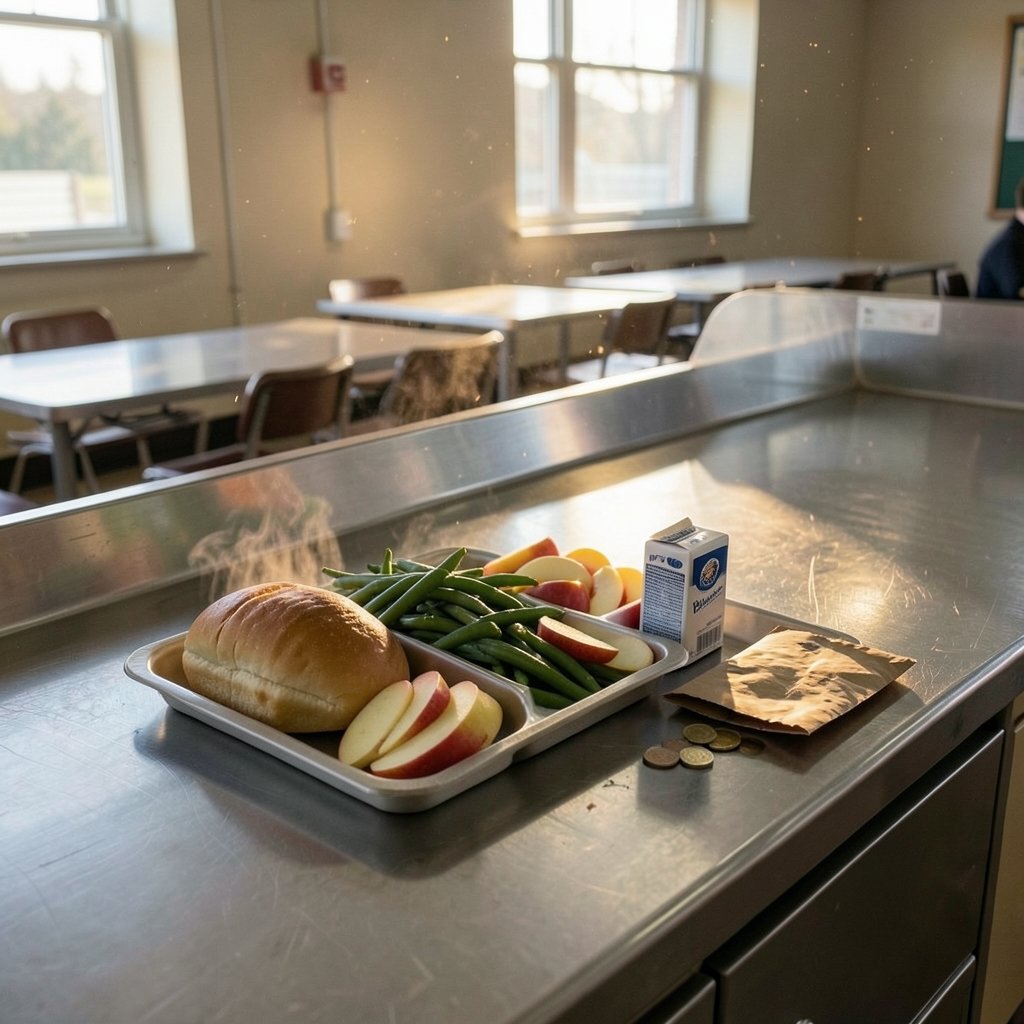
What happens when a child walks up to the register with a tray of food and no money in their pocket? That question runs through a surprisingly tangled subject. “Lunch money” sounds like the simplest phrase in the language, a few coins in a paper envelope. In practice, it touches school policy, family budgets, legal obligations, and a long-running debate about whether a hot meal at midday should ever depend on a child’s wallet. This article explains the term from the angles worth knowing: what it means, how school meal programs work, what happens when the money runs out, and how families can stay ahead of the bill.
What “Lunch Money” Actually Means
In everyday American English, lunch money is the cash or account balance a child uses to buy food at school. It is a small, practical sum, and that smallness is part of its meaning. The phrase also works as shorthand for any modest amount of spending cash, the kind you would not miss if you lost it.
The word choice is regional. In the United States, parents hand over “lunch money.” In the United Kingdom, the older term is dinner money, a leftover from the days when the midday school meal was called dinner. The distinction matters if you are reading British or American sources about school food policy, because the same concept hides behind two different labels.
There is also a looser, informal use: “lunch money” as a dismissive description of petty cash, or occasionally as slang for a small bribe. That usage is colloquial and imprecise, so it is best treated as colorful language rather than a defined term.
The School Lunch Program Behind the Money

Most American lunch money flows into a system that dates back to the middle of the twentieth century. The National School Lunch Program was created by the National School Lunch Act, which President Harry S. Truman signed on June 4, 1946. The program provides low-cost or free meals to schoolchildren and now operates in tens of thousands of schools nationwide. (Packed lunch)
The structure explains why lunch money looks different from district to district. Families above the income threshold pay full price or a reduced price. Families below it pay nothing. Schools act as the middleman, collecting payments, tracking balances, and reconciling the difference with federal reimbursements.
A major shift came with the Community Eligibility Provision, created by the Healthy, Hunger-Free Kids Act of 2010. Under this rule, schools in high-poverty areas can serve free meals to every student without collecting household applications. The eligibility threshold was lowered in 2023, which brought more schools into the program. For families in those schools, lunch money stops being a daily concern entirely. The mechanics of how institutions collect, hold, and move small payments have changed too, and anyone curious about the wider shift toward digital money can read about how central bank digital currency is changing the way money moves. (School Nutrition and Meals (CDC Healthy Schools))
Why the Program Exists at All
The original rationale was partly nutritional and partly military. Recruiters during the 1940s had rejected large numbers of young men for malnutrition-related reasons, and a guaranteed midday meal was seen as a matter of national readiness. That framing has faded, but the core idea survives: a hungry student cannot learn, and schools are a efficient place to intervene.
What Happens When the Money Runs Out
Unpaid meal debt is one of the most contested issues in American school food policy. The rules are not uniform. Some districts allow a child to charge a meal and run a negative balance. Others serve a reduced “alternate meal,” such as a cold sandwich, to students who cannot pay. A few have policies that effectively single out children, which is where the politics gets heated.
Several states have moved toward universal free school meals, removing the question of payment altogether for every student in a given school or district. California and Maine were early movers, and other states have followed with their own versions. The result is a patchwork: a child’s experience of lunch money depends heavily on their zip code.
The financial exposure for schools is real. Districts absorb unpaid balances, sometimes writing them off, sometimes pursuing families. The awkwardness of that pursuit, debt collectors calling about a child’s lunch account, is exactly why universal meal proposals keep gaining traction.
Lunch Money in the United Kingdom
The British story runs on a different timeline. Free school meals were introduced nationally by the Education (Provision of Meals) Act 1906, a piece of legislation that recognized feeding children as a public responsibility. For decades afterward, “dinner money” was a routine part of the school morning: coins collected, registers marked, meals counted.
The modern landscape shifted again in September 2014, when universal infant free school meals arrived in England. Every child in Reception and Key Stage 1 became entitled to a free lunch, regardless of household income. Older children still pay unless their family qualifies for free meals under means-tested rules. The vocabulary persists even where the payment does not: plenty of British parents still say “dinner money” out of habit.
How Families Actually Manage It
Practical management of lunch money is less about policy and more about habits. A few approaches tend to work better than others.
- Use the school’s prepaid account rather than cash. Most districts now run online payment systems. Money loaded onto an account cannot be lost on the playground, and parents can see balances in real time.
- Set a low-balance alert. Nearly every payment portal offers email or text notifications. Turning them on is the single easiest way to avoid an accidental negative balance.
- Check whether your family qualifies for free or reduced-price meals. Applications are confidential, and eligibility is broader than many parents assume.
- Ask about the district’s charge policy in writing. Knowing whether your child will receive a full meal or an alternate one on a zero balance prevents unpleasant surprises.
- Fund in small increments if budgeting is tight. A weekly top-up is easier to absorb than a lump sum, and it keeps the account visible.
The most common mistake is treating lunch money as a set-and-forget item. Accounts drift negative quietly, and the first notification a parent gets is often a letter home. The second most common mistake is assuming that a free-meal application is only for families in obvious hardship. Income thresholds are higher than many people expect.
Families juggling tight budgets often find that small, recurring costs are the ones that slip through the cracks. The same principle shows up in other corners of personal finance, from subscription creep to the way scammers extract money in small increments, as this breakdown of how the gift card scam works and why victims rarely get their money back illustrates. Small sums are easy to overlook, and that is exactly what makes them worth tracking.
The Economics of a School Meal
A school lunch is a small transaction with a large supply chain behind it. Food costs, labor, kitchen equipment, and compliance with federal nutrition standards all feed into the price a family pays. When a district sets its lunch price, it is balancing the federal reimbursement rate against the actual cost of production.
That math explains a lot of behavior. Districts that participate in community eligibility stop chasing individual payments because the federal reimbursement covers everyone. Districts that do not participate must collect, which means invoicing, reminders, and the occasional awkward conversation.
The broader economy of small payments is worth understanding, because it shapes how institutions behave. When the cost of collecting a debt exceeds the debt itself, organizations make choices that are not always kind. Schools are not exempt from that logic.
Technology Has Changed the Envelope
The paper envelope with a child’s name on it is mostly gone. In its place are online portals, cafeteria keypads, and account dashboards. The change has real benefits: less lost cash, better records, faster service lines. It also creates new friction for families without reliable internet or a bank account, which is why many districts still accept cash and checks.
Automation has crept into other parts of school administration too. Districts use software to forecast meal counts, order food, and flag accounts heading negative. The same wave of automation is reshaping small business operations more broadly, and the lessons about avoiding waste while adopting new tools apply just as well to a school kitchen as to a shop floor, as this guide to using AI business automation without wasting money makes clear.
Common Myths Worth Correcting
A few persistent misconceptions keep circulating.
| Myth | Reality |
|---|---|
| Unpaid lunch money means a child goes hungry | Many districts serve an alternate meal, and some states guarantee a full meal regardless of balance |
| Free meals are only for very poor families | Eligibility thresholds are higher than most parents assume, and community eligibility covers entire schools |
| Lunch money is trivial and not worth tracking | Small recurring charges add up, and negative balances can follow a family across school years |
| School meal programs are a modern invention | The US program dates to 1946, and the UK’s free meal legislation to 1906 |
Why the Topic Keeps Coming Back
School meals sit at the intersection of nutrition, education, and household finance, which is why the debate never fully settles. Every few years a new study, a new state law, or a new viral story about a child’s tray being taken away pushes the issue back into public view.
The direction of travel is fairly clear. More schools are moving toward universal service, more payment systems are going digital, and fewer families are handling physical cash. But the underlying question, whether a child’s midday meal should depend on a parent’s bank balance, remains genuinely contested. That is what makes lunch money more than a phrase. It is a small window into how a society decides what it owes its children.
For readers interested in the wider pattern of how institutions handle money and risk, the same themes recur across security, finance, and technology. Understanding where money actually goes, whether in a school cafeteria or a corporate budget, is a skill worth building deliberately.
Conclusion
Lunch money looks like a minor detail of childhood, but it carries real weight. It connects a 1946 federal law to a parent’s online account balance, and a 1906 British statute to a school dinner register. It exposes the gap between universal policies and local practice, and it forces families to think about small recurring costs that quietly accumulate. Whether you are a parent setting up a prepaid account, a policymaker weighing universal meals, or simply someone curious about where a familiar phrase comes from, the practical takeaway is the same: track the small sums, know the rules in your district, and do not assume that a simple term describes a simple system.
Frequently Asked Questions
What does lunch money mean?
Lunch money is the cash or prepaid account balance a student uses to buy food at school. In American English it also serves as casual shorthand for a small amount of spending money. In British English, the equivalent term is dinner money.
Is lunch money the same as free school meals?
No. Lunch money refers to money a family pays toward a school meal. Free school meals are a separate entitlement, provided to students whose households meet income criteria or who attend a school operating under a universal or community eligibility policy.
What happens if a student has no lunch money?
It depends on the district. Some schools let the balance go negative and serve a full meal. Others provide an alternate meal such as a sandwich. A growing number of states and schools serve free meals to all students, which removes the issue entirely.
When did school lunch programs start?
The US National School Lunch Program was established by the National School Lunch Act, signed on June 4, 1946. In the UK, free school meals were introduced nationally by the Education (Provision of Meals) Act 1906.
How can parents avoid a negative lunch balance?
Set up a prepaid online account, turn on low-balance alerts, check whether your family qualifies for free or reduced-price meals, and ask the district for its written charge policy. Topping up weekly rather than termly keeps the balance visible.
Do all schools in England provide free lunches?
No. Since September 2014, all children in Reception and Key Stage 1 in England receive a free school lunch under universal infant free school meals. Older pupils pay unless their family qualifies for means-tested free school meals.



