
What happens if you fall into bed with a full face of foundation and a coat of waterproof mascara? Most people know the answer is “nothing good,” but far fewer know what proper removal actually looks like. Splashing water on your face and calling it a night is not it. Neither is scrubbing hard enough to leave your skin red. (Face washing 101)
The good news: removing makeup properly is a skill, not a talent. It comes down to a handful of steps, a little patience around the eyes, and a basic understanding of why certain products work. This guide walks through the whole routine, from the first swipe of a cleansing balm to the final pat-dry, plus the common mistakes that quietly sabotage even careful people.
Why Proper Makeup Removal Matters More Than You Think
Leaving makeup on overnight can smudge the pillowcase, and it also affects the eye area, the most sensitive part of this habit. Ophthalmologists commonly warn that sleeping in mascara and eyeliner can clog the oil glands along the eyelid margin, and the habit is associated with blepharitis, styes, and dry eye. That reflects consensus among ophthalmologists rather than a single controlled trial, but the advice is consistent across the field.
The eyelid margin needs deliberate cleaning rather than a quick rinse. Clinical guidance on lid hygiene recommends gentle daily cleansing of the lid margin, often with a warm compress and lid wipes, as part of managing blepharitis and meibomian gland dysfunction. Makeup removal is the everyday form of that practice. Skipping it night after night leaves residue sitting exactly where the glands open.
There is also the expiration side of the story. Mascara in particular should be replaced periodically, with roughly every three months being the widely repeated rule of thumb, because the wand transfers microbes from the eye area back into the tube. That figure is convention rather than a hard standard, but the logic behind it is sound.
The Core Principle: Like Dissolves Like
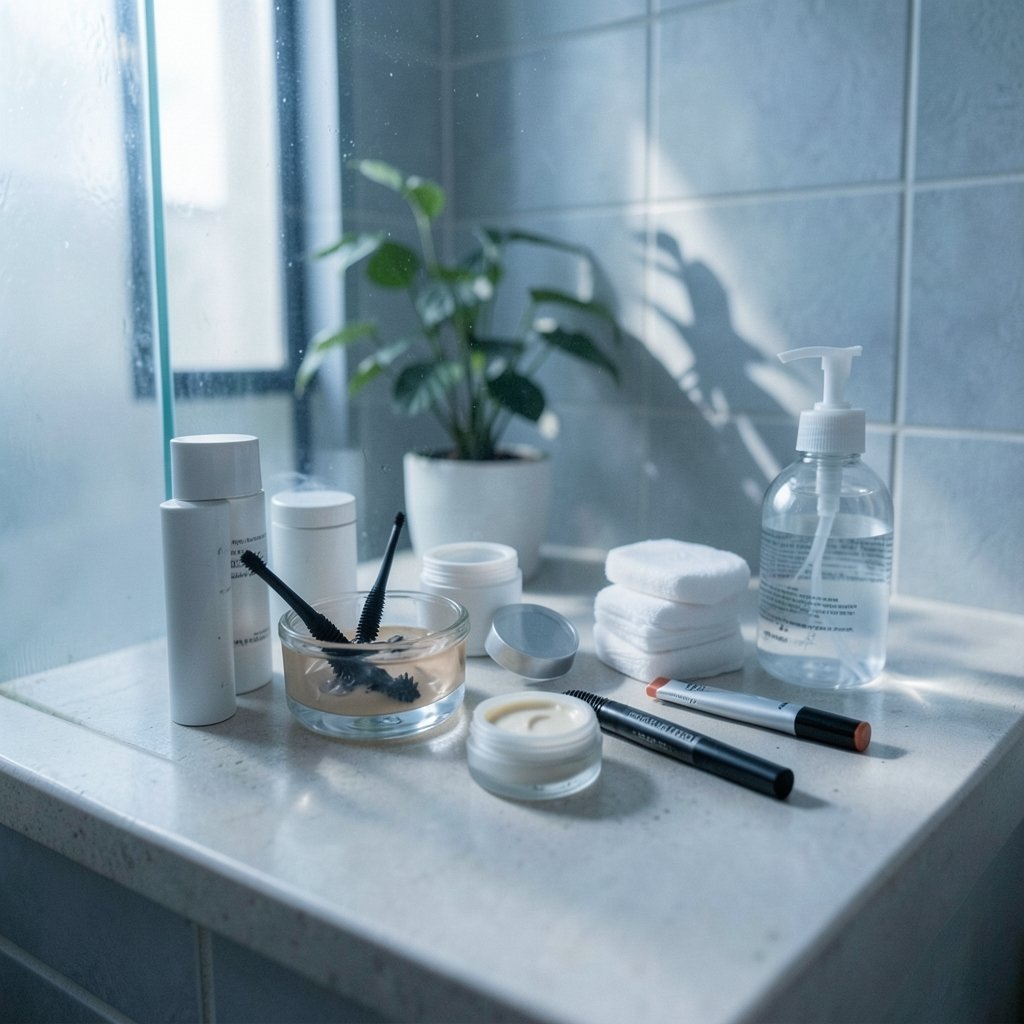
Before getting into products, it helps to understand one piece of chemistry. Waterproof mascara and long-wear foundation are typically oil-based or silicone-based. Water alone cannot break them down effectively, which is why a splash-and-go approach leaves raccoon eyes behind. Oil-based removers dissolve them far more readily because of the principle that like dissolves like.
This is why a cleansing oil or balm is often the most efficient first step, especially on a full face of long-wear product. It is also why micellar water works at all. Micellar cleansers contain surfactant molecules that form micelles in water. The hydrophobic tails trap oils and makeup, and the micelles get rinsed or wiped away. It is standard colloid science, not marketing magic.
Once that chemistry clicks, product shopping gets much simpler. Match the remover to the makeup, and half the battle is won before you touch your face.
Step 1: Wash Your Hands and Start With Dry Skin
It sounds almost too basic to mention, but clean hands come first. Whatever is on your fingers ends up on your face, and the eye area is not the place to introduce new bacteria.
The next point trips up a lot of people: many oil cleansers and balms work best applied to dry skin. If you wet your face first, the product emulsifies too early and loses some of its dissolving power. Read the label, but as a general rule, massage the oil or balm onto dry skin and add water only when it is time to rinse.
Step 2: Break Down Eye Makeup Gently
The eyes deserve their own step, done before the rest of the face so that dissolved mascara does not get spread across your cheeks.
- Soak a cotton pad or reusable cloth with an oil-based eye remover or micellar water.
- Press it against the closed eye for 20 to 30 seconds. Let the product do the work.
- Wipe downward and outward in one slow stroke.
- Repeat with a fresh pad until the cotton comes away clean.
- Use a cotton swab dipped in remover to trace the lash line and the inner corners, where liner hides.
The single biggest mistake here is rubbing. Dermatologists and ophthalmologists generally advise against vigorous rubbing around the eyes because the skin there is thin and friction can irritate the lid margin. Patting or holding a soaked pad briefly is always preferable to scrubbing. If a waterproof formula is stubborn, hold the pad longer rather than pressing harder.
Step 3: Massage an Oil or Balm Over the Whole Face
With eye makeup out of the way, apply your oil cleanser or balm to dry skin and massage it in for about 30 to 60 seconds. Focus on the areas where makeup collects: the hairline, the sides of the nose, the jaw, and the eyebrows. Brow gel and pencil are easy to forget, and leftover product there can leave a faint shadow. (Cleanser)
This step is where double cleansing begins. The two-step routine, an oil-based cleanser followed by a water-based one, is widely recommended in consumer skincare guidance, though it is worth being honest: it is a popular method rather than a regulated standard, and there is no peer-reviewed trial establishing it as superior to one thorough cleanse. For heavy makeup, it helps. For a light day, one good cleanse may be enough. (Remove malware from android step by step recovery plan)
Step 4: Follow With a Water-Based Cleanser
Emulsify the oil with a little warm water, rinse, then go in with a gentle water-based cleanser. This second pass removes the oily film, any loosened residue, and the day’s sweat and sunscreen. Lukewarm water is the right temperature; hot water strips skin and can leave it tight and irritated.
Use your fingertips, not a washcloth, for this step. A soft cloth is fine occasionally, but daily friction is unnecessary. Rinse thoroughly, because leftover cleanser can feel sticky and may irritate sensitive skin.
Step 5: Pat Dry and Moisturize
Pat your face dry with a clean towel rather than dragging it across your skin. Then apply moisturizer while the skin is still slightly damp, which helps lock in hydration. If you removed eye makeup thoroughly, the eye area may feel a little tight, so a dedicated eye cream or a second light layer of moisturizer is a reasonable finish.
Choosing the Right Remover for Your Makeup
Different formulas suit different routines. Here is a practical comparison.
| Remover type | Best for | Watch out for |
|---|---|---|
| Micellar water | Light makeup, quick refreshes, sensitive skin | Can leave residue; needs a rinse or second cleanse |
| Cleansing oil | Waterproof mascara, long-wear foundation | Must be applied to dry skin to work well |
| Cleansing balm | Full-coverage makeup, travel | Can clog drains if not emulsified fully |
| Cold cream | Dry, mature skin | Heavier feel; less effective on silicone formulas |
| Makeup wipes | Emergencies, gym bags | Friction and leftover residue with regular use |
Wipes are the most controversial entry on that list. They are convenient, but they tend to smear product around rather than lift it, and the rubbing motion is exactly what the eye area does not need. Keep them for genuine emergencies.
Common Mistakes That Undermine a Good Routine
Even people with a solid routine fall into a few predictable traps.
Rushing the eyes. A two-second swipe does not give the remover time to dissolve waterproof formulas. Hold, then wipe.
Skipping the hairline and jaw. Foundation creeps past the face. If you only cleanse the center, you can end up with clogged pores along the edges.
Using hot water. It feels nice, but it strips the skin barrier. Lukewarm is the target.
Rubbing with a towel. Pat, do not drag.
Ignoring expiration dates. Old mascara is a microbial risk, and separated or changed-smelling products should go.
Assuming “gentle” means “ineffective.” A well-formulated balm removes stubborn mascara without stinging. If your remover burns, it is the wrong product for you, not a sign you need to scrub harder.
When Makeup Ends Up Somewhere It Should Not
Proper removal is mostly about the face, but makeup has a way of migrating onto collars, pillowcases, and towels. Those stains are oil-based, so the same like-dissolves-like logic applies: treat them with a small amount of dish soap or a dedicated stain remover before washing, and avoid hot water until the stain is gone. For a full walkthrough, this guide on how to remove makeup stains from clothes and sheets covers fabrics and techniques in detail. (Remove iphone calendar virus fixing calendar spam fast)
It is also worth knowing what not to do when a stain or a smudge resists. Scrubbing aggressively on delicate fabric, or on skin, tends to make things worse rather than better. The same patience that works on a stained pillowcase works on a stubborn lash line.
Building the Habit Without Making It a Chore
The people who remove makeup consistently are rarely the ones with the most elaborate routines. They are the ones who made it easy. A few practical adjustments help:
- Keep remover and cotton pads next to your toothbrush so the step happens automatically.
- Store a small balm in your bag for late nights away from home.
- Set a reminder on your phone for mascara replacement if you genuinely forget.
- Use reusable microfiber cloths with warm water for light makeup days to cut down on waste.
Skincare habits stick when they are short. A three-minute routine done nightly beats a fifteen-minute ritual attempted twice a week.
A Note on Sensitive Skin and Reactions
Cosmetic products are labeled under regulatory oversight of labeling and safety, and the standard advice is to follow label directions and stop using anything that causes irritation. If a new remover stings, reddens your skin, or makes your eyes water, set it aside. Patch testing on the inner forearm before using a new product near the eyes is a small step that saves a lot of discomfort.
Sensitive skin types often do best with fragrance-free micellar water or a plain cleansing oil, applied with a soft pad and plenty of soaking time. There is no prize for toughness here.
Conclusion
Removing makeup properly is less about buying the perfect product and more about method. Break down eye makeup with a soaked pad and patience. Massage an oil or balm over dry skin to dissolve long-wear formulas. Follow with a gentle water-based cleanser, rinse with lukewarm water, and pat dry. The consistent expert message is that completeness matters more than product type: micellar water, oil, balm, or a wipe all work if they fully remove the product without irritating the skin.
Get the steps right, treat the eye area gently, and replace products when they age out. Your skin, your pillowcases, and your eyes will all notice the difference.
Frequently Asked Questions
Is it really that bad to sleep in makeup occasionally?
An occasional slip is not a crisis, but the eye area is where the risk concentrates. Leaving mascara and liner on overnight can clog the oil glands along the lid margin, a habit associated with blepharitis, styes, and dry eye. Making removal a nightly default, even a quick one, is the goal.
Does micellar water actually remove waterproof mascara?
It can, with enough soaking time, but an oil-based remover is usually faster and gentler on waterproof formulas. Micellar water works because surfactant molecules form micelles that trap oils and makeup. For heavy waterproof product, hold a soaked pad on the closed eye for 20 to 30 seconds before wiping.
Is double cleansing necessary?
Not strictly. The oil-then-water method is widely recommended and genuinely helpful for heavy makeup, but it is a popular convention rather than a regulated standard, and no peer-reviewed trial establishes it as superior to one thorough cleanse. If a single well-formulated cleanser removes everything without irritation, that is fine.
How often should mascara be replaced?
Roughly every three months is the widely repeated rule of thumb, because the wand transfers microbes from the eye area into the tube. It is convention rather than a hard standard, but replacing mascara on a schedule, and sooner if it smells or separates, is sensible.
Can I use makeup wipes every night?
It is not ideal. Wipes tend to smear product rather than lift it, and the rubbing motion is unkind to thin skin around the eyes. They are best kept for emergencies, travel, or the gym bag, with a proper cleanse at home.
What should I do if my eyes sting during removal?
Stop and rinse with lukewarm water. Stinging usually means the product is too harsh for your eyes or that residue got onto the lid margin. Switch to a fragrance-free remover, apply it to a pad rather than directly to the eye, and give the product time to dissolve makeup instead of pressing harder.



