
What if the single most useful skill in modern eating isn’t cooking, but searching? Anyone who has typed “best food near me” into a phone at 7:40 p.m., hungry and slightly desperate, knows the feeling. You get a map full of pins, a wall of star ratings, and very little certainty about which door to walk through. The results look helpful. They are also ranked, filtered, and sometimes gamed.
That gap between what search results promise and what dinner actually delivers is worth understanding. Once you know how local food results get built, which signals you can trust, and which ones are mostly noise, finding a great meal nearby stops being a gamble. It becomes a short, repeatable process.
What “Best Food Near Me” Actually Returns
When someone searches for the best food near them, the search engine is not handing over a ranked list of the world’s finest cooking. It is answering a narrower question: which nearby places match this query and appear most relevant, close, and well known?
Google’s own documentation on how local results are ranked names three factors: relevance, distance, and prominence. Relevance means how well a listing matches what you typed. Distance is self-explanatory. Prominence covers how well known a business is, which can include review volume, citations across the web, and general buzz. None of those three factors is a direct measure of whether the food is good.
This is the first mental adjustment worth making. A restaurant appearing at the top of a “near me” search is winning a visibility contest, not a taste test. It might also be excellent. But the ranking itself is not proof.
The second adjustment is about volume. Local search statistics get quoted constantly, and most of them originate from marketing reports rather than audited research. Treat any dramatic claim about how often people search for nearby food as a directional hint, not a hard fact. The practical takeaway holds either way: most people now choose restaurants through a search box rather than a recommendation from a friend.
How Rankings and Reviews Really Work
Google Maps and Search both draw on business listings that owners or users can claim and edit. That system works well most of the time, but it has a known weakness. Unclaimed or outdated listings produce wrong hours, closed venues that still show as open, and pins dropped in the wrong place. If a listing has never been claimed, nobody has a strong incentive to fix it.
Review platforms add another layer. Yelp has published an explanation of how its recommendation software works, and the key point is that it does not simply average every review it receives. It tries to surface the reviews it considers most trusted, which means a five-star average on one platform is not directly comparable to a five-star average on another. Each platform has its own partly undisclosed method.
That matters when you compare scores across apps. A 4.3 on one site and a 4.3 on another may reflect entirely different calculations. Comparing them as if they were the same number is a common mistake, and it leads people to dismiss perfectly good restaurants or trust shaky ones.
The Fake Review Problem Is Now Regulated
Incentivized reviews, purchased reviews, and review swaps have been a documented problem for years. In the United States, the Federal Trade Commission’s rule banning fake reviews and testimonials took effect in October 2024, following a final rule announced in August 2024. The rule targets the sale and purchase of fake reviews and certain other deceptive practices.
For a diner, the practical lesson is simple. A sudden cluster of five-star reviews posted in the same week, written in the same breathless tone, with no specifics about dishes, is a signal to slow down. Real reviews tend to mention particular plates, particular servers, particular annoyances. Specificity is hard to fake at scale.
Use Public Inspection Data Alongside Star Ratings
Here is the signal most people ignore, and it is often the most objective one available. Many local health departments publish restaurant inspection results. New York City, for example, has issued letter grades of A, B, or C since 2010, and those grades are public.
An inspection score will not tell you whether the empanadas are good. It will tell you whether the kitchen has been keeping food at safe temperatures and handling it properly. When you are choosing between two unknown places with similar ratings, inspection data breaks the tie in a way that star averages cannot.
Food safety is not a hypothetical concern. Foodborne illness affects a large share of the population each year, and the CDC publishes estimates of the burden of foodborne illness in the United States, though the methodology behind those figures has been revised over time, so check the current published numbers rather than repeating old ones.
Allergens and Dietary Needs
If you or someone in your group has a food allergy, the listing description is not enough. In the European Union, Regulation (EU) No 1169/2011 has required allergen information for non-prepacked food served in restaurants since December 2014. In the United States, the FDA Food Code addresses allergen awareness in food service. In practice, this means a phone call before you go is still the most reliable step. Menus change, kitchens get busy, and a web page can be months out of date. (Best thai food near me) (Local food)
A Practical Method for Choosing a Restaurant Nearby
The most useful approach is not a single search but a short sequence. It takes about five minutes and saves a lot of disappointing meals.
- Search broadly first. Use a plain query like “best food near me” or a cuisine-specific one to see what the map thinks is nearby.
- Narrow by cuisine and neighborhood. A generic query returns generic results. “Thai food near me” or “salads near me” returns a tighter, more useful set.
- Check the listing’s basic facts. Confirm the address, the hours, and whether the place is marked as temporarily closed. Cross-check hours against a second source if the place matters.
- Read the middle reviews. Skip the glowing five-star reviews and the furious one-star ones. Three-star and four-star reviews are where people explain what actually happened.
- Look for inspection grades if your area publishes them.
- Call ahead for anything that matters: a large group, an allergy, a special occasion, or a long drive.
Common Mistakes That Waste a Meal
The most frequent error is trusting a single platform. Each app has its own ranking logic and its own review culture. Checking two sources takes a minute and catches most bad calls.
The second error is ignoring distance in the wrong direction. A place two blocks away with a 4.1 rating often beats a place forty minutes away with a 4.6, simply because the marginal quality rarely justifies the trip. Distance is a ranking factor for a reason.
The third error is treating “best” as an absolute. Best for a quick lunch, best for a birthday dinner, and best for a late-night bite are three different questions with three different answers. Being specific about what you actually want is the single biggest upgrade to your results.
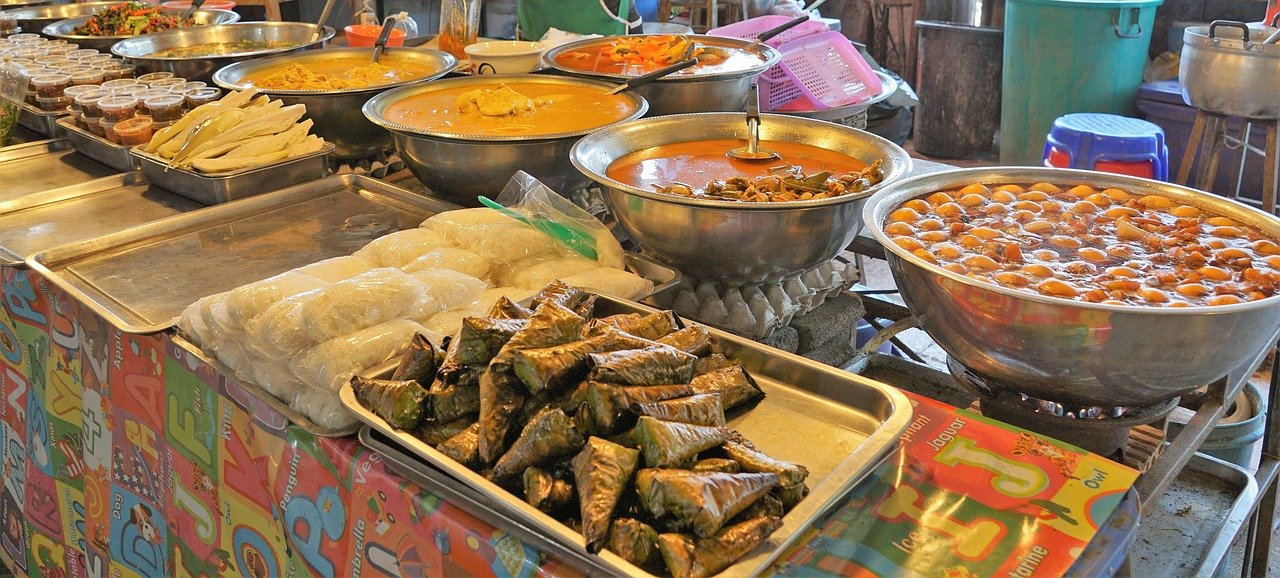
The fourth error is forgetting that a great meal is often not a restaurant at all. A bakery counter, a market stall, or a food truck can outperform a sit-down place, and these venues are frequently under-reviewed.
Beyond Restaurants: Other Food Worth Searching For
The “near me” habit works well beyond a standard dinner reservation. It is genuinely useful for specific cravings and specific errands.
If you want something warm and savory, searching for the best empanada de jamon y queso near me will surface bakeries and small counters that a generic restaurant search would bury. The same goes for a proper plate of callos a la madrilena near me, which tends to appear at older, family-run places rather than in trend-driven lists. Cuisine-specific queries are almost always more productive than broad ones.
The habit also applies to non-restaurant errands. People search for garage door repair near me with the same urgency they search for lunch, and the same ranking logic applies: relevance, distance, and prominence, not necessarily quality. The same applies to browsing for secondhand kitchenware at thrift stores near me before a dinner party, or hunting down the best salads near me on a day when something lighter is the goal.
The broader point is that “near me” is a format, not a category. Once you understand how the results are assembled, you can apply the same skepticism and the same verification steps to any local search.
What Actually Predicts a Good Meal
After all the ranking factors and review algorithms, a few signals tend to hold up better than the rest.
A short, focused menu usually beats a vast one. Kitchens that cook a limited number of dishes repeatedly tend to execute them more consistently.
Steady, unremarkable review volume is a better sign than a sudden spike. A restaurant with two hundred reviews accumulated over four years is showing a track record. One with two hundred reviews in three weeks is showing a campaign.
Recent reviews matter more than old ones. A place that was excellent in 2021 and has drifted since will still carry its old average. Sort by newest and read the last month.
Photos from diners beat photos from the business. They show the actual portion, the actual table, the actual lighting.
A full room at an odd hour tells you something no algorithm can. If a place is busy at 3 p.m. on a Tuesday, the neighborhood trusts it.
Conclusion
Finding the best food near you is less about luck and more about knowing what the search results are actually measuring. Local rankings weigh relevance, distance, and prominence. Review platforms apply their own partly hidden logic. Fake reviews are now a regulated problem, which tells you how common they became. Public inspection grades and allergen rules exist precisely because star ratings cannot tell you everything.
The reliable approach is unglamorous: search specifically, check two sources, read the middle reviews, confirm the hours, and call ahead when it counts. Add inspection data where it is published, and stay suspicious of sudden perfection. Do that, and “best food near me” stops being a hopeful guess and starts being a short list you can trust.
Frequently Asked Questions
Why does the top result for “best food near me” change so often?
Local results are recalculated constantly based on your exact location, the time of day, your search history, and how listings change. A restaurant that updates its hours or gains a burst of reviews can move quickly. Rankings also reflect relevance, distance, and prominence rather than food quality, so the order is not a stable verdict on the cooking.
Are high star ratings a reliable sign of good food?
Partly. Ratings are useful, but they are not comparable across platforms because each one calculates them differently. A platform may weight recent reviews more heavily or filter out reviews its software does not trust. Read the most recent reviews, look for specifics about dishes, and treat a sudden cluster of identical five-star reviews as a warning rather than a recommendation.
How can I tell if reviews are fake?
Look for timing and specificity. Fake reviews tend to arrive in bursts, use generic praise, avoid naming dishes or staff, and repeat similar phrasing. Genuine reviews usually mention particular meals, wait times, or small annoyances. In the United States, the FTC’s rule banning fake reviews and testimonials took effect in October 2024, so platforms and businesses now face clearer consequences for this behavior.
What is the fastest way to check whether a restaurant is safe?
Search for your local health department’s published inspection results. Many cities and states make these public, and some use letter grades, as New York City has since 2010. An inspection score will not tell you if the food tastes good, but it gives you an objective read on food handling that a star average cannot provide.
Should I trust the hours listed online?
Not completely. Listings are edited by owners and by users, and unclaimed or neglected listings frequently show outdated hours. Before a long trip or a special occasion, confirm the hours by phone or by checking a second source. This is one of the most common causes of a wasted evening.
How do I search for a specific dish rather than a general restaurant?
Search for the dish by name plus “near me,” such as a specific pastry, a regional stew, or a particular sandwich. Dish-level queries surface bakeries, market counters, and small family kitchens that general restaurant searches tend to bury under larger, more heavily reviewed venues. Cuisine-specific searches narrow the results and usually produce a better shortlist.



