
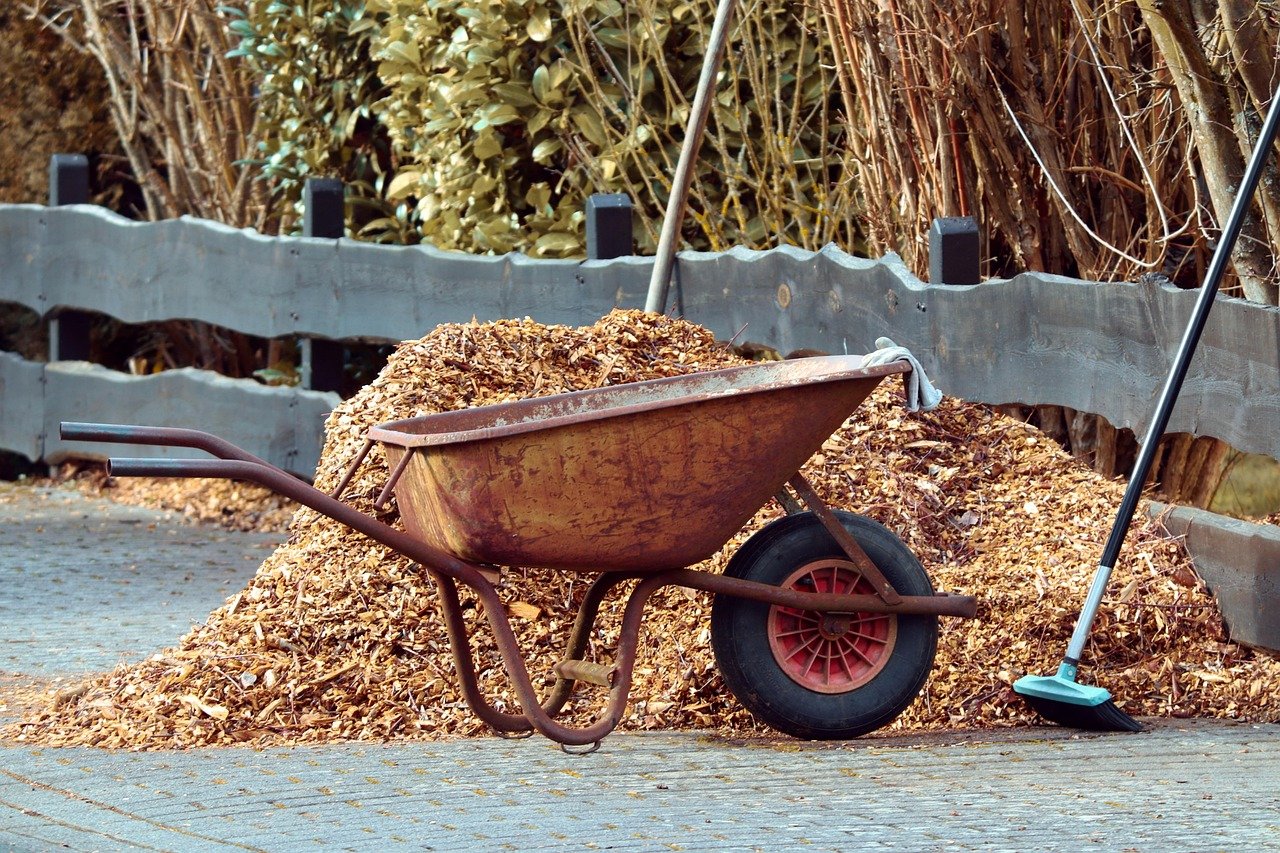
What if the cheapest upgrade to your garden had nothing to do with plants at all? Walk through any well-tended landscape and you will notice something the plants share: a neat layer of material covering the soil. That layer is mulch, and it quietly does more work than most garden products ever will. It holds water in the ground, smothers weeds before they sprout, and keeps roots comfortable through both summer heat and winter cold. It is also one of the most misunderstood garden tasks, because the difference between good mulching and bad mulching is mostly about depth and placement, not the material itself. Get those two details right, and the rest is easy.
What Mulch Actually Is
Mulch is any material spread over the soil surface as a protective covering. That is the whole definition, and it is deliberately broad. Organic mulches include bark, wood chips, straw, compost, and fallen leaves. Inorganic options include gravel, landscape fabric, and plastic film. Each works differently, and none is universally “best.”
The core benefits are well documented. Mulch reduces evaporation from the soil, so plants drink less often and survive dry spells better. It moderates soil temperature, keeping soil cooler in summer and warmer in winter. And a thick enough organic layer blocks light, which stops many weed seeds from germinating. Those three effects alone justify the effort in almost any garden.
There is a catch worth stating upfront: recommended mulch depths, materials, and timing vary substantially by climate, crop, and source. There is no single universal standard. Anyone who tells you “always use exactly three inches” is giving you a rule of thumb, not a law of nature. Treat every number in this article the same way, as a starting point to adjust for your own soil and weather.
Organic vs. Inorganic Mulch: A Practical Comparison
Choosing a mulch starts with one question: do you want the material to break down and feed the soil, or do you want it to stay put? Organic mulches decompose over time, adding organic matter and improving soil structure, but they need topping up. Inorganic mulches last for years but contribute nothing to soil biology.
| Feature | Organic mulch | Inorganic mulch |
|---|---|---|
| Examples | Bark, wood chips, straw, compost, leaves | Gravel, landscape fabric, black plastic film |
| Adds organic matter | Yes, as it decomposes | No |
| Lifespan | Months to a few years | Years |
| Weed control | Good when deep enough | Good, but weeds can grow through gaps |
| Best for | Beds, trees, vegetables, borders | Paths, gravel gardens, high-wind sites |
| Watch out for | Nitrogen tie-up with fresh wood, sour mulch | Disposal, heat buildup, plastic waste |
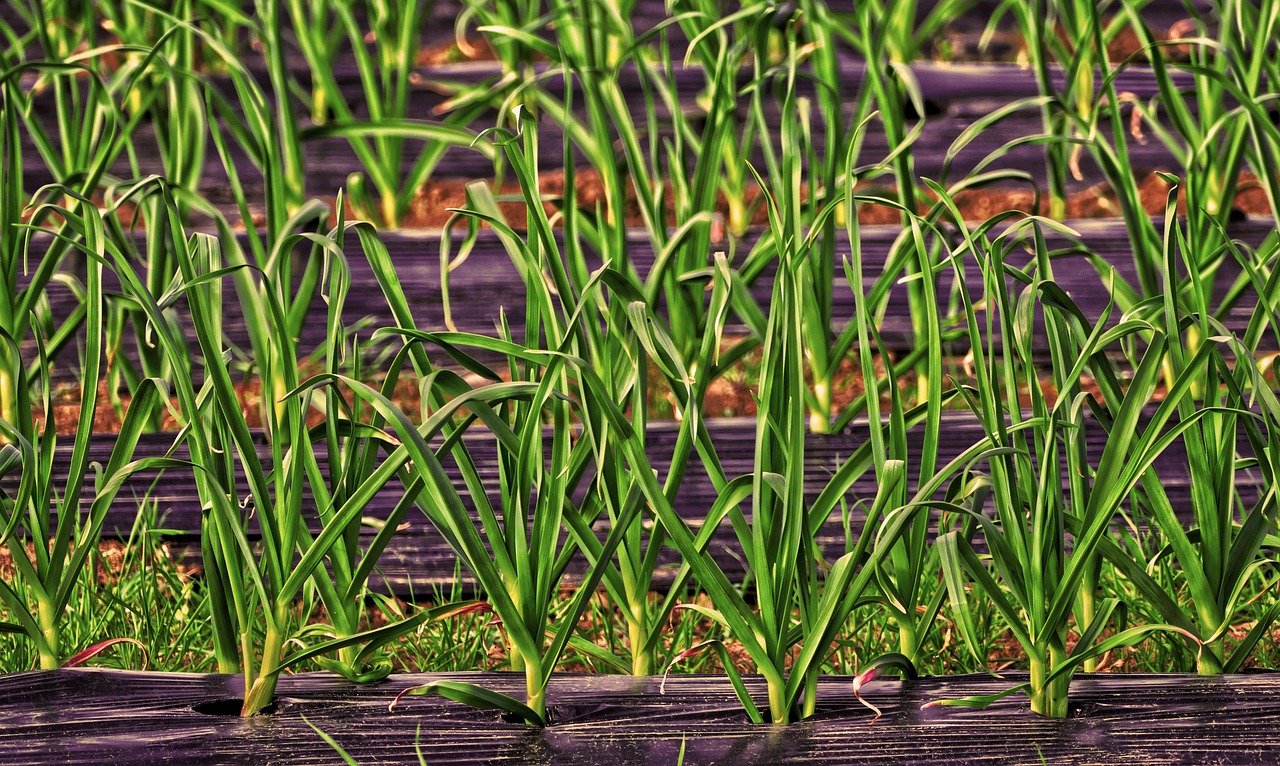
Black plastic film deserves its own note. It is widely used in commercial vegetable production for weed control and soil warming, and it genuinely works. But it does not add organic matter, it must be disposed of or recycled at the end of the season, and it sheds microplastic fragments over time. For a home vegetable patch, it is a tool for a specific job, not a default. (Composting At Home)
Compost is a frequent point of confusion. Compost is sometimes used as mulch, but it is primarily a soil amendment, meaning it is meant to be worked into the soil. Using it as a surface mulch is a different practice with different nutrient implications. A thin compost layer can be a fine light mulch, but a deep compost mulch may deliver more nutrients than some plants, especially natives, actually want. (Mulch)
How Deep Should Mulch Be?
Most university extension guidance lands in the range of roughly 2 to 4 inches (5 to 10 cm) of organic mulch for garden beds. Within that range, the right depth depends on what you are mulching:
- Annual flower and vegetable beds: 2 inches is usually plenty. Deeper layers can keep soil too cool for warm-season crops and make direct sowing difficult.
- Perennial borders and shrubs: 2 to 3 inches works well.
- Trees and large shrubs: 2 to 4 inches, spread wide rather than piled high.
- Paths and utility areas: deeper is fine, since the goal is surface cover rather than soil health.
The most common mistake is not too little mulch, but too much in the wrong place. A layer deeper than 4 inches can limit oxygen reaching the soil, and it can keep the root zone too wet. More is not better. Aim for even coverage, not volume.
The Volcano Mulch Problem
Piling mulch in a cone against a tree trunk, often called volcano mulching, is widely discouraged by extension services. The reasons are practical, not aesthetic. Mulch held against the bark keeps moisture where it does not belong, which can encourage decay. It also creates a sheltered zone that favors rodents and certain pests, and it can encourage roots to grow up into the mulch pile instead of outward into the soil.
The fix is simple: pull mulch back so it does not touch the trunk, leaving a small gap of bare soil around the base. Think of a donut, not a volcano. The same rule applies to shrubs, perennials, and even tomatoes. Stems need air.
Mulch by Season: Summer and Winter Jobs
Mulching is often treated as a one-time spring chore, but it plays a different role in each season.
In summer, the job is water conservation and heat moderation. A fresh organic layer applied after the soil has warmed keeps moisture from baking off and keeps root zones several degrees cooler than bare ground. Apply it after the soil has warmed in spring, not before, or you will slow the warming that early crops need.
In winter, mulch becomes insulation. A layer applied after the ground freezes helps prevent the freeze-thaw cycles that heave plants out of the soil. This matters most for marginally hardy plants, and the standard for judging hardiness is the plant hardiness zone map maintained by the USDA, which was updated in November 2023 to replace the 2012 version. If you garden near a zone boundary, winter mulch is cheap insurance.
One practical tip: in cold climates, do not mulch too early in fall. Wait until the soil has cooled or the ground has frozen, then apply. Mulching warm soil in October keeps it warm, which can keep plants growing when they should be hardening off.
Mulching Vegetables and Annuals Without Creating Problems
Vegetable gardens need a lighter touch. Here is what actually works in practice:
- Wait until seedlings are up and the soil has warmed, then apply a thin 1 to 2 inch layer.
- Keep mulch a few inches away from stems to prevent rot and slug damage.
- Use straw or shredded leaves around leafy greens and brassicas, where a coarse bark mulch would be awkward.
- Avoid fresh wood chips around nitrogen-hungry crops unless you add extra nitrogen, since soil microbes can tie up nitrogen as they break down the wood.
- Refresh mid-season if the layer thins, especially after heavy rain.
A common mistake is mulching direct-sown beds too early. Seeds need light and warmth, and a thick layer over the seed row will stop germination or bury tiny seedlings.
Common Mulch Mistakes to Avoid
Beyond volcano mulching, a few errors show up again and again.
Using sour or anaerobic mulch. Mulch that has been piled wet and sealed can ferment and smell strongly of vinegar or ammonia. It can harm young plants if applied fresh. Spread it out to air and dry before use.
Mulching over weeds without removing them. Mulch suppresses new weed seeds, but established perennial weeds like bindweed or thistle will push right through. Clear them first.
Skipping the edge. Mulch works best when it is spread wide. A narrow ring around a tree does little for the root zone, which extends well beyond the canopy edge.
Forgetting to top up. Organic mulch breaks down, which is the point, but it means the layer thins. Check depth once or twice a year and top up to the target range rather than assuming last year’s layer is still there.
Using the wrong material for the site. Gravel mulch on a windy slope will migrate. Light straw in a windy spot will blow away. Match the material to the exposure.
Conclusion
Mulch is one of the few garden inputs that pays for itself in saved watering, fewer weeds, and healthier soil, provided it is applied with a little restraint. Choose organic material where you want soil improvement, inorganic material where you want permanence, and keep the layer in the 2 to 4 inch range for most beds. Keep it off trunks and stems. Time it to the season rather than the calendar. None of this is complicated, and almost all of it comes down to two habits: spread wide, and never pile high. Do that, and the soil underneath will do the rest.
Frequently Asked Questions
What is the best mulch for a garden?
There is no single best mulch, only the best match for the job. Shredded bark and wood chips are excellent for shrubs and trees because they last and look tidy. Straw and shredded leaves suit vegetable beds. Compost works as a thin mulch where you also want to feed the soil. Gravel and landscape fabric suit paths and dry, windy sites. Match the material to what you want it to do.
How deep should mulch be?
For most garden beds, aim for roughly 2 to 4 inches (5 to 10 cm) of organic mulch. Annual and vegetable beds usually do well with about 2 inches, while trees and shrubs can take 2 to 4 inches spread wide. Deeper than that can limit oxygen to the soil and hold too much moisture. Keep mulch a few inches away from stems and trunks.
Is volcano mulching really bad for trees?
Yes, and for practical reasons rather than aesthetics. Piling mulch against the trunk traps moisture against the bark, which can encourage decay, and it creates shelter for rodents and pests. It can also encourage roots to grow upward into the mulch instead of outward. Spread mulch in a wide, even ring and leave a small gap of bare soil around the trunk.
Can I use compost as mulch?
You can, but it is a different practice from using compost as a soil amendment. Compost is primarily meant to be worked into the soil. Used as a surface mulch, a thin layer is usually fine, but a deep compost layer can deliver more nutrients than some plants, particularly native plants, need. For most beds, a dedicated mulch material is the better choice.
Does mulch attract termites or pests?
Some mulches can attract certain pests, and the risk depends on the material, your climate, and how it is applied. The bigger issue is mulch piled against a building foundation or a tree trunk, which creates a sheltered, moist zone. Keep mulch several inches away from foundations and trunks, and the risk drops considerably. If termites are a known problem in your area, keep mulch thin near the structure.
When should I apply mulch?
Spring is the usual time for organic beds, applied after the soil has warmed so you do not slow early growth. In cold climates, winter mulch is best applied after the ground has cooled or frozen, since mulching warm soil too early in fall can keep plants growing when they should be hardening off. Refresh thin layers whenever they drop below your target depth.



